




Home Insurance Short Term

Written by Andrea Troy
Reviewed by Tim Bailey
6 min read
Updated: 3 Nov 2026
Home Insurance Short Term

Home insurance short term is cover arranged for a defined period shorter than a full year, often used when you are between homes, waiting to complete a sale, or leaving a property empty for a stretch of time. In the UK, short policies are uncommon from mainstream insurers. Most of what is sold as “short term” is a specialist unoccupied-property policy that still runs for a fixed term, and standard annual home insurance that reduces or withdraws cover once a property is left empty beyond a set number of days.

If your normal home insurance is about to lapse a month before you move, or a house will sit empty while probate is sorted, you have three practical routes: keep an annual policy running, extend cover through your existing insurer, or buy specialist unoccupied-property insurance. Each has different rules on how long the property can be empty and what stays covered. Free Price Compare compares combined buildings and contents home insurance from a panel of 42 providers, so you can weigh these options against a standard annual quote.

Quick Answer: Home Insurance Short Term

  • Most “short term” cover is specialist unoccupied-property insurance, usually sold for 3 to 12 months.
  • Standard home insurance often reduces cover once a property is empty beyond 30 to 60 days.
  • The average UK combined buildings-and-contents premium was £375 in Q1 2026 (ABI).
  • Buying an annual policy and cancelling early can forfeit the full year’s premium outside the 14-day cooling-off period.
  • Renovations and empty properties often need specialist cover, not a standard policy.

Last updated: October 2026

Written by the Free Price Compare editorial team | Reviewed October 2026

What is short term home insurance?

Short term home insurance is cover arranged for a defined period of less than a year, typically to bridge a gap or protect a property during a temporary situation. In the UK market, truly short policies measured in days or weeks are rare. Most cover sold under this label falls into two groups: specialist unoccupied-property insurance (commonly offered on terms of 3 to 12 months) and standard annual home insurance that you keep running while a property is temporarily empty.

The distinction matters because the risk changes the moment a home is left empty. An unoccupied property is more exposed to undetected leaks, break-ins and vandalism, so insurers either restrict cover or price it as a separate specialist product. If you only need protection for a few weeks between moving dates, the realistic choice is usually an annual policy you can cancel, or a specialist policy with the shortest available term.

For a broader primer on how household cover works, our home insurance FAQs explain the basics of buildings, contents and combined policies.

Will my standard home insurance cover an empty property?

Standard home insurance usually covers an empty property only for a limited window, after which cover reduces or is withdrawn. Most policy wordings set an unoccupancy limit, and once a home is left empty beyond that period, the insurer may restrict cover to events like fire and lightning, or suspend cover for theft, escape of water and malicious damage. AXA’s published wording, for example, names a 30-day limit on one product and 60 days on another, according to FCA-regulated policy documents from the insurer.

The exact limit varies by insurer and product, so the only reliable answer is in your own policy wording, usually under “unoccupied” or “minimum level of occupancy”. If you expect a property to be empty beyond the stated period, tell your insurer before it happens. Failing to disclose a known period of unoccupancy can give the insurer grounds to reduce or refuse a claim.

Leaving a home empty while you are away for an extended trip carries the same risk, as our piece on how long holidays can affect home insurance claims explains.

Compare home insurance quotes

How long can I get short term unoccupied cover for?

Short term unoccupied cover is generally available for a fixed term rather than by the day or week, although the minimum term varies between providers. Some specialist insurers only sell unoccupied-property policies on a 12-month basis even when the property is empty temporarily, so you may pay for a full year and cancel when occupancy resumes. Others offer shorter minimum terms of 3, 6 or 9 months.

Specialist cover typically becomes relevant once a property has been, or will be, empty for more than 30 consecutive days, which is where many standard policies begin to restrict cover. Common reasons include a long overseas trip, a stay in hospital or a care home, probate, or waiting for a sale to complete. The cover limits on these policies can be substantial, with some specialist buildings cover reaching up to £1 million and liability up to £5 million, though these are benefit limits, not prices.

  • Properties awaiting sale or completion, where the move runs past your renewal date.
  • Homes left empty during probate or while an estate is settled.
  • Properties vacant while the owner is in hospital, in a care home, or working abroad.
  • Second homes or inherited properties that sit empty for long stretches.

Does short term unoccupied property insurance cover renovations?

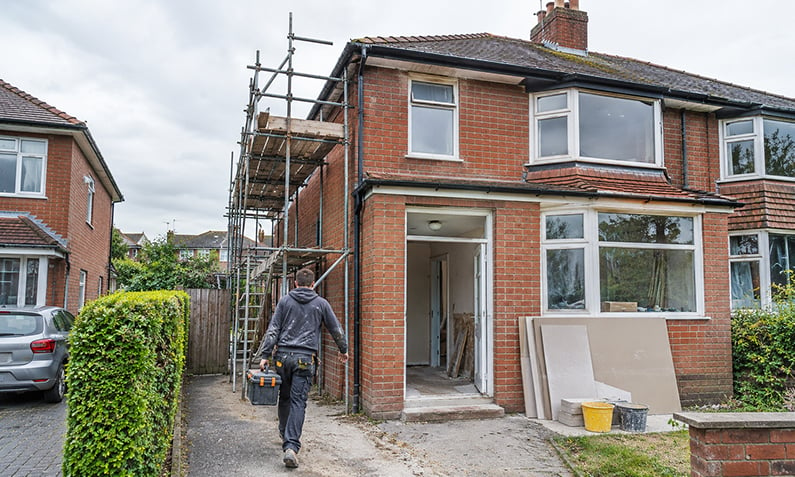
Short term unoccupied property insurance can cover renovations, but only if the works are declared and accepted by the insurer in advance. An empty property undergoing building work is a materially higher risk, so most insurers ask about the scope, cost and duration of the works before they will quote. Minor redecoration is often fine; major structural work, extensions or anything affecting the roof or walls usually needs specific agreement and may carry conditions.

If builders or contractors are on site, check whose liability cover applies and whether the property is left secure and weatherproof overnight. Many policies exclude damage that arises directly from the building work itself, as opposed to insured events like fire or storm. Always confirm in writing what is and is not covered while renovations are under way, because an undeclared conversion or extension is a common reason claims are declined.

Does short term unoccupied property insurance cover renovations

Moving, renovating or leaving a home empty?

Compare combined buildings and contents cover from our panel of 42 UK providers.

How much does temporary home insurance cost?

Temporary home insurance has no fixed national price, because it depends heavily on the property, its location, how long it will be empty and the works planned. There is no verified UK average premium specifically for short term or unoccupied-home cover. As a reference point for standard cover, the average combined buildings-and-contents premium was £375 in Q1 2026, a fall of £5 and the fourth consecutive quarterly drop, according to the ABI.

Unoccupied-property cover is usually priced higher than an equivalent occupied policy because the risk is greater, and a short fixed term rarely costs much less than a longer one once set-up costs are factored in. In practice, the cheapest route is often not the shortest. Buying an annual policy and cancelling early can forfeit the whole year’s premium if you are past the 14-day cooling-off period, so a specialist short term policy or keeping cover running to your move date can work out better value. Our guide to how loyal home insurance customers can be overcharged is a reminder to compare rather than auto-renew.

See home insurance options for your property

Temporary home insurance while you wait to move

Temporary home insurance while you wait to move is usually best handled by keeping your existing annual policy running until completion, or arranging short term cover that spans both properties during the overlap. If your renewal falls a few weeks before you move, cancelling early can leave you uninsured on a legal requirement your mortgage lender imposes, so it is safer to let the policy run or arrange a replacement that covers the gap.

On the day of a house move, the general rule is that buildings cover should be in place on the new property from the date contracts exchange, because you become responsible for it then. Many standard annual policies let you transfer cover to a new address mid-term, which avoids the need for a separate short term product altogether. If you are comparing cover for a completely new property, it is worth running a fresh home insurance comparison rather than simply moving your old policy across, as the right level of buildings cover depends on the rebuild cost of the new home.

Sum insured, excess and exclusions in plain English

The sum insured is the maximum amount an insurer will pay out, and getting it right matters more on a short term or unoccupied policy than almost anything else. For buildings, the sum insured should reflect the rebuild cost, not the market value, because you are insuring the cost of reconstruction, not the price of the land. For contents, it is the cost of replacing everything you own in the home. Under-insuring either can lead to a reduced payout if you claim.

The excess is the amount you agree to pay towards each claim before the insurer pays the rest. A compulsory excess is set by the insurer; a voluntary excess is one you choose to add, often to lower the premium. On unoccupied properties, insurers sometimes apply a higher excess for escape of water, because leaks in an empty home can go undetected for weeks.

Exclusions are the situations a policy will not pay for. On short term and unoccupied cover, common exclusions include theft or malicious damage while the property is empty beyond the agreed period, damage from undeclared building work, frost or burst-pipe damage if the water was not turned off or heating maintained, and gradual deterioration. Reading the exclusions before you buy avoids the two most common surprises: an empty property losing theft cover, and a claim declined because a known risk was not disclosed.

  • Buildings sum insured should match the rebuild cost, which is often lower than the market value.
  • Contents sum insured should cover full replacement of your belongings.
  • Check whether a higher excess applies to escape of water on an empty home.
  • Confirm any security or maintenance conditions, such as draining the system or inspecting the property regularly.

Compare combined buildings and contents cover

Short term options compared

Choosing between the main short term routes comes down to how long the property will be empty and whether it is occupied in the meantime. The table below sets out the typical position for each, so you can see which fits your situation before you get a quote.

Situation Usual best option Key point
Occupied, moving within weeks Keep annual policy to completion Transfer cover to the new address where possible
Renewal lapses before you move New annual policy or short term specialist cover Avoid cancelling and losing the full premium
Empty beyond 30 to 60 days Specialist unoccupied-property cover Standard cover often reduces past the limit
Empty during probate or sale Specialist unoccupied cover (3 to 12 months) Declare the reason and expected duration
Undergoing renovation Specialist cover with works declared Major works usually need specific agreement

Figures are indicative and may change.

If you also need cover for a vehicle during the same period, a short term car insurance policy works on a similar flexible, fixed-period basis. For households weighing up protection more widely, it can be worth reviewing level or decreasing term life insurance at the same time as a house move.

Short term options compared

FAQs about home insurance short term

What is the difference between short term house insurance and buildings insurance?

Short term house insurance usually refers to combined cover for the structure and your belongings over a fixed, shorter period. Short term buildings insurance covers only the structure of the property, which is what a mortgage lender requires. If a property is empty, both can be arranged as specialist unoccupied cover, but you only need contents cover if belongings remain in the home.

Can I set up a temporary buildings and contents policy for a few weeks?

short policies measured in weeks are hard to find from mainstream UK insurers, as most unoccupied-property cover is sold in terms of 3 to 12 months. If you need only a few weeks, the practical options are to keep an annual policy running and cancel afterwards, or buy a specialist policy with the shortest available term. Always check the minimum term and any cancellation charges before you commit.

How long can my standard home insurance cover an empty property?

Most standard home insurance policies cover an empty property for a set period, commonly 30 to 60 days, before cover reduces or is withdrawn. After that point the insurer may suspend cover for theft, escape of water or malicious damage. The exact limit is stated in your policy wording, so check it and notify your insurer if the property will be empty for longer.

Does temporary home insurance cover a property during probate?

Specialist unoccupied-property insurance can cover a home during probate, which is one of the most common reasons properties sit empty. You will usually need to declare that the owner has died and the property is awaiting sale or transfer. Standard policies often restrict cover once a home has been empty beyond the stated period, so specialist cover is normally the safer route.

Do I need home insurance to cover a dog sitter staying in my house?

A dog sitter staying in your home while you are away generally keeps the property occupied, which helps preserve your normal cover. Check your policy for any wording about who may stay in the home, and confirm that your contents cover is not affected by having a non-family member in residence. Tell your insurer if the sitter is a paying guest, as that can change the basis of cover.

Is it worth buying an annual policy and cancelling early for short term needs?

It can be, but only within the 14-day cooling-off period, during which you can cancel and get most or all of your premium back. Cancel after that and you may forfeit the full year's cost or receive only a small refund, depending on the insurer's terms. Compare the net cost against a specialist short term policy before deciding.

Does short term home insurance cover renovations?

It can, but only if the building work is declared and agreed by the insurer before it starts. Minor redecoration is usually acceptable, while major structural work, extensions or roof works need specific approval and may carry conditions. Damage caused directly by the work itself is often excluded, so confirm exactly what is covered in writing.

Do I need to tell my insurer if I rent out my house?

Yes. Renting out your home, including short term or holiday lets, changes the risk and must be disclosed, as a standard home policy is designed for owner-occupied use. Many insurers will not cover short term lets and you may need a landlord or specialist policy instead. Failing to disclose a let can invalidate cover and lead to a declined claim.

What happens if I do not tell my insurer a property is empty?

If you leave a property empty beyond your policy's unoccupancy limit without telling your insurer, the insurer may reduce or refuse a claim. Non-disclosure of a known material fact, such as planned unoccupancy, gives them grounds to do so. Notifying them in advance lets you arrange suitable cover and keep protection valid.

How should I work out the right sum insured for a short term policy?

For buildings, use the rebuild cost rather than the market value, as you are insuring reconstruction, not land. For contents, estimate the full cost of replacing everything in the home as new. Under-insuring can lead to a reduced payout, so take time to calculate both figures accurately even for a short period.

Can I transfer my existing home insurance to a new address mid-move?

Many standard annual policies allow you to transfer cover to a new property mid-term, which often removes the need for a separate short term product. The premium may change because it reflects the new property's rebuild cost, location and risk. Contact your insurer before you move to arrange the change and confirm the date cover switches across.

Also Read Related Articles


Information correct as of 18 October 2026. Prices, tariffs, policy details and providers change frequently, so please check the latest details before making a decision. This article is for general information only and does not constitute financial advice. Free Price Compare is authorised and regulated by the Financial Conduct Authority (FCA).

4000+ reviews