




How to Check Van Insurance: A Plain-English Guide

Pratik Aghera
Written by Pratik Aghera
Andrea Troy
Reviewed by Andrea Troy
6 min read
Updated: 23 Nov 2026
How to Check Van Insurance: A Plain-English Guide

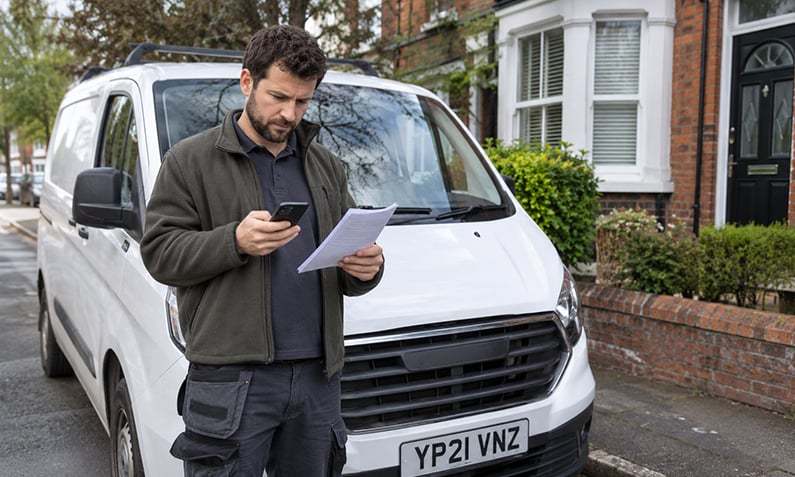
How to check van insurance starts with one free step: enter the registration on the askMID “Check your vehicle” service to see whether your van appears on the Motor Insurance Database (MID), the UK’s central record of insured vehicles. That tells you if a live policy exists, but it is not the full picture. To confirm you are properly covered, you also need to read your own policy schedule, certificate and use class.

This matters most to sole traders, tradespeople and small businesses, because a van can show as “insured” on the database while the policy still has the wrong class of use, too low a mileage limit, or no cover for tools and racking. Those gaps can leave a claim refused even when the MID says you are insured.

Free Price Compare is FCA-authorised and compares van cover from a panel of 63 UK providers. Below we set out exactly what to check, in what order, and the common traps that catch van owners at renewal.

Quick Answer: How to Check Van Insurance

  • Check the Motor Insurance Database free via askMID using your van’s registration.
  • A MID “insured” result confirms a policy exists, not that your cover is correct.
  • Checking another vehicle on askMID costs £10.00 per one-off search.
  • Always verify your use class, mileage limit and tools/goods cover in the schedule.
  • Van premiums fell around 4.5% in the three months to August 2026 (Defaqto).

Last updated: November 2026

Written by the Free Price Compare editorial team | Reviewed November 2026

How do you check if a van is insured?

You check if a van is insured by entering its registration number into the askMID “Check your vehicle” service, which searches the Motor Insurance Database (MID), the UK’s central record of insured vehicles run by the Motor Insurers’ Bureau. Checking your own registration is free, and the result confirms whether a live insurance policy is recorded against that van.

The askMID result tells you the vehicle is on the database and, in some cases, the insurer linked to the record. It does not show your policy number, cover level, excess or use class. For those details you need the documents your insurer or broker sent you.

Looking up a different vehicle, such as one belonging to someone else, is a paid search on askMID that costs £10.00 per one-off check. There is no free way to look up another person’s van insurer, because the MID only releases full third-party policy details to police, authorised insurers and claimants after an incident.

  • Go to the askMID “Check your vehicle” page.
  • Enter the van’s registration (VRN) and accept the terms.
  • Review whether the record shows the van as insured.
  • Cross-check against your policy schedule and certificate.

If you have just bought or renewed cover and the van does not appear yet, check your documents first and contact your insurer or broker. No official source guarantees an instant database update, so a short delay after a new policy starts is normal rather than a sign you are uninsured. The same free self-check also works for a car, as our guide on how to check if a car is insured explains.

Compare van insurance quotes

How to check van insurance online step by step

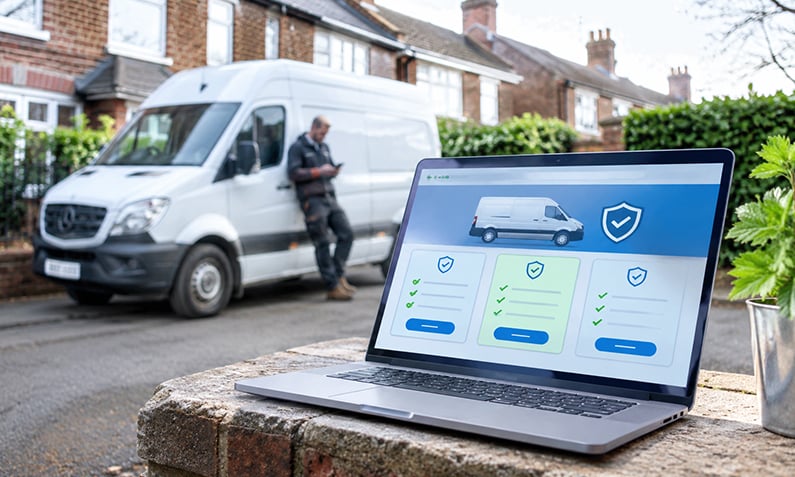
To check van insurance online, use two sources together: the askMID database for proof a policy exists, and your insurer’s own portal or paperwork for what the policy actually covers. Relying on only one of these is the most common mistake van owners make.

The Motor Insurance Database confirms the existence and start date of cover, which matters because driving an uninsured van is an offence under the Road Traffic Act 1988 and the Continuous Insurance Enforcement rules mean a vehicle with no insurance and no SORN can face a fine, clamping or seizure. Your insurer’s documents then confirm the detail that askMID cannot show.

What to verify on your policy schedule

Your policy schedule is the single most important document to check, because it lists the exact terms of your cover. Read it in full and confirm every entry matches how you actually use the van.

  • Policyholder name, van registration, make and model.
  • Cover level: comprehensive, third party fire and theft, or third party only.
  • Class of use: social only, commuting, carriage of own goods, business use, courier or haulage.
  • Annual mileage limit and the policy start and end dates.
  • Excess amounts, tools and contents cover, racking, signwriting and any modifications.

Keep the certificate of insurance and schedule where you can find them, and note the insurer’s contact number. If anything is wrong, tell the insurer before you drive, not after a claim. Our van insurance check guide runs through the same documents in more depth.

How to check van insurance online step by step

How to check your vehicle insurance status and validity

Your vehicle insurance status is “valid” only when three things line up: the van appears on the Motor Insurance Database, the policy dates cover today, and the class of use matches how you are driving. A van can show as insured on askMID yet have invalid cover for the trip you are making if the use class is wrong.

Class of use is where tradespeople most often come unstuck. “Carriage of own goods” covers tools and materials you use for your own business, while “hire and reward” covers carrying goods or passengers for payment, such as courier or haulage work. Using a van outside its stated class can invalidate a claim even though the policy is technically live.

Private and social users should check too. A van insured for “social only” is not covered for commuting or any business trip, so even a one-off job can fall outside the policy. If your work has changed, update the use class rather than assuming the old policy still fits.

Use class What it typically covers
Social only Personal, non-work trips; not commuting or business use.
Carriage of own goods Tools and materials for your own business.
Business use Travel between sites or clients for work.
Hire and reward / haulage Carrying goods or passengers for payment.

Figures are indicative and the exact wording varies by insurer. The way insurers rate a van also depends on its van insurance group, which reflects repair costs, performance and security to bodies such as Thatcham Research.

Not sure your cover still fits?

Compare van insurance across a panel of 63 UK providers in minutes.

How to look up a van’s insurer for free

You can look up your own van’s insurer for free through the askMID “Check your vehicle” service, but you cannot look up another person’s van insurer for free. Checking a vehicle that is not yours is a paid askMID search costing £10.00 per one-off check, and even then the database does not release the full policy details publicly.

This limit exists to protect policyholder data under the Financial Conduct Authority’s rules and data-protection law overseen by bodies such as the Information Commissioner’s Office. Full third-party insurer details are shared only with the police, authorised insurers and people with a valid claim after an incident.

After a collision, you are entitled to the other driver’s insurance details to pursue a claim, and if the other vehicle is uninsured or untraced, the Motor Insurers’ Bureau can step in. For everyday checks, stick to your own registration on askMID and your own documents.

See typical van insurance prices

What does van insurance cost in 2026?

Van insurance costs vary widely by van, driver, use class and address, so there is no single UK average that applies to everyone. As a guide, typical van premiums vary by driver, van, use and location, while quotes across the whole market can run much higher for riskier profiles.

Cover level and use class move the price significantly. Social-only use tends to sit at the lower end, carriage of own goods in the middle, and haulage or hire and reward at the top, reflecting the higher risk of commercial carrying work.

Van (example) Indicative quoted premium
Vauxhall Astravan around £379
Nissan Primastar around £475
Renault Kangoo around £484
Vauxhall Corsa Van around £519
Volkswagen Transporter around £539
Citroën Berlingo around £602

Price valid as of 17/11/2026

Figures are indicative quoted premiums based on 2025 data published by Howden in January 2026, not live prices for today. Van premiums can change between insurers and over time, so shopping around at renewal is worth the time.

Comparing cover is the practical way to find a fair price for your exact profile. A van insurance quote with us takes about five minutes and lets you line up excess, mileage limits, tools cover and breakdown alongside the headline premium, not just the cheapest number.

Checks to run before you buy or renew

Before you buy or renew van cover, confirm the facts an insurer rates on and the extras you actually need, because a quote built on wrong details can be invalid when you claim. Accurate information up front also protects your no-claims bonus and avoids a mid-term price jump.

  • Confirm the registration, make, model, engine size and current van value.
  • Select the correct use class for how you really drive the van.
  • Set a realistic annual mileage; under-stating it can void a claim.
  • Check whether tools, contents, racking, signwriting and goods in transit are covered.
  • Compare excess, exclusions, breakdown cover, courtesy van and legal expenses.
  • Verify the start date and keep the certificate, schedule and insurer contact.

Renewal quotes are often higher than new-business prices, so compare before you auto-renew. If you add windows, towbars, racking or signwriting, tell the insurer, because modifications can change the price and undeclared changes can invalidate cover. A valid MOT also underpins a claim, so our UK MOT check guide is worth a read alongside your insurance.

Finally, recheck the van on askMID once cover begins, and don’t rely on a comparison quote as proof of insurance. A quote is an estimate; only the insurer’s confirmation, schedule and certificate prove you are covered. If you ever leave the van loaded, our guide on keeping an unattended van insured explains the theft conditions that can affect a claim.

Checks to run before you buy or renew

Compare van cover from 63 providers

FAQs about check van insurance

How do I check my van insurance for free?

Enter your van's registration into the askMID "Check your vehicle" service. Checking your own vehicle is free and confirms whether a live policy is recorded on the Motor Insurance Database. For cover details such as excess, mileage limit and use class, read your own policy schedule and certificate, as askMID does not show those.

How can I look up the insurance company on another vehicle?

Looking up a vehicle that is not yours is a paid askMID search costing £10.00 per one-off check, and it still does not release full policy details publicly. There is no free way to see another person's insurer. After a collision you are entitled to the other driver's insurance details to make a claim, and the Motor Insurers' Bureau can help if they are uninsured or untraced.

Is a van insured instantly after I buy a policy?

Your cover starts from the policy start date shown on your schedule, but the Motor Insurance Database may take a short time to update. If your van does not appear on askMID straight after buying, check your documents first and contact the insurer or broker. No official source guarantees an instant database update.

How do I check my vehicle insurance status is valid?

Your insurance is valid when the van appears on the Motor Insurance Database, the policy dates cover the current date, and the class of use matches how you are driving. A van can show as insured yet have invalid cover for a specific trip if the use class is wrong, so check all three.

What is the difference between carriage of own goods and hire and reward?

Carriage of own goods covers tools and materials you carry for your own business, such as a plumber transporting their own equipment. Hire and reward covers carrying goods or passengers for payment, such as courier or haulage work. Driving outside your stated use class can invalidate a claim.

Why is no deposit van insurance hard to find in the UK?

Most insurers spread van premiums over monthly instalments that include a credit arrangement, so a zero-deposit option is rare. Paying annually usually works out cheaper overall because it avoids interest on the instalments. If budget is tight, compare the total annual cost rather than only the monthly figure.

Does checking my van on askMID count as proof of insurance?

An askMID result confirms a policy exists on the database, but your certificate and policy schedule are the documents that prove your cover and show the detail. Police and authorised bodies use the database, but for your own records keep the certificate, schedule and insurer contact details.

Will my van insurance renewal usually be cheaper if I shop around?

Renewal quotes are often higher than new-business prices, so comparing before you auto-renew can reduce the cost. Van premiums fell around 4.5% in the three months to August 2026 according to Defaqto, so switching or renegotiating can be worthwhile. Always compare like-for-like cover, not just the headline premium.

Can adding side windows or racking affect my van insurance?

Yes. Modifications such as windows, racking, towbars or signwriting can change how an insurer rates risk and may increase the premium. You must declare them, because undeclared changes can invalidate your cover. Tell your insurer before the change takes effect to keep the policy valid.

What should I do if my van premium rises after I buy the policy?

Contact the insurer and check the details on your schedule, as a mid-term increase often follows a correction to information such as use class, mileage, address or occupation. Make sure every entry is accurate. If the revised terms do not suit you, you can compare alternative cover before the change is applied.

Does a company-owned van need business van insurance?

A van owned by a limited company and used for its trade normally needs business or commercial van insurance in the company's name, with the correct use class for the work done. If the director is the sole driver, that should be reflected on the policy. Confirm the registered keeper and main driver details match your documents.

Can I pause or reduce van insurance if the van is off the road?

If a van is off the road and not used, you can declare it SORN with the DVLA, which means it does not need insurance while laid up, though it cannot be driven. Continuous Insurance Enforcement means a vehicle with no insurance and no SORN can face a fine or clamping, so one or the other must be in place.

Also Read Related Articles


Information correct as of 17 November 2026. Prices, tariffs, policy details and providers change frequently, so please check the latest details before making a decision. This article is for general information only and does not constitute financial advice. Free Price Compare is authorised and regulated by the Financial Conduct Authority (FCA).

4000+ reviews