





Compare Home Insurance NI: Costs, Cover and Savings

Ankit Sureja
Written by Ankit Sureja
Prajesh Manvar
Reviewed by Prajesh Manvar
6 min read
Updated: 25 Nov 2026
Compare Home Insurance NI: Costs, Cover and Savings

Compare home insurance NI quotes and most Northern Ireland homeowners find the right combined buildings and contents cover for a fairer price than sticking with an auto-renewal. The average premium for a three-bedroom NI property was £454.82 a year in Q3 2026 (CompareNI index, updated 20 November 2026), the highest of any UK region but down £24 on the previous quarter.

Northern Ireland prices sit well above London (£256.09), Scotland (£158.63) and Wales (£148.87) on the same Q3 2026 index, which is why shopping around matters more here than almost anywhere else in the UK. We compare home insurance from a panel of 42 providers, covering buildings, contents and combined policies, so you can see where your postcode, rebuild cost and excess choices land on price.

This page explains what you actually need, how sum insured, excess and exclusions work in plain English, and the specific NI points worth knowing before you buy.

Quick Answer: Compare Home Insurance NI

  • Home insurance is not a legal requirement in NI, but mortgage lenders require buildings cover.
  • Newry, Mourne and Down was the priciest NI council area at £665.69 (Q3 2026).
  • Lisburn and Castlereagh was the cheapest NI council area at £393.58 (Q3 2026).
  • Buildings cover insures the rebuild cost, not the market value of your home.
  • Most NI flood damage is covered, and Flood Re can help high-risk homes get cover.

Last updated: November 2026

Written by the Free Price Compare editorial team | Reviewed November 2026

Why home insurance costs more in Northern Ireland

Home insurance in Northern Ireland is the most expensive of any UK region, averaging £454.82 a year for a three-bedroom property in Q3 2026 according to the CompareNI index. That compares with £256.09 in London and £148.87 in Wales over the same period, so an NI household can pay roughly three times what a Welsh household pays for similar cover.

Several factors push NI prices up: higher rebuild costs, a smaller and less competitive insurer panel than Great Britain, localised flood risk in some areas, and claims history across certain postcodes. Premiums did fall from Q2 to Q3 2026, but Northern Ireland recorded a smaller year-on-year reduction than Great Britain over the period.

Because the gap between the cheapest and the average quote is wide here, comparing properly is where NI homeowners save the most. If you want to understand the difference between the two main parts of a policy first, our guide to buildings versus contents insurance breaks it down.

Compare home insurance NI quotes

How much does home and contents insurance cost in NI?

Combined buildings and contents insurance averaged £383 a year across the UK in April to June 2026, based on ABI premium data cited by Direct Line, while the NI-specific average was higher at £454.82 for a three-bed in Q3 2026 (CompareNI). Buildings-only cover averaged £309 and contents-only £118 across the UK over the same April to June 2026 period.

What you pay in NI depends heavily on your council area. The table below shows the Q3 2026 extremes from the CompareNI index.

Cover / area Average annual premium (Q3 2026)
NI three-bed average £454.82
Newry, Mourne and Down (highest) £665.69
Lisburn and Castlereagh (lowest) £393.58
UK combined buildings & contents (ABI, Apr–Jun 2026) £383
UK buildings-only (ABI, Apr–Jun 2026) £309
UK contents-only (ABI, Apr–Jun 2026) £118

Price valid as of 24/11/2026

Figures are indicative and may change. If you are quoted well above these averages, that does not automatically mean the price is wrong, but it is a strong signal to compare before renewing.

Do I legally need home insurance in Northern Ireland?

Home insurance is not a legal requirement in Northern Ireland, but if you have a mortgage your lender will require buildings cover as a condition of the loan. There is no statute that forces an owner-occupier to insure their home, unlike motor insurance which is compulsory under the Road Traffic Act.

Buildings insurance protects the structure of your property, so going without it leaves you personally liable for the full rebuild cost after a fire, flood or storm. Contents insurance is always optional, but it covers your possessions, which the average household would struggle to replace from savings.

Renters do not need buildings cover, as that is the landlord’s responsibility, but contents insurance is worth considering to protect your own belongings. Our renter’s guide to home insurance explains who covers what in a let property.

Do I legally need home insurance in Northern Ireland

How much cover do I need? Sum insured, excess and exclusions

The sum insured is the maximum your insurer will pay out, and for buildings it should match your rebuild cost, not your home’s market value. Rebuild cost is what it would take to physically reconstruct your property from scratch, including labour, materials and clearance, and it is usually lower than what the house would sell for because it excludes the land.

Getting your rebuild cost right

Underinsuring the rebuild cost is one of the most common NI mistakes, and it can lead to a reduced payout if you claim. You can get a free rebuild estimate from the BCIS calculator used across the UK insurance industry, or your surveyor’s report if you bought recently. For contents, walk through each room and total the replacement cost of everything you would need to buy new.

How excess affects your price

The excess is the amount you agree to pay towards any claim before the insurer pays the rest. A policy typically has a compulsory excess set by the insurer plus a voluntary excess you choose, and raising the voluntary excess usually lowers your premium. Set it at a level you could afford if you had to claim tomorrow.

Exclusions are the situations a policy will not pay for, such as gradual wear and tear, damage from lack of maintenance, or an unoccupied property left empty beyond the policy limit (often 30 to 60 consecutive days). Our guide to home insurance exclusions and our breakdown of how much cover you need go into more detail.

Not sure what cover level fits your home?

Compare buildings, contents and combined policies from our panel of 42 UK providers in about five minutes.

Does home insurance cover flooding in Northern Ireland?

Standard home insurance policies in Northern Ireland do cover flood damage as part of buildings and contents cover, though homes in higher-risk areas can face larger premiums or excesses. Flood risk is one reason certain NI postcodes are quoted more, and some insurers decline to quote on specific addresses flagged on flood maps.

Flood Re is a UK-wide reinsurance scheme that helps insurers offer affordable cover on homes at high flood risk, and it applies in Northern Ireland as it does in Great Britain. If one insurer declines or quotes an unusually high flood-related price, comparing across a wider panel often finds another that will cover you, which is the practical value of shopping around. For context on how flood events affect claims, our look at the York floods and their insurance impact is a useful read.

Check flood and buildings cover options

Why did my home insurance go up with no claims this year?

Home insurance can rise at renewal even with no claims because insurers reprice continuously based on market-wide claims costs, inflation on rebuild and repair prices, and your area’s risk profile, not just your personal history. NI premiums have been under particular pressure, falling slower than the rest of the UK, so a renewal quote above last year’s is common here.

Rising building material and labour costs feed directly into buildings premiums, since the insurer’s exposure is the rebuild cost. Some insurers have also withdrawn from parts of the NI market, reducing competition on certain postcodes. The practical response is to compare at renewal rather than accept the quoted figure, because loyalty rarely delivers the best price. The FCA’s rules on fair value and renewal pricing ban insurers from charging existing customers more than new ones for the same policy, but that still leaves wide price differences between insurers.

Our piece on whether home and car insurance prices will fall explains the wider market trends behind these increases.

How to compare home insurance quotes in NI and save

Comparing home insurance quotes in NI means checking the same cover level and excess across multiple insurers, because the cheapest headline price often has lower limits or higher excesses than it first appears. According to CompareNI research using Seopa data, 51% of consumers could save £257.05 on buildings and contents cover in April 2026, based on comparing the cheapest quote with the average of the next 14 cheapest. That is a representative saving, not a guaranteed individual result.

When you compare, keep these consistent so you are comparing like for like:

  • The same buildings sum insured (your rebuild cost) and contents sum insured.
  • The same voluntary excess across every quote.
  • The same add-ons, such as accidental damage, legal cover or home emergency.
  • Whether the price is a monthly instalment (which may carry interest) or an annual lump sum.

We compare home insurance from a panel of 42 providers, and a quote with us takes about five minutes. For a wider walkthrough of choosing a policy, see our guide to the best home insurance and how to choose, or our plain-English home insurance made easy guide.

Compare 42 home insurance providers

Can I get cover for a new build or non-standard home?

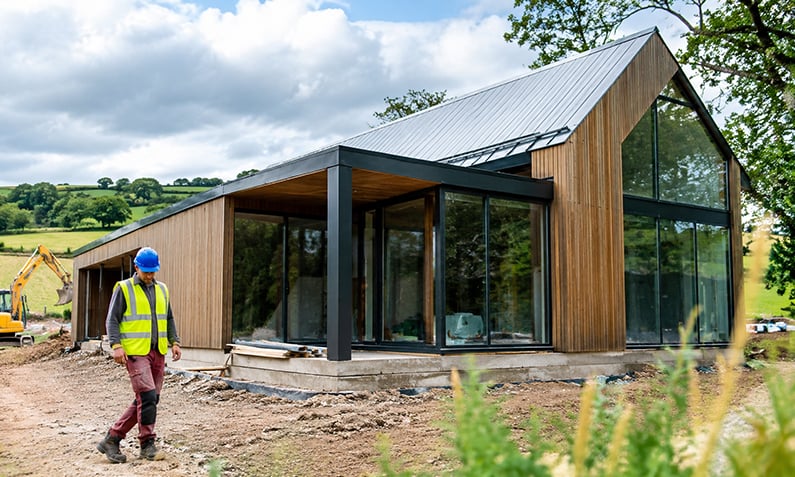
Yes, you can get home insurance for a newly built home or a non-standard construction property in Northern Ireland, though the choice of insurers is narrower and the price can be higher. A non-standard construction is anything other than brick or stone walls with a slate or tile roof, such as a property with thatch, timber frame, flat roof, or concrete construction.

For a new build, you may need proof of the structural warranty (such as an NHBC or equivalent 10-year cover) and the insurer will want the rebuild cost rather than the purchase price. For older or unusual construction, a specialist or a broker panel often finds cover that a single insurer’s online form rejects. Because availability varies so much by property type, comparing across a wider panel is the most reliable way to find an insurer that will quote.

Can I get cover for a new build or non-standard home

FAQs about home insurance ni

Is home insurance more expensive in Northern Ireland than the rest of the UK?

Yes. The average NI premium for a three-bedroom property was £454.82 a year in Q3 2026, the highest of any UK region, compared with £256.09 in London and £148.87 in Wales. Higher rebuild costs, a smaller insurer panel and localised flood risk all contribute. The gap is why comparing quotes matters more in NI than in most of the UK.

What do most people pay for home and contents insurance in NI?

The NI average for combined buildings and contents cover on a three-bed was £454.82 a year in Q3 2026, though prices range widely by council area. Newry, Mourne and Down averaged £665.69 while Lisburn and Castlereagh averaged £393.58. Your own price depends on your postcode, rebuild cost, excess and the cover level you choose.

Does home insurance cover flooding in NI?

Standard buildings and contents policies cover flood damage in Northern Ireland, though homes in higher-risk areas can face larger premiums or excesses. Flood Re, a UK-wide scheme, helps insurers offer affordable cover on high-risk homes and applies in NI. If one insurer declines on flood grounds, comparing a wider panel often finds another that will cover you.

Why has my home insurance gone up despite no claims?

Insurers reprice at renewal based on market-wide claims costs, rebuild and repair inflation and your area's risk, not just your personal claims record. NI premiums have fallen slower than the rest of the UK, so increases are common here even with no claims. Comparing quotes at renewal rather than auto-renewing is the most effective response.

What is the difference between buildings and contents cover?

Buildings insurance covers the physical structure of your home, including walls, roof, floors and permanent fixtures, up to the rebuild cost. Contents insurance covers your belongings, such as furniture, electronics and clothing, at their replacement value. A combined policy bundles both, which is usually cheaper than buying them separately and what most homeowners need.

Should buildings cover match my home's market value?

No. Buildings cover should match your rebuild cost, which is what it would take to physically reconstruct the property, not its market value or sale price. Rebuild cost is usually lower because it excludes the land. You can get a free estimate from the BCIS calculator used across the insurance industry, or from a recent survey.

Can I have multiple home insurance policies with different companies?

You can technically hold more than one policy, but you cannot claim twice for the same loss, as insurers operate on an indemnity basis that only restores you to your pre-loss position. Doubling up usually wastes money and complicates claims. One policy with the right sum insured and add-ons is almost always the better choice.

Can I get home insurance for a non-standard construction property in NI?

Yes, but the choice of insurers is narrower and the price can be higher. Non-standard construction means anything other than brick or stone walls with a slate or tile roof, such as thatch, timber frame or a flat roof. A broker panel or specialist insurer often covers properties that a single online quote form rejects.

How much can I save by comparing home insurance in NI?

CompareNI research using Seopa data found 51% of consumers could save £257.05 on buildings and contents cover in April 2026, based on comparing the cheapest quote with the average of the next 14 cheapest. This is a representative saving, not a guaranteed individual result. Your actual saving depends on your current price and property.

Is a very cheap home insurance quote too good to be true?

Not necessarily, but always check what the cheap quote actually covers before buying. A low headline price can hide a lower sum insured, a higher excess, fewer add-ons, or excluded perils. Compare quotes on the same cover level and excess so you are comparing like for like rather than price alone.

Does paying monthly cost more than paying annually?

Paying your home insurance in monthly instalments usually costs more over the year because insurers often add interest, effectively treating it as credit. Paying the full premium annually in one lump sum typically works out cheaper. If you pay monthly, check the APR shown in the documents so you know the total cost.

Also Read Related Articles


Information correct as of 24 November 2026. Prices, tariffs, policy details and providers change frequently, so please check the latest details before making a decision. This article is for general information only and does not constitute financial advice. Free Price Compare is authorised and regulated by the Financial Conduct Authority (FCA).

4000+ reviews