

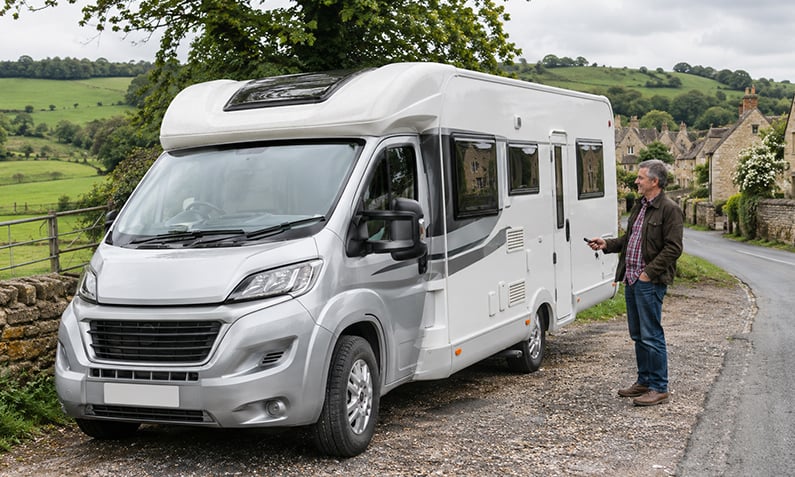



Temporary Motorhome Insurance Explained for UK Drivers

Written by Ankit Sureja
Reviewed by Tim Bailey
5 min read
Updated: 16 Nov 2026
Temporary Motorhome Insurance Explained for UK Drivers

Temporary motorhome insurance is short-term cover on a motorhome or campervan, usually lasting from one hour up to 28 or 30 days, bought for a single trip rather than a full year. Based on retrieved provider examples, one-day cover currently ranges from around £17.45 to £37.50, while a week can run from about £52.30 to £80, with price depending on the vehicle, the dates, the driver’s age and their driving history.

It suits you if you are borrowing or hiring a motorhome, moving one you have just bought, or want a parent, partner or friend added for a specific journey without touching an existing annual policy. The core things to get right are the same ones that matter on home cover: the sum insured (what the vehicle is valued at), the excess (what you pay towards a claim) and the exclusions (what is not covered at all).

At Free Price Compare we work across car, van and home insurance, so the advice below is written in plain English and grounded in current UK provider pricing and Financial Conduct Authority (FCA) rules.

Quick Answer: Temporary Motorhome Insurance Explained for UK Drivers

  • Cover runs from 1 hour up to 28 or 30 days, depending on the provider.
  • One-day cover is around £17.45 to £37.50 based on retrieved provider examples.
  • Comprehensive is common but not guaranteed — always check the policy wording.
  • A temporary policy does not build or protect a no-claims discount.
  • Policies can often be bought up to 28 days before the cover starts.

Last updated: October 2026

Written by the Free Price Compare editorial team | Reviewed October 2026

What temporary motorhome insurance actually covers

Temporary motorhome insurance covers a motorhome or campervan for a fixed short period, typically with fully comprehensive protection against accident damage, fire and theft, though the exact cover depends on the insurer and the policy wording. Comfort states its temporary product is underwritten by Aviva, and both Comfort and Dayinsure advertise fully comprehensive short-term cover, but no rule guarantees every policy is comprehensive, so the cover level must be confirmed before you buy.

The three terms that decide whether a policy is good value are straightforward. The sum insured is the figure the insurer uses to value the motorhome, and it should reflect what the vehicle is worth. The excess is the amount you agree to pay towards any claim before the insurer pays the rest. The exclusions are the situations the policy will not pay out on at all.

Short-term cover usually protects third-party liability, which is the legal minimum under the Road Traffic Act 1988 as set out on gov.uk, plus damage to the motorhome itself if the policy is comprehensive. What it often does not include automatically is breakdown assistance, windscreen cover, legal expenses, European driving or cover for your belongings inside. Treat each of those as something to check, not something to assume.

If you want to see how short-term cover is structured on related vehicles, our guide to temporary van insurance in the UK explains the same mechanics in more detail.

Compare short-term cover options

How much does temporary motorhome insurance cost?

Temporary motorhome insurance costs from around £9.72 for one hour, based on Bluebird’s indicative example (page updated 10 October 2026), rising with the length of cover and the risk profile of the driver and vehicle. These are provider estimates rather than guaranteed quotations or market averages, and your own price depends on the motorhome’s value and type, your age, your driving history, the cover dates and where you live.

Cover period Indicative price range
1 hour from around £9.72
1 day around £17.45 to £37.50
1 week around £52.30 to £80
28 days from around £128.90

Price valid as of 23/10/2026

Figures are indicative and may change. They are drawn from retrieved provider examples (Bluebird, Comfort and MultiQuoteTime pages, updated in October 2026) and are not market-wide averages or regulated benchmarks.

Bluebird’s own daily and weekly figures were based on a 30-year-old driver with a clean full UK licence and a Group 10 car, so they are a starting point rather than a motorhome-specific quote. The only way to know your actual cost is to run a quote against the exact vehicle and dates. A short-term policy is not always cheaper than amending an annual policy, so it is worth comparing both routes for longer trips.

Working out the right cover level?

Compare home and vehicle insurance in plain English with Free Price Compare.

No, driving someone else’s motorhome on a UK road without valid insurance is illegal under the Road Traffic Act 1988, and the vehicle owner’s annual policy will rarely extend to you automatically. Some annual policies include a “driving other vehicles” extension, but these are usually third-party only, often restricted to cars, and almost never cover a motorhome. Assuming you are covered is the mistake that leads to seizure, penalty points and a fine.

A temporary policy in your own name is the clean solution when you borrow or hire a motorhome, because the cover is written specifically for you and that vehicle for the dates you need. Dayinsure states that its temporary cover applies to owned and hired motorhomes, which matches how most hire and borrowing arrangements work in practice. The same logic applies to cars, which we explain in our guide to driving someone else’s car on your insurance.

If you are hiring, remember that UK hire companies must provide at least the minimum legal level of insurance, but that base cover can carry a high excess. Buying your own temporary top-up or checking the hire firm’s excess waiver can reduce what you would owe after an incident.

Is it legal to drive someone else’s motorhome without being insured

What should I know about temporary motorhome insurance cover in the UK?

Temporary motorhome insurance cover in the UK is bought online, usually activates within minutes and can often be arranged up to 28 days before the start date, which makes it practical for a planned trip or a same-day collection. Dayinsure states cover can be purchased up to 28 days in advance, and several providers describe near-immediate activation once the quote is accepted.

Four details are worth confirming before you buy any short-term policy:

  • Whether the cover is comprehensive, third-party fire and theft, or third-party only.
  • The excess, including any separate voluntary and compulsory amounts.
  • Whether European driving is included if you plan to travel abroad.
  • Whether breakdown, windscreen, legal expenses or contents are included or need adding.

One point that catches people out is the no-claims discount. A temporary policy does not build a no-claims discount, and it will not protect one on your annual car or motorhome policy either. If you expect to own a motorhome long term, a standard annual policy that earns no-claims years may work out better over time. For a sense of how underwriters price risk more broadly, our explainer on how UK insurance pricing works is a useful companion.

See short-term motorhome and van cover

Temporary motorhome insurance under 25: what younger drivers should expect

Temporary motorhome insurance under 25 is available but tends to cost more and comes with tighter eligibility, because insurers price younger and less experienced drivers as higher risk. Minimum age, licence requirements and the type or weight of motorhome allowed vary between providers, so a driver in their late teens or early twenties should confirm acceptance before relying on being able to buy a policy.

Larger and heavier motorhomes can require a specific licence category, and some short-term insurers cap the vehicle value or exclude certain conversions and older vans entirely. A reader who just needs to move a self-built or unusual camper for a day should check the insurer accepts non-standard vehicles, as not every short-term product does.

Younger drivers who expect to use a motorhome regularly may find the same cost-cutting tactics that work on car cover help here too. Our guides on young driver insurance strategies and car insurance for young drivers cover the principles that carry across, such as honest declarations and avoiding fronting.

Temporary motorhome insurance in Northern Ireland and driving in the EU

Temporary motorhome insurance in Northern Ireland follows the same UK legal framework, because the Road Traffic Act 1988 requirement to hold valid insurance applies across the United Kingdom, but availability and acceptance can differ by provider and postcode. A driver based in Northern Ireland should check that a short-term insurer quotes for their address, as not every provider covers all UK regions equally.

European driving is a separate check and is never automatic. Some products, such as Dayinsure’s temporary motorhome cover, state that UK and EU driving is included, but there is no rule that every short-term policy extends abroad. If your trip crosses into the Republic of Ireland or mainland Europe, confirm the EU element in writing and check the level of cover that applies once you leave the UK, since some policies drop to third-party only abroad.

Where cover is bought through an FCA-authorised firm, you also benefit from UK consumer protections. The FCA has confirmed it reviewed the motor, home and travel insurance markets and would keep focusing on good consumer outcomes during 2026, according to the Financial Conduct Authority. Complaints you cannot resolve with an insurer can go to the Financial Ombudsman Service, and FCA-regulated policies are typically protected by the Financial Services Compensation Scheme.

Compare home and contents cover

When temporary cover beats changing your annual policy

Temporary cover is usually the better choice for one-off, short journeys, while amending an annual policy tends to win for repeated or long-term use. The deciding factor is how often you will drive the motorhome and for how long over the year.

Short-term cover makes sense when you are collecting a newly bought motorhome, borrowing one for a weekend, adding a driver for a single leg of a trip, or test-living in one temporarily. Because it is written for set dates, there is no need to disturb an existing policy or trigger a mid-term adjustment fee.

An annual policy is usually more sensible if you own the motorhome, use it several times a year, or want to build a no-claims discount, which a temporary policy cannot do. For owners weighing options, our camper van insurance comparison shows how annual cover is structured, and the tips on avoiding a cancelled policy are a reminder that accurate declarations matter whichever route you choose.

When temporary cover beats changing your annual policy

FAQs about temporary motorhome insurance

What is temporary motorhome insurance?

Temporary motorhome insurance is short-term cover on a motorhome or campervan, bought for a fixed period rather than a full year. Cover typically runs from one hour up to 28 or 30 days, depending on the provider. It is designed for borrowing, hiring, collecting a newly bought motorhome, or adding a driver for a single trip.

How quickly can I get temporary motorhome cover?

Most short-term motorhome policies are bought online and activate within minutes once the quote is accepted. Several providers also let you buy cover up to 28 days before the start date, so you can arrange it in advance for a planned trip. You will usually receive confirmation documents straight away.

Is temporary motorhome insurance always fully comprehensive?

No, a temporary policy is not automatically comprehensive. Some providers advertise fully comprehensive short-term cover, but others may offer lower levels, so you should always confirm the cover level before you buy. Check the policy wording for the excess, exclusions and whether damage to the motorhome itself is included.

Does temporary motorhome insurance cover driving in Europe?

Not always. Some short-term motorhome policies include UK and EU driving, but there is no rule that every policy extends abroad, and some drop to third-party only once you leave the UK. If you plan to cross into the Republic of Ireland or mainland Europe, confirm European cover and its level in writing before travelling.

Can I insure a motorhome I am hiring or borrowing?

Yes, temporary policies can usually cover both owned and hired or borrowed motorhomes, which is a common reason people buy them. If you hire, the firm must provide at least the minimum legal insurance, but it may carry a high excess. A temporary policy in your own name, or an excess waiver, can reduce what you would pay after an incident.

Does a temporary policy earn or protect a no-claims discount?

No, temporary motorhome insurance does not build a no-claims discount and will not protect one on your existing annual policy. If you expect to own and use a motorhome regularly, a standard annual policy that earns no-claims years may work out better over time. Short-term cover is best kept for one-off journeys.

Rarely. A "driving other vehicles" extension on an annual policy is usually third-party only, often limited to cars, and seldom covers a motorhome. Driving without valid insurance is an offence under the Road Traffic Act 1988. A temporary policy in your own name is the reliable way to be covered when borrowing a motorhome.

Can drivers under 25 get temporary motorhome insurance?

Yes, but it is usually more expensive and subject to tighter eligibility, as insurers price younger drivers as higher risk. Minimum age, licence requirements and allowed vehicle types vary by provider, so confirm acceptance before relying on cover. Larger motorhomes may also need a specific licence category.

Does temporary motorhome insurance cover my belongings inside?

Not automatically. Contents, personal belongings, breakdown assistance, windscreen cover and legal expenses are often optional extras rather than standard inclusions on short-term cover. Check the policy wording and add what you need, or arrange separate cover for valuable items you are carrying.

Can I get temporary motorhome insurance in Northern Ireland?

Yes, the legal requirement to hold valid insurance applies across the whole United Kingdom, including Northern Ireland. Availability can still vary by provider and postcode, so check that a short-term insurer quotes for your address. European cover for trips into the Republic of Ireland should be confirmed separately.

Can I insure a self-built or unusual camper for one day?

Sometimes, but not every short-term insurer accepts non-standard conversions or older vans. If you only need cover to drive a self-built or unusual camper home, check the insurer accepts that vehicle type before buying. Some providers cap the vehicle value or exclude certain conversions entirely.

Is temporary cover cheaper than changing my annual policy?

Not always. A short-term policy is convenient for one-off trips, but for repeated or long-term use, amending an annual policy or taking out full annual cover can be better value. Compare both routes for longer journeys, especially if you want to build a no-claims discount over time.

Also Read Related Articles


Information correct as of 23 October 2026. Prices, tariffs, policy details and providers change frequently, so please check the latest details before making a decision. This article is for general information only and does not constitute financial advice. Free Price Compare is authorised and regulated by the Financial Conduct Authority (FCA).

4000+ reviews