





CCTV Home Insurance

Written by Pratik Aghera
Reviewed by Andrea Troy
7 min read
Updated: 27 Aug 2026
CCTV Home Insurance

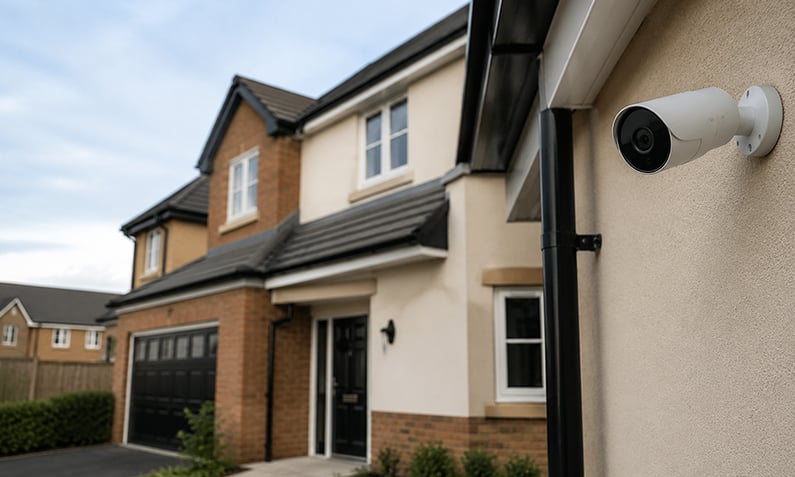
CCTV home insurance discounts are rare in the UK: most insurers do not reward home CCTV on its own with an automatic price cut, and many do not even ask whether you have cameras. Security measures that move your premium are usually approved door locks and, for higher-value homes, a monitored or approved burglar alarm. CCTV works best as one layer of a wider security setup that can support a lower risk profile, rather than a standalone discount lever.

That does not make cameras pointless. A visible, working system can deter intruders, help police recover stolen items and support a claim. The distinction that matters to insurers is between passive footage-only cameras and a professionally installed or monitored system that forms part of a recognised security specification.

Free Price Compare compares combined buildings and contents home insurance from a panel of 42 UK providers, so you can see how your security features, sum insured and excess affect the price across the market.

Quick Answer: CCTV Home Insurance

  • Most UK insurers do not offer an automatic discount for home CCTV alone, and many do not ask about it on a standard quote.
  • Approved BS3621 five-lever mortice deadlocks (or TS007 cylinders on uPVC doors) are the security feature most likely to affect your premium, and are often a condition of cover.
  • A monitored CCTV or alarm system managed 24/7 from an alarm receiving centre improves your risk profile more than passive, footage-only cameras.
  • The average combined buildings and contents premium was £383 between April and June 2026, down 2% year-on-year, according to the ABI.
  • If your cameras capture areas outside your property boundary, GDPR and the Data Protection Act 2018 apply, and the ICO can take action if you do not comply.

Last updated: August 2026

Written by the Free Price Compare editorial team | Reviewed August 2026

Does CCTV actually reduce my home insurance premium?

CCTV rarely reduces a UK home insurance premium on its own, and most mainstream insurers do not offer a named CCTV discount. Insurance industry bodies have long noted that domestic cameras are not usually treated as a discountable security feature, partly because footage-only cameras do not physically stop entry the way a deadlock does, nor interrupt a break-in the way an activated alarm can. Cameras mainly provide evidence after an incident.

Where CCTV can help is indirectly. A visible system may deter opportunist intruders, and it can strengthen a theft claim by showing what was taken and how entry was made. Some insurers weigh a combination of security features together, so cameras alongside approved locks, an alarm and good lighting may support a marginally lower risk assessment even without a specific line-item saving.

Because insurers price security packages differently, the only reliable way to see the effect is to compare quotes with your actual setup declared. Our guide on how home security lowers insurance walks through which measures carry the most weight.

Compare home insurance quotes with your security setup

Do insurers even ask whether I have CCTV?

Most standard UK home insurance quotes do not include a question about CCTV, so having cameras often makes no difference to the price you are shown. Insurers typically ask about door and window locks, whether you have a burglar alarm, the property’s occupancy pattern and its claims and crime history. Cameras usually fall outside that core risk questionnaire.

High-value home policies and specialist insurers are more likely to ask about a full security specification, including CCTV, as part of the underwriting for expensive contents. For those homes, a professionally installed and monitored system can be a condition of cover rather than a discount. If you have valuable items, our overview of home insurance for high-risk properties explains how underwriting tightens as sums insured rise.

The latest Office for National Statistics (ONS) figures show that police recorded 223,456 burglary offences in England and Wales in the year ending March 2026, while the Crime Survey for England and Wales continues to identify burglary as a significant form of household crime.

Should I tell my insurer I’ve installed CCTV?

Tell your insurer about a CCTV system if the policy asks about security features or if the cameras are part of a wider alarm setup you have already declared. You do not usually need to notify a change for adding a simple video doorbell, but honesty on any asked question protects your claim. Misdescribing your security could give an insurer grounds to reduce or reject a payout.

If your existing policy specifies a maintained or monitored alarm, check whether adding or altering CCTV affects that condition. When in doubt, a quick call to your insurer confirms whether the change needs recording.

Do I need professionally installed CCTV, or will DIY cameras count?

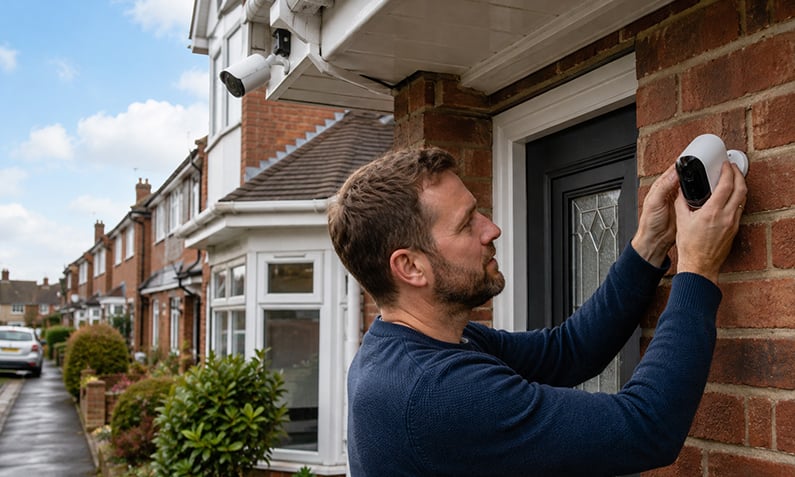
Professionally installed CCTV carries more weight with insurers than DIY cameras, because it typically follows recognised standards and is documented, which underwriters can verify. A DIY smart camera or video doorbell improves visibility and deterrence, but it rarely qualifies for any security recognition on a home policy. It is treated as a helpful extra rather than an approved security measure.

Systems certified to standards overseen by bodies such as the National Security Inspectorate (NSI) or the Security Systems and Alarms Inspection Board (SSAIB), and installations aligned with Secured by Design or Police-Preferred Specification, are the kind insurers recognise. For a specialist or high-value policy, a professionally fitted and certificated system is far more useful than a consumer camera kit.

ONS figures show that police recorded 223,456 burglary offences in England and Wales in the year ending March 2026. The ABI advises that insurers may offer discounts for approved home-security devices and that customers should check with their insurer which security measures it recognises.

Will a Ring or smart doorbell affect my contents insurance?

A smart doorbell or standalone camera does not usually void your contents insurance, and it also does not usually earn a discount. Insurers generally view a video doorbell as a security aid, not an approved measure, so it will not on its own reduce your premium. It should not be declared as an alarm, because it does not perform the same function.

The one practical caution is data protection: if the doorbell records neighbours’ property, a shared hallway or the public pavement, the same rules that apply to any domestic CCTV apply to it.

Do I need professionally installed CCTV, or will DIY cameras count

See how your security features affect the price

Compare combined buildings and contents cover across 42 UK providers

Does a monitored CCTV system get a bigger discount than an unmonitored one?

A monitored CCTV system improves your risk profile more than an unmonitored one, because monitored systems are actively watched around the clock by trained staff in an alarm receiving centre (ARC) who can respond to alerts in real time. Unmonitored, footage-only cameras are considered passive and are mainly used to review events after they happen. Insurers, especially for higher-value or commercial-adjacent risks, place more value on active monitoring.

Even so, for a typical domestic policy the difference is more likely to show in whether cover is available or in the terms attached than in a headline percentage off. The clearest premium lever remains an approved intruder alarm that is maintained and, ideally, monitored, rather than the cameras themselves. A monitored alarm can be a genuine factor when arranging buildings and contents cover for a higher-value home.

The Association of British Insurers (ABI) says that many insurers offer discounts for homes fitted with security devices such as burglar alarms and high-quality window and door locks, although individual insurers decide which security devices they approve.

Check quotes with an approved alarm declared

What security measures actually lower home insurance?

Approved door locks are the security feature most likely to affect your UK home insurance, and are often a condition of cover rather than an optional extra. For wooden doors with mortice locks, insurers most commonly specify BS3621, the British Standard for a thief-resistant deadlock with at least five levers. For uPVC and composite doors, insurers increasingly require TS007 cylinder standards, sometimes with Sold Secure grading for high-value contents.

  • BS3621 five-lever mortice deadlocks on external doors, and key-operated locks on accessible windows, are frequently required and can reduce contents premiums where fitted.
  • An approved burglar alarm can attract a discount from some insurers, and is a requirement for many higher-value homes.
  • Security lighting, motion sensors and CCTV can help meet an insurer’s overall requirements and support a lower risk assessment as part of a package.
  • Membership of a Neighbourhood Watch scheme is sometimes recognised by insurers.

Fitting the right locks is often the single most cost-effective change, because it can move you from ineligible to insurable, or from a loaded premium to a standard one. Before you buy anything, check which lock standards your quotes assume, then compare like-for-like.

ABI data shows that insurers paid out £189 million for theft claims under home insurance policies in 2024, highlighting the financial impact of burglary and theft on the home insurance market. The ABI recommends measures including robust door and window locks and burglar alarms to help reduce the risk of theft. (abi.org.uk)

What door locks qualify for an insurance discount?

Approved door locks qualify when they meet the specific British Standard an insurer names, most commonly BS3621 for mortice deadlocks on timber doors and TS007-rated cylinders on uPVC or composite doors. A lock stamped with the BS3621 kitemark and a five-lever mechanism is what most insurers mean by an approved lock. Fitting sub-standard locks after a quote assumed approved ones can invalidate a theft claim, so the specification matters as much as the fact you have locks at all.

What should I check for a burglar alarm insurance discount?

A burglar alarm can support a home insurance security discount when it is professionally installed, maintained and, where the insurer requires it, monitored to a recognised standard. Some insurers reward an approved alarm with a small reduction, while others make one a condition of cover for higher sums insured. Before installing, confirm with prospective insurers whether they recognise a bells-only alarm, a maintained alarm, or only a monitored one, because the type you fit changes both eligibility and any saving.

How much does home insurance cost, and where do savings really come from?

The average combined buildings and contents home insurance premium was £383 between April and June 2026, 2% (£9) lower than a year earlier, according to the ABI Property Insurance Tracker, which is based on prices actually paid across around 15.5 million policies. The average buildings-only premium was £309, and contents-only cover for renters averaged about £117 earlier in 2026. That Q2 figure was the first quarterly rise since the start of 2025.

Against premiums at that level, the realistic security-related savings from cameras are modest, and often nil. Bigger reductions usually come from getting your sum insured right, choosing a sensible voluntary excess, paying annually rather than monthly where affordable, and shopping the whole market rather than auto-renewing. Reviewing cover each year matters because theft claims are rising: the ABI reported home insurers paid an average of £4,350 per theft claim in the first quarter of 2026, up from £3,800 a year earlier.

Cover type Average premium (2026)
Combined buildings and contents (Q2 2026) £383
Buildings only (Q2 2026) £309
Contents only (renters, 2026) around £117

Figures are indicative and may change. If you want to see how your own security and sum insured affect the price, it is worth reading our plain-English guide to buildings and contents cover before you compare.

Compare combined buildings and contents cover

Home CCTV can create legal obligations under GDPR and the Data Protection Act 2018 if your cameras capture images beyond your own property boundary. According to gov.uk guidance on domestic CCTV, if your system records people in neighbours’ homes or gardens, shared spaces or public areas, data protection law applies to you as the operator. A system used purely within your private property, capturing only your own boundary, generally falls outside most of those obligations.

Where the rules apply, you should be able to justify why you record, minimise footage of areas outside your property, tell people cameras are in use, and handle any requests to see footage. The ICO can take regulatory action, and affected individuals can pursue legal action, if you do not comply. This is a practical reason to position external cameras carefully rather than a reason to avoid CCTV altogether.

Smart cameras also connect to your home network, which is worth securing properly. Our look at whether connected devices can put your home at risk covers the basics of keeping cameras and routers safe.

CCTV or a burglar alarm: which is the better spend?

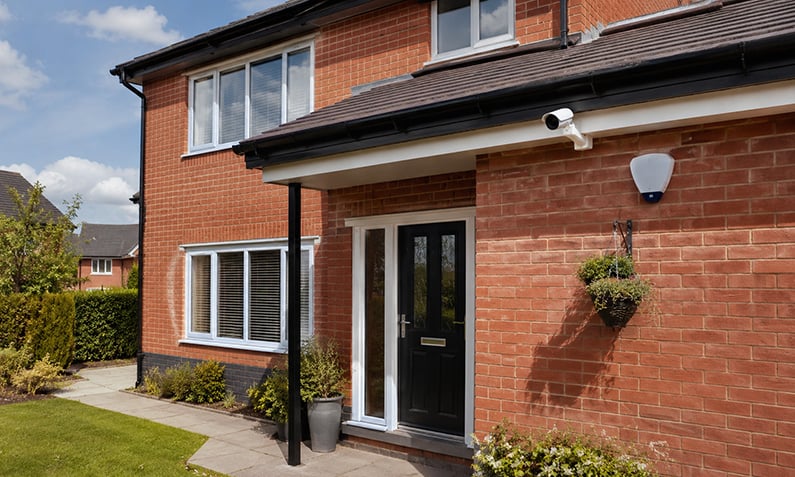
A maintained or monitored burglar alarm is usually the better spend than CCTV for lowering a home insurance premium, because insurers recognise alarms more readily and sometimes make them a condition of cover for higher-value homes. CCTV is better thought of as a deterrent and an evidence tool that supports a claim, not as a discount lever in its own right. Many homeowners fit both, and that combination, alongside approved locks, gives the strongest overall security position.

If your goal is purely to reduce the premium, prioritise approved locks first, then consider an alarm to a standard your target insurers recognise, and treat cameras as a security and peace-of-mind decision rather than a pricing one. Whatever you fit, declare it accurately and re-compare at renewal so any recognised measures are reflected in the quotes you receive.

CCTV or a burglar alarm: which is the better spend

FAQs about CCTV home insurance

Does CCTV lower home insurance in the UK?

In most cases CCTV does not lower home insurance on its own, and many insurers do not ask whether you have cameras. Security features that more reliably affect the premium are approved door locks and, for higher-value homes, a maintained or monitored burglar alarm. CCTV is best seen as a deterrent and evidence tool that can support a claim rather than a guaranteed discount.

Do DIY cameras count, or do I need professionally installed CCTV?

DIY cameras and smart doorbells rarely count as an approved security measure, so they seldom affect the price. Professionally installed CCTV that follows recognised standards, and is documented, carries more weight, particularly for high-value or specialist policies. For a standard home policy, neither type usually earns a specific line-item discount.

Should I tell my insurer I have installed CCTV?

Tell your insurer if the policy asks about security features or if the cameras form part of an alarm setup you have already declared. Adding a simple video doorbell usually does not require notifying a change, but answer any asked questions honestly to protect your claim. If your policy specifies a maintained or monitored alarm, check whether new CCTV affects that condition.

Will a Ring or smart doorbell void my contents insurance?

A smart doorbell will not usually void your contents insurance, and it also will not usually reduce it. Insurers treat a video doorbell as a helpful security aid rather than an approved measure, so do not declare it as an alarm. The main thing to watch is data protection if it records beyond your own property boundary.

What locks do I need for home insurance?

For timber doors with mortice locks, UK insurers most commonly require BS3621, a five-lever thief-resistant deadlock. For uPVC and composite doors, they increasingly specify TS007-rated cylinders, sometimes with Sold Secure grading for high-value contents. Fitting locks below the standard your quote assumed can invalidate a theft claim, so match the exact specification your insurer names.

How much can home security actually save on my premium?

Security-related savings are usually modest and depend heavily on the insurer, with approved locks and an approved alarm the features most likely to make a difference. Larger reductions typically come from setting the correct sum insured, choosing a sensible excess, paying annually and comparing the whole market rather than auto-renewing. Always declare your security accurately and re-compare at renewal.

Does home insurance cover theft if I have no alarm?

Home insurance can still cover theft without an alarm, provided you meet the security conditions in your policy, such as approved locks being fitted and used. If the policy required an alarm to be set and it was not, or you did not meet a stated condition, the insurer may reduce or decline a theft claim. Read the security warranties in your policy schedule carefully.

Yes. If your CCTV captures images beyond your property boundary, such as neighbours’ gardens, shared spaces or public areas, GDPR and the Data Protection Act 2018 apply to you as the operator. You should minimise footage of areas outside your property, be able to justify recording and handle footage requests. Cameras used purely within your own private property generally fall outside most of these obligations.

Is a burglar alarm or CCTV the better way to cut my premium?

A maintained or monitored burglar alarm is usually the better spend for reducing a premium because insurers recognise alarms more readily and sometimes require them for higher-value homes. CCTV is more of a deterrent and evidence tool. Prioritise approved locks first, then consider an alarm to a standard your insurers recognise, and treat cameras as a security decision rather than a pricing one.

Can I be refused home insurance even with good security?

Yes, an insurer can decline cover even where security is strong, because underwriting also weighs factors such as claims history, occupancy, location crime data and the value at risk. Good security helps but does not override every other consideration. If one insurer declines, comparing across the market often surfaces others willing to offer terms, sometimes with specific security conditions attached.

How much does home CCTV cost to install in the UK?

Home CCTV costs vary widely depending on whether you fit a DIY smart camera kit or a professionally installed, certificated system, and how many cameras and features you choose. Because most home policies do not offer a CCTV discount, you should not expect to recover the outlay through lower premiums. Base the decision on deterrence and evidence value rather than an insurance saving.

Also Read Related Articles


Information correct as of 26 August 2026. Prices, tariffs, policy details and providers change frequently, so please check the latest details before making a decision. This article is for general information only and does not constitute financial advice. Free Price Compare is authorised and regulated by the Financial Conduct Authority (FCA).

4000+ reviews