





So Energy vs British Gas: Which Is Cheaper?

Written by Shay Ramani
Reviewed by Pratik Aghera
10 min read
Updated: 16 Sep 2026
So Energy vs British Gas: Which Is Cheaper?

So Energy vs British Gas comes down to how much predictability you want versus how much you might save on a tracker tariff, and how you feel about exit fees. On one stored comparison model captured on 2 September 2026, a So Energy tracker tariff came out around £43/year cheaper than a comparable British Gas tracker, but that gap depends entirely on your usage, your region and the tariffs available on the day you switch.

Both suppliers sit inside the same regulatory framework. The Great Britain energy price cap set by Ofgem is £1,663/year for a typical dual-fuel household paying by Direct Debit for 1 July to 30 September 2026, rising to £1,723/year for 1 October to 31 December 2026. If you are on a standard variable tariff, you are paying at or near that cap right now.

Free Price Compare sources tariff data from Ofgem publications and whole-of-market comparison, so the sensible test is not which brand is famous but which live tariff is cheapest for your meter and postcode today.

Quick Answer: So Energy vs British Gas

  • So Energy’s So Green Tracker changes every three months in line with Ofgem’s price cap and is priced to stay £50 below it, according to So Energy.
  • So Energy tracker tariffs typically carry a £190 exit fee, while British Gas tracker examples show a lower £50 exit fee – check the fee before you commit.
  • The Ofgem price cap is £1,663/year for a typical dual-fuel Direct Debit home from 1 July to 30 September 2026, rising to £1,723/year for October to December 2026.
  • Switching supplier never interrupts your gas or electricity supply – the same wires, pipes and meter stay in place; only the billing changes.
  • Ofgem’s cap uses 26.11p/kWh electricity and 7.33p/kWh gas as average unit rates for July to September 2026, plus daily standing charges of 57.19p and 29.04p.

Last updated: September 2026

Written by the Free Price Compare editorial team | Reviewed September 2026

Who is cheaper, So Energy or British Gas?

So Energy tends to price its tracker tariff below the Ofgem cap, and on one stored comparison model from 2 September 2026 a So Energy tracker came out around £43/year cheaper than a comparable British Gas tracker. That single example does not make So Energy universally cheaper. British Gas has at times offered competitive fixed rates among the larger suppliers, and the cheapest option depends on your annual gas and electricity use, your payment method and your region. So Energy says its So Green Tracker changes every three months in line with the price cap and is set to stay £50 below it, which gives cost-conscious households a way to sit just under the cap without locking into a fixed price. Because both suppliers refresh their tariffs regularly, the reliable answer is always a live quote for your own meter rather than a headline claim.

For a wider view of how So Energy stacks up against other big names, our So Energy vs Octopus Energy comparison covers another popular head-to-head.

Compare live energy tariffs for your postcode

How do their tariffs and prices compare in 2026?

So Energy and British Gas both offer a mix of tracker and fixed tariffs, and the prices below come from stored comparison examples captured in early September 2026 rather than live quotes. According to Ofgem, the price cap for a typical dual-fuel Direct Debit household is £1,663/year for 1 July to 30 September 2026, so any tariff quoted below that level is priced under the cap for a medium-usage home. The table shows how a few example tariffs sat against each other, including their contract length and exit fees, which matter as much as the annual figure if you might want to move again.

Tariff (example) Annual cost Term Exit fee
So Energy So Green Tracker 24m around £1,508 24 months £190
British Gas Cap Tracker Plus around £1,551 No fixed term £50
British Gas Fix and Boiler Bonus around £1,649 21 months £200
So Energy So Kestrel 18m around £1,735 18 months £190

Figures are indicative and may change.

The So Energy tracker looked cheapest on annual cost in this snapshot, but the British Gas tracker had the lower exit fee and no fixed term, which gives more flexibility if you expect to move home or switch again soon. A higher headline saving with a £190 exit fee can be worse value than a slightly pricier tariff you can leave for £50. If you want to see how these brands compare with other suppliers, our So Energy vs EDF Energy guide and Octopus Energy vs British Gas comparison add more context.

What is the So Green Tracker and how does it work?

The So Green Tracker is a variable tariff from So Energy that adjusts every three months in line with Ofgem’s price cap and is set to sit £50 below it, according to So Energy. A tracker tariff is one where your unit rates move with an external benchmark rather than staying fixed, so your price falls when the cap falls and rises when it rises. Because the Ofgem cap is refreshed quarterly, a cap-linked tracker gives you a small, predictable discount against the default rate without the certainty of a fixed price. For a household on a standard variable tariff paying at the cap, moving to a cap-minus tracker is one of the simplest ways to shave a modest amount off each period. The trade-off is that if wholesale costs fall sharply, a well-priced fixed deal locked in beforehand could beat a tracker that only ever stays £50 under the cap.

What is the So Green Tracker and how does it work

Not sure which tariff suits you?

Compare So Energy, British Gas and the wider market side by side in minutes.

What are So Energy’s exit fees if I want to leave?

So Energy’s fixed and tracker tariffs in the examples above carry a £190 exit fee per fuel arrangement if you leave before the end of the term, based on stored comparison data from September 2026. An exit fee is a charge your supplier applies for ending a fixed-term contract early, and it usually does not apply once you reach the final weeks of the term or if you are on a standard variable tariff. British Gas tracker examples showed a lower £50 exit fee, while its longer fixed deals carried up to £200. Under Ofgem rules, suppliers cannot charge an exit fee if you switch within the last 49 days of a fixed contract, and you can always leave a standard variable tariff without penalty. Always check the exact exit fee and how it applies per fuel before committing, because two households on paper-identical tariffs can face very different costs to leave.

Should I choose a fixed or variable tariff?

Choose a fixed tariff if you value certainty over your unit rates for the contract term, and a variable or tracker tariff if you want your price to follow the market. A fixed tariff locks your gas and electricity unit rates and standing charges for a set period, so your rates cannot rise even if the Ofgem cap goes up. A variable tariff, including a cap-linked tracker, moves with the market, which helps when prices fall but exposes you when they rise. The cap trend matters here: Ofgem confirmed the price cap rose 13% for 1 July to 30 September 2026 and is set to rise a further 4% for October to December 2026, so households nervous about further increases may prefer a competitive fix. Low-usage homes often gain more from tariffs with lower standing charges, since a large share of a small bill is the daily standing charge rather than the units used.

  • Pick a fix if you want budget certainty and think prices will keep rising.
  • Pick a tracker if you want a small guaranteed discount against the cap with no long lock-in on price.
  • Check the standing charge, not just the unit rate, if you use little energy.

Our So Energy vs OVO Energy guide shows how another supplier balances fixed and variable options.

See fixed and tracker deals near you

Will my supply be interrupted if I switch?

No, switching supplier never interrupts your gas or electricity supply. The physical infrastructure stays exactly the same when you change supplier: the same cables, pipes, meter and network operator continue to deliver your energy, and only the billing relationship changes. Under Ofgem’s switching rules, a switch should complete within five working days once you request it, and you get a 14-day cooling-off period during which you can cancel without charge. There is no engineer visit, no loss of power and no gap in supply. If a supplier ever fails, Ofgem’s Supplier of Last Resort process moves you to a new supplier automatically with your credit balance protected, so your energy keeps flowing throughout. This is one of the most common worries among people considering a switch, and it is entirely unfounded.

How do their customer service and extras compare?

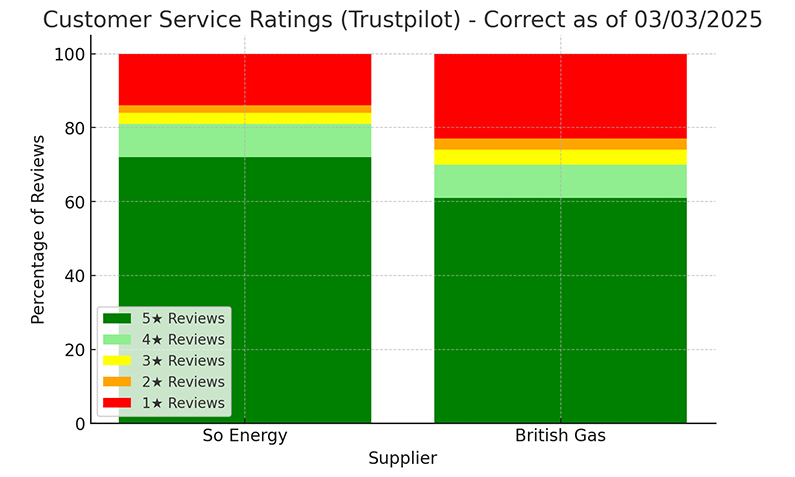
Customer service is where the two suppliers differ most in character, since British Gas is a large legacy supplier with a broad service network and So Energy is a smaller renewable-focused challenger. British Gas fields a high volume of contact and consistently appears in searches for complaints and live chat support, which reflects its scale rather than a definitive verdict on quality. So Energy positions itself around green supply and simpler tariffs, supplying a small share of the UK market. Both must follow the same complaints rules, and if a complaint is unresolved after eight weeks you can escalate it free to the Energy Ombudsman, whose decision is binding on the supplier. Vulnerable customers with either supplier can ask to join the Priority Services Register for extra support, and eligible low-income households may qualify for the Warm Home Discount. If service track record matters most to you, read independent review scores rather than relying on brand recognition.

You can also weigh these two against the wider market in our British Gas vs OVO Energy comparison.

How do their customer service and extras compare

Switch with confidence in minutes

FAQs about so energy vs british gas

How much is So Energy's exit fee?

So Energy's fixed and tracker tariffs in recent comparison examples carried a £190 exit fee if you leave before the term ends, applied per fuel. Under Ofgem rules, no exit fee can be charged if you switch within the last 49 days of a fixed contract, and standard variable tariffs never carry an exit fee.

Does So Energy's tracker always stay below the price cap?

So Energy says its So Green Tracker is priced to sit £50 below Ofgem's price cap and updates every three months in line with the cap. This means it tracks cap changes rather than offering a fixed guarantee, so the exact discount and unit rates change each quarter as the cap moves.

Is a fixed tariff better than a tracker in 2026?

A fixed tariff is better if you want certainty and expect prices to keep rising, while a tracker suits you if you want a small guaranteed discount against the cap. Ofgem's cap rose 13% for July to September 2026 and is set to rise a further 4% for the next quarter, which makes a competitive fix worth considering for households worried about increases.

Will switching from British Gas to So Energy cut off my gas or electricity?

No. Switching supplier never interrupts your supply because the same pipes, cables and meter stay in place and only the billing changes. Switches usually complete within five working days and include a 14-day cooling-off period, with no engineer visit or loss of power at any point.

How long does it take to switch energy supplier?

A switch typically completes within five working days once you confirm it, under Ofgem's switching rules. You also get a 14-day cooling-off period during which you can cancel without charge. Your supply continues uninterrupted throughout, and your first bill with the new supplier starts from the switch date.

What is the energy price cap right now?

The Ofgem price cap for a typical dual-fuel household paying by Direct Debit is £1,663 a year for 1 July to 30 September 2026, rising to £1,723 a year for 1 October to 31 December 2026. The cap limits unit rates and standing charges for a medium-usage home, not a fixed total bill, so your actual cost depends on how much you use.

Are So Energy's tariffs renewable?

So Energy is a renewable-focused supplier and markets its So Green Tracker as a green tariff. Suppliers back green tariffs through renewable electricity generation or certificates, and the exact fuel mix is published by each supplier annually. If green supply is a priority, check the supplier's latest published fuel mix before choosing.

When can I leave British Gas without penalty?

You can leave British Gas without penalty if you are on a standard variable tariff, or within the last 49 days of a fixed-term contract under Ofgem rules. Outside those windows, a fixed tariff may carry an exit fee, which in recent examples ranged up to £200 depending on the deal. Always check your specific tariff terms before switching.

Do low energy users save more with a lower standing charge?

Low energy users often benefit more from tariffs with lower standing charges, because the daily standing charge makes up a larger share of a small bill. For July to September 2026, Ofgem's average standing charges are 57.19p a day for electricity and 29.04p a day for gas, so comparing these alongside unit rates matters if you use little energy.

What happens if So Energy or British Gas goes out of business?

If any UK energy supplier fails, Ofgem's Supplier of Last Resort process automatically moves you to a new supplier and protects any credit balance you hold. Your gas and electricity supply continues without interruption throughout, and you do not need to take any action to keep your energy on.

Can I get extra support if I am a vulnerable customer?

Yes. Both So Energy and British Gas offer the Priority Services Register, a free service giving vulnerable customers extra help such as advance notice of interruptions and priority support. Eligible low-income households may also qualify for the Warm Home Discount, which provides a one-off credit towards winter energy costs.

Also Read Related Articles


Information correct as of 14 September 2026. Prices, tariffs, policy details and providers change frequently, so please check the latest details before making a decision. This article is for general information only and does not constitute financial advice. Free Price Compare is authorised and regulated by the Financial Conduct Authority (FCA).

4000+ reviews