




Park Home Insurance Explained: Cover, Cost and Exclusions

Written by Tim Bailey
Reviewed by Ankit Sureja
5 min read
Updated: 12 Nov 2026
Park Home Insurance Explained: Cover, Cost and Exclusions

Park home insurance is a specialist policy that protects a residential park home’s structure, contents and your legal liability as an owner, because standard household buildings and contents policies are usually not designed for prefabricated, single- or twin-skin park homes. It typically combines reinstatement cover for the home itself, contents cover and public liability into one policy, with features such as new-for-old replacement and re-siting costs that standard home insurance rarely includes.

Premiums for a residential park home vary depending on the home’s value, construction, age, location and the cover level you choose. There is no single market-wide average, so the right approach is to understand what each part of the policy does before comparing like-for-like quotes.

At Free Price Compare we compare home and specialist cover from a panel of 42 providers, and this explainer sets out the cover, the costs and the exclusions in plain English so you can judge what level of protection your park home actually needs.

Quick Answer: Park Home Insurance Explained

  • Standard home insurance usually will not cover a park home’s structure.
  • Reinstatement limits are commonly marketed up to £500,000-£600,000.
  • Contents cover of up to £75,000 and £5m public liability are typical maximums.
  • Subsidence, heave and landslip often carry a much higher excess (around £500).
  • New-for-old and re-siting costs are common park home policy features.

Last updated: October 2026

Written by the Free Price Compare editorial team | Reviewed October 2026

What park home insurance actually covers

Park home insurance covers the park home’s structure (its reinstatement value), your contents, and your public liability as an owner, usually bundled into one specialist policy. Core protection typically includes fire, storm, flood, theft, vandalism, escape of water and accidental damage to the home and its permanent fixtures. Many policies also build in frost damage to plumbing, debris removal and temporary accommodation if your home is uninhabitable after an insured event.

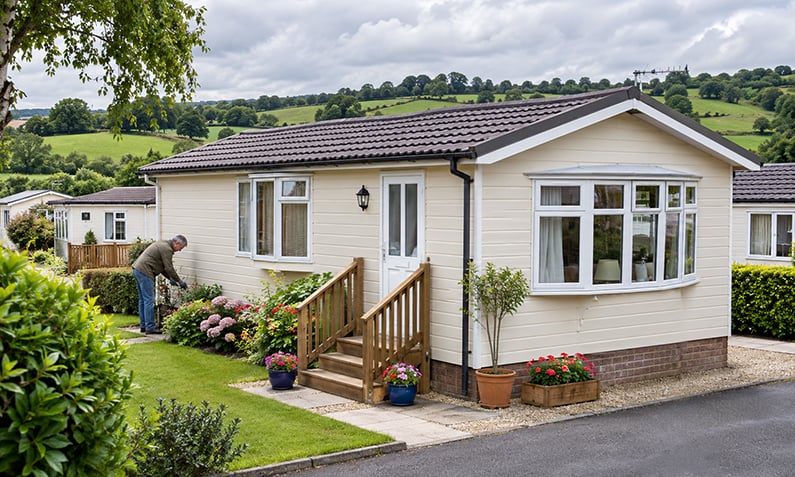
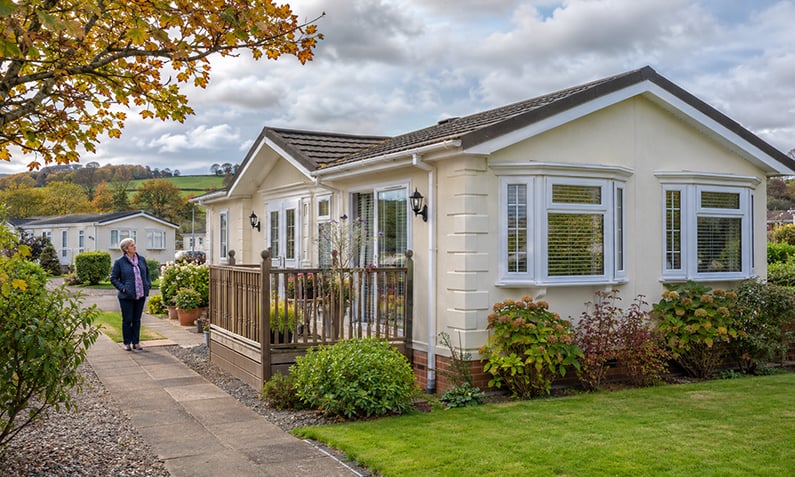
A defining feature is cover for the parts that make a park home liveable but sit outside a traditional house: steps, ramps, skirting, decking, patios, fences, gates, balconies and storage buildings. Standard household buildings policies are written around brick-and-mortar homes and generally exclude these, which is the main reason a dedicated product exists.

Named examples from the current market show the typical ceilings. One provider offers reinstatement cover for the structure up to £500,000, contents up to £75,000, public liability up to £5 million and temporary accommodation up to £25,000, with new-for-old replacement including re-siting costs. Another advertises buildings cover up to £600,000 with new-for-old regardless of the home’s age. For a plain-English refresher on the building-plus-contents split, our guide to home and contents insurance is a useful starting point.

Compare park home and household cover

Why standard home insurance usually won’t cover a park home

Standard home insurance usually will not cover a park home because most household buildings policies are underwritten for permanent brick-built properties and exclude prefabricated, timber-framed or single- and twin-skin construction. A park home sits on a pitch rather than permanent foundations, which changes how insurers assess fire spread, storm damage, theft and re-siting, so they price and cover it differently.

Residential park homes also carry risks a house policy is not built to handle: the home may need to be moved or re-sited after major damage, and prefabricated panels behave differently in a fire. That is why park home policies routinely include re-siting costs and new-for-old replacement regardless of the home’s age, features you rarely find on mainstream cover.

If you have moved into a park home from a conventional property, do not assume your existing insurer can simply switch the policy across. You generally need a specialist product or a specialist scheme, and trying to insure a park home on a standard household policy risks a claim being declined. Our general home insurance FAQs explain how cover levels and exclusions work across different property types.

How much does park home insurance cost?

Park home insurance costs most UK owners between £100 and £600 a year, with provider figures across the current market ranging from around £191 upwards for structure cover and typical comprehensive premiums commonly quoted at £200 to £500. These are advertised ranges based on different cover levels and customer profiles, not a single verified market average, so they should be treated as a guide rather than a benchmark.

The spread is wide because premiums depend on several moving parts. A higher reinstatement value, a larger contents sum, an older or single-skin home, or a coastal or flood-exposed pitch all push the price up. A lower excess and extra accidental-damage cover also raise it, while security devices, a clean claims history and certain discounts bring it down.

What affects the price Effect on premium
Reinstatement value of the home Higher value, higher premium
Contents sum insured More contents cover, higher premium
Single-skin vs twin-skin construction Single-skin often costs more
Age and condition of the home Older or poorer condition, higher premium
Park location (flood, coastal, theft risk) Higher-risk pitches cost more
Security (alarms, locks) Can reduce the premium
Claims history and excess chosen Clean record and higher excess reduce it

Figures are indicative and may change. Park Home Assist advertises discounts of up to 20% for no claims, 10% for customers over 50 and up to 20% for selected parks, subject to eligibility and policy terms. It is also worth asking your park operator whether they run a block scheme for residents.

How much does park home insurance cost

See what your park home cover could cost

Get the right cover for your park home

Compare specialist and household home insurance from our panel of 42 UK providers.

How much contents and buildings cover do I need?

You need enough buildings (reinstatement) cover to fully rebuild or replace your park home, and enough contents cover to replace everything inside it at today’s prices. Underinsuring either is the most common and costly mistake, because if you insure for less than the true value, insurers can reduce a payout proportionally even on a partial claim.

For the structure, the figure you want is the reinstatement or replacement value, not the price you paid or the home’s resale value. Provider limits in the current market commonly reach £500,000 to £600,000, which covers the vast majority of residential park homes. For contents, walk through each room and total up the cost of replacing furniture, electricals, clothing, carpets and valuables; typical policy ceilings run up to £75,000.

Do not forget outdoor items and landscaping. Everywhen’s current park home policy includes up to £350 for contents in the open and up to £750 for re-landscaping, subject to policy limits; these benefits matter because decking, planting and garden features are a real part of park home living. If you keep valuable collections or high-value single items, check the single-article limit and whether they need to be listed separately. Our wider explainer on how home insurance cover levels work walks through calculating a sum insured.

What is a park home insurance excess, and how does it work?

A park home insurance excess is the amount you agree to pay towards a claim before your insurer covers the rest. A policy can carry different excesses for different claim types, and understanding them matters because the excess on serious structural risks is often far higher than the standard one.

In the current market, one provider sets a standard excess of £75, with the option to increase it to £100 or £250 in exchange for a lower premium. Another applies a £50 excess to park home and contents claims, a £100 excess to personal possessions, and a much higher £500 excess for subsidence, heave and landslip. That last point is important: ground-movement claims routinely carry a heavier excess, reflecting how serious and costly they are to put right.

Choosing a higher voluntary excess usually lowers your premium, but only commit to an amount you could comfortably pay if you had to claim tomorrow. Always read the schedule for the separate excesses that apply to escape of water, accidental damage and subsidence, rather than assuming a single figure applies across the board.

What’s typically excluded from park home insurance?

Park home insurance typically excludes wear and tear, gradual deterioration, lack of maintenance, damage that existed before the policy started, and any risk you failed to disclose. These are standard exclusions across home cover, and they exist because insurance is designed for sudden, unexpected events rather than the slow decline a home needs maintaining against.

Flood, subsidence and landslip are usually covered but underwritten carefully, sometimes with a higher excess or specific conditions attached. Some policies will decline or load cover for homes in very high flood-risk areas, though others specifically market flood cover for properties that struggle to get it elsewhere. Do not assume any particular flood-cover rule applies to your pitch without checking the individual policy wording.

Other common exclusions and limits to watch for include unoccupancy beyond a set number of consecutive days, poorly maintained skirting or decking, and a cap on single high-value items. If your park home is a holiday home or lodge rather than your permanent residence, that changes the cover and price, so always declare how the property is used. For a sense of how flood claims play out in practice, our write-up on the 2015-16 York floods shows why flood terms matter.

Check cover for flood, subsidence and more

How to compare park home insurance quotes fairly

To compare park home insurance quotes fairly, match every quote on the same reinstatement value, contents sum, excess and list of included perils, because a cheaper headline price often reflects lower limits or a bigger excess rather than better value. The headline premium is not the only cost; the excess you would pay at claim time is part of the real price.

Work through a short checklist on each quote before you decide. Confirm the reinstatement and contents figures match your own valuation, check the public liability limit (often up to £5 million), confirm new-for-old and re-siting are included, and read the separate excesses for subsidence, escape of water and accidental damage. Then look at whether home emergency cover and temporary accommodation are built in or cost extra.

  • Same reinstatement value and contents sum on every quote
  • Identical standard and voluntary excess figures
  • New-for-old replacement and re-siting costs included
  • Public liability limit and temporary accommodation limit checked
  • Separate excesses for subsidence, flood and accidental damage read in full
  • Any no-claims, over-50s or park-specific discounts applied

It is also worth asking your park operator whether they run a resident scheme before you commit, and ignoring any supposed single “cheapest” provider claim, since the best value depends entirely on your home and pitch. When you are ready, you can compare home insurance quotes across our panel. If you spend long periods away, our piece on how long holidays affect home insurance claims explains why unoccupancy clauses matter.

How to compare park home insurance quotes fairly

FAQs about park home insurance

There is no general UK law making park home insurance compulsory for every owner. However, your park's site agreement or your mortgage or finance provider may require you to hold cover as a condition. Even where it is not required, insuring a home you own outright protects you from potentially large rebuild and liability costs, so most owners take out a policy.

Can I insure a park home on a standard home insurance policy?

Usually not. Most standard household buildings policies are written for permanent brick-built homes and exclude prefabricated, single- or twin-skin park home construction. You generally need a specialist park home policy or scheme. Trying to cover a park home on a mainstream household policy risks a claim being declined, so always check the wording or ask the insurer directly.

What's the difference between a residential park home and a static caravan for insurance?

A residential park home is your permanent main residence on a licensed site and is insured as a dwelling, while a static caravan or lodge used for holidays is insured as leisure property. The cover, excesses and price differ, and how you use the property changes what you can claim for. Always declare whether the home is your permanent residence, a holiday home or a lodge.

Does park home insurance cover flooding?

Many park home policies include flood cover, and some specifically market cover for properties in higher-risk areas, but it is underwritten carefully. Homes in very high flood-risk locations may face a higher excess, specific conditions, or in some cases restricted cover. Do not assume any particular flood rule applies to your pitch; check the individual policy wording before you buy.

Why is the subsidence excess so much higher than the standard excess?

Subsidence, heave and landslip claims are complex and expensive to investigate and repair, so insurers apply a higher excess to these claims to share the cost. One current provider sets a standard excess of £50 but a £500 excess for subsidence, heave and landslip. Always read the schedule so you know which excess applies to each type of claim.

What is new-for-old cover and re-siting cover?

New-for-old cover means a replacement is provided without a deduction for wear and tear, so a destroyed item or home is replaced at today's cost. Re-siting cover pays to move or reposition the park home where that is needed after major damage. Both are common features of specialist park home policies and are rarely found on standard household insurance.

How do I work out the right sum insured for my park home?

Base the buildings figure on the reinstatement or replacement value of your home, not its resale price or what you paid. For contents, total the cost of replacing everything inside at current prices, room by room, including carpets, electricals and valuables. Underinsuring either can lead to a reduced payout even on a partial claim, so review the figures at each renewal.

Can I get a discount on park home insurance?

Park Home Assist advertises discounts of up to 20% for a no-claims history, 10% for customers over 50 and up to 20% for homes on selected parks, subject to eligibility and policy terms. Installing approved alarms and locks and keeping a clean claims record can also help. It is worth asking your park operator whether they run a resident scheme before you buy elsewhere.

Does park home insurance include public liability cover?

Most specialist park home policies include public liability cover as standard, commonly up to £5 million. This protects you if a visitor is injured on your property or their belongings are damaged and you are held legally responsible. Check the exact limit on each quote, as it is an important part of the cover that is easy to overlook when comparing prices.

What happens to my cover if I leave my park home unoccupied?

Most park home policies limit cover if the home is left unoccupied beyond a set number of consecutive days, often 30 or 60. During extended absences, certain claims such as escape of water or theft may be restricted or excluded. If you travel for long periods, tell your insurer and ask about their unoccupancy terms so you are not caught out at claim time.

Are outdoor items and landscaping covered by park home insurance?

Many park home policies include limited cover for outdoor contents and landscaping, which matters because decking, planting and garden features are a real part of park home living. Everywhen’s current park home policy includes up to £350 for contents in the open and up to £750 for re-landscaping, subject to policy limits. Check these limits against what you actually keep outside, as they can be modest.

How quickly can I compare and buy park home cover?

Comparing specialist and household cover usually takes a few minutes once you have your reinstatement value, contents sum and a note of any flood or subsidence history to hand. Having an accurate idea of your home's construction, age and site location speeds things up and produces more accurate quotes. Matching each quote on the same cover levels and excesses is the key to a fair comparison.

Also Read Related Articles


Information correct as of 14 October 2026. Prices, tariffs, policy details and providers change frequently, so please check the latest details before making a decision. This article is for general information only and does not constitute financial advice. Free Price Compare is authorised and regulated by the Financial Conduct Authority (FCA).

4000+ reviews