

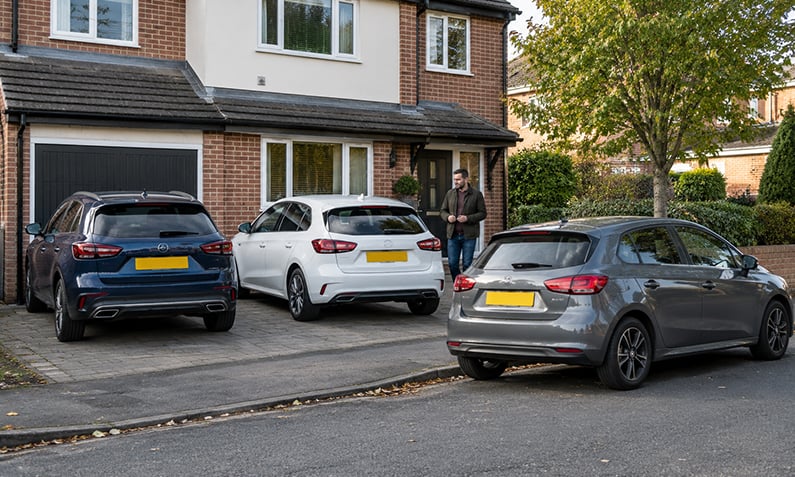




Multi Car Policy Explained: How It Works

Written by Tim Bailey
Reviewed by Shay Ramani
6 min read
Updated: 6 Oct 2026
Multi Car Policy Explained: How It Works

A multi car policy lets a household insure two or more vehicles under one insurance arrangement, usually with a discount applied to each car for keeping them together. Each vehicle still gets its own cover and its own renewal date, but they sit under a single account so you deal with one insurer and one login rather than juggling separate providers.

Multi-car cover appeals most to families and couples with two or more cars at the same address, and it can reduce the price on each vehicle compared with buying identical policies separately. Whether it actually works out cheapest depends on the drivers, the cars and each person’s no-claims history, so it always pays to compare the multi-car quote against the best individual quotes before committing.

Free Price Compare checks car insurance across a panel of more than 130 UK insurers, which makes it straightforward to line up a multi-car price against separate single-car prices for the same cover.

Quick Answer: Multi Car Policy Explained

  • A multi car policy covers two or more vehicles at the same address under one account, each with its own cover and renewal date.
  • Discounts are cut from an insurer’s own premium, not the market average – Aviva advertises 10% off both vehicles and AXA up to 15% (insurer pages, August 2026).
  • Most insurers let you add up to 5 cars, and some up to 6 or 7 – all normally registered at the same address.
  • Cars can hold different cover levels (comprehensive, third party fire and theft or third party only) within the same multi-car account.
  • A shared multi-car account can affect the whole household if one named driver has a claim, so compare it against the best separate quotes each year.

Last updated: August 2026

Written by the Free Price Compare editorial team | Reviewed August 2026

How does multi car insurance work?

Multi car insurance works by grouping two or more vehicles under one policyholder account so a household manages them together and receives a discount on each car. Each vehicle keeps its own certificate of insurance, its own cover level and often its own renewal date, but the insurer treats them as a linked group rather than unrelated customers.

A multicar insurance policy is not the same as insuring two cars on a single certificate. Under UK rules each car needs its own valid insurance to be driven legally on the road, in line with the Road Traffic Act 1988. Multi-car arrangements satisfy that by issuing separate cover for each vehicle while bundling the admin and the pricing into one place.

The practical draw is a discount plus simpler administration. According to the ABI, the average private comprehensive motor premium was £560 in Q1 2026, broadly stable on the previous quarter, so any multi-car saving comes off an already sizeable annual cost. Because comprehensive cover accounts for around 88-89% of car insurance quotes made through Free Price Compare (Free Price Compare data, Jan-Jun 2026), most households comparing multi-car deals are pricing comprehensive on each vehicle.

Compare multi car insurance quotes

Is multi car insurance cheaper than separate policies?

Multi car insurance is often cheaper than buying identical separate policies from the same insurer, but it is not automatically the cheapest option across the whole market. The discount is applied to that insurer’s own premium for each car, so the real comparison is a bundled multi-car price against the best individual quotes you can find for the same cover.

Insurer-advertised discounts vary. Aviva states customers who add an extra car or van receive a 10% discount on both the new vehicle and the existing one (Aviva, August 2026), and AXA advertises up to a 15% discount when insuring cars registered at the same address as a car already insured with them (AXA, August 2026). Hastings Direct has promoted that a quarter of new customers saved £420.81 with multi-car cover against like-for-like separate policies between November 2025 and April 2026 (Hastings Direct, June 2026). These are single-insurer figures, not a market-wide multi-car average.

The tension is that a discounted price with one insurer can still be beaten by cheaper standalone quotes from different insurers for each car. That is why comparison matters: line the multi-car total up against the sum of the best separate quotes for the same drivers and cover. Free Price Compare research suggests multi-car pricing tends to help most where two or more cars share the same address and at least one driver has a strong no-claims record (Free Price Compare research, August 2026).

Our own figures show around 43-48% of car insurance quotes are for a car valued between £1,000 and £5,000 (Free Price Compare data, Jan-Jun 2026), so many multi-car households are insuring mid-value second cars where the saving on each vehicle can be meaningful relative to the premium.

Check a multi-car price against separate quotes

See how a bundled multi-car deal compares with the best single-car prices for your household.

How many cars can I add to a multi car policy?

Most UK insurers let you add up to 5 cars to a multi car policy, and some allow up to 6 or 7 vehicles under one account. The cars normally need to be registered and kept at the same address, which is what lets the insurer treat them as one household group and apply the discount.

There is usually no requirement that every vehicle joins at once. Households often start with two cars and add a third or fourth later, for example when an adult child begins driving or a partner changes vehicle. When you add a car mid-term, the discount typically applies to the new vehicle and can extend to the existing ones depending on the insurer’s rules.

Vans are frequently accepted alongside cars on the same account, which suits households running a car and a work van. If a household grows beyond the multi-car limit, or the vehicles are used commercially, a fleet policy may be the better route, though a family fleet of ordinary private cars almost always fits a standard multi-car product. [STAT NEEDED: Ofcom, Ofgem, ABI, FCA or ONS]

How many cars can I add to a multi car policy

Do all cars need the same level of cover?

No, cars on a multi car policy do not all need the same level of cover. Each vehicle can hold its own cover level, so one car can be comprehensive while another is third party fire and theft or third party only, all within the same multicar insurance policy.

This flexibility is useful for mixed households. A newer, higher-value main car might warrant comprehensive cover, while an older runabout kept as a second car could sit on a cheaper level if that suits its value and use. Comprehensive covers your own vehicle for accidental damage as well as third-party liability; third party fire and theft adds fire and theft to the legal minimum; third party only is the basic legal cover for damage or injury you cause to others.

Optional extras such as breakdown cover, courtesy cars or protected no-claims can also be set per vehicle. A protected no-claims bonus preserves your discount if you make a claim, though it does not stop your renewal premium rising after a claim. If you are unsure which level suits a lower-value car, our rundown of the cheapest cars to insure gives a sense of how vehicle choice drives the price. [STAT NEEDED: Ofcom, Ofgem, ABI, FCA or ONS]

See typical car insurance prices

Can family at different addresses be covered on multi car insurance?

Most multi car policies require all vehicles to be registered at the same address, so family members living at different addresses usually cannot share one multi-car account. The same-address rule is central to how insurers define a household group for the discount.

Some insurers do offer flexibility for close family at a second address, for example a son or daughter away at university whose car is kept at a different postcode for part of the year. This is not universal, and the terms vary, so check each insurer’s rules directly before assuming a relative elsewhere can be added. Where a relative lives at a separate address permanently, a separate policy in their own name is normally the correct and cleaner arrangement.

Keeping addresses accurate matters for more than the discount. Giving a false address to lower a premium, sometimes called fronting when combined with a misstated main driver, can void cover and leave a claim unpaid. If in doubt, insure the car where it is actually kept and overnight parked. [STAT NEEDED: Ofcom, Ofgem, ABI, FCA or ONS]

The little-known risk of a shared multi-car account

The main drawback of a multi car policy is that the vehicles are linked, so an event affecting one car can affect the whole household’s cover and pricing. Because a single policyholder or shared account ties the cars together, a claim or a change on one vehicle can feed into the renewal price on the others.

Two practical points are worth understanding before you bundle. First, a claim by any driver on the account can influence the household’s renewal, not just the driver at fault, since the insurer prices the linked group together. Second, if you later want to split one car back out to a separate insurer, you may lose the multi-car discount on the remaining vehicles and the cars may fall out of alignment at renewal.

None of this makes multi-car cover poor value, but it does mean the convenience has a trade-off. Reviewing the deal each year against the best separate quotes keeps you honest about whether the discount still beats going it alone. It is also worth checking the 21-day renewal rule so you shop around in good time rather than auto-renewing. [STAT NEEDED: Ofcom, Ofgem, ABI, FCA or ONS]

Review your multi-car cover this year

Prices change every renewal, so it pays to check a bundled deal against separate quotes annually.

What is the cheapest way to insure a second car?

The cheapest way to insure a second car is to compare a multi-car quote against the best standalone single-car quote for that vehicle, because the winner depends entirely on the drivers, the car and the no-claims records involved. There is no single answer that holds for every household.

For a couple where both drivers have strong no-claims histories, second car insurance under a multi-car account often wins on both price and admin. For a household where one driver is new or has recently claimed, a separate policy on the cheaper car can sometimes undercut the bundle, since linking a higher-risk driver to the account can lift the group price. Around a third of car insurance quotes through Free Price Compare come from drivers with zero years of no-claims bonus (Free Price Compare data, Jan-Jun 2026), which is exactly the situation where checking both routes pays off.

A few habits keep second-car costs down: build and protect a no-claims bonus on each vehicle, choose a lower insurance group car where you can, pay annually rather than monthly to avoid interest, and set a sensible voluntary excess. Whether you are pricing a bundle or a standalone deal, comparing across a wide panel of insurers is the surest way to find the cheapest suitable cover for your second car.

What is the cheapest way to insure a second car

Get a multicar insurance quote

FAQs about multi car policy

What does multi car policy mean?

A multi car policy means insuring two or more vehicles kept at the same address under one policyholder account, with a discount applied to each car. Every vehicle still has its own cover and certificate of insurance so each car is legally insured in its own right. You deal with one insurer for all the cars rather than several separate providers.

Can I insure two cars on one policy in my name?

You cannot put two cars on a single insurance certificate for permanent everyday use, because each vehicle needs its own valid cover to be driven legally. A multi car policy is the correct way to hold two cars in your name, as it issues separate cover for each vehicle under one linked account. This gives you a discount on each car while keeping every vehicle individually insured.

How many cars can you have on a multicar insurance policy?

Most insurers allow up to 5 cars on a multicar insurance policy, and some accept 6 or 7 vehicles. The cars normally have to be registered and kept at the same address. Vans can often be added alongside cars, which suits households running a family car and a work van.

Is a multi car discount worth it?

A multi car discount is worth it when the bundled price beats the total of the best separate quotes for the same drivers and cover. It usually helps most where two or more cars share an address and drivers have solid no-claims records. It is less likely to win when a higher-risk driver is added to the account, so compare both routes before deciding.

Can family members at different addresses be on the same multi car policy?

Most multi car policies require every vehicle to be at the same address, so relatives living elsewhere usually cannot share one account. A few insurers make exceptions for close family such as a student keeping a car at a different postcode, but the terms vary. Where a relative lives permanently at another address, a separate policy in their own name is normally the right approach.

Do all cars on a multi car policy renew at the same time?

Not always – many multi car policies keep each vehicle on its own renewal date, especially where cars joined the account at different times. Some insurers align all cars to a single renewal date for simplicity, so check how your insurer handles it. Aligned dates make budgeting easier, while separate dates can make it harder to compare the whole bundle at once.

What happens to a multi car policy if one driver has an accident?

If one driver on a shared multi car account has an accident, the claim can affect the household’s renewal pricing, not only that driver’s car. Insurers price the linked group together, so a claim on one vehicle can feed into the renewal cost of the others. A protected no-claims bonus can shield the discount, but it does not prevent the underlying premium rising after a claim.

Can I mix comprehensive and third party cover on a multi car policy?

Yes, cars on a multi car policy can hold different cover levels, so one vehicle can be comprehensive while another is third party fire and theft or third party only. This lets you match the cover to each car’s value and use, for example comprehensive on a newer main car and a cheaper level on an older second car. Optional extras such as breakdown cover can also be set per vehicle.

How do I add a new car to my multi car policy?

You add a new car to a multi car policy by contacting your insurer, who issues cover for the extra vehicle and applies the multi-car discount. The discount typically covers the new car and can extend to the existing vehicles depending on the insurer’s rules. There may be an admin fee and the new car will have its own certificate of insurance from the date it is added.

Is it cheaper to insure a second car on a multi car policy or separately?

It depends on the drivers and cars, so compare both. A second car on a multi car policy often wins where both drivers have good no-claims records, thanks to the household discount. A separate standalone policy can sometimes be cheaper when a new or higher-risk driver would otherwise lift the whole account, so checking both prices across a wide panel of insurers is the reliable way to find the cheapest option.

Do I lose my discount if I take a car off a multi car policy?

Removing a car from a multi car policy can reduce or remove the multi-car discount on the remaining vehicles, because the account no longer holds the same number of linked cars. The precise effect varies by insurer, and there may be a refund or charge depending on timing. It is worth requesting a fresh comparison before splitting a car out, as separate policies might sometimes work out better overall.

Also Read Related Articles


Information correct as of 25 August 2026. Prices, tariffs, policy details and providers change frequently, so please check the latest details before making a decision. This article is for general information only and does not constitute financial advice. Free Price Compare is authorised and regulated by the Financial Conduct Authority (FCA).

4000+ reviews