




Pros and Cons of Black Box Car Insurance

Written by Tim Bailey
Reviewed by Shay Ramani
5 min read
Updated: 23 Oct 2026
Pros and Cons of Black Box Car Insurance

Black box car insurance is a telematics policy that uses a small device, or a mobile app, to record how, when and where you drive, then prices your cover partly on that behaviour rather than on statistics alone. For some new and young drivers it can reduce the premium by several hundred pounds; for older, lower-risk drivers it often saves little and can cost slightly more.

Whether it suits you depends heavily on your age, mileage and when you drive. The average motor premium paid in the UK was £560 in Q1 2026, according to the Association of British Insurers (ABI) Motor Insurance Premium Tracker, and telematics is one of several levers that can move your price up or down from that figure. Free Price Compare compares car insurance from a panel of 130+ insurers, including telematics and standard policies, so you can see both side by side.

Quick Answer: Pros and Cons of Black Box Car Insurance

  • Telematics records speed, mileage, braking and time of day via a box or app.
  • Young drivers can save the most; 17-19s may pay several hundred pounds less.
  • For drivers aged 50+, telematics estimates ran around £20 dearer in 2026.
  • Poor scores or lots of night driving can push your renewal price up.
  • Driving data is covered by UK GDPR; check the insurer’s privacy terms.

Last updated: October 2026

Written by the Free Price Compare editorial team | Reviewed October 2026

What is black box car insurance and how does it work?

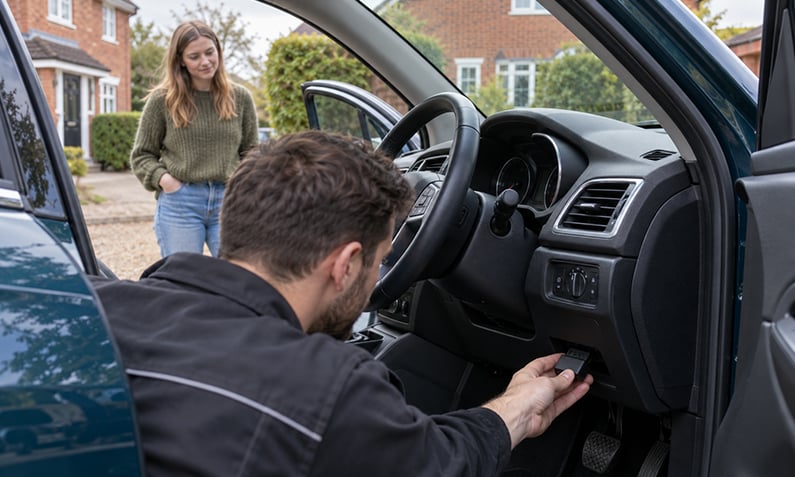
Black box car insurance is a policy where a telematics device or smartphone app monitors your driving and feeds that data into how your premium is set. The box is fitted to your car (often behind the dashboard) or replaced by an app on your phone, and it records information such as mileage, speed, braking, cornering and the time of day you drive.

The government’s Motor Insurance Taskforce, in its final report updated 13 July 2026 on gov.uk, lists miles driven, roads used, speed, time of day and braking patterns as the main factors telematics may assess. Instead of pricing you purely on your age, postcode and claims history, the insurer blends those traditional factors with what your actual driving shows. Many insurers also give you an online dashboard or app score so you can see how you are rated.

There are three common formats: a hard-wired box, a self-fit plug-in device, and an app-only policy. App-based cover is now widespread, which removes installation work and suits drivers who would rather not have hardware fitted. You can read a plain-English explainer of what black box insurance is if you want the basics first.

What are the main pros of a black box policy?

The biggest advantage of black box car insurance is that it can reduce premiums for higher-risk drivers who actually drive carefully, especially new and young motorists. The Motor Insurance Taskforce notes that lower-risk drivers who fall into high-risk pricing groups may receive a lower premium through telematics, because their behaviour, rather than their age alone, starts to shape the price.

  • Potential savings for new and young drivers. Where a 17-20 year old would otherwise face a very high quote, telematics can be the difference between affordable cover and none at all.
  • Pricing reflects how you actually drive. Low mileage, calm braking and daytime journeys can all count in your favour over the policy year.
  • It can encourage safer habits. Seeing a live driving score tends to make drivers ease off on speed and harsh braking.
  • Theft recovery. Many boxes include GPS tracking, which can help locate a stolen car.
  • A way in for thin credit or driving history. Drivers with little insurance record can prove themselves through data rather than waiting years to build a no-claims bonus.

This matters for the group that shops hardest for cover. Young drivers aged 17-25 make up around a quarter of Free Price Compare car insurance quotes but a smaller share of actual sales, which points to price being the main barrier, and telematics is one of the few tools that can bring a workable quote within reach.

Compare car insurance quotes in minutes

What are the disadvantages of black box insurance?

The main disadvantages of black box insurance are that risky driving can raise your price, your journeys and location are recorded, and the savings can be small or non-existent for lower-risk drivers. Telematics prices you on behaviour, so the same technology that rewards careful driving can penalise speeding, heavy braking or regular late-night trips.

  • Your premium can rise if your score drops. Consistent speeding or harsh braking can increase a renewal quote or wipe out an expected discount.
  • Night driving may be scored less favourably. The government report confirms time of day is a rating factor, so frequent late journeys can count against you even if you drive well.
  • Privacy and data use. Detailed journey and driving data is collected. In the UK this falls under the ICO and UK GDPR, so check the insurer’s privacy notice for how long data is kept and who can see it.
  • Admin and device costs can erode savings. Installation, removal or data charges can offset part of any discount, particularly for drivers who were not going to save much anyway.
  • Practical restrictions. Some drivers change behaviour, such as avoiding night driving or capping mileage, to protect their score.

A common worry is what happens if the device records a one-off burst of speed. A single event will not usually cancel a policy, but patterns matter: repeated high-risk driving is what affects scores and renewal pricing. If the box itself malfunctions, you are entitled to have it fixed or to resolve the policy fairly, and disputes can ultimately go to the FCA-regulated Financial Ombudsman Service.

What are the disadvantages of black box insurance

Not sure telematics suits you?

See both telematics and standard quotes side by side on one search.

Is black box insurance worth it for older and lower-risk drivers?

Black box insurance is rarely the cheapest option for older, experienced drivers, and in 2026 telematics estimates ran slightly higher than standard cover for this group. For a driver aged 40-49 the modelled difference was around £10 dearer with telematics, and for drivers aged 50 and over around £20 dearer (2026 estimates from secondary market analysis; see our note below).

That fits the typical Free Price Compare car insurance buyer, who is around 47-50 years old, has held a licence for roughly two decades, and overwhelmingly chooses comprehensive cover. Drivers in this bracket already benefit from a long no-claims record and a settled risk profile, so a device that proves good driving adds little the insurer does not already price in. For most experienced drivers, a straightforward comprehensive policy or steps like adjusting your voluntary excess will do more for the price than telematics.

Age group Telematics (estimate) Standard (estimate) Difference
17-19 around £1,510 around £1,850 around £340 saved
20-24 around £1,160 around £1,340 around £180 saved
25-29 around £720 around £780 around £60 saved
30-39 around £590 around £610 around £20 saved
40-49 around £530 around £520 around £10 dearer
50+ around £490 around £470 around £20 dearer

Figures are 2026 estimates from secondary market analysis and are indicative only; your own quote may differ. They may change.

The pattern is clear: the price advantage narrows with age and can reverse once you are past 40. If you are an experienced driver chasing the lowest price, it is usually worth comparing standard cover first and treating telematics as a fallback rather than a default.

See typical car insurance prices for your age

How much can new and young drivers save with telematics?

New and young drivers can save the most from telematics, with 2026 estimates suggesting a 17-19 year old might pay several hundred pounds less than on a standard policy. Published secondary estimates vary widely, from a modest saving to very large percentage differences, so no single figure applies to everyone and you should quote your own circumstances rather than rely on an advertised headline.

Quoted comprehensive prices for the youngest drivers are high to begin with. Comprehensive prices for 17-20-year-olds are typically much higher than the all-ages average, so there is scope for behaviour-based pricing to help. For a learner or newly qualified driver, telematics is often the route to a workable quote, and it sits alongside other tactics in our guide to lowering young driver premiums.

Being added to a parent’s policy, choosing a low-insurance-group first car, and completing a Pass Plus course can also bring the price down, sometimes without a box at all. The right choice depends on how and when the young driver uses the car; a student who mostly drives in daylight and keeps mileage low is well suited to telematics, while someone who regularly drives late at night may score worse. Our affordable young driver insurance tips cover these trade-offs in more detail.

Compare young and new driver cover

Can I remove a black box and keep my insurance?

No, you cannot remove the black box and keep the same telematics policy, because the device is a condition of that cover and the insurer needs the data to price and manage it. Removing or disconnecting a box yourself can breach the policy terms and, in some cases, lead to the policy being cancelled, which can make future cover harder to arrange.

If you want to stop using telematics, the correct route is to let the policy run to renewal and switch to a standard policy, or contact your insurer to discuss your options mid-term. Many policies cover the cost of professional removal when you leave; check your documents before you book anything. Switching at renewal also lets you compare across the market cleanly, rather than paying a mid-term adjustment or cancellation charge.

If the box has failed or was never working, that is the insurer’s responsibility to put right. You are entitled to a working device or a fair resolution, and a comparison across a panel of 130+ insurers can show whether a standard policy would now be cheaper for you anyway. For drivers weighing up how they pay as well as how they are priced, our guide to monthly versus annual car insurance is worth a look.

Can I remove a black box and keep my insurance

FAQs about black box car insurance

What exactly does a black box record?

A black box, or telematics device, typically records your mileage, speed, braking and acceleration, cornering, and the time of day you drive. Many also use GPS, which can help locate a stolen car. The insurer combines this data with traditional factors like your age and address to set or adjust your premium. The exact measures vary by provider, so check the policy for what is collected and how it affects your score.

Will one episode of speeding cancel my black box policy?

A single instance of speeding is unlikely to cancel your policy on its own. Telematics pricing looks at patterns over time, so consistent high-risk driving is what affects your score and renewal price. Repeated or serious breaches of the policy terms could lead to warnings or cancellation, so it is worth reading how your provider treats individual events. If in doubt, the insurer's app or dashboard usually shows how each trip is scored.

Does a black box guarantee a cheaper premium?

No, a black box does not guarantee a cheaper premium. It can reduce the price for careful, lower-mileage drivers, particularly younger ones, but a poor driving score can increase a renewal quote or reduce an expected discount. For many experienced drivers aged 40 and over, 2026 estimates suggest telematics costs slightly more than a standard policy. Always compare both before deciding.

Is black box insurance worth it for a 50 year old driver?

For most drivers aged 50 and over, black box insurance is not worth it on price alone. Experienced drivers already benefit from a long no-claims record, so telematics adds little, and 2026 estimates put it around £20 dearer for this age group than standard comprehensive cover. If you are in this bracket, compare standard policies first and treat telematics as a fallback rather than a default.

Can night driving affect my black box score?

Yes, night driving can affect your score where the insurer uses time of day as a rating factor, which government reporting confirms is common. Late-night and early-morning journeys are statistically higher risk, so regular trips at those times may count against you even if you drive carefully. If you often drive at night, check how the provider weights this before choosing a telematics policy, as it may suit you less than a standard one.

What happens to my black box if I change my car?

If you change your car, you must tell your insurer, and the black box will usually need to be refitted to the new vehicle or your app profile updated. There may be an administration or refitting cost depending on the provider and the type of device. Some vehicles are not compatible with hard-wired boxes, so confirm compatibility before buying a new car. Never move or disconnect the device yourself without the insurer's agreement.

Who can see my black box driving data?

Your driving data is held by the insurer and its telematics partner, and its use is governed by UK GDPR and overseen by the Information Commissioner's Office. The insurer uses it to price and manage your policy, and may share it in limited circumstances such as a claim or legal request. You have the right to know what is collected and how long it is kept, so read the privacy notice before you sign up.

Is app-based telematics as good as a fitted box?

App-based telematics can work as well as a fitted box for most drivers and removes the need for installation. The app uses your phone's sensors and GPS to record journeys, so it relies on the phone being with you and charged while you drive. A hard-wired box can be more robust and often includes theft tracking tied to the vehicle. Which suits you depends on how you use your phone and whether you want hardware fitted.

Can a black box help a learner or provisional driver?

Yes, telematics can help learner and provisional drivers get more affordable cover, as insurers can price on behaviour rather than age and inexperience alone. Short-term learner telematics policies exist for lessons in a parent's car or a borrowed vehicle. For new drivers, a box, a low-insurance-group first car and a Pass Plus course together can bring the price down. Compare learner and newly qualified options to see which combination is cheapest for your situation.

Does a black box improve my no-claims bonus?

A black box does not directly improve your no-claims bonus; your bonus still builds one year at a time for each claim-free year, the same as on a standard policy. What telematics can do is help you qualify for cover you might otherwise struggle to afford, so you can start building that record. Good scores may earn discounts within the policy, but they are separate from your no-claims entitlement. Always confirm how each insurer handles both.

Are there cancellation or removal fees with telematics?

Some telematics policies charge for early cancellation, device removal or data administration, while others include removal when you leave at renewal. These charges vary between insurers and are not standardised, so there is no single UK figure. Check the policy documents for any mid-term adjustment, cancellation or removal costs before you buy. If you plan to switch to standard cover, timing the move to renewal usually avoids extra fees.

Also Read Related Articles


Information correct as of 20 October 2026. Prices, tariffs, policy details and providers change frequently, so please check the latest details before making a decision. This article is for general information only and does not constitute financial advice. Free Price Compare is authorised and regulated by the Financial Conduct Authority (FCA).

4000+ reviews