

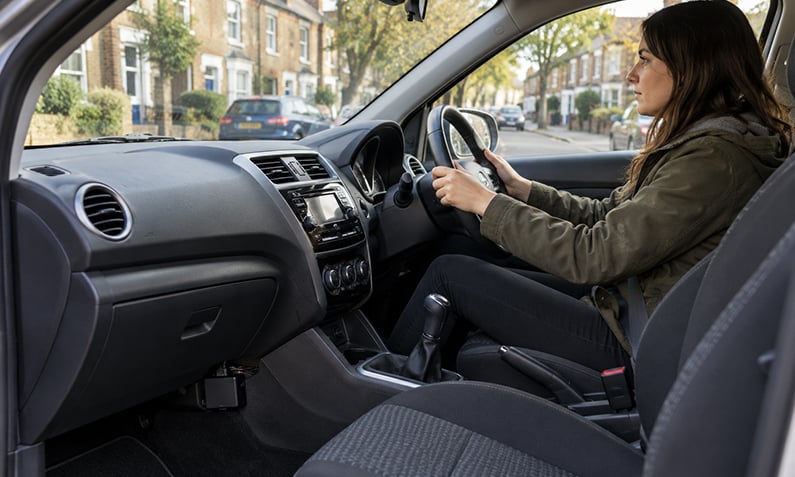



Black Box Car Insurance: The Pros and Cons

Written by Tim Bailey
Reviewed by Ankit Sureja
6 min read
Updated: 22 Oct 2026
Black Box Car Insurance: The Pros and Cons

Black box car insurance is a type of motor cover that uses a small telematics device, or a mobile app, to measure how you drive and factors that data into your premium. The Association of British Insurers (ABI) calls it “pay how you drive” insurance, and its appeal is simple: safer drivers can be rewarded with a lower price, while riskier driving can push costs up.

The main benefit is a potentially cheaper premium for higher-risk groups, especially new and young drivers, who face far steeper standard prices. The main drawbacks are possible fitting or cancellation charges, driving behaviour that affects your price, and the privacy trade-off of sharing journey data. Whether it is worth it depends on how, when and how much you actually drive.

At Free Price Compare we compare car insurance across a panel of 130+ insurers, including telematics products, so you can weigh a black box policy against standard comprehensive cover side by side.

Quick Answer: Black Box Car Insurance

  • Telematics tracks speed, braking, mileage and time of day to set your price.
  • Average UK motor premium was £560 in Q1 2026 (ABI).
  • Safer drivers usually benefit; poor scores can raise the price (ABI).
  • Policies may charge to fit, remove or cancel the device early.
  • No single curfew or mileage rule applies, terms vary by insurer.

Last updated: October 2026

Written by the Free Price Compare editorial team | Reviewed October 2026

What is black box car insurance?

Black box car insurance is motor cover that uses a telematics device or app to record how, when and how far you drive, then uses that data alongside standard factors such as age, address and vehicle when setting your premium. The Association of British Insurers (according to the ABI) describes telematics as “pay how you drive” insurance, with the premium more tailored to your actual vehicle use than a traditional policy.

The device can take three common forms: a professionally fitted hardwired box, a self-fit plug-in device, or a smartphone app that uses your phone’s sensors. Whatever the format, it typically assesses factors such as mileage, speed, braking, acceleration, cornering and the time of day you drive.

Many telematics products give feedback through an app, and some review your premium periodically. Some providers, for example, reassess pricing roughly every three months based on your recent score, so improving your driving can bring the next price down.

What are the main pros of a black box policy?

The strongest advantage of a black box policy is a lower premium for safer drivers in higher-risk groups, because telematics lets insurers price on real driving behaviour rather than age and postcode alone. The ABI confirms that safer drivers will usually benefit compared with less-safe drivers on the same profile.

  • Cheaper cover for high-risk profiles: where standard quotes are very high, proving careful driving can earn a meaningful discount.
  • Pricing based on how you drive: the ABI describes telematics as enabling premiums more tailored to vehicle use, so low-mileage and careful drivers are not grouped with riskier ones.
  • Driving feedback: most products show your score through an app, helping you see what is pushing the price up or down.
  • Periodic reviews: some policies reassess your premium every few months, rewarding steady improvement rather than locking you into one annual price.

For context, the average UK motor premium was £560 in Q1 2026, according to the ABI Motor Insurance Premium Tracker. That figure covers all policy types, so it is not a telematics-only average, but it shows how much standard quotes for new and young drivers sit above the typical market level, which is where a black box can close the gap. If you are weighing options, you can see how a telematics box can reduce your premium before you commit.

Compare telematics and standard car insurance

What are the disadvantages of black box insurance?

The main disadvantages of black box insurance are possible charges to fit, remove or cancel the device, a premium that can rise if your driving score is poor, and the privacy trade-off of sharing journey data. The ABI warns that fitting and removal may incur charges and that early cancellation can trigger recovery of the device’s cost, so the exact terms must be checked in the policy documents.

  • Price can go up, not just down: because insurers use driving performance to assess risk, a poor score may reduce or remove the discount you expected. The effect varies by insurer.
  • Fitting, removal and cancellation fees: there is no standard fee, but charges can apply, and cancelling early may mean paying back device costs.
  • Driving behaviour matters: factors such as late-night driving, heavy braking or high mileage can all count against you, depending on the product.
  • Data and privacy: GPS and driving data are collected to assess risk, which some drivers are uncomfortable with. Data handling is governed by UK GDPR and overseen by the Information Commissioner’s Office.
  • Variable usage can be awkward: if your journeys, hours or mileage are hard to predict, a policy that scores those things may suit you less well.

No single set of curfews, mileage caps or penalties applies to every policy, because the ABI confirms that insurers assess driving differently. That means the same driving can affect two policies in different ways, so comparing terms carefully matters more with telematics than with standard cover. For a deeper look at the trade-offs, read our guide to the disadvantages of black box car insurance and whether it is worth it.

What are the disadvantages of black box insurance

Not sure if a black box suits you?

Compare telematics and standard comprehensive quotes side by side.

Does a black box make insurance cheaper?

A black box can make insurance cheaper, but it is not guaranteed, because the discount depends on your driving score alongside age, location and vehicle. The ABI is clear that safer drivers usually benefit while poorer driving can erode or remove the saving, so a black box rewards careful driving rather than automatically cutting the price for everyone.

The largest potential savings tend to sit with the youngest drivers, where standard prices are highest and there is most room for a telematics discount. The benefit narrows through the twenties as standard premiums fall. Claims of a fixed saving, such as a flat percentage or a set pound figure, should be treated with caution, because no universal saving applies across all products and drivers.

At Free Price Compare, around a third of car insurance quotes come from drivers with no no-claims bonus, and young drivers aged 17-25 make up roughly a quarter of quotes but a smaller share of completed sales (Free Price Compare data, Jan-Jun 2026). That pattern reflects heavy price shopping among newer drivers, who are exactly the group a well-scored black box can help most.

Check car insurance prices for new drivers

Is black box insurance worth it for new and young drivers?

Black box insurance is often worth it for new and young drivers whose standard quotes are very high, because telematics gives them a route to prove careful driving and bring the price down. New and young driver insurance is priced as higher risk, so where a standard comprehensive quote runs into the thousands, even a partial telematics discount can be substantial.

It is less compelling when the gap between a telematics quote and a standard quote is small, or when your driving is hard to fit around a scored policy. If you regularly drive late at night, cover unpredictable mileage, or share the car with others whose driving affects your score, a standard policy may give you fewer restrictions for a similar price.

Comprehensive cover is by far the most common choice: around 88-89% of car insurance quotes through Free Price Compare are for comprehensive cover, rising to roughly 88-91% of actual purchases (Free Price Compare data, Jan-Jun 2026). A black box can usually be attached to comprehensive cover, so you are not trading down on protection to get telematics pricing. For more ways to cut costs, see our tips on affordable young driver insurance and our guide to lowering premiums for young drivers.

How does the black box affect your car and driving?

A black box fitted to your car records driving data but is designed not to interfere with how the vehicle runs, and a properly installed modern device should not drain the battery under normal use. If a device appears to cause an electrical problem, that is a fault to raise with the insurer or installer, not a feature of telematics.

You cannot simply remove a fitted device while keeping the policy, because the insurer relies on that data to price and maintain your cover. Removing or tampering with the box can breach your policy terms and could invalidate the insurance, so any change should go through the insurer. The Road Traffic Act 1988 still requires you to hold valid insurance to drive on UK roads, whatever device is fitted.

If you sell the car or switch insurer, the device is dealt with according to the policy. A professionally fitted box is usually removed or deactivated by the provider, and self-fit plug-in devices are typically returned or unplugged. Check whether removal charges apply before you cancel, as the ABI confirms these can exist.

See flexible pay-as-you-go car insurance options

What should you check before buying a telematics policy?

Before buying a telematics car insurance policy, read the policy documents for exactly what is scored, what it costs to fit or cancel, and how any driving limits are applied, because these terms vary widely between insurers. Since the ABI confirms there is no standard telematics tariff, the detail in the small print is what determines whether a black box saves you money.

  • What is monitored: speed, braking, acceleration, cornering, mileage and time of day, and how each affects your score.
  • Charges: any fees for fitting, removal, or early cancellation, and whether device costs are recovered if you cancel.
  • Driving conditions: whether night driving, mileage caps or specific behaviours carry penalties, and how warnings are given.
  • Data use: what data is collected, who it is shared with, and your rights under UK GDPR.
  • Review frequency: whether and how often the premium is reassessed.

It is also worth comparing a telematics quote against a straight comprehensive quote, since the cheapest headline price is not always the best value once charges and restrictions are counted. Running both through a comparison across a panel of 130+ insurers lets you see the real difference, and you can also weigh monthly versus annual payment and whether raising your excess helps. Most of our car insurance journeys now happen on mobile, with around 8 in 10 quotes and sales completed on a phone (Free Price Compare data, Jan-Jun 2026), so comparing on the go is straightforward.

What should you check before buying a telematics policy

FAQs about black box car insurance

Can I drive before the black box is fitted?

It depends on your insurer's terms, as some policies provide cover from the start date while others require the device to be installed first. Many fitted-box policies give a short grace period to arrange installation, but you must not assume cover is active until the insurer confirms it. Check the policy documents or call the insurer before driving.

What happens to the box if I sell my car or switch insurer?

When you sell your car or move to a new insurer, a professionally fitted box is usually removed or deactivated by the original provider, while self-fit plug-in devices are typically returned or simply unplugged. You should notify your insurer before selling, as the policy and the device are linked. Removal or early cancellation charges can apply, so check these first.

Does a black box drain the car battery?

A correctly installed modern telematics device is designed to draw minimal power and should not drain the battery during normal use. If you notice a battery problem after fitting, treat it as a potential fault and contact your insurer or installer rather than removing the device yourself. Tampering with the box can breach your policy terms.

Can I remove the black box myself without telling the insurer?

No, removing or tampering with a black box without your insurer's knowledge can breach your policy and may invalidate your cover. The insurer relies on the device to price and maintain the policy, so any change must go through them. Driving without valid insurance is an offence under the Road Traffic Act 1988.

Is it mandatory to have a black box fitted?

No, a black box is not legally required to insure or drive a car in the UK. It is simply one type of policy you can choose, usually because it offers a cheaper price for careful driving. You remain free to buy standard comprehensive, third party fire and theft, or third party only cover instead.

What happens if I speed with a black box policy?

Speeding is recorded by the device and can lower your driving score, which may reduce the discount you expected or push your premium up at review. Repeated or serious breaches of a policy's conditions could, in some cases, lead the insurer to cancel the policy, depending on the terms. The exact consequences vary by insurer, so read the small print.

Does poor GPS signal affect my black box score?

GPS-based systems can occasionally produce inaccurate readings where signal is weak, which some drivers worry may unfairly affect their score. If you believe your driving has been misrecorded, you can usually query it with your insurer, and complaints can be escalated to the Financial Ombudsman Service if unresolved. Keep a note of the journey in question when raising it.

Do other drivers on my policy affect my black box score?

Yes, where additional drivers are named on a black box policy, their driving can affect the score and therefore your price, because the device records whoever is behind the wheel. This matters if you share the car, for example a parent and a young driver. Check how the policy treats named drivers before adding anyone.

Can I get comprehensive cover with a black box?

Yes, telematics can usually be attached to comprehensive cover, so you do not have to reduce your level of protection to get black box pricing. Comprehensive is the most common choice among UK drivers, and most telematics providers offer it. Always confirm the cover level when comparing quotes.

Are there alternatives to a black box for cheaper insurance?

Yes, you can lower premiums without a black box by building a no-claims bonus, choosing a lower-insurance-group car, adding an experienced named driver, increasing your voluntary excess, or paying annually rather than monthly. Pay-as-you-go or low-mileage policies can also suit drivers who use the car rarely. Comparing several insurers is the most reliable way to find the cheapest suitable cover.

Does a black box reward safer driving over time?

Yes, many telematics policies review your driving score periodically, so consistently careful driving can bring your premium down at renewal or at a mid-term review. Some providers reassess roughly every few months. Improving habits such as smoother braking, steady speeds and fewer late-night journeys tends to have the biggest effect.

Is black box insurance only for young drivers?

No, while telematics is most associated with young and new drivers because their standard quotes are highest, any driver can choose a black box policy. Low-mileage drivers, returning drivers and those with a short claims history may also find it competitive. The benefit depends on your individual profile and how a telematics quote compares with standard cover.

Also Read Related Articles


Information correct as of 22 October 2026. Prices, tariffs, policy details and providers change frequently, so please check the latest details before making a decision. This article is for general information only and does not constitute financial advice. Free Price Compare is authorised and regulated by the Financial Conduct Authority (FCA).

4000+ reviews