

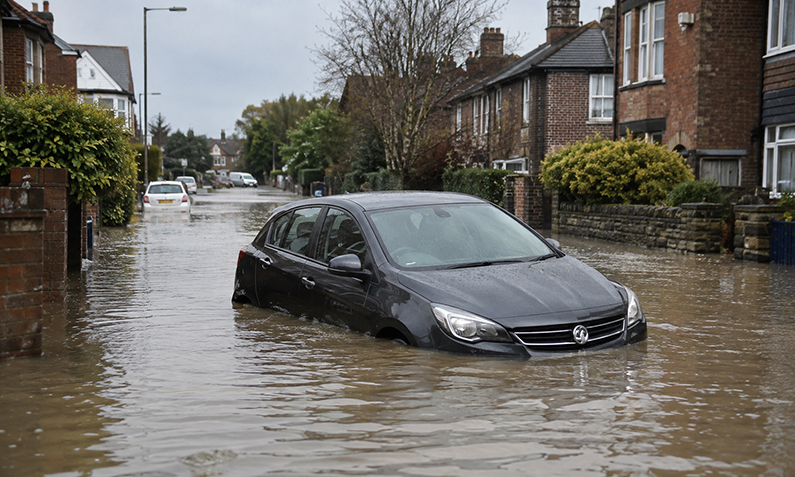




Car Insurance Flood Damage

Written by Shay Ramani
Reviewed by Tim Bailey
6 min read
Updated: 10 Sep 2026
Car Insurance Flood Damage

Car insurance flood damage cover only applies if you hold a fully comprehensive policy. Third party only and third party, fire and theft policies do not cover flood damage to your own car. If floodwater ruins your engine, electrics or interior, comprehensive cover is the only type that can pay to repair or replace your vehicle.

There is one important test insurers apply: whether the damage was avoidable or unavoidable. Damage you could not have prevented, such as floodwater rising around your car where it is normally parked at home, is usually covered. Damage from a choice you made, such as driving into standing water on a flooded road, is often refused. Around 88-89% of quotes through Free Price Compare are for comprehensive cover (Free Price Compare data, Jan-Jun 2026), so most drivers already hold the right policy type without realising flood damage sits inside it.

Quick Answer: Car Insurance Flood Damage

  • Only fully comprehensive car insurance covers flood damage to your own vehicle; third party and third party, fire and theft do not.
  • Insurers usually pay for unavoidable flood damage (e.g. your parked car flooding at home) but often refuse avoidable damage from driving into floodwater.
  • Flood-damaged cars are commonly written off as Category N (non-structural damage), the classification that replaced Cat D in 2017.
  • A weather-related claim can still count against your no-claims discount, because there is no third party to recover costs from.
  • The average premium paid rose to £566 in Q2 2026, up £6 on the quarter, according to the Association of British Insurers (ABI).

Last updated: September 2026

Written by the Free Price Compare editorial team | Reviewed September 2026

Which car insurance types actually cover flood damage?

Fully comprehensive car insurance is the only cover level that protects your own car against flood damage in the UK. Third party only insurance covers injury and damage you cause to other people and their property, and nothing for your own vehicle. Third party, fire and theft (TPFT) adds cover for your car if it is stolen or catches fire, but still leaves flood and water damage out.

Flooding is treated as a form of accidental or weather damage, which only comprehensive policies include. This is one reason comprehensive cover has become the default choice for most drivers: around 88-89% of Free Price Compare quotes are for comprehensive, versus roughly 6% third party only and 5% third party, fire and theft (Free Price Compare data, Jan-Jun 2026).

Cover level Covers flood damage to your car?
Third party only No
Third party, fire and theft No
Fully comprehensive Yes, subject to the avoidable/unavoidable test

If you are unsure which level you hold, check your policy schedule or certificate before assuming you are protected. Our guide to the different car insurance types and which is right for you breaks down what each level does and does not include.

Compare comprehensive car insurance quotes

Will my car insurance cover damage caused by flooding?

Comprehensive car insurance will cover flood damage where the damage was unavoidable, but insurers can refuse a claim if they decide you took an avoidable risk. Unavoidable flood damage is damage you could not reasonably have escaped, such as your car flooding where it is normally parked at home during heavy rainfall. Avoidable flood damage happens because of a choice you made, most commonly driving into standing or moving floodwater.

The distinction matters because insurers assess the cause before paying out. If your engine is wrecked because water was drawn in while driving through a flooded road, the insurer may argue you could have turned around and taken a different route. Where the damage is clearly outside your control, a comprehensive claim usually proceeds without dispute.

Repair costs make this a serious risk. Floodwater damages electrics, upholstery, and increasingly the sensors and driver-assistance systems fitted to modern cars, and repair bills have been rising. The average accidental damage claim reached £3,699 in Q1 2026, up 8% on the previous quarter, according to the Association of British Insurers (ABI), as higher parts prices and vehicle complexity push costs up.

Am I covered if my car floods while parked at home?

Yes, if your car floods while parked at home you are usually covered, provided you hold comprehensive insurance and the flooding was outside your control. A car flooding on a driveway, on the road outside your house or in your usual parking spot during a storm is the textbook example of unavoidable damage that comprehensive cover pays for.

The position is different if you knowingly parked in an area under a flood warning or in a known flood-risk spot when you could have moved the vehicle. In practice, most home flooding claims are straightforward because there was no realistic way to prevent the water reaching the car. Weather-related flood claims have climbed sharply in recent years, with the ABI reporting record property weather payouts of £1.2 billion in 2025, a 14% rise on 2024, which reflects how much more frequent serious flooding has become.

If your home and its contents were also affected, note that vehicle and property claims are handled separately under different policies. Our companion guide on whether home insurance covers flood damage explains how buildings and contents cover works alongside your car policy.

Am I covered if my car floods while parked at home

Check you hold the right cover before the next storm

Comprehensive cover is the only level that protects your car against flooding

Will my car be written off after flood damage?

Flood-damaged cars are frequently written off, and many are classed as non-structural write-offs. The current write-off categories were introduced in 2017. A Cat N car can technically be repaired and put back on the road, but insurers often decide the repair cost exceeds the vehicle’s value and declare it a total loss instead.

Water is uniquely damaging because it spreads into wiring looms, control modules, the engine and the interior, and problems can surface months later through corrosion and electrical faults. That risk of hidden, recurring damage is why insurers write off cars that appear repairable. This is a common frustration for owners who believe the car could be dried out and saved.

If your car is written off, the insurer pays its market value at the time of the loss, minus any excess. That valuation matters more than many drivers expect, especially given that 43-48% of Free Price Compare quotes are for cars valued between £1,000 and £5,000 (Free Price Compare data, Jan-Jun 2026), where a total-loss payout can fall short of buying an equivalent replacement.

See how flood claims affect a write-off

Does a flood claim affect your no-claims discount?

A flood claim can reduce your no-claims discount, even though the weather is not your fault. A no-claims discount is a reduction applied to your premium for each consecutive year you do not make a claim. Because a flood has no third party for the insurer to recover costs from, many insurers treat it as a fault claim, which can strip some or all of your accumulated discount at renewal.

Whether your discount survives depends on your specific policy and whether you paid to protect it. Some premium policies include a promise that flood, storm and fire claims will not affect your no-claims discount, so it is worth checking your policy documents for that protection before assuming a weather claim is cost-free.

Even a protected no-claims discount does not guarantee your premium stays the same, because insurers can still reprice based on your overall claims history. If your car is damaged by other road hazards too, our guide on potholes and how they affect insurance explains how these weather- and road-related claims are treated.

What does comprehensive car insurance cover beyond flooding?

Comprehensive car insurance covers damage to your own vehicle from a range of causes, not just flooding. Alongside flood and storm damage, a comprehensive policy typically covers accidental damage you cause, fire, theft, vandalism, and windscreen damage. Many policies also include personal belongings cover and, for newer vehicles, a new-car replacement if the car is written off within the first 12 months.

Understanding what sits inside your policy helps you avoid nasty surprises at claim time. Comprehensive cover does not, however, pay for mechanical breakdown or engine failure caused by wear and tear, which needs separate mechanical breakdown insurance or a warranty.

  • Flood, storm and weather damage to your car (subject to the avoidable/unavoidable test)
  • Fire damage and theft of the vehicle
  • Vandalism and malicious damage
  • Accidental damage you cause to your own car
  • Windscreen and glass repair or replacement, often with a separate excess

For a fuller picture of what your policy protects and where the gaps sit, see our overview of what vehicle insurance really covers and the more detailed guide to car insurance.

Compare cover levels side by side

Does Flood Re help with flood-damaged cars?

Flood Re does not cover vehicles at all. Flood Re is a government-backed reinsurance scheme that helps make home buildings and contents insurance affordable for households in high flood-risk areas. It applies to residential property only, so it has no bearing on car insurance or a flood-damaged vehicle.

The scheme’s existence does show how seriously UK regulators and insurers now treat flood risk, but for your car the only protection is a comprehensive motor policy. If you live in a flood-prone area, the practical steps that help are moving your car to higher ground when flood warnings are issued and confirming your motor policy is comprehensive.

Because flood risk varies so much by postcode and by how a car is used, comparing across a broad panel matters. Free Price Compare checks car insurance from a panel of more than 130 insurers, which helps drivers in higher-risk areas find comprehensive cover at a fair price rather than assuming the first quote is the best available.

What should you do if your car is flood damaged?

If your car is flood damaged, do not attempt to start the engine, because running it can draw water into the engine and cause far more expensive damage. Starting a flooded car is one of the most common ways owners turn a repairable situation into a write-off. Instead, document the damage and contact your insurer as soon as it is safe to do so.

  • Leave the engine off and do not try to start the car
  • Take clear photos and video of the water level and any interior or exterior damage
  • Note the date, time and cause of the flooding for your claim
  • Contact your insurer promptly and follow their instructions on recovery
  • Keep receipts for any emergency costs, such as recovery, that your policy may reimburse

Acting quickly protects both your safety and your claim. Around 8 in 10 Free Price Compare car insurance journeys now happen on a mobile device (Free Price Compare data, Jan-Jun 2026), which makes it straightforward to photograph the damage and start the claims process from where you are standing.

What should you do if your car is flood damaged

FAQs about car insurance flood damage

Will my car insurance pay out if I drove through a flooded road?

It depends on whether the insurer views the damage as avoidable. If your engine or electrics were damaged because you drove into standing floodwater, many insurers treat that as avoidable and may refuse the claim, arguing you could have turned back. Some claims do succeed where the water depth was not obvious, but driving through flood water carries a real risk of a refused claim, so it is best avoided.

What is comprehensive car insurance?

Comprehensive car insurance is the highest standard cover level, protecting your own vehicle against a range of damage including flood, storm, fire, theft, vandalism and accidental damage, as well as covering injury and damage you cause to others. It is the only cover level that includes flood damage to your own car. It does not cover mechanical breakdown or wear-and-tear engine failure, which need separate cover.

Does third party, fire and theft cover flood damage?

No, third party, fire and theft (TPFT) does not cover flood damage to your own car. TPFT covers your liability to others plus fire and theft of your vehicle, but weather and water damage sit outside it. Only fully comprehensive cover protects your car against flooding in the UK.

How much does flood damage to a car typically cost to repair?

Flood repair costs vary widely, but water damage to electrics, upholstery and engines is expensive and often exceeds the car's value, leading to a write-off. Repair costs across motor claims have been rising generally: the ABI reported the average accidental damage claim reached £3,699 in Q1 2026. Modern cars with sensors and driver-assistance systems are particularly costly to repair after water ingress.

How does my car insurance excess work with a flood claim?

Your excess is the fixed amount you agree to pay towards any claim before the insurer covers the rest. For a flood claim, the insurer deducts your excess from the repair cost or the write-off payout. If your car is written off, you receive its market value minus the excess, so a high excess reduces what you actually get back.

Can I claim on my insurance if the flood damage appears weeks later?

You can still claim if flood damage surfaces later, but you must be able to link it to the original flooding event. Water damage often causes corrosion and electrical faults that appear weeks or months afterwards. This is why it helps to report the incident to your insurer at the time and keep photos and dates, even if the car seems fine initially.

Will a flood claim increase my premium at renewal?

A flood claim can increase your premium at renewal, even though the weather was not your fault. Because there is no third party to recover costs from, insurers often record weather claims as fault claims, which can affect both your premium and your no-claims discount. The exact impact depends on your insurer and whether you had no-claims protection.

Why do insurers write off flood-damaged cars that seem repairable?

Insurers write off flood-damaged cars because water spreads unpredictably into wiring, control modules and the engine, causing hidden faults that resurface months later. Even a car that appears repairable can develop electrical and corrosion problems that make it unreliable and unsafe. Most flood write-offs are graded Category N, meaning non-structural damage, but the insurer still judges repair uneconomical.

Is my car covered for flood damage in a car park or away from home?

Yes, comprehensive cover protects your car against flooding wherever it is legally parked, not just at home, provided the damage was unavoidable. If floodwater rises around your car in a car park or on the street while it was properly parked, that is treated as unavoidable damage and is usually covered. The claim is only at risk if you parked somewhere you knew was flooding or under a warning.

Does Flood Re cover my car?

No, Flood Re does not cover cars. Flood Re is a government-backed scheme that helps make home buildings and contents insurance affordable in high flood-risk areas, and it applies to residential property only. For your car, a fully comprehensive motor insurance policy is the only source of flood protection.

What happens if I only have third party only insurance and my car floods?

If you hold third party only insurance and your car floods, you will not be able to claim for the damage to your own vehicle. Third party only covers injury and damage you cause to others, with nothing for your own car. You would have to meet the repair or replacement cost yourself, which is why upgrading to comprehensive is worth considering if flooding is a risk where you live.

How can I reduce the risk of a refused flood claim?

To reduce the risk of a refused flood claim, hold comprehensive cover, avoid driving through standing water, and move your car to higher ground when flood warnings are issued. Keeping evidence of where and how the flooding happened helps show the damage was unavoidable. Never attempt to start a flooded car, as running the engine can turn a repairable situation into a write-off.

Also Read Related Articles


Information correct as of 6 September 2026. Prices, tariffs, policy details and providers change frequently, so please check the latest details before making a decision. This article is for general information only and does not constitute financial advice. Free Price Compare is authorised and regulated by the Financial Conduct Authority (FCA).

4000+ reviews