

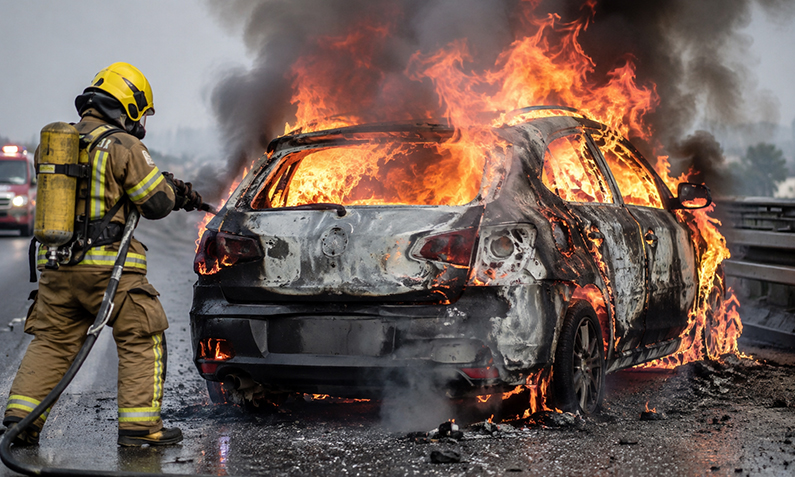




Does Car Insurance Cover Fire Damage to Your Car?

Written by Prajesh Manvar
Reviewed by Pratik Aghera
7 min read
Updated: 5 Aug 2026
Does Car Insurance Cover Fire Damage to Your Car?

Does car insurance cover fire damage? Yes, but only if you hold the right level of cover. Both comprehensive and third party, fire and theft (TPFT) policies cover fire damage to your own car. Third party only (TPO), the legal minimum under the Road Traffic Act 1988, does not cover any damage to your own vehicle, including fire.

Whether your car catches fire from an engine fault, an electrical problem, arson or a nearby blaze, the type of policy you bought decides whether you can claim. Here is exactly what is and is not covered, plus how to handle a fire claim in the UK.

  • Comprehensive and TPFT cover fire damage to your own car; TPO does not.
  • Cover usually applies whether the fire is accidental, the result of arson, or spreads from another vehicle or building.
  • Most policies pay for the resulting fire damage but exclude the part that caused the fire if it failed through mechanical or electrical breakdown.
  • Lower-tier “essential” comprehensive policies can strip out protections, so always check the specific tier you are buying.

Which levels of cover protect against fire

Fire damage to your own car is covered by comprehensive and third party, fire and theft policies, but not by third party only. The word “fire” in the middle of “third party, fire and theft” is the clue: this level was designed specifically to add fire and theft protection on top of basic third party cover.

Third party only is the minimum cover required to drive legally on UK roads under the Road Traffic Act 1988. It pays out for injury or damage you cause to other people and their property, but offers nothing for your own car, whether it is crashed, stolen or burnt out.

Comprehensive includes everything in TPFT and adds accidental damage to your own car, plus non-accident events such as floods and storms. For fire specifically, comprehensive and TPFT give you the same core protection.

Cover level Fire damage to your car
Third party only (TPO) Not covered
Third party, fire and theft (TPFT) Covered
Comprehensive Covered

If you are unsure which level suits you, our guide to the different car insurance types and which is right for you breaks down each option in plain terms.

Compare car insurance cover levels

What a fire claim actually pays for

A fire claim pays to repair or replace your car after fire damage, up to its market value if it is written off. Many vehicle fires destroy the car completely, so a fire claim often results in a total loss settlement rather than a repair.

Some insurers also extend fire cover to fitted equipment. AXA’s third party, fire and theft policy, for example, pays up to £1,000 to repair or replace audio and sat-nav equipment damaged by fire, and up to £300 towards child car seats damaged by fire or theft. Limits and inclusions vary by insurer and tier, so check your policy booklet.

Repair costs across the market remain high. The Association of British Insurers (ABI) reported that insurers paid £2.9bn in motor claims between January and March 2026, with vehicle repairs alone totalling £1.9bn, up 3% on the previous quarter. The rising complexity of modern vehicles is one reason fire-damaged cars are frequently written off rather than rebuilt.

The fire versus the cause distinction

Most policies cover the damage a fire causes but exclude the component that started it if that part failed through mechanical or electrical breakdown. In practice, if an electrical fault sets your car alight, the insurer typically pays for the burnt bodywork, interior and surrounding damage, but not the faulty wiring or component that caused the fire in the first place.

This is why policy wordings often state they do not cover mechanical breakdown, computer failure or electrical failure. The fire payout is for consequential damage, not for the underlying fault. Read your policy’s exclusions carefully so you know where the line sits before you need to claim.

What a fire claim actually pays for

Are you covered if the fire was deliberate?

Yes, comprehensive and TPFT policies generally cover fire damage caused by arson or vandalism, as long as you were not involved in starting the fire. If a stranger torches your car or it is set alight during civil disturbance, your fire cover should respond.

Fire claims do attract closer scrutiny than most, because deliberately destroyed vehicles are a known fraud route. Insurers may instruct a fire investigator and will expect a police crime reference number. If you took out the policy honestly and had no hand in the fire, a genuine arson claim should be paid.

Tens of thousands of vehicle fires are recorded in the UK each year. A meaningful share of car fires are started deliberately, which is part of why insurers treat these claims with care.

Not sure your cover is right?

Compare whole-of-market car insurance and check exactly what each policy includes.

Where your car catches fire: garage, driveway or road

Your car insurance, not your home insurance, covers the vehicle itself if it catches fire in your garage or on your driveway. The car is insured under your motor policy wherever it is, while your buildings and contents insurance would cover damage the fire causes to the garage structure or your home.

So a fire that starts in your car and spreads to your garage typically involves two policies: your car insurer for the vehicle, and your home insurer for the building and its contents. If your parked car is set alight in the street or in a public car park, your comprehensive or TPFT cover still applies to the vehicle.

This split matters because each insurer handles its own part of the loss. Notify both promptly if a fire affects your car and your property, and keep evidence such as photographs and the fire and rescue service incident details.

See your car insurance options

Why an insurer might reject a fire claim

An insurer can reject a fire claim if your policy is invalid, the cause is excluded, or it suspects fraud. Citizens Advice states that an insurer must give you a reason for refusing a claim, and you should check your policy carefully to judge whether that decision is reasonable.

Common reasons a fire claim is refused include:

  • You hold third party only cover, which excludes all fire damage to your own car.
  • The fire resulted from mechanical or electrical breakdown of a part, which sits outside many policies.
  • You deliberately or carelessly withheld information or misled the insurer when applying or renewing (for policies taken out, renewed or changed after 6 April 2013).
  • The insurer’s investigation links you to deliberately starting the fire.
  • The car was not roadworthy, taxed or kept in line with policy conditions.

MoneyHelper notes that under current rules an insurer cannot reject your claim if you took reasonable care to answer all their questions honestly and to the best of your knowledge. If you believe a refusal is unfair, raise it through the insurer’s official complaints process first, then escalate to the Financial Ombudsman Service if you remain unhappy.

What to do straight after a car fire

Report the fire to the police to obtain a crime or incident reference, then notify your insurer as soon as possible. A clear record from the start strengthens a legitimate claim and speeds up the assessment.

  • Call 999 if the fire is active and keep clear of the vehicle.
  • Get a police crime reference number, especially if arson is suspected.
  • Photograph the damage and the scene before anything is moved.
  • Do not scrap or dispose of the vehicle until your insurer agrees, as it may need a fire investigation.
  • Keep all paperwork, including the fire and rescue service’s incident details.

Why the policy tier matters more than the brand

The brand on your policy does not guarantee fire cover, because the specific tier decides what is included. Some lower-tier “essential” or “flex” versions of comprehensive cover can remove protections that the standard version includes as standard.

Always read the policy summary and the full booklet for the exact tier you are buying, rather than assuming a familiar insurer name means full protection. Two products from the same insurer can differ on excesses, included extras and exclusions. Checking the documents before you buy is the only reliable way to confirm fire damage is covered.

With average motor premiums having fallen for several consecutive quarters, switching at renewal can pay off. The ABI reported an average premium of £560 for prices paid between January and March 2026, £30 lower than the same period in 2025. Comparing the full market lets you weigh price against the cover detail that actually matters. If you have had cover withdrawn before, our guide on avoiding car insurance cancellation is worth a read.

Why the policy tier matters more than the brand

Compare cover and prices

FAQs about does car insurance cover fire damage

Does third party, fire and theft actually cover fire damage to my own car?

Yes. Third party, fire and theft (TPFT) is designed specifically to cover damage to your own car from fire and theft, on top of basic third party cover. It will pay to repair or replace your vehicle if it is damaged or destroyed by fire, up to its market value. It does not cover accidental damage from a crash that is your fault, which only comprehensive provides.

Will my insurer pay out if the fire was caused by arson or vandalism?

Generally yes, provided you had no part in starting the fire and your policy includes fire cover. Comprehensive and TPFT policies cover deliberate fires started by someone else, such as arson or vandalism. You will usually need a police crime reference number, and the insurer may appoint a fire investigator, as these claims attract extra scrutiny against fraud.

Am I covered if the fire started from an electrical or mechanical fault?

The fire damage itself is usually covered, but the part that caused it often is not. Most policies pay for the consequential damage when an electrical or mechanical fault sets your car alight, while excluding the faulty component because mechanical breakdown and electrical failure are standard exclusions. Check your policy wording, as the exact treatment varies between insurers.

Is my car covered if it catches fire in my garage, or is that home insurance?

Your car insurance covers the vehicle itself, even inside your own garage. Your home buildings and contents insurance covers damage the fire causes to the garage structure and your belongings. A fire that starts in the car and spreads to the building typically involves both policies, so notify your car insurer and home insurer separately.

Why might an insurer reject my fire claim?

Common reasons include holding third party only cover, which excludes all fire damage to your own car, or the fire being caused by an excluded mechanical or electrical breakdown. A claim can also be refused if you withheld or misrepresented information when applying, or if an investigation suggests you started the fire deliberately. The insurer must give you a reason in writing.

What is the difference between comprehensive and TPFT for fire?

For fire damage to your own car, comprehensive and TPFT give you the same core protection, so either will respond to a genuine fire claim. The difference is everything else: comprehensive also covers accidental damage to your car in a crash that is your fault, plus events like floods and storms. TPFT covers your car only for fire and theft, not crash damage.

Do I have to pay an excess on a car fire claim?

Yes, in most cases you pay your policy excess on a fire claim, just as with other claims. The excess is the amount you agree to pay towards the claim before the insurer covers the rest. Check your documents, as some policies apply a higher excess for certain claim types, and a total loss settlement will have the excess deducted from the payout.

Will making a fire claim affect my no-claims bonus?

It can. A fire claim is usually treated like any other claim and may reduce your no-claims bonus at renewal unless you have protected it. Even an arson claim where you were not at fault can affect your premium if the insurer cannot recover its costs from anyone. Ask your insurer how a specific fire claim would be recorded before you proceed.

What should I do immediately after my car catches fire?

Call 999 if the fire is active, keep well clear of the vehicle, and let the fire and rescue service deal with it. Once it is safe, get a police crime or incident reference, photograph the damage, and notify your insurer as soon as possible. Do not scrap or move the vehicle until your insurer agrees, as it may need to investigate the cause.

Does car insurance cover fire damage to a parked car in a public car park?

Yes, if you hold comprehensive or TPFT cover. Your fire protection applies wherever the car is, including a public car park or the street, so a parked car set alight is covered. You will still need to report it, ideally with a police reference, and your usual policy excess will apply to the claim.

Also Read Related Articles

4000+ reviews