

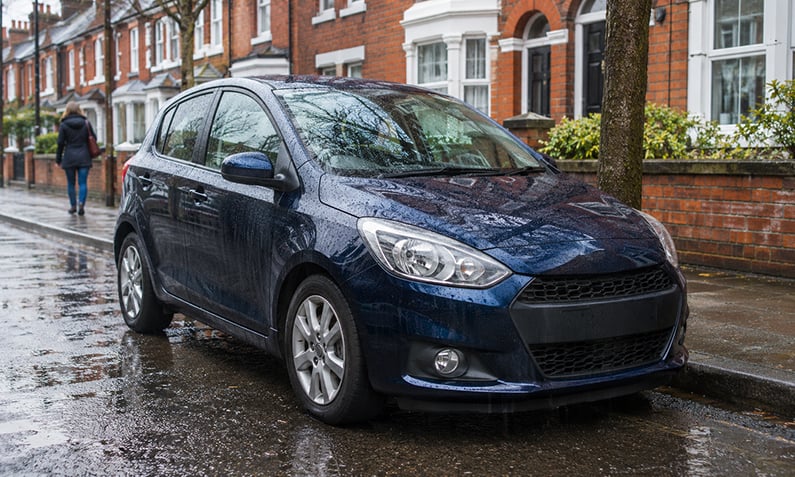



Is It Illegal to Park an Uninsured Car on the Road? | 2026

Written by Tim Bailey
Reviewed by Prajesh Manvar
6 min read
Updated: 13 Nov 2026
Is It Illegal to Park an Uninsured Car on the Road? | 2026

Parking an uninsured car on the road is illegal in the UK, even if the vehicle is never driven. Under Continuous Insurance Enforcement, the registered keeper of a vehicle must either keep it insured or declare it off the road with a Statutory Off Road Notification (SORN) and keep it on private land. A stationary, uninsured car sitting on a public road still breaks the law.

This catches a lot of people out. You might buy a car and plan to insure it in a few days, or your policy might lapse while the vehicle sits outside your house. In both cases the car is uninsured and on a public road, which means you could be fined, clamped or taken to court as the keeper, separately from any penalty for actually driving it.

Free Price Compare lists cover from a panel of 130+ insurers, so if you need to get a car legally back on the road quickly, you can line up a quote before you park it there. Below, we set out the rules, the penalties and the practical options, using current GOV.UK guidance.

Quick Answer: Is It Illegal to Park an Uninsured Car on the Road?

  • You must insure a car kept on a public road or declare it SORN and keep it off-road.
  • The keeper of an uninsured car not declared SORN can face a £100 fixed penalty (GOV.UK).
  • Unresolved cases can lead to clamping, impounding and a court fine of up to £1,000.
  • Driving uninsured is more serious: £300 fine, six points and a possible unlimited fine.
  • GOV.UK guidance states no grace period applies after a policy ends.

Last updated: November 2026

Written by the Free Price Compare editorial team | Reviewed November 2026

Does a car need insurance just to be parked on the road?

A car parked on a public road needs valid insurance, because UK law requires almost all vehicles to be insured whenever they are kept or used on roads or in public places. The only lawful alternative is to take the vehicle off the public road and declare it off-road with a Statutory Off Road Notification (SORN). Being stationary does not remove the obligation.

This comes from Continuous Insurance Enforcement, introduced in 2011. Continuous Insurance Enforcement means the registered keeper commits an offence by keeping an uninsured vehicle, whether or not anyone drives it, unless a valid SORN is in place. The rule links the DVLA registered-keeper record to the Motor Insurance Database, so a car that appears on one but not the other is flagged automatically.

GOV.UK confirms that a vehicle only avoids the insurance requirement when it is kept off the road and declared SORN, in guidance updated on 3 October 2026 (GOV.UK uninsured vehicles guidance). There is no stated grace period that lets a car sit uninsured on a public road for a few days. Our own guide on why car insurance is mandatory explains the wider legal background.

Compare car insurance quotes now

What are the penalties for keeping an uninsured car on the road?

The registered keeper of an apparently uninsured vehicle that has not been declared SORN can receive a £100 fixed penalty, according to GOV.UK guidance updated on 3 October 2026. If the matter is not resolved, the consequences escalate, and the penalties for keeping an uninsured vehicle are separate from the more serious penalties for driving one.

The enforcement steps a keeper can face are:

  • A £100 fixed penalty for being the keeper of an uninsured vehicle not declared SORN.
  • Having the vehicle wheel-clamped, impounded or, in some cases, destroyed.
  • Court proceedings and a maximum fine of up to £1,000 if the situation is not put right.

These figures are set out on GOV.UK and have not changed as of the latest October 2026 updates. The Department for Transport’s Motor Insurance Taskforce final report, published on 5 November 2026, notes that penalties for keeping or driving a vehicle without insurance have not been reviewed for many years and says the Government will consider them (GOV.UK vehicle enforcement policy). That is a policy review, not a confirmed change to the current amounts.

How does Continuous Insurance Enforcement find uninsured cars?

Continuous Insurance Enforcement finds uninsured cars by comparing DVLA registered-keeper records with the Motor Insurance Database held by the Motor Insurers’ Bureau. When a vehicle appears registered but has no matching insurance record and no SORN, the system flags it and the keeper can be sent a warning letter or a fixed penalty. No police officer needs to see the car to trigger this.

This is why a car left uninsured outside your house can attract a penalty even if it never moves. The check is a continuous database comparison, so a lapsed policy or a gap between buying a car and insuring it can be picked up without anyone reporting it. Keeping your details current on the Motor Insurance Database matters, and you can check whether a car is insured if you are unsure.

What are the penalties for keeping an uninsured car on the road

Need to get a car road-legal fast?

Line up valid cover before you park it on a public road.

Can I keep an uninsured car on my own driveway or in a garage?

You can keep an uninsured car on a private driveway or in a garage only if it is declared SORN; otherwise a taxed but uninsured vehicle is still an offence even off the public road. Keeping an uninsured car on a driveway is lawful when you have made a valid Statutory Off Road Notification, but if the vehicle is taxed and not declared SORN, the keeper obligation to insure it still applies.

A Statutory Off Road Notification (SORN) is a declaration to the DVLA that a vehicle is kept off public roads and will not be used or parked on them. Once a car is SORN, it does not need insurance or road tax, but it must be stored on private land such as a driveway, garage or private car park, never on a public road. If you want to use the car again, you cancel the SORN by taxing and insuring it.

A common misunderstanding is that a car parked off the road is automatically fine. It is not. If the vehicle still has valid road tax, the law treats it as in use and the keeper must insure it. The clean fix is to either keep the policy running or declare SORN, which also stops road tax being charged while the car is laid up.

If my car is SORN, can I park it anywhere?

A SORN car cannot be parked anywhere; it must be kept off public roads at all times, on private property such as a driveway, garage or private land. A Statutory Off Road Notification only removes the insurance and road tax requirement on the condition that the vehicle stays off the public highway, so parking a SORN car on the street is itself an offence.

If you move a SORN vehicle, there are narrow exceptions, such as driving to a pre-booked MOT test, but the car still generally needs to be insured and taxed to be driven on a road. Simply leaving a SORN car on the kerb outside your home does not count as off-road and can lead to enforcement.

See typical car insurance prices

What happens if you drive an uninsured car, not just park it?

Driving an uninsured car is a more serious offence than keeping one, carrying a £300 fixed penalty and six penalty points, according to GOV.UK guidance updated on 2 October 2026. If the case goes to court you can face an unlimited fine and possible disqualification, and the police can seize and in some circumstances destroy the vehicle.

Driving without insurance is a strict liability offence, which means you can be prosecuted even if you did not realise the car was uninsured. The driving-without-insurance penalty is deliberately heavier than the keeper penalty because an uninsured driver on the road creates a direct risk to other people (GOV.UK driving without insurance guidance).

These two situations often get confused. Parking an uninsured car on the road is a keeper offence under Continuous Insurance Enforcement, enforced mainly through database checks. Driving it is a driver offence that police can act on directly at the roadside. Both carry penalties, but they are distinct.

Does the car still need an MOT and road tax?

A car used or kept on a public road needs insurance, valid road tax and, for most vehicles over three years old, a current MOT. These three requirements are separate: having one does not cover you for the others, and a car can be insured yet still be illegal to use if the MOT has expired.

If you declare SORN, road tax and insurance are no longer required while the car stays off-road, but you cannot drive it on a public road except to a pre-booked MOT. For a fuller breakdown of how tax, MOT and insurance fit together, our guide to current UK driving laws sets out the rules in one place.

How do I report an uninsured car parked on the road?

You can report an uninsured vehicle, but an uninsured car that is only parked, not being driven, is generally a keeper matter handled through Continuous Insurance Enforcement rather than a police emergency. If a car is actually being driven without insurance, that is a police matter and can be reported to the police directly.

For a parked vehicle that appears uninsured, the enforcement route runs through DVLA and the Motor Insurers’ Bureau, which compare registration and insurance records. In practice, a car that is uninsured and taxed will often be flagged automatically without any report, because the systems cross-check continuously. If the parked vehicle is also blocking access or causing an obstruction, that may be a separate issue for your local council or the police.

Reporting is not usually needed to trigger enforcement on a stationary uninsured car, since the database comparison does most of the work. If you believe a vehicle is being driven uninsured, contact the police with the registration and details rather than waiting for the automated system.

Compare cover from 130+ insurers

What should you do if your car is parked and uninsured right now?

If your car is currently parked uninsured on a public road, the safest step is to either arrange insurance before it stays there any longer or move it onto private land and declare SORN. There is no stated grace period in GOV.UK guidance that makes a short uninsured gap on a public road lawful, so acting quickly reduces the risk of a penalty.

Your practical options are:

  • Buy valid insurance straight away if you intend to keep using the car on the road.
  • Move the vehicle onto a driveway, garage or private land and declare SORN if you will not use it for a while.
  • Sell or scrap the car if you no longer need it, and tell DVLA once ownership changes.

Most drivers who come to us want the cheapest suitable cover rather than the absolute minimum, which is why around 88 to 89% of car insurance quotes through Free Price Compare are for comprehensive cover (Free Price Compare data, January to June 2026). Comparing across a panel of 130+ insurers takes about five minutes and lets you line up a policy before the car sits on the road again. If you are weighing up whether added legal protection is worth it, our overview of legal cover in car insurance explains what it includes.

What should you do if your car is parked and uninsured right now

FAQs about uninsured car on the road

Can I leave a car uninsured but taxed on my driveway?

No, not legally. If a car is taxed, the law treats it as in use and the registered keeper must insure it under Continuous Insurance Enforcement, even on a private driveway. To keep a car uninsured off the road, you must declare it SORN with the DVLA, which also stops the road tax. Only then can it sit on a driveway or in a garage without insurance.

Is there a grace period to insure a car parked on the road?

Current GOV.UK guidance does not state that any grace period applies after a policy ends or after you buy a car. That means a car left uninsured on a public road can attract enforcement from the point it is uninsured, with no guaranteed safe window of a few days. If you have just bought a car, arrange cover before you park it on a public road, or keep it on private land until you do.

Can the police seize a car parked uninsured but not being driven?

An uninsured car that is only parked is mainly dealt with through Continuous Insurance Enforcement, which can lead to a £100 fine, clamping or impounding by the keeper route. Direct police seizure usually applies when a vehicle is being driven uninsured. However, an uninsured vehicle can still be clamped, impounded or removed as part of enforcement, so parking it uninsured does not make it safe from action.

How much is the fine for keeping an uninsured car?

The registered keeper of an uninsured vehicle not declared SORN can receive a £100 fixed penalty, according to GOV.UK guidance updated in October 2026. If the issue is not resolved, it can lead to the vehicle being clamped or impounded and to court proceedings with a maximum fine of up to £1,000. These keeper penalties are separate from the heavier penalties for driving uninsured.

What is the penalty for driving without insurance?

Driving without insurance carries a £300 fixed penalty and six penalty points, according to GOV.UK guidance. If the case goes to court, the fine can be unlimited and you may be disqualified from driving. The police can also seize the vehicle and, in some circumstances, destroy it. Driving without insurance is a strict liability offence, so you can be prosecuted even if you did not know the car was uninsured.

Does a SORN car need insurance?

A car with a valid Statutory Off Road Notification (SORN) does not need insurance or road tax while it stays off public roads. The condition is that it must be kept on private land such as a driveway, garage or private car park, and not parked or used on a public road. If you want to drive or park it on the road again, you cancel the SORN by taxing and insuring the vehicle first.

Is it illegal to park an unregistered car on the road?

A car parked on a public road must normally be registered, taxed and insured, or declared SORN and kept off-road. An unregistered vehicle on a public road can face enforcement for lack of registration as well as insurance and tax. If a vehicle is permanently off the road, it should be declared SORN and stored on private property to stay within the law.

Do I need insurance if I am not driving the car at all?

Yes, if the car is kept on a public road you still need insurance, because Continuous Insurance Enforcement applies to the keeper regardless of whether anyone drives the vehicle. The only way to avoid insuring a car you are not using is to keep it off public roads and declare it SORN. Not driving a car is not, by itself, a reason it can stay uninsured on the street.

Can I report an uninsured car parked on my street?

You can, but a stationary uninsured car is usually picked up automatically through Continuous Insurance Enforcement, which cross-checks DVLA and insurance records continuously. If the car is being driven without insurance, report that to the police with the registration and details. If the vehicle is also causing an obstruction or is abandoned, your local council may be the right body to contact.

What is the Motor Insurers’ Bureau?

The Motor Insurers’ Bureau is the organisation that compensates victims of uninsured and untraced drivers in the UK and helps run the Motor Insurance Database. The Motor Insurance Database records which vehicles are insured and is used alongside DVLA records to enforce Continuous Insurance Enforcement. If your car is insured, your insurer should add it to this database, which is what prevents it being wrongly flagged as uninsured.

Can I be fined for a car I own but never drive?

Yes. As the registered keeper you can be fined £100 for keeping an uninsured vehicle on a public road even if you never drive it, unless you have declared it SORN and kept it off the road. This surprises many owners, but Continuous Insurance Enforcement targets the keeper, not just the driver. To avoid it, either insure the vehicle or SORN it and store it on private land.

What should I do if I am selling an uninsured car with a SORN deadline?

If you are selling a SORN car, keep it on private land until the sale completes, as it cannot legally be parked or driven on a public road while uninsured. Once ownership changes, tell the DVLA so the registered-keeper record updates and you are no longer liable. The buyer will need to insure and tax the vehicle before driving it away or parking it on the road.

Also Read Related Articles


Information correct as of 11 November 2026. Prices, tariffs, policy details and providers change frequently, so please check the latest details before making a decision. This article is for general information only and does not constitute financial advice. Free Price Compare is authorised and regulated by the Financial Conduct Authority (FCA).

4000+ reviews