





Unoccupied House Insurance: Cover for an Empty Home

Written by Tim Bailey
Reviewed by Brijesh Patel
Updated: 8 Sep 2026
Unoccupied House Insurance: Cover for an Empty Home

Unoccupied house insurance is specialist cover for a home that stands empty for longer than a standard policy allows, usually more than 30 to 60 consecutive days. It protects the building, and sometimes contents, against risks like fire, escape of water, theft and malicious damage while nobody lives there. If your second home, holiday home, inherited property or student let sits empty beyond your policy’s vacancy limit, standard home insurance may reduce or refuse a claim, which is why a specialist policy usually becomes necessary.

The trigger point catches many owners out. Most standard policies keep full cover only while the property is lived in, then scale cover back once it has been empty for a set number of days. Read your policy wording, because the definition of “unoccupied” and the vacancy limit vary by insurer.

Free Price Compare works with a panel of 42 home insurance providers and sources market data from the ABI, FCA and Flood Re. This explainer sets out what the cover is, what it costs, and the practical conditions insurers attach.

Quick Answer: Unoccupied House Insurance

  • Standard home insurance typically keeps full cover for only 30 to 60 consecutive days of vacancy, so always check your policy’s exact unoccupancy limit in the wording.
  • Specialist policies cover empty periods of 3, 6, 9 or 12 months, with premiums from around £14.25 a month for buildings plus £2m property owner’s liability (Simply Business, Jan-Jun 2026).
  • Insurers often require conditions such as regular inspections, draining water or keeping heating at a low level, and cover can be void if you do not meet them.
  • Empty homes can attract a council tax premium of up to 100% extra after 1 year in England, and up to 100% extra on furnished second homes from April 2025 (GOV.UK).
  • Unoccupied properties remain eligible for Flood Re, provided the home is in council tax bands A to H and was built before 1 January 2009.

Last updated: August 2026

Written by the Free Price Compare editorial team | Reviewed August 2026

When does a home count as unoccupied?

A home counts as unoccupied when nobody is living in it regularly, usually once it has been empty for a continuous period set by your insurer, commonly 30 to 60 days. A property is generally treated as “unoccupied” if it is furnished but no one is sleeping there most nights during that window; if it is also empty of furniture, insurers often call it “unfurnished and unoccupied”, which can attract stricter terms.

The exact vacancy limit and definition sit in your policy wording, and they differ between insurers. Some policies allow 30 days, others 60. A few landlord policies stretch to around three months, sometimes with an empty-property add-on. The point that trips owners up is that this is measured in consecutive days, so a fortnightly visit does not always “reset the clock” unless your insurer says it does.

Common situations that push a home over the limit include probate on an inherited property, a house awaiting sale, a major renovation, a stay in hospital or care, or a second home used only occasionally. If any of these apply, contact your existing insurer first: many will let you keep or extend cover, or they will tell you a specialist policy is needed.

Can you insure a house that is empty?

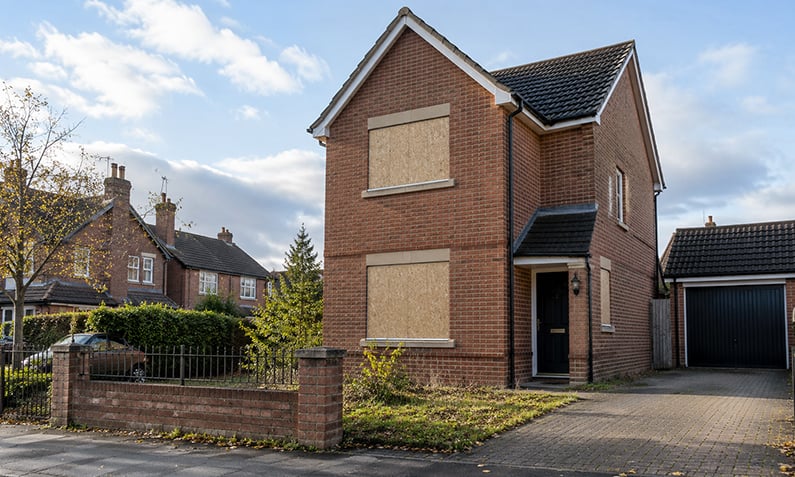
Yes, you can insure a house that is empty by taking out unoccupied house insurance, a specialist product built for exactly this situation. It covers buildings, and optionally limited contents, while the property has no regular occupant. Even a permanently empty or run-down property awaiting sale can usually be insured, though premiums rise and fewer insurers compete for it the longer it has stood empty.

Leaving an empty home uninsured is a serious risk. A single escape of water or fire can run into tens of thousands of pounds, and there is no legal safety net for the building. The ABI reported that the average home insurance claim went above £7,000 for the first time in April to June 2026, according to figures published by the ABI. An empty property with no one to spot a leak early is precisely where those costs escalate.

Compare home insurance quotes

How much does unoccupied home insurance cost?

Unoccupied home insurance cost in the UK varies with the cover period, but market figures for 2026 put typical annual premiums roughly between £160 and £240 for buildings cover, with monthly-paid specialist policies starting from around £14.25 a month. Simply Business offers unoccupied property insurance from £14.25 a month for buildings plus £2 million property owners’ liability, with 10% of customers paying £170.96 or less annually between 1 January and 30 June 2026.

Independent market data compiled in May 2026 suggests an average of around £162 for a property left empty up to 30 days, around £184 for 30 to 60 days, and around £240 for over 60 days. As a broad rule, unoccupied cover ran roughly 25% higher than equivalent occupied home insurance between February and April 2026 (Free Price Compare research, August 2026). For context, the ABI Property Insurance Premium Tracker put the average combined buildings and contents policy at £383 for April to June 2026.

Cover period Indicative average annual cost
Up to 30 days unoccupied Around £162
30 to 60 days unoccupied Around £184
Over 60 days unoccupied Around £240

Figures are indicative and may change.

What affects the price you pay?

The price of unoccupied house insurance depends mainly on how long the property will be empty, its value and location, the level of cover and the security in place. An expensive home in a high-crime area with few security measures usually costs more than a lower-value property in a low-crime area with alarms and good locks.

  • Cover period: three months costs less than a full year, and longer vacancy raises the risk premium.
  • How long it has already been empty: properties empty for over two years may attract higher premiums and fewer willing insurers.
  • Level of cover: buildings-only is cheaper than buildings plus limited contents.
  • Property value and rebuild cost, location, crime rate and any flood or subsidence history.
  • Security features, claims history and whether you meet inspection and maintenance conditions.

Before you buy, it is worth reading our guide to comparing home insurance quotes in the UK so you know which details to have ready.

How much does unoccupied home insurance cost

Insuring an empty second home?

Compare specialist cover across our panel of home insurance providers.

What does unoccupied house insurance cover?

Unoccupied house insurance covers the empty building against core perils, with the exact scope depending on the cover tier you choose. Entry-level policies often follow “FLEEA” cover, and fuller policies add accidental damage, escape of water, theft and malicious damage. FLEEA stands for Fire, Lightning, Explosion, Earthquake and Aircraft, and it is the minimum most insurers offer on an empty property.

Higher tiers, sometimes branded Bronze, Silver and Gold, extend protection considerably. Property owner’s liability, commonly £2 million, is usually included so you are protected if a visitor or passer-by is injured because of the property.

What is not usually covered?

Unoccupied policies usually exclude damage that builds up unnoticed and anything caused by breaching the policy conditions. Because no one is present to spot problems early, insurers apply tighter exclusions than on a standard home policy.

  • Escape of water and burst pipes if you failed to drain the system or keep heating on as required in the wording.
  • Theft where there is no sign of forced entry, and often theft of contents unless specifically covered.
  • Gradual damage, wear and tear, damp and rot that develop over time.
  • Claims where a required inspection was missed or not documented.

If the empty property is part of a wider portfolio or a higher-risk building, our guide to home insurance for high-risk properties covers the extra conditions insurers apply.

Does unoccupied home insurance cover subsidence?

Subsidence cover on an unoccupied property is available but is not automatic, and you usually need to declare any history of subsidence and choose a policy that includes it. Subsidence is the downward movement of the ground beneath a building, which can crack walls and destabilise foundations, and it is one of the most expensive claims an insurer faces. The ABI reported the average household subsidence claim reached a record £20,000 in Q2 2026.

If your home has never had subsidence, standard or specialist policies usually include it as part of buildings cover, though a higher subsidence excess (often several hundred pounds or more) commonly applies. If the property has a history of subsidence, or sits in a shrink-swell clay area prone to it, expect fewer insurers, higher premiums and possibly a specialist non-standard insurer. Always disclose past movement, monitoring or underpinning, because non-disclosure can void a claim.

Homes with a flood history are not left out. Under Flood Re, an unoccupied home remains eligible for affordable flood cover provided it is in council tax bands A to H and was built before 1 January 2009, according to the Flood Re eligibility criteria.

Check home insurance options for your property

Inspection rules and heating conditions

Most unoccupied policies attach conditions you must meet to keep cover valid, typically regular property inspections and steps to prevent water and frost damage. These are warranties in the policy, not suggestions, and a missed inspection or unmet condition can allow an insurer to decline a claim.

Common requirements include inspecting the property at set intervals (often weekly, fortnightly or monthly, depending on the insurer), keeping a record of each visit, turning off and draining the water supply during winter or keeping the heating at a low continuous temperature, securing doors and windows, and clearing post so the home does not look empty. The exact demands vary widely between insurers, which is why comparing wordings matters as much as comparing prices.

Is there an insurer that does not require weekly inspections?

Yes, some specialist insurers accept fortnightly or monthly inspections rather than weekly ones, though the trade-off is often a higher premium or a lower level of cover. Inspection frequency is one of the biggest differences between unoccupied policies, so if weekly visits are impractical, filter for insurers with a longer interval before you buy.

The looser the inspection requirement, the more risk the insurer carries, and that is usually reflected in the price. If the property is far away or difficult to reach, a slightly dearer policy with a realistic inspection schedule is safer than a cheap one whose conditions you cannot meet. Whatever the interval, keep dated records of each visit in case you need to prove compliance at claim time.

Second homes, holiday homes and probate properties

Second homes, holiday homes and inherited properties in probate each need cover matched to how the property is actually used, and unoccupied house insurance is often the right fit when they sit empty for long stretches. A holiday home used a few weeks a year may need holiday home house insurance or an unoccupied policy, depending on how long the gaps between stays are and whether it is ever let out.

For a property used part-time as a genuine second residence, a dedicated second home policy may suit better than pure unoccupied cover. Our second home insurance guide explains the differences and when each applies. For an inherited home going through probate, contact the existing insurer as soon as possible: many extend cover during probate, and some councils in England offer a 12-month council tax exemption running from the date probate is granted for a property empty because the occupant has died, introduced from 1 April 2025 per GOV.UK guidance.

Listed buildings and non-standard homes

Listed buildings and other non-standard homes usually require a specialist insurer because their rebuild costs and construction fall outside standard underwriting. Non-standard home insurance is cover for properties that do not fit a mainstream insurer’s usual criteria, such as listed buildings, homes with thatched roofs, timber-framed or non-brick construction, or properties with a subsidence or flood history.

An empty listed building combines two non-standard factors, so expect fewer providers and higher premiums. Rebuild costs must reflect like-for-like materials and conservation requirements, which pushes the sum insured up. Comparing across a broad panel, and being ready to use a specialist broker for the most unusual cases, gives you the best chance of affordable cover.

Council tax on an empty home

Council tax on an empty home can rise sharply, and this is a running cost owners of unoccupied property should budget for alongside insurance. Since April 2024, councils in England can charge an empty homes premium of up to 100% extra council tax on homes that have been empty and substantially unfurnished for 1 year or more, according to GOV.UK guidance updated in 2026.

From April 2025, councils can also charge a premium of up to 100% extra on furnished second homes that are nobody’s main residence. The premiums scale with time: some councils charge higher premiums on homes empty for 5 or 10 years, though the powers are discretionary, so rates differ by council. These charges stem from the Local Government Finance Act 1992, as amended by the Levelling-up and Regeneration Act 2023. If you are moving into or out of an empty property, our guide to transferring home insurance when moving is a useful companion read.

Council tax on an empty home

Find cover for an empty or second home

FAQs about unoccupied house insurance

What should I know before insuring an unoccupied house?

Check your insurer’s exact definition of “unoccupied” and its vacancy limit, because these vary and are measured in consecutive days. Confirm what conditions apply, such as inspection frequency, draining water and keeping heating on, and whether contents are covered. Approach your existing insurer first, as many will extend or continue cover before you need a separate specialist policy.

How long can a house be empty before you need special insurance?

Most standard home policies keep full cover for only 30 to 60 consecutive days of vacancy, after which cover is reduced or removed. Once a home passes that limit, a specialist unoccupied policy is usually needed. The precise number of days is set in your policy wording, so always read it rather than assume.

Is it a bad idea to leave your house uninsured while empty?

Leaving an empty home uninsured is a serious financial risk, as there is no cover for fire, escape of water, theft or third-party injury claims. An empty property is more exposed because no one is there to spot a leak or break-in early, so damage can escalate. With average home claims exceeding £7,000 in 2026, the potential loss far outweighs the premium.

Why do insurers ask you to check a vacant home regularly?

Insurers ask for regular checks because most serious damage in empty homes, such as burst pipes, leaks and break-ins, gets worse the longer it goes unnoticed. Documented inspections let you catch problems early and prove you met your policy conditions. Missing a required inspection can give the insurer grounds to reduce or decline a claim.

What is FLEEA insurance cover?

FLEEA cover protects against Fire, Lightning, Explosion, Earthquake and Aircraft impact, and it is the minimum level most insurers offer on an unoccupied property. It is the cheapest tier but leaves out common risks like escape of water, theft and malicious damage. Higher tiers add accidental damage and water cover for more comprehensive protection.

Can you insure a house that is basically derelict or awaiting sale?

Yes, specialist unoccupied insurers can cover a run-down or derelict property awaiting sale, though premiums are higher and fewer insurers will quote. The longer a property has been empty, especially beyond two years, the more limited and expensive your options become. A specialist broker is often the best route for the most difficult cases.

Does home insurance cover neighbour damage from an empty property?

Property owner’s liability cover, usually included on unoccupied policies at around £2 million, can respond if your empty property causes injury or damage to others, for example a falling wall or tile. It does not cover damage a neighbour causes to your home. If your neighbour’s property damages yours, you would claim on your own buildings cover and your insurer may pursue theirs.

Do I need to keep contents insurance on an empty house?

Contents cover on an unoccupied home is optional and often limited, because many insurers restrict or exclude theft where valuables sit unattended. If you have removed furniture and belongings, buildings-only cover is cheaper. If some contents remain, check the limits carefully and consider removing high-value items to reduce both risk and premium.

Will my insurer cover an empty property during probate?

Many insurers will continue or extend cover on a property going through probate, but you must tell them the home is now unoccupied. Some standard policies allow a short grace period before requiring a specialist policy. Contact the existing insurer promptly, as failing to disclose the change in occupancy can invalidate any claim.

How can I reduce the cost of unoccupied house insurance?

Choose the shortest realistic cover period, improve security with alarms and quality locks, and keep the property well maintained and inspected on schedule. Buildings-only cover costs less than adding contents, and comparing several insurers helps because pricing and conditions vary widely. Meeting all inspection and heating conditions also protects the cover you pay for.

Is unoccupied home insurance more expensive than standard cover?

Yes, unoccupied cover typically costs more than standard home insurance because empty properties carry higher risk of undetected damage and theft. Market data for early 2026 suggested unoccupied premiums ran around 25% above equivalent occupied cover. The gap widens with longer vacancy periods and for higher-risk or non-standard properties.

What is non-standard home insurance and when do I need it?

Non-standard home insurance covers properties that fall outside a mainstream insurer’s usual criteria, such as listed buildings, thatched or timber-framed homes, and properties with a subsidence or flood history. You need it when standard insurers decline or heavily load a quote. An empty non-standard home combines two risk factors, so a specialist insurer or broker is usually the right route.

Also Read Related Articles


Information correct as of 27 August 2026. Prices, tariffs, policy details and providers change frequently, so please check the latest details before making a decision. This article is for general information only and does not constitute financial advice. Free Price Compare is authorised and regulated by the Financial Conduct Authority (FCA).

4000+ reviews