







Home insurance with accidental damage explained

Written by Prajesh Manvar
Reviewed by Tim Bailey
6 min read
Updated: 8 Sep 2026
Home insurance with accidental damage explained

Home insurance with accidental damage adds protection for sudden, one-off mishaps you cause yourself, such as putting a foot through the loft ceiling, spilling paint on a carpet or drilling through a hidden pipe. Standard home insurance covers named risks like fire, theft, storm and escape of water, but it usually will not pay for damage that is simply your own accident, unless you add accidental damage cover.

According to the Association of British Insurers (ABI), accidental damage is usually an optional extra, though some policies include limited cover as standard for specific items like fixed glass or sanitary fittings. Because cover varies considerably between insurers, the policy wording matters more than the price.

Free Price Compare compares combined buildings and contents home insurance from a panel of 42 UK providers, so you can see which policies include accidental damage as standard and which charge extra. This explainer covers what the add-on does, what it costs, what it excludes, and how to decide whether it is worth it for your home.

Quick Answer: Home insurance with accidental damage explained

  • Accidental damage is usually an optional add-on, but some higher-tier policies include it as standard, and many include limited cover for fixed glass and sanitary fittings (ABI).
  • Adding accidental damage typically increases a home insurance premium by a modest amount: one 2026 market summary put the step-up at roughly £45 a year (from around £356 to £401), though pricing varies by postcode and property.
  • Accidental damage does not remove your excess: you still pay the first part of any claim yourself, and claims can affect your no-claims discount.
  • Contents accidental damage can extend to some items away from home (like a laptop) only if you add personal possessions cover, which is separate.
  • Wear and tear, mechanical or electrical breakdown, and deliberate damage are excluded, so accidental damage is not a repair or warranty scheme.

Last updated: August 2026

Written by the Free Price Compare editorial team | Reviewed August 2026

What does accidental damage cover in home insurance?

Accidental damage cover pays to repair or replace property damaged suddenly, unexpectedly and by an outside cause that was not deliberate. In practice that means one-off events like a wine glass smashing into a TV screen, a drill going through a water pipe, a child kicking a ball through a window, or paint tipping onto a fitted carpet. The damage has to come from a single identifiable incident, not from a gradual process.

The cover splits along the same lines as the rest of your policy. Buildings accidental damage covers the permanent structure and fixtures: walls, floors, ceilings, fitted kitchens, bathrooms and pipework. Contents accidental damage covers your belongings: furniture, electronics, appliances and personal items. If you only buy one part, you can only claim for damage to that part, which is one reason combined buildings and contents insurance is popular with homeowners.

  • Buildings example: drilling through a concealed pipe and flooding a room, or dropping something heavy that cracks a bath.
  • Contents example: knocking a laptop off a table, or spilling a drink into a games console.
  • Often included as standard even on basic policies: accidental damage to fixed glass (windows, mirrors set into furniture) and sanitary fittings such as basins and toilets.

The ABI stresses that cover varies considerably by policy, so two products both labelled “accidental damage” can differ on limits, single-item caps and what counts as accidental. Reading the exclusions is the part that decides whether a future claim gets paid.

Compare home insurance with accidental damage

Does standard home insurance cover accidental damage?

Standard home insurance does not fully cover accidental damage; it covers a defined list of risks, and your own accidents usually fall outside that list unless you add the extra cover. A typical base policy insures against fire, theft, escape of water (such as a burst pipe), storm, flood, subsidence and malicious damage. Knocking a hole in a wall or spilling paint is none of those, so it is only paid if accidental damage cover is on the policy.

There is a common overlap that confuses people. Many standard policies include limited accidental damage as standard for fixed glass and sanitary ware, and some higher-tier products build full accidental damage into the base price rather than charging separately. That is why checking the policy schedule matters: the same protection can be free on one product and a paid add-on on another.

To understand how the named-risk structure works before adding extras, it helps to read our plain-English guide on how home insurance works in the UK. Knowing what is already included stops you paying twice for cover you effectively have.

How much does accidental damage cover cost?

Accidental damage cover usually adds a modest amount to a home insurance premium rather than a large one. A 2026 average-cost summary of UK quotes for a typical home with a £300,000 rebuild cost put the difference at around £45 a year, moving from roughly £356 without accidental damage to around £401 with it. That figure is a third-party market estimate rather than an official ABI or FCA statistic, so treat it as a guide, not a guaranteed price.

Public 2026 pricing guides show a wide spread, from under £20 a year for contents-only accidental damage up to a low three-figure sum for fuller cover, depending heavily on postcode, property type, cover breadth and insurer tier. Because the spread is so wide, the only reliable way to know your price is to run a quote with and without the add-on and compare the two.

Cover level Indicative annual price (2026 market guides)
Contents accidental damage only Often under £20 a year
Buildings accidental damage only Frequently up to around £30 a year
Full accidental damage within combined cover Roughly £45 a year in one cited comparison

Figures are indicative and may change. They are drawn from public 2026 market guides, not official UK market statistics, so your quote may differ. Before buying, it is worth running a full home insurance quote comparison to see how the add-on affects your specific price.

How much does accidental damage cover cost

See what accidental damage adds to your quote

Compare combined buildings and contents cover from 42 UK providers in minutes.

Should I get accidental damage home insurance?

Whether you should get accidental damage home insurance depends on how likely you are to make a claim and what a repair would cost you out of pocket. It tends to be worth it for households with young children or pets, keen DIYers, and homes with expensive fitted flooring, worktops or electronics, because these are exactly the situations that produce sudden one-off damage. For a small, low-clutter home where a mishap would cost less than your excess, the add-on may not pay its way.

Run the maths against your excess. Accidental damage cover does not remove the excess, so if you have a £250 excess and you crack a £180 phone screen, the cover pays nothing useful. Where it earns its place is on larger accidents: a foot through a ceiling, a ruined engineered-wood floor, or a hole drilled into pipework, where the repair can run into hundreds or thousands of pounds.

  • More likely worth it: families with children, pet owners, regular DIY, high-value flooring or built-in appliances.
  • Less likely worth it: minimal furnishings, low-value contents, or a high excess that would swallow most small claims.
  • Always weigh a claim against your no-claims discount: a small claim can cost more in lost discount at renewal than it returns.

Because claiming can affect future pricing, some homeowners protect their record where possible; the logic mirrors the way no-claims discount protection works on car cover. If a single mishap would be affordable to fix yourself, self-insuring the small stuff and keeping cover for the large stuff is often the sensible middle ground.

Check accidental damage prices for your home

What does accidental damage not cover? Key exclusions

Accidental damage cover excludes wear and tear, gradual deterioration, mechanical or electrical breakdown, and deliberate damage, because it only pays for sudden, one-off accidents. A washing machine that stops working from age is a breakdown, not an accident, so it is not covered. Scuffs and marks that build up over time are wear and tear, also excluded. The ABI advises reading the policy wording precisely, because exclusions are where most declined claims originate.

Some exclusions catch people out. A slow-leaking pipe that damages a floor over weeks may be treated as escape of water with its own conditions rather than accidental damage, and some policies exclude the cost of fixing the failed pipe itself while paying for the resulting damage. Damage while a property is left unoccupied for a long period, or damage from pets in some contents policies, can also be excluded or limited.

  • Not covered: wear and tear, gradual damage, faults from poor workmanship, and general deterioration.
  • Not covered: mechanical or electrical breakdown of appliances (that needs a warranty or breakdown cover, not accidental damage).
  • Often limited: single-item claim caps, so a very high-value item may need to be listed separately.
  • Check carefully: escape-of-water and leaking-pipe wording, which frequently has its own exclusions.

Appliances are a common source of confusion. If a boiler fails from a fault it is not accidental damage; whether any of the cost falls to your policy depends on the wording, which our guide on whether home insurance covers boilers explains in more detail.

Does accidental damage cover items away from home?

Accidental damage on a standard home policy generally covers belongings inside your home only; to cover items you take out and about, you need to add personal possessions cover (sometimes called all-risks). Personal possessions cover extends accidental damage, loss and theft to specified or unspecified items when you are away from the property, such as a laptop knocked off a café table or a bike damaged on a trip.

The two are usually priced and limited separately. Personal possessions cover has its own single-item limit and often needs high-value items listed by name. If your main concern is a phone, watch or laptop that leaves the house daily, personal possessions cover matters more than home accidental damage, so buy the one that matches where the risk actually sits.

Can I add accidental damage mid-policy?

Yes, you can usually add accidental damage during the policy term by contacting your insurer, who will adjust the premium for the remaining months. Most insurers allow mid-term changes, though they may charge a small administration fee and the new cover applies only from the date it is added, not retrospectively. You cannot add accidental damage to cover something that has already been damaged.

If your renewal is close, it is often simpler to compare the whole market at renewal rather than pay a mid-term adjustment. Switching insurer at renewal lets you shop the add-on across many providers at once, and if you are moving house it is worth reading our guide on transferring home insurance when moving so cover is not accidentally left with the wrong address.

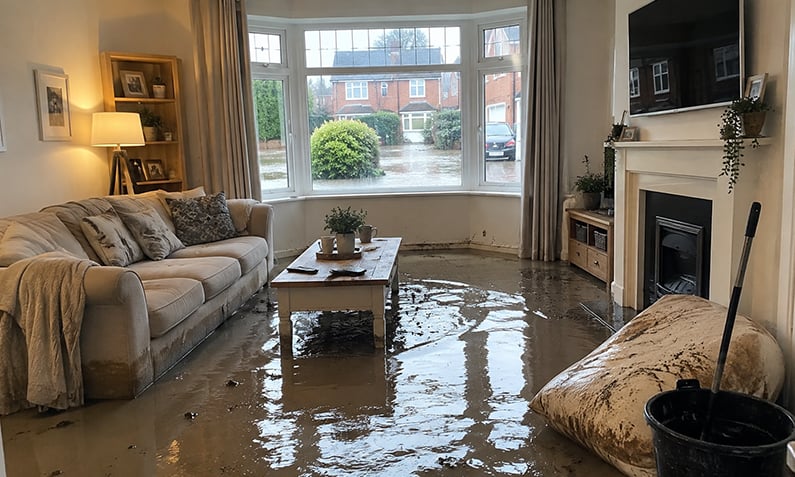
Is flooding and water damage covered by home insurance?

Flooding and escape of water are usually covered by standard home insurance as named risks, separate from accidental damage. Flood cover pays for damage from rising external water, and escape of water covers a burst or leaking pipe inside the home, both built into most buildings and contents policies rather than being optional accidental damage add-ons. Accidental damage would only apply if you yourself caused a sudden leak, such as drilling through a pipe.

Flood cover can be harder to secure in high-risk postcodes, though the Flood Re scheme helps make cover more available and affordable for eligible homes. If your property has any flood history, check the wording and limits carefully, and read our detailed guide on whether home insurance covers flood damage. For lightning, most policies cover fire and damage caused by a lightning strike as a named peril, so a surge that starts a fire is treated differently from a power surge that merely trips electronics.

Water damage claims are among the most common and most disputed, so the distinction between a covered burst pipe and an excluded gradual leak is worth understanding before you need to claim. If you are still deciding on cover levels as a first-time buyer or leaseholder, our guide on home insurance for leaseholders explains who insures the building versus the contents.

Is flooding and water damage covered by home insurance

Compare buildings and contents with flood cover

FAQs about home insurance

What is accidental damage house insurance?

Accidental damage house insurance is cover for sudden, one-off damage you cause yourself to your property or belongings, such as putting a foot through a ceiling or spilling paint on a carpet. It is usually an optional add-on to standard home insurance, though some policies include limited cover for fixed glass and sanitary fittings as standard. It does not cover wear and tear, gradual damage or breakdowns.

What is accidental damage buildings insurance?

Accidental damage buildings insurance covers sudden damage to the permanent structure and fixtures of your home, such as walls, floors, ceilings, pipework and fitted kitchens or bathrooms. An example would be drilling through a concealed pipe or cracking a bath by dropping something heavy. It is separate from contents accidental damage, so you can only claim for structural damage if you hold buildings cover.

Is accidental damage cover worth it?

Accidental damage cover is usually worth it for households with children, pets, keen DIYers, or expensive fitted flooring and electronics, because these produce the sudden mishaps it is designed for. It tends to add only a modest amount to a premium, roughly £45 a year in one 2026 market comparison. For a low-clutter home where any accident would cost less than your excess, it may not pay its way.

Will home insurance cover water damage?

Home insurance usually covers water damage from a burst or leaking pipe under escape-of-water cover, which is a standard named risk rather than an accidental damage add-on. Cover can vary, and some policies exclude the cost of repairing the failed pipe itself while still paying for the resulting damage. Gradual leaks that develop over weeks are often treated differently and may be excluded, so check the wording.

Will home insurance cover lightning damage?

Most home insurance policies cover fire and damage caused by a lightning strike as a standard named peril, so a lightning-caused fire or structural damage is typically included. A power surge that damages electronics may or may not be covered depending on the wording, and some policies treat surge damage under accidental damage or a specific electrical clause. Check whether your policy lists electrical surge as covered.

Does accidental damage cover remove my excess?

No, accidental damage cover does not remove your policy excess. You still pay the first part of any claim yourself, so if your excess is £250 and the repair costs £180, the cover pays nothing useful. Accidental damage is most valuable on larger claims where the repair cost clearly exceeds your excess.

Does claiming for accidental damage affect my no-claims discount?

Yes, making a claim, including for accidental damage, can reduce your no-claims discount and increase your premium at renewal. For small claims it is often cheaper to pay for the repair yourself than to lose your discount. Weigh the repair cost against your excess and the likely rise in future premiums before claiming.

Does accidental damage cover broken appliances?

Accidental damage covers sudden physical damage you cause to an appliance, such as knocking it over or dropping something on it. It does not cover mechanical or electrical breakdown, where the appliance fails from a fault or age, which needs a warranty or separate breakdown cover instead. Check single-item limits, as high-value appliances may be capped.

Is flooding covered by standard home insurance?

Flooding from rising external water is usually covered by standard buildings and contents insurance as a named risk, not as an accidental damage add-on. Cover can be harder to obtain in high-risk postcodes, though the Flood Re scheme helps keep it available and affordable for eligible homes. If your property has flood history, check the limits and any specific flood excess carefully.

What counts as accidental damage under home insurance?

Accidental damage is damage caused suddenly and unexpectedly by an outside means that was not deliberate and could not reasonably have been foreseen. There must be a single identifiable event, such as a dropped glass smashing a screen, rather than gradual deterioration. Damage from wear and tear, poor maintenance or general use does not count and is excluded.

Also Read Related Articles


Information correct as of 28 August 2026. Prices, tariffs, policy details and providers change frequently, so please check the latest details before making a decision. This article is for general information only and does not constitute financial advice. Free Price Compare is authorised and regulated by the Financial Conduct Authority (FCA).

4000+ reviews