






Smart Thermostats Save Energy: What You’ll Really Cut

Written by Andrea Troy
Reviewed by Brijesh Patel
6 min read
Updated: 11 Sep 2026
Smart Thermostats Save Energy: What You’ll Really Cut

Smart thermostats save energy mainly by heating your home only when it is needed, and the size of the saving depends heavily on how you already run your heating. According to Ofgem’s consumer advice, smart thermostats and heating controls can cut costs by letting heating and hot water come on only when required, rather than running to a fixed schedule you forget to change.

For a bill-conscious household still on a standard variable tariff, the practical question is not whether the technology works, but how much it will realistically shave off your gas bill and how long the kit takes to pay for itself. A smart thermostat helps most if your heating currently runs when nobody is home, if your daily routine varies, or if you have never set a proper schedule.

Free Price Compare sources this guidance from Ofgem and current UK retail pricing, and we help households compare energy tariffs so any saving from better heating control sits on top of a competitively priced deal.

Quick Answer: Smart Thermostats Save Energy

  • Independent-style UK testing quoted in 2026 buying guides suggests smart thermostats can cut heating use by roughly 10% to 22%, but real savings vary by home and habits (Free Price Compare research, August 2026).
  • Hardware costs around £129 to £270 for popular UK models, with professional installation adding roughly £150 to £320 on top.
  • The saving comes from heating control, not the device itself: a smart thermostat draws only a few watts and adds a negligible amount to your electricity use.
  • Households already running a tight, well-set heating schedule save the least; those heating an empty home or with variable routines save the most.
  • Smart thermostats do not lower your unit rate or standing charge, so comparing your energy tariff still matters alongside better heating control.

Last updated: August 2026

Written by the Free Price Compare editorial team | Reviewed August 2026

Do smart thermostats actually save money in the UK?

Smart thermostats do save money for most UK households, but the amount depends on how wasteful your current heating habits are. Ofgem confirms that smart thermostats and heating controls can reduce costs by heating and running hot water only when needed. Independent-style testing repeated across 2026 UK buying guides points to savings in the region of 10% to 22% of heating use for typical homes, though no single primary study confirms an exact national figure (Free Price Compare research, August 2026). The honest position is that a household heating an empty home to a fixed schedule can save meaningfully, while one that already turns the heating down when out and uses a well-set timer may save very little.

Heating is where the money is. Space heating and hot water account for the largest share of a typical gas bill, so even a modest percentage cut on heating translates into a worthwhile annual figure. If you want to understand where your money goes before buying kit, our breakdown of what uses the most energy in the home is a useful starting point.

Compare energy tariffs to cut your bill

How do smart thermostats save energy?

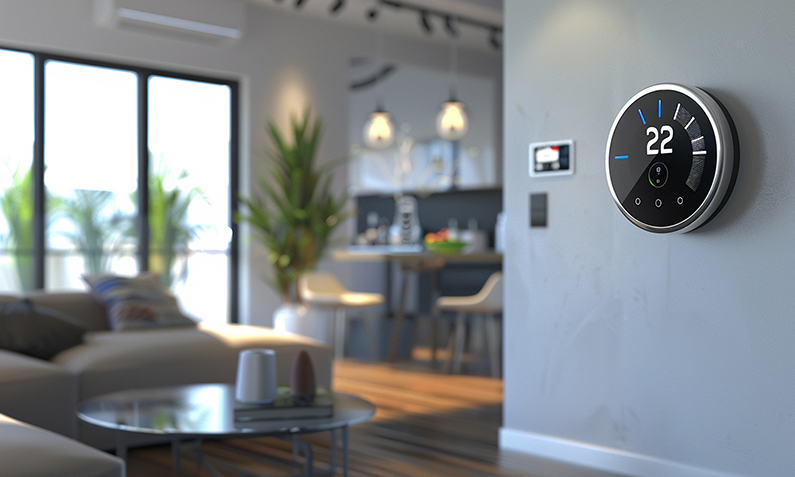
Smart thermostats save energy by matching your heating to when you are actually home and awake, rather than running to a fixed clock or a single temperature all day. A smart thermostat is a Wi-Fi connected heating control that you set from an app, and most add features a basic timer cannot: geofencing that turns heating down when your phone leaves the house, learning routines that build a schedule from your behaviour, and remote control so you can heat the home only when you are on the way back. Some also use OpenTherm to let a compatible boiler modulate, running at a lower flame instead of cycling on and off at full power, which improves efficiency.

The practical saving comes from four things: not heating an empty house, not overheating rooms you are not using, dropping the temperature overnight automatically, and reheating only in time for when you need it. Setting your room thermostat one degree lower is one of the most reliable ways to reduce heating use, and a smart thermostat makes that easier to stick to. For more tactics alongside heating control, our guide to smart ways to cut energy costs in the UK covers the wider picture.

How do smart thermostats save energy

How much can I realistically save per year?

Realistic annual savings from a smart thermostat sit at the lower end of manufacturer claims for most homes, with 2026 UK guides indicating something in the region of £80 to £200 a year where the device meaningfully changes how you heat (Free Price Compare research, August 2026). The figure is not fixed: a large, poorly-scheduled home with people out all day can save more, while a small, already-efficient home with a good timer and drawn habits may barely notice. No official Ofgem cash figure exists for smart thermostat savings, so treat any precise “save £300” headline with caution.

The saving is a percentage of your heating cost, not your whole bill, so your gas usage sets the ceiling. A household with a high gas bill and loose heating habits has the most to gain. Because a smart thermostat cannot change your unit rate or standing charge, the biggest single lever for many households is still the tariff itself. If you are on a standard variable tariff above the price cap floor, comparing deals can save more than the thermostat in the first year. Switching supplier is straightforward: run a comparison, choose a tariff, and your new supplier manages the switch, which Ofgem expects to complete within five working days once the cooling-off period allows. There is no interruption to your gas or electricity supply during the changeover.

Pair better heating control with a better tariff

See how much you could save by comparing gas and electricity deals

Do smart thermostats use more electricity themselves?

Smart thermostats use a negligible amount of electricity, typically only a few watts to stay connected to Wi-Fi and run the display. The tiny standby draw of the device is dwarfed by the heating energy it helps you avoid, so the net effect on your bill is a saving, not a cost. A concern raised often online is that always-on smart kit quietly adds to bills; for a thermostat the running cost is trivial, measured in a small number of pounds a year at most.

Standby and always-on devices across a whole home can add up, which is why it is worth auditing them separately. If that concern applies to your other gadgets, our guide to standby power and how to reduce it shows where the hidden costs sit. For the thermostat itself, the electricity it draws is not a reason to avoid one.

Will smart radiator thermostats help reduce my heating?

Smart radiator thermostats can reduce heating by letting you set different temperatures in different rooms, so you stop paying to heat spaces nobody is using. A smart TRV (thermostatic radiator valve) is a wireless valve that replaces the manual dial on a radiator and links to your heating system, enabling zoned or room-by-room control. The saving comes from turning down bedrooms during the day, or a spare room permanently, while keeping living areas comfortable.

Two caveats matter. First, savings from zoning depend on leaving some rooms cooler, which means accepting closed doors and cooler spaces; if you heat the whole house evenly anyway, smart TRVs add little. Second, kitting out every radiator costs more, as each valve is bought separately, which lengthens the payback. Smart TRVs make most sense in larger homes with clearly separate living and sleeping zones. For households comparing broader upgrades, our overview of reducing energy costs with smart home technology puts them in context.

See more ways to lower your energy bill

Why don’t smart thermostats always save you money?

Smart thermostats do not always save money because the saving depends entirely on changing wasteful behaviour, and some homes have little waste to remove. If you already run a sensible timer, turn the heating down when out, and keep unused rooms cool, a smart thermostat automates habits you already have, so the improvement is small. Homes with poor insulation or a heating system that cannot modulate may also see less benefit, because the underlying inefficiency remains.

Payback is the other issue. Popular UK models cost around £129 to £270 for hardware, and professional installation can add roughly £150 to £320 more. If your realistic saving is modest, recouping the outlay can take longer than the year or so that some marketing implies. The device pays back fastest in homes with high gas use, variable routines, and no existing schedule. Insulation, draught-proofing and correct boiler settings often deliver more per pound spent, and are worth doing first. GOV.UK reports that insulating, draught-proofing and correcting boiler controls are among the first measures to consider for reducing gas use, because they are typically lower-cost options that can deliver savings before larger changes.

Why don’t smart thermostats always save you money

What does a smart thermostat cost to buy and install?

A smart thermostat costs around £129 to £270 for the hardware in 2026, depending on model, whether it is wired or battery-powered, and whether a starter kit is included. Leading UK options this year span roughly £129 to £220 for mid-range learning thermostats, with premium models and multi-room bundles reaching the higher end of that range. Professional installation typically adds around £150 to £320, and larger whole-home setups with several smart valves can cost considerably more. The Energy Saving Trust states that adding a programmer, thermostat and TRVs to all radiators costs around £600 (or around £370 to add TRVs if you already have a programmer and thermostat).

Cost element Typical 2026 UK range
Single smart thermostat (hardware) Around £129 to £270
Professional installation Around £150 to £320
Smart radiator valves (each) Bought individually, cost adds up per room
Whole-home multi-room install Can run into several hundred pounds or more

Figures are indicative and may change. Some households wire the thermostat themselves where the existing controls are a simple swap, but heating wiring and boiler compatibility vary, so a professional fit is the safer route if you are unsure.

Can I install a smart thermostat myself?

You can install some smart thermostats yourself if the wiring is a straightforward like-for-like swap and the boiler is compatible, but many households are better off using a professional. A basic replacement of an existing programmable thermostat can be a DIY job for a confident person who follows the manufacturer’s instructions and isolates the power first. However, systems with combi boilers, hot water cylinders, S-plan or Y-plan wiring, or OpenTherm connections often need a Gas Safe registered engineer or qualified electrician to fit correctly and safely.

Getting installation wrong risks the thermostat not controlling hot water properly, losing modulation benefits, or triggering boiler faults. Manufacturers publish compatibility checkers, and it is worth confirming your boiler and system type before buying. If your setup is anything beyond a simple swap, the installation cost is money well spent to secure the saving you bought the device for.

Compare gas and electricity deals

Are smart thermostats worth it for cutting your bill?

Smart thermostats are worth it for households that currently waste heating energy, and less worthwhile for those already running a tight schedule. The device is a good fit if you heat an empty home, have an unpredictable routine, keep rooms warmer than needed, or have never set a proper timer. For these homes, the automation delivers a real cut in gas use and the outlay pays back within a reasonable period.

To lower your energy bill overall, treat the thermostat as one part of a plan rather than a fix on its own. Insulation and draught-proofing reduce the heat you need in the first place, correct boiler flow settings improve efficiency, and a competitively priced tariff cuts the cost of every unit you do use. Households on a smart meter can also see the impact of changes in near real time; our guide to smart meters and accurate billing explains how that visibility helps. The cheapest way to heat your home is to combine efficient controls with a good deal, not to rely on one gadget alone.

Are smart thermostats worth it for cutting your bill

FAQs about smart thermostats save energy

Do smart thermostats save energy compared to a normal timer?

Smart thermostats can save energy beyond a normal timer if they meaningfully change your heating pattern, such as through geofencing, remote control or automatic learning. If you already use a well-set timer and turn the heating down when out, the extra saving is small. The bigger gains come in homes with variable routines or no existing schedule.

How much energy do smart thermostats save on average?

UK buying guides in 2026 suggest smart thermostats can cut heating use by roughly 10% to 22% where they change how you heat, though no single official figure confirms this. In cash terms that often works out around £80 to £200 a year for suitable homes. Your gas usage and current habits set how much you actually save.

Will a Hive or Nest thermostat save 2% or 20%?

The realistic saving depends on your home, not the brand, and for most households sits nearer the lower-to-middle of the claimed range rather than the top. A home heating an empty house to a fixed schedule can save a meaningful percentage, while an already-efficient home may save only a couple of percent. Habits and gas usage matter more than the model.

Are smart radiator valves worth adding as well?

Smart radiator valves are worth adding in larger homes where you leave some rooms cooler, because zoning stops you heating unused spaces. If you heat the whole house evenly and keep doors open, the saving is limited. Each valve is bought separately, so the cost adds up and lengthens the payback.

How long does a smart thermostat take to pay for itself?

Payback depends on your saving versus the total cost of hardware and installation, which can run from around £280 upwards for a fitted single thermostat. In a home with high gas use and loose heating habits, payback can be reasonably quick; in an already-efficient home it can take several years. Buy for the saving, not the marketed payback headline.

Do I need a smart meter to use a smart thermostat?

No, a smart thermostat works independently of your electricity or gas smart meter, so you do not need one to install or use it. A smart meter does help by showing your usage more clearly, making it easier to see whether the thermostat is reducing consumption. The two are complementary rather than dependent on each other.

Can a smart thermostat control my hot water too?

Many smart thermostats can control hot water if you have a hot water cylinder and the model supports it, letting you schedule heating and hot water separately. Combi boilers heat water on demand, so there is usually no separate hot water schedule to control. Check the model's compatibility with your system before buying.

What's the most effective way to make my boiler run efficiently?

Setting a lower flow temperature on a condensing boiler and letting it modulate, rather than cycling on and off at full power, is one of the most effective efficiency steps. A smart thermostat with OpenTherm can help a compatible boiler modulate more smoothly. Combining this with a sensible room temperature and schedule reduces wasted gas.

Is it cheaper to turn the heating off when out or leave it low?

For most homes it is cheaper to turn the heating off or well down when the house is empty and reheat when you return, rather than leaving it running at a constant temperature. A smart thermostat automates this by using geofencing or a schedule. Only in unusual cases, such as very poorly insulated homes with long absences, does keeping a low background temperature make sense.

Will a smart thermostat lower my unit rate or standing charge?

No, a smart thermostat cannot change your energy unit rate or standing charge, as those are set by your tariff. It only reduces how much energy you use through better heating control. To cut the price of every unit you use, compare tariffs, especially if you are on a standard variable deal.

Which homes save the most from a smart thermostat?

Homes that heat an empty house, have unpredictable routines, run rooms warmer than needed, or have never set a proper schedule save the most from a smart thermostat. Larger properties with distinct living and sleeping zones also benefit from room-by-room control. Small, well-insulated homes with a good existing timer save the least.

Also Read Related Articles


Information correct as of 18 August 2026. Prices, tariffs, policy details and providers change frequently, so please check the latest details before making a decision. This article is for general information only and does not constitute financial advice. Free Price Compare is authorised and regulated by the Financial Conduct Authority (FCA).

4000+ reviews