





Pay Excess Not at Fault: What UK Drivers Need to Know

Written by Tim Bailey
Reviewed by Shay Ramani
5 min read
Updated: 6 Aug 2026
Pay Excess Not at Fault: What UK Drivers Need to Know

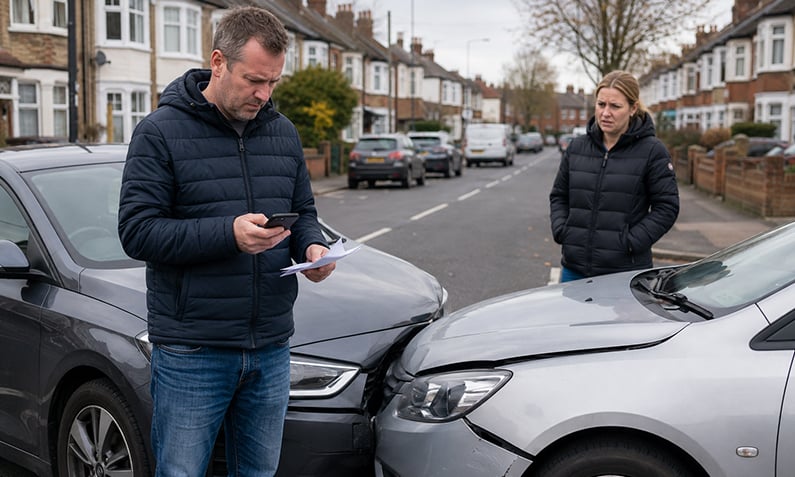
Pay excess not at fault is a real and common outcome in UK car insurance: if you claim through your own insurer after a crash that was not your fault, you will usually pay your excess upfront, then reclaim it once the other driver’s insurer accepts liability. The excess is not a penalty for being to blame. It is simply the part of any claim your policy does not cover, and it applies whenever you claim on your own policy, regardless of who caused the accident.

There is one common way to avoid paying anything upfront: if the at-fault driver’s insurer handles your repair directly, you do not claim on your own policy, so no excess is triggered. Whether that route is open depends on liability being clear and the third party’s insurer agreeing to deal with you.

Free Price Compare compares comprehensive cover across a panel of more than 130 insurers, and around 88 to 89% of the quotes run through the site are for comprehensive policies, so this excess question affects most of our buyers. The guidance below explains when you pay, when you get it back, and how to keep upfront costs down.

Quick Answer: Pay Excess Not at Fault

  • You usually pay your excess upfront on a non-fault claim if your own insurer handles it, then reclaim it once liability is settled (Citizens Advice).
  • Your excess is your compulsory excess (set by the insurer) plus any voluntary excess you chose; voluntary excess is commonly £200 to £300 (Money.co.uk).
  • Paying your excess is not an admission of fault. Fault is decided by the insurers on the evidence, not by who pays first.
  • If the at-fault driver’s insurer deals with your claim directly, you do not claim on your own policy and pay no excess at all.
  • If nobody can be found to blame (for example an untraced hit-and-run), you often keep paying the excess and cannot recover it.

Last updated: August 2026

Written by the Free Price Compare editorial team | Reviewed August 2026

Do you pay excess if not at fault?

You do pay excess if not at fault whenever you claim on your own car insurance policy, because the excess is the agreed part of any claim your insurer does not cover. The rule applies regardless of blame, so a non-fault driver claiming through their own insurer normally pays upfront just as an at-fault driver would. The difference is that a non-fault driver can usually recover that money later. According to Citizens Advice, if your insurer handled the claim it should recover the excess back for you from the driver who caused the accident. So paying it is often a temporary cash-flow cost, not a permanent loss, provided the other side accepts liability.

The exception that avoids the excess entirely is claiming through the other driver’s insurer instead of your own. If liability is clear and the at-fault insurer agrees to manage your repair directly, you never open a claim on your policy, so no excess is charged.

Why do you pay excess when it wasn’t your fault?

You pay excess when it was not your fault because the excess attaches to the claim itself, not to who caused the accident. When you ask your insurer to repair or write off your car, they are paying out under your policy, and your policy says you cover the first part of any claim. Fault has nothing to do with whether that clause applies. Insurers apply it the moment you claim on your own cover, then pursue the at-fault party separately to get the money back. This is why drivers who were rear-ended or reversed into are still asked for their excess: the insurer needs to recover its costs from someone before it can refund you.

Whether you can avoid the excess comes down to who deals with the claim. Free Price Compare’s own data shows around 88 to 89% of car insurance quotes are for comprehensive cover, and comprehensive policyholders have the widest choice of routes, including claiming directly against the third party’s insurer where fault is admitted quickly. If you want to check your options before renewal, you can compare comprehensive car insurance across the panel first.

Why do you pay excess when it wasn’t your fault

Compare comprehensive car insurance quotes

What is excess in car insurance?

Excess in car insurance is the fixed amount you agree to pay towards any claim before your insurer pays the rest. It is made up of two parts: compulsory excess, which the insurer sets and you cannot change, and voluntary excess, which you choose to add on top. Both are added together and become payable when you claim on your policy. Voluntary excess amounts vary by insurer, car and driver profile, while compulsory excess figures also differ widely.

Compulsory and voluntary excess explained

Compulsory excess is the mandatory portion your insurer fixes based on risk, and voluntary excess is the extra amount you volunteer to lower your premium. A higher voluntary excess usually cuts your premium, but it raises what you pay out if you claim, so it only makes sense if you would still find that amount affordable after an accident. New and returning drivers should note that around a third of Free Price Compare car insurance quotes come from people with no no-claims bonus, and higher excesses often follow a thinner claims history, so it is worth checking both figures on any quote.

Excess type Who sets it Typical range
Compulsory excess Your insurer Varies widely by risk
Voluntary excess You choose Around £200 to £300
Total excess on a claim Both added together Example: £550

Figures are indicative and may change.

Do I pay and then my insurance company pays it back to me?

Yes, on a non-fault claim you normally pay your excess first and your insurer recovers it for you once liability is settled, then refunds it. Citizens Advice states that if your own insurer handled the claim, it should claim the excess back on your behalf from the at-fault driver’s insurer. You do not usually have to chase the other side yourself while your insurer is running the recovery. The refund lands once the at-fault insurer accepts liability and settles, which is why the timing depends on how quickly the other party admits blame.

Two things speed this up. First, keeping evidence, dash-cam footage, photos, witness details and a clear account of what happened, helps your insurer establish fault fast. Second, having legal expenses cover on your policy means the recovery is handled without you being left out of pocket if a dispute drags on. If the third party disputes liability, the process can take longer, and in rare no-blame situations you may not get the excess back at all.

Check your excess and cover before you renew

See what a switch could save on comprehensive cover across 130+ insurers.

Can I avoid paying excess altogether?

You can avoid paying excess altogether by claiming through the at-fault driver’s insurer instead of your own, so no claim is opened on your policy. Citizens Advice notes that if the accident was not your fault, you can use a credit hire company rather than claiming through your own insurer, which can also keep you off your own policy and avoid the upfront excess. These routes only work when fault is clear and the other side accepts it. Some accident-management and credit hire arrangements carry their own conditions and risks, so read the terms before agreeing, particularly around who is liable if the recovery fails.

The most reliable way to avoid the upfront charge is to establish the other driver’s insurer details at the scene and let them handle your repair directly if they accept blame. If liability is unclear, or you need your car fixed quickly, claiming through your own insurer and reclaiming the excess later is usually the more straightforward option. Some policies also let you protect against being left out of pocket by adding accidental damage cover-style extras, though the specifics differ between motor and home products.

See car insurance options across 130+ insurers

Does paying my excess mean I’m admitting fault?

Paying your excess does not mean you are admitting fault. Fault in a UK motor claim is decided by the insurers based on the evidence, the circumstances of the accident, statements, damage patterns, footage and witness accounts, not by who pays their excess first. You can pay your excess on a claim and still be recorded as the non-fault driver once liability is settled. Insurers routinely collect the excess upfront on non-fault claims precisely because it is a claims-handling step, not a judgement about blame.

This matters for your no-claims bonus too. A confirmed non-fault claim where your insurer fully recovers its costs should not affect your no-claims discount in the same way a fault claim would, though it can still show on your record. Keeping evidence and asking your insurer to confirm the recorded fault position protects you if there is any later dispute about who was to blame.

What if the car is a write-off or nobody is at fault?

If your car is a write-off after a non-fault crash, your excess is normally deducted from the payout first, then recovered from the at-fault driver’s insurer along with the rest of the settlement. A write-off, or total loss, is where the repair cost exceeds a set percentage of the car’s value and the insurer pays out the car’s worth instead of repairing it. On a non-fault total loss, you should end up with the full market value once the excess is recovered, so long as liability is accepted. Around 43 to 48% of Free Price Compare car insurance quotes are for cars valued between £1,000 and £5,000, where write-off decisions are more common because repair bills quickly outstrip the car’s value.

If nobody can be found to blame, the position is different. In a genuine no-fault-established case, such as an untraced hit-and-run or an accident where liability cannot be pinned on anyone, you often pay the excess and cannot recover it. Claims involving untraced or uninsured drivers may fall to the Motor Insurers’ Bureau process, which has its own rules on what is recoverable. Checking whether you have legal expenses cover before you claim can make the difference between recovering your excess and absorbing it.

How much voluntary excess should you pay?

Choose a voluntary excess you could comfortably pay in full the day after an accident, because that is exactly when you will need it. Setting a higher voluntary excess lowers your premium, but it raises your out-of-pocket cost on every claim, including non-fault claims where you pay upfront before any recovery. Most drivers land on £200 to £300 of voluntary excess according to Money.co.uk, which balances a useful premium saving against a manageable upfront cost. If your car is worth only a few thousand pounds, a very high total excess can leave little worth claiming for, so weigh the excess against the car’s value.

A practical test: add your compulsory and voluntary excess together, then ask whether you would still claim for a moderate repair at that figure. If the answer is no, the voluntary excess is too high for your situation. Comparing quotes lets you see how much each pound of voluntary excess actually saves, and the trade-off varies by insurer. You can weigh premium against excess when you compare car insurance quotes across the panel.

How much voluntary excess should you pay

Compare quotes and set your excess

FAQs about pay excess not at fault

How long does it take to get my excess back after a non-fault claim?

There is no fixed timescale because the refund depends on the at-fault driver's insurer accepting liability. Once fault is admitted and the claim settles, your insurer refunds the excess, which can take a few weeks to several months. Disputed liability or slow responses from the other side extend the wait.

Do I have to sue the third party myself to get my excess back?

No, in most cases your insurer recovers the excess on your behalf as part of the wider claim, so you do not need to take separate legal action. If liability is disputed and your insurer will not pursue it, legal expenses cover can fund a recovery. Only in unusual situations would you consider chasing the third party directly.

Do I pay excess if the other person's insurance is dealing with everything?

No, if the at-fault driver's insurer handles your repair directly you do not claim on your own policy, so no excess is triggered. This route depends on liability being clear and the third-party insurer agreeing to deal with you. If you claim through your own insurer instead, you pay the excess upfront and reclaim it later.

Someone reversed into my car and their insurer says I have to pay my excess. Is that right?

If you are claiming through your own insurer, yes, you pay your excess first and reclaim it once the other side accepts liability. If the at-fault driver's insurer offers to handle your repair directly, you can avoid the excess entirely. It is worth asking whether the third-party insurer will deal with you before claiming on your own policy.

Will a non-fault claim affect my no-claims bonus?

A confirmed non-fault claim where your insurer fully recovers its costs should not reduce your no-claims discount in the way a fault claim would. However, any claim can still appear on your record and may affect future quotes. Always confirm the recorded fault position with your insurer once liability is settled.

What happens to my excess if my car is written off and it wasn't my fault?

Your excess is usually deducted from the write-off payout first, then recovered from the at-fault driver's insurer alongside the rest of the settlement. On a confirmed non-fault total loss you should receive the full market value once the excess is recovered. If liability is not accepted, recovery of the excess is not guaranteed.

Can I claim from the at-fault driver's insurer and my own insurer at the same time?

No, you cannot recover the same loss twice. You either claim through your own insurer, who then recovers costs from the at-fault party, or you deal directly with the at-fault driver's insurer. Choosing the direct route avoids your excess but relies on the other insurer accepting liability.

What if the driver who hit me was untraced or uninsured?

If the driver cannot be traced or was uninsured, your claim may go through the Motor Insurers' Bureau, which has its own rules on what you can recover. In these cases you often cannot reclaim your excess in the usual way. Legal expenses cover and dash-cam evidence can help support any claim.

How many car insurance claims can I make in a year?

There is no fixed legal limit on how many claims you can make in a year, but multiple claims usually raise your future premiums and can affect your no-claims bonus. Each claim you make on your own policy triggers your excess, whether you were at fault or not. Non-fault claims where costs are fully recovered have less impact than fault claims.

Yes, legal expenses cover can fund the recovery of your excess and other uninsured losses if the at-fault driver disputes liability. Without it, your insurer usually still recovers the excess as part of a straightforward claim, but a contested case is harder to pursue. It is a low-cost add-on worth checking on any quote.

Is it worth choosing a high voluntary excess to lower my premium?

A higher voluntary excess lowers your premium but increases what you pay upfront on any claim, including non-fault claims. It only makes sense if you could comfortably afford the total excess after an accident. If your car is only worth a few thousand pounds, a very high excess can leave little worth claiming for.

Do I still pay excess if I only claim for damage the other driver caused?

Yes, if you claim on your own comprehensive policy for damage the other driver caused, you pay your excess first, then reclaim it once liability is confirmed. If you do not claim on your policy at all, for example because the other insurer repairs your car directly, no excess is due. The excess is tied to claiming on your own cover, not to who caused the damage.

Also Read Related Articles


Information correct as of 5 August 2026. Prices, tariffs, policy details and providers change frequently, so please check the latest details before making a decision. This article is for general information only and does not constitute financial advice. Free Price Compare is authorised and regulated by the Financial Conduct Authority (FCA).

4000+ reviews