

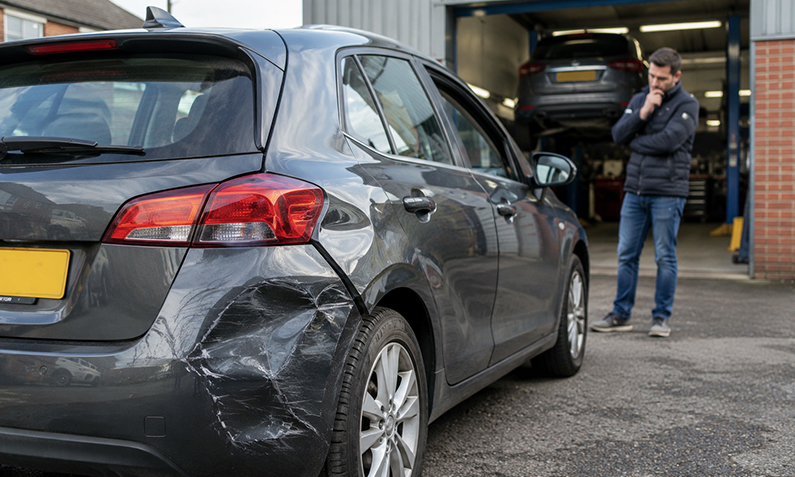




Will Car Insurance Cover Repairs? What Actually Applies

Written by Ankit Sureja
Reviewed by Tim Bailey
6 min read
Updated: 1 Oct 2026
Will Car Insurance Cover Repairs? What Actually Applies

Car insurance cover for repairs depends entirely on the level of policy you hold and how the damage happened. Comprehensive car insurance usually pays to repair your own vehicle after an accident, fire, theft or vandalism, even when the accident is your fault, but no motor policy at any level covers everyday wear and tear or mechanical failure such as a worn clutch or a seized engine.

Around 88-89% of car insurance quotes started through Free Price Compare are for comprehensive cover, so most drivers reading this already hold the level that pays for own-vehicle accident damage (Free Price Compare data, January to June 2026). The question that trips people up is what counts as accident damage versus what counts as a fault that the policy treats as your own problem, and that line decides whether a claim is worth making.

We compare car insurance from a panel of 130+ UK insurers, and this explainer sets out exactly which repairs each cover level pays for, when the excess makes a claim not worth it, and what to do if the repair bill approaches your car’s value.

Quick Answer: Will Car Insurance Cover Repairs? What Actually Applies

  • Comprehensive cover repairs your own car after accident, fire, theft or vandalism.
  • No motor policy covers wear and tear, breakdown or engine and gearbox failure.
  • Third-party fire and theft only repairs your car for fire or theft damage.
  • You always pay the excess first, even on a non-fault claim.
  • The average motor claim payout was around £4,900 in Q2 2026 (ABI).

Last updated: September 2026

Written by the Free Price Compare editorial team | Reviewed September 2026

What each cover level actually pays to repair

The level of cover you hold decides whether your insurer pays to repair your own vehicle. There are three cover levels in the UK, and only two of them ever pay towards your own car’s repairs. Comprehensive cover repairs your own car for accidental damage, fire, theft and vandalism; third-party, fire and theft (TPFT) only repairs your car for fire or theft; and third-party only never repairs your own vehicle at all.

Cover level Repairs your own car?
Comprehensive Yes – accident (any fault), fire, theft, vandalism, weather, floods
Third-party, fire & theft Only for fire or theft damage – not for crash damage
Third-party only No – covers other people’s cars and injuries only

Figures are indicative and may change.

Third-party only is the legal minimum under the Road Traffic Act 1988, and it exists to pay for damage and injury you cause to other people, not to fix your own vehicle. If you hold third-party only and crash into a wall, you pay for your own repairs from your own pocket. It is worth reading our breakdown of the different types of car insurance cover if you are unsure which level you have.

Comprehensive is the only level that reliably pays for your own repairs, which is why almost nine in ten drivers quoting through us choose it. Even then, cover applies to sudden, accidental or malicious damage, not to parts that simply wear out.

See which cover level fits your car

Will car insurance cover repairs if the accident was my fault?

Yes, comprehensive car insurance covers repairs to your own car when the accident was your fault, which is the main reason drivers choose it over cheaper levels. If you reverse into a bollard, misjudge a turn or hit a parked car, a comprehensive policy pays to repair your vehicle once you have paid the excess. Third-party only and TPFT do not pay for your own repairs after an at-fault crash.

A fault claim in insurance terms does not always mean the crash was your mistake. A fault claim is any claim where your insurer cannot recover the repair cost from another party, so a fire with no one to blame, or your car being struck by an animal, is recorded as a fault claim even though you did nothing wrong. That classification affects your no-claims record and future premiums, so it matters beyond the single repair.

The trade-off is your no-claims discount. Making an at-fault claim usually reduces or resets your no-claims bonus unless you have paid to protect it, and around a third of quotes we see already come from drivers with zero years of no-claims bonus (Free Price Compare data, January to June 2026). If the repair is only slightly above your excess, weigh the repair saving against the likely rise in next year’s premium before you claim.

Will car insurance cover repairs if you are not at fault?

If the accident was not your fault, the at-fault driver’s insurer is responsible for your repair costs, and in a straightforward non-fault claim you should not lose out financially. You can either claim through the other driver’s insurer directly or claim through your own comprehensive policy, in which case your insurer arranges the repair and then recovers the cost from the at-fault party.

The catch on a non-fault claim is the excess. If you claim through your own insurer, you usually pay your excess up front, then reclaim it from the at-fault driver’s insurer once liability is settled, according to Citizens Advice. Legal expenses cover, if you have it, can handle this recovery for you and pursue any uninsured losses. Our guide to car insurance legal cover explains when that add-on earns its place.

A non-fault claim can still nudge your premium upward at renewal, because insurers treat any driver who has claimed as statistically more likely to claim again. Where the other driver accepts blame and their insurer handles everything, the effect is usually smaller than a fault claim.

Will car insurance cover repairs if you are not at fault

Compare comprehensive cover in about five minutes

Check prices across 130+ UK insurers and see what your excess would be.

Does car insurance cover engine failure or mechanical repairs?

Car insurance does not cover engine failure, gearbox failure or any mechanical breakdown caused by age, wear or lack of maintenance. Motor insurance pays for sudden, external, accidental damage, not for parts that fail from normal use, so a seized engine, a slipping clutch or a worn gearbox is not a valid claim on a standard policy. To cover those, you need separate Mechanical Breakdown Insurance (MBI), a used-car warranty, or the manufacturer’s warranty if the car is still within it.

There is one exception worth knowing. If engine or gearbox damage is the direct result of an insured accident, for example a collision that cracks the engine block, comprehensive cover can pay for that repair because the cause is the accident, not wear. The distinction is always about cause: accident damage is covered, deterioration is not.

Manufacturing defects are handled outside insurance too. If a part fails because of a design or build fault, the remedy sits with the manufacturer’s warranty or your rights under the Consumer Rights Act 2015 against the dealer, not with your motor insurer. Breakdown cover is also different from any of this: roadside breakdown cover gets you moving or recovers the car, but it does not pay for the mechanical parts or the garage repair itself.

  • Covered by comprehensive: accident damage, fire, theft, vandalism, flood, storm, falling objects.
  • Not covered by any motor policy: worn brake pads, tyres, clutch, timing belt, general engine and gearbox wear.
  • Needs a separate product: Mechanical Breakdown Insurance, a warranty, or roadside breakdown cover.

Can I claim on insurance for repairs when there was no accident?

Yes, you can claim for repairs without a collision if the damage is caused by an insured event such as vandalism, fire, theft, a storm, a flood or a falling object, provided you hold comprehensive cover. Someone keying your car, a wall blowing onto your bonnet in high winds, or flood water damaging the interior are all claimable on a comprehensive policy even though no accident took place.

What you cannot claim for without an accident is deterioration. Rust, faded paint, a failing battery, worn tyres or a part reaching the end of its life are all wear and tear, and no comprehensive policy pays for them. Cosmetic scuffs and small dents fall into a grey area: standard cover treats them as accidental damage if there is a sudden cause, but a dedicated cosmetic repair add-on can cover minor scratches and scuffs without touching your main no-claims discount.

Windscreen damage is a common no-accident claim. Most comprehensive policies include windscreen cover with a lower, separate excess, and repairing a chip rather than replacing the glass usually costs little or nothing and does not affect your no-claims bonus. Our guide on windscreen cover under comprehensive policies sets out how that works.

Compare comprehensive car insurance quotes

When is it not worth claiming for a repair?

A repair claim is generally not worth making when the bill is close to your excess or when the premium rise outweighs the repair saving. You always pay the excess first, so if your excess is £450 and the repair costs £600, you only recover £150 from a claim, and that £150 can be wiped out several times over by a higher premium and a lost no-claims discount at renewal.

Work out the real cost before you claim by adding your excess to the likely premium increase, then compare that total against the repair bill. For small dents, scuffs or a single chipped windscreen, paying a garage directly often works out cheaper and protects your no-claims discount. For larger accident damage, structural repairs or anything approaching several thousand pounds, claiming is usually the sensible route.

The average motor claim payout rose to around £4,900 in the second quarter of 2026, according to the Association of British Insurers (ABI), and insurers paid out a record £3.2 billion in that quarter alone. Those numbers show how quickly repair costs escalate on serious damage, which is exactly where comprehensive cover earns its keep. Before renewal, it also pays to run through our questions to ask when comparing quotes so your excess and add-ons match how you actually use the car.

Can I arrange my own repairs and claim the money back?

Under UK law you have the right to choose your own repairer, and your insurer cannot refuse a valid claim simply because you want to use an independent bodyshop rather than their approved network. It can, however, limit what it pays to the cost it would have incurred at its own approved repairer, so get quotes and get the work authorised in writing before it starts, or you risk being left to cover the difference.

An approved repairer is a garage in your insurer’s own network that carries out repairs to agreed standards, and using one brings a repair guarantee that independent garages do not. Allianz offers a lifetime guarantee on repairs carried out by its recommended repairers for as long as you own the vehicle, and its approved repairer service includes that guarantee on labour only. Choose an independent garage and that insurer-backed guarantee no longer applies.

Retrospectively claiming for repairs you have already paid for is harder. Insurers expect you to report an incident promptly and let them assess the damage before repair, and they can reject a claim if a delay has prevented them inspecting the car or verifying the cause. If you must arrange emergency work, photograph the damage thoroughly and keep every invoice.

What happens if the repair costs more than the car is worth?

If repairing your car would cost more than its market value, your insurer can declare it a write-off and pay you the car’s value at the time of the accident rather than repairing it. This is standard practice: no insurer pays more to repair a car than the vehicle is worth, and around 43-48% of the cars quoted through us are valued between £1,000 and £5,000, which is the range where write-off decisions come up most often (Free Price Compare data, January to June 2026).

Write-offs are graded into categories A, B, S and N. Categories A and B mean the car must be scrapped, while S (structural) and N (non-structural) damage can be repaired and returned to the road if you buy it back. If you want to keep a Category S or N car, you can negotiate a buy-back, but you must notify the DVLA and, for a Category S vehicle, have it professionally repaired and inspected before it is roadworthy again.

The payout is the disputed part for most drivers. If you think the market value offered is too low, provide evidence such as advertised prices for the same make, model, age and mileage, and you can escalate an unresolved dispute to the Financial Ombudsman Service. Pothole damage is a frequent write-off trigger: Allianz says 21% of insurance claims where a vehicle hit a pothole resulted in the vehicle being declared a write-off, and the average total-loss claim was £7,900. Our guide on pothole damage and insurance covers claiming from the council as well as your insurer.

What happens if the repair costs more than the car is worth

Compare car insurance and check your excess

FAQs about car insurance cover repairs

Will insurance cover gearbox failure?

No, a standard car insurance policy does not cover gearbox failure, because insurers class it as wear and tear or mechanical breakdown. The one exception is if the gearbox is damaged directly by an insured accident, in which case comprehensive cover can pay for it. To cover gearbox failure from normal use, you need Mechanical Breakdown Insurance or a warranty.

Is breakdown cover the same as engine failure insurance?

No, breakdown cover and engine failure insurance are different products. Roadside breakdown cover gets you moving again or recovers your car to a garage, but it does not pay for the mechanical repair itself. To pay for the cost of repairing or replacing a failed engine, you need Mechanical Breakdown Insurance or a warranty, not breakdown cover.

What if my engine fails due to a manufacturing defect?

If your engine fails because of a manufacturing defect, the remedy sits with the manufacturer's warranty or your rights under the Consumer Rights Act 2015 against the seller, not your motor insurer. Car insurance covers accidental and external damage, not faults built into the vehicle. Contact the manufacturer or dealer, and keep records of the fault and any correspondence.

Will car insurance cover repairs if someone else was driving my car?

Comprehensive car insurance can cover repairs if another named driver on your policy causes damage, subject to the excess and your no-claims discount. If the driver was not insured on your policy and had no cover of their own, the claim may be refused. Always check who is a named driver before letting someone drive your car.

Can I claim on insurance for a scratch or dent that was not caused by an accident?

Yes, you can claim on comprehensive cover for a scratch or dent caused by vandalism or an unknown third party, though you pay the excess first. For minor scuffs, paying a garage directly is often cheaper than claiming and protects your no-claims discount. A cosmetic repair add-on can cover small scratches without affecting your main policy.

How long do I have to report damage to my insurer?

You should report any incident to your insurer as soon as possible, and most policies require prompt notification even if you do not intend to claim. Insurers can reject a claim if a delay has prevented them inspecting the damage or verifying the cause. Reporting late for minor scratches is usually accepted, but do not leave it if the damage is significant.

Will my premium go up if I make a non-fault claim?

A non-fault claim can still increase your premium at renewal, even though you were not to blame. Insurers treat any driver who has claimed as statistically more likely to claim again. The rise is usually smaller than for a fault claim, especially where the other driver's insurer accepts liability and settles the cost quickly.

Do I have to use my insurer's approved repairer?

No, under UK law you have the right to choose your own repairer, and your insurer cannot refuse a valid claim just because you use an independent garage. It can limit its payment to what its own approved network would have charged, so get the work authorised in writing first. Using an approved repairer usually gives you a repair guarantee that an independent garage cannot.

How long are car insurance repairs guaranteed for?

Repairs carried out by an insurer's approved repairer are typically guaranteed for at least three years, and Defaqto data shows around 95% of insurers offer this minimum. Some insurers provide a lifetime guarantee for as long as you own the car. If you use a garage outside the approved network, the repair is not covered by any insurer-backed guarantee.

Should I go through insurance or accept cash for repairs?

Accepting cash for repairs can make sense for minor damage where the cost is close to your excess or where a claim would raise your premium and reset your no-claims discount. For larger accident damage, claiming through insurance is usually safer and cheaper overall. Weigh your excess plus the likely premium rise against the repair bill before deciding.

What is the point where an insurance company writes off a car?

An insurer writes off a car when repairing it would cost more than the vehicle's market value, though the exact threshold varies by insurer and can be lower than 100% once labour and other costs are included. If your car is worth £3,000 and the repair is £2,000 with a £450 excess, it may still be repaired, but it can depend on the insurer's own repair cost limits.

Can I keep my car if it is written off?

You may be able to keep a written-off car if it falls into Category S or N and can be safely repaired, by negotiating a buy-back with your insurer. Category A and B write-offs must be scrapped and cannot return to the road. You must notify the DVLA, and a Category S car needs professional repair and inspection before it is roadworthy again.

Also Read Related Articles


Information correct as of 26 September 2026. Prices, tariffs, policy details and providers change frequently, so please check the latest details before making a decision. This article is for general information only and does not constitute financial advice. Free Price Compare is authorised and regulated by the Financial Conduct Authority (FCA).

4000+ reviews