




Car Insurance Write-Off Categories Explained Simply

Written by Andrea Troy
Reviewed by Prajesh Manvar
6 min read
Updated: 23 Oct 2026
Car Insurance Write-Off Categories Explained Simply

Car insurance write-off categories are the four official labels (A, B, S and N) UK insurers use to record how badly a car was damaged when it was declared a total loss. According to GOV.UK guidance updated on 2 October 2026, Category A and B cars must be destroyed, while Category S and N cars can be repaired and returned to the road if made roadworthy.

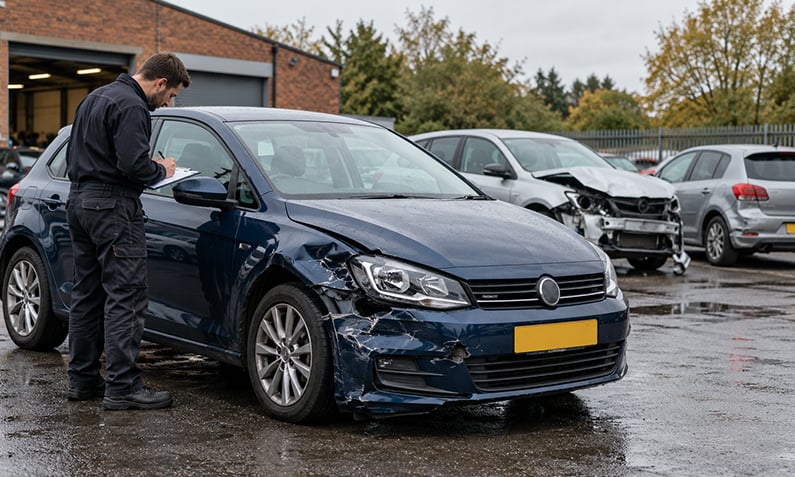
A car is “written off” when your insurer decides repairing it is uneconomical, usually because repair costs exceed its current market value. The insurer then pays you the car’s value rather than fixing it. Which category it is recorded under depends on the type and severity of the damage, not on how much the repair would have cost.

Most Free Price Compare car insurance buyers hold comprehensive cover (around 88-89% of our quotes, January to June 2026), which is the level that pays out the market value of your car if it is written off. We compare cover from a panel of 130+ insurers, and this explainer sets out exactly what each category means for selling, repairing, insuring and getting paid.

Quick Answer: Car Insurance Write-Off Categories Explained Simply

  • Cat A = scrap only; Cat B = body shell crushed, parts salvaged
  • Cat S = structural damage, repairable and can return to the road
  • Cat N = non-structural damage, repairable and can return to the road
  • Cat C and D were replaced by S and N in October 2017
  • Payouts are based on current market value, minus any excess, not purchase price

Last updated: October 2026

Written by the Free Price Compare editorial team | Reviewed October 2026

What does it mean when a car is written off?

A car is written off when your insurer decides it is a total loss, meaning repairing it costs more than the car is worth or is otherwise uneconomical. The Association of British Insurers (ABI) explains that a vehicle is treated as a total loss when repair costs exceed its actual cash value, its current market value at the time of the claim.

Rather than repairing the car, your insurer pays you a settlement. For comprehensive or third-party, fire and theft cover, the ABI states the insurer should cover replacement at the car’s current market value. If you hold third party only cover, there is no payout for your own vehicle. That matters because only around 6% of our quotes are third party only (Free Price Compare data, January to June 2026), so the large majority of drivers are on cover that would pay out.

A write-off is not always caused by a large crash. A relatively minor knock on an older car with a low market value can still be uneconomical to repair. The point where an insurer writes off a car is driven by the value of the car, not the size of the dent.

What are the car insurance write-off categories?

The four current UK write-off categories are A, B, S and N, set out in GOV.UK guidance updated on 2 October 2026. Two mean the car must be destroyed, and two mean the car can legally return to the road after proper repair.

Category What it means Can it return to the road?
Category A Scrap only. The whole car must be crushed and no parts reused. No
Category B Body shell must be crushed, but usable parts may be salvaged. No (as a complete vehicle)
Category S Structural damage, repairable to a roadworthy condition. Yes, after repair
Category N Non-structural damage, repairable to a roadworthy condition. Yes, after repair

Figures are indicative and may change.

Category A is the most severe. The entire car, including every part, must be destroyed. Category B is slightly less severe: the body shell must be crushed so the car can never be rebuilt, but mechanical or interior parts can be removed and reused in other vehicles. Neither can be licensed for normal road use again. A local-authority licensing example from North Tyneside Council, updated 8 October 2026, confirms that only Categories S and N can potentially be licensed for use if repairs and safety can be demonstrated.

See how much comprehensive cover costs

What is the difference between Cat S and Cat N?

The difference between Cat S and Cat N is where the damage is: Category S means structural damage (to the chassis, crumple zones or load-bearing parts), while Category N means non-structural damage (cosmetic panels, electrics, lights or bumpers). Both can legally return to the road once repaired to a roadworthy standard, which is the key feature that separates them from Categories A and B.

Category S (the “S” stands for structural) covers cars where the frame or safety structure was damaged. A Cat S repair should be carried out by someone competent and the car must be roadworthy before it is driven again. Category N (non-structural) covers damage that does not affect the safety shell, though a Cat N car can still have faults with brakes, steering or airbags that need proper repair before use.

Neither category tells you whether a specific repaired car is safe. The category records the damage history, not the quality of any later repair. If you are buying a used car, checking its category and the standard of repair matters as much as the label itself. You can confirm a car’s status through a vehicle history check against the DVLA record and insurance industry databases before you buy.

Older listings sometimes still mention Category C or Category D. Those codes were replaced by S and N in October 2017, so current GOV.UK guidance lists only A, B, S and N for newly recorded write-offs. Cat C broadly maps to today’s Cat S (repairable but costly), and Cat D broadly maps to Cat N (repairable, lighter damage).

What is the difference between Cat S and Cat N

Buying or insuring after a write-off?

Compare cover from 130+ UK insurers before you commit.

How do insurers decide whether to write off a car?

Insurers write off a car when the cost of repair exceeds its current market value, or when repairs would not restore it to a safe, roadworthy standard. GOV.UK confirms the insurer decides whether the vehicle is written off and tells you how much it will pay, and that the settlement is generally based on the car’s current value rather than the repair cost.

A useful way to picture the threshold: if repair costs approach or exceed a car’s current market value, the insurer may declare it a total loss and pay you that value instead. Each insurer applies its own write-off ratio and underwriting rules, so the exact tipping point varies. This is why two insurers can reach different decisions on the same damage.

Insurers can, and increasingly do, assess damage from photographs and engineer reports rather than always inspecting the car in person. You do not have an automatic right to force your insurer to repair rather than write off a car, but you can query the valuation and provide evidence (such as adverts for comparable cars) if you believe the offered figure is too low. The valuation should reflect what it would cost to replace your car with a similar one.

Market conditions sit behind these decisions too. The Financial Conduct Authority (FCA) reported that motor claims costs rose from 54% of premium in 2024 to 59% in 2025, with rising repair and parts costs a significant factor, even as average premiums fell by 7% during 2025.

Compare car insurance quotes in minutes

How much will I be paid, and how does the excess work?

If your car is written off, your insurer pays its current market value, minus any excess you owe, as long as you hold comprehensive or third-party, fire and theft cover. The market value is what it would cost to buy a comparable car in similar condition today, not what you originally paid for it.

Your car insurance excess still applies to a write-off claim. The excess is the amount you agree to pay towards any claim before the insurer covers the rest, and it is deducted from your payout. Excess comes in two parts: a compulsory excess set by the insurer, and any voluntary excess you chose to add. If you want a fuller breakdown of how the two combine, our guide to how car insurance excess works walks through both.

Where you were not to blame, the position on excess is different. If the accident was entirely another driver’s fault and your insurer recovers costs from theirs, your excess is usually refunded, though you may have to pay it up front first. Our explainer on whether you pay excess when you are not at fault covers how that recovery works in practice.

If the payout will not clear what you still owe on a finance agreement, there can be a shortfall. GAP insurance may cover the difference between the car’s current market value and its original purchase price, according to the ABI. If your written-off car is on finance, our guide to a car written off on finance explains who gets paid first and what to do next.

Can I keep a written-off car?

You can keep a Category S or N write-off, but not a Category A or B. If you want to keep a Cat N or Cat S car, GOV.UK confirms the insurer pays your claim and then sells the vehicle back to you, usually deducting the salvage value from your settlement. The car must be repaired to a roadworthy condition before it is driven again.

For a retained Category S car, GOV.UK says you must send the complete V5C registration certificate to your insurer and request a free duplicate log book using form V62. A Category A car must be crushed in its entirety, and a Category B car’s body shell must be destroyed even though parts can be reclaimed, so neither can be kept for road use.

Keeping a repairable write-off can make sense if you can repair it well and cheaply, but weigh the cost and quality of repair, the lower resale value a recorded category carries, and whether you can insure it affordably afterwards. There is no fixed percentage by which a write-off category reduces a car’s value, and the effect varies by model, damage and repair standard.

Does a write-off affect my no-claims bonus and future premiums?

A write-off claim normally affects your no-claims bonus in the same way as any other claim, unless you hold protected no-claims cover or another driver was fully at fault and your insurer recovers all its costs. A no-claims bonus is a discount insurers give for each consecutive year you do not make a claim, so losing years of it can raise your renewal price.

An at-fault write-off, like any at-fault claim, can increase future premiums because insurers price on claims history. A no-fault write-off where costs are fully recovered usually has less impact, though you must still declare the incident when asked. Context helps here: around a third of our car insurance quotes come from drivers with no no-claims bonus at all, while around 16-19% have 20 or more years (Free Price Compare data, January to June 2026), and that history is one of the biggest drivers of price.

Insuring a Category S or N car you have kept or bought is possible, but fewer insurers cover recorded write-offs and some charge more, so it pays to compare. Comparing across a panel of 130+ insurers is the practical way to find one that will cover a repaired write-off at a fair price. If you are a newer or younger driver facing higher quotes, our notes for younger drivers seeking car insurance and our guide to black box insurance cover ways to bring the price down.

Does a write-off affect my no-claims bonus and future premiums

Compare cover for a repaired write-off

FAQs about car insurance write-off categories

What does Cat C mean on a car?

Category C was an older write-off code used until October 2017, when it was replaced by Category S. It meant the car was repairable but the repair cost was high relative to its value. If you see Cat C on an older listing, treat it broadly like today’s Cat S: structurally repairable and legally allowed back on the road once made roadworthy.

How can I check if a car is Category S or N?

You can check a car’s write-off category through a paid vehicle history check that draws on DVLA records and insurance industry databases. A write-off is normally recorded against the registration, so a reputable history check will flag it along with the category and the date it was recorded. Always check before buying a used car, as some categories are not obvious from the car’s appearance.

Can an insurer write off a car just from a photo?

Yes, insurers can assess damage from photographs and engineer reports rather than always inspecting a car in person. For clearly uneconomical damage this is common practice and speeds up the claim. If you disagree with a photo-based decision or the valuation, you can ask for a physical inspection or provide your own evidence before accepting the settlement.

Do I have the right to refuse a write-off and keep my car repaired?

You cannot force your insurer to repair a car it has decided is uneconomical to fix. However, if the car is a Category S or N, you can usually keep it by accepting a reduced settlement that deducts the salvage value, then arrange your own repairs. The car must be made roadworthy before it is driven again.

Does a write-off cancel my car’s MOT?

A write-off does not automatically cancel an existing MOT, but a Category S or N car must be roadworthy before it is used again, which in practice usually means a fresh inspection after repair. Driving a repaired write-off on the road without it being roadworthy is an offence regardless of the MOT. Have any structural or safety repairs checked before relying on the car.

Will a written-off car be worth less when I sell it?

A repaired Category S or N car is usually worth less than an equivalent car with no write-off history, because the recorded category and repair must be disclosed to a buyer. There is no fixed percentage reduction, as the effect depends on the model, the severity of the original damage and the quality of repair. Always disclose a write-off category when selling, as failing to do so can be misrepresentation.

What happens if my car is written off and it is not my fault?

If another driver is fully at fault, your insurer either claims from theirs or you claim against the at-fault insurer, and you should receive the car’s market value. Any excess you pay up front is usually refunded once costs are recovered from the at-fault party. Your no-claims bonus is normally protected in a fully recovered no-fault claim, but you must still declare the incident.

Can I insure a Category S or N car?

Yes, you can insure a repaired Category S or N car, but fewer insurers cover recorded write-offs and some charge more, so comparing is important. You must declare the write-off category when getting a quote, as hiding it can invalidate your policy. Comparing across a wide panel of insurers is the practical way to find one that covers a repaired write-off at a fair price.

At what point will an insurer write off a car?

An insurer generally writes off a car when the repair cost approaches or exceeds its current market value, or when it cannot be safely restored. For example, a car worth around £3,000 with a repair quote near or above that figure is likely to be declared a total loss. Each insurer uses its own write-off threshold, so decisions can differ between companies on identical damage.

What is the difference between Cat A and Cat B write-offs?

Category A means the entire car, including every part, must be crushed and nothing may be reused. Category B means the body shell must be destroyed so the car can never be rebuilt, but mechanical and interior parts can be salvaged for use in other vehicles. Neither category can ever be licensed or returned to the road as a complete car.

Does keeping a written-off car save money?

Keeping a Category S or N car can save money if you can repair it well and cheaply, because you receive a settlement and then buy the car back at salvage value. Against that, weigh the cost and standard of repair, the lower resale value the category carries, and potentially higher insurance afterwards. For many drivers it only makes sense when the repair is straightforward and the car has sentimental or practical value.

Also Read Related Articles


Information correct as of 14 October 2026. Prices, tariffs, policy details and providers change frequently, so please check the latest details before making a decision. This article is for general information only and does not constitute financial advice. Free Price Compare is authorised and regulated by the Financial Conduct Authority (FCA).

4000+ reviews