





Pros and Cons of Black Box Car Insurance

Written by Tim Bailey
Reviewed by Pratik Aghera
7 min read
Updated: 16 Oct 2026
Pros and Cons of Black Box Car Insurance

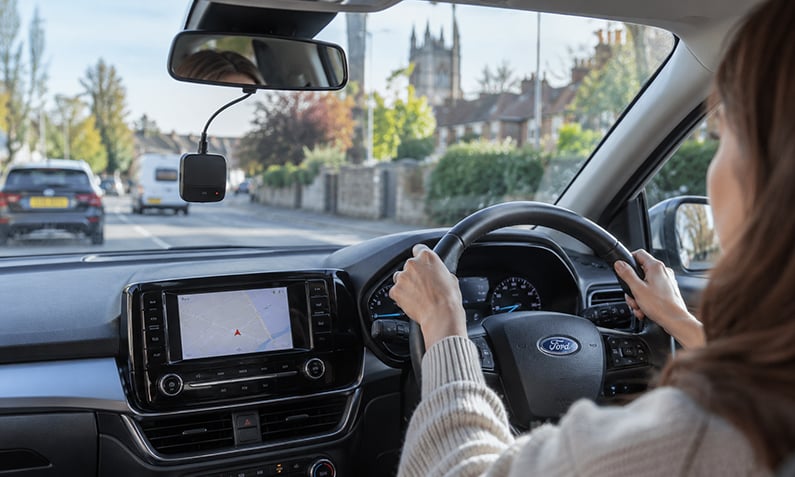
Black box car insurance is a policy that uses a telematics device, either a fitted box or a smartphone app, to record how you drive and then prices your cover partly on that data. The main advantage is that safer driving can reduce your premium, which is why it is most often sold to younger and newly qualified drivers facing high quotes. The main drawbacks are the loss of some privacy, possible mid-policy price rises for riskier driving, and extra fitting or removal fees on physical devices.

For the typical Free Price Compare buyer, aged around 47 to 50 with two decades of no-claims history, telematics usually offers little upside, because your low-risk profile is already baked into a standard quote. Telematics earns its place when the alternative is an unaffordable premium, most commonly for a 17 to 25 year old or a first-time driver. We compare car insurance across a panel of 130+ insurers, including several telematics specialists, so you can see standard and black box prices side by side.

Quick Answer: Pros and Cons of Black Box Car Insurance

  • Telematics works best for 17-25s and new drivers facing high quotes
  • Fitting a physical box can cost around £50-£100 (Zego)
  • A poor driving score can raise your premium mid-policy
  • The insurer records data such as speed, braking and mileage
  • App-based telematics avoids fitting fees but needs your phone charged

Last updated: October 2026

Written by the Free Price Compare editorial team | Reviewed October 2026

How black box car insurance actually works

Black box car insurance works by recording your driving through a telematics device and feeding that data into how your insurer prices and reviews your cover. The device is either a small unit fitted to or plugged into the car, or an app that uses your phone’s sensors. It typically logs factors such as speed, braking, acceleration, cornering, mileage and the time of day you drive, then combines these into a driving score.

Insurers use that score in different ways. Some set the price mainly at the start and review it at renewal, while others review performance during the policy term. One UK telematics product is described as reviewing driver performance roughly every three months rather than waiting for the annual renewal. The practical point is that your behaviour behind the wheel can influence what you pay, not just your age, car and postcode. For a fuller breakdown, our explainer on what black box insurance is sets out the device types and how scoring differs between providers.

Telematics is no longer limited to a fitted box. App-based products use smartphone sensors instead, which removes installation work and fitting costs but relies on your phone being present, charged and set up correctly. Zego, a UK telematics insurer, offers an app-based product that avoids physical fitting altogether.

What are the pros of a black box policy?

The clearest pro of a black box policy is cheaper cover for drivers who would otherwise face a very high premium, which in practice means younger and newly qualified motorists. Because the insurer prices on recorded driving rather than relying heavily on age-based assumptions, a careful driver can earn back some of the loading that applies to a standard young-driver quote.

  • Potential savings for higher-risk drivers. Telematics most often reduces the price for 17 to 25 year olds and first-time drivers. Savings are not guaranteed and depend on age, driving behaviour, vehicle group, postcode and history.
  • Price reflects your actual driving. Safer, lower-mileage driving can be rewarded, and some products review your score during the year so improvement can help sooner than the next renewal.
  • Feedback and rewards. Several telematics products give app-based feedback on your driving, and some offer cashback or rewards for consistently safe or low-mileage use.
  • A built-in tracker. A fitted box doubles as a location device, so if the car is stolen the insurer may be able to help locate it.
  • Good for low-mileage drivers. Usage-based and app products can suit people who drive infrequently, though the benefit depends on the policy’s mileage and pricing structure.

If you are a young or new driver weighing this up, our guide to affordable young driver insurance covers the other levers that reduce a first-year premium alongside telematics.

Compare black box and standard quotes side by side

What are the disadvantages of black box insurance?

The main disadvantages of black box insurance are continuous monitoring, the risk of a higher price if your driving score is poor, and extra charges on physical devices. These trade-offs matter most if you dislike being tracked, drive in ways the box scores harshly, or expect to change cars during the policy.

  • Monitoring and data collection. A telematics policy requires the insurer to record your driving. There is no single industry-wide data-retention period, so you need to read each provider’s privacy notice and policy terms.
  • Possible mid-policy price rises. Many black box products reserve the right to increase your premium if your driving does not meet their standard, not just at renewal but during the term.
  • Scoring penalties. Hard braking, heavy acceleration, sharp cornering, speeding, high mileage or driving at certain times can lower your score and affect the price.
  • Fitting and removal fees. Physical devices can carry fitting costs of around £50 to £100 (Zego), with possible further charges when you cancel or change vehicle.
  • App dependence. App-based telematics avoids fitting fees but depends on your phone being present, charged and configured. A missing or flat handset or inaccurate location data could affect your record.
  • No cheaper is guaranteed. Savings depend on your profile and driving. Zego notes the benefit is greater for drivers with higher scores, so a weak score can leave you no better off than standard cover.

Our in-depth look at whether a telematics black box reduces your premium explains how the scoring maths plays out over a full policy year.

What are the disadvantages of black box insurance

Not sure if telematics suits you?

See standard and black box quotes from 130+ insurers in one search.

Is black box car insurance actually cheaper?

Black box car insurance is often cheaper for young and new drivers, but it is not automatically cheaper for everyone, and no universal saving can be stated across the market. Telematics prices reflect your recorded driving, so a careful driver with a high score can pay noticeably less than a standard quote, while a driver who scores poorly may save little or nothing. Zego’s own figures place telematics policies across a broad annual range, which shows how much the price varies by individual.

For the average Free Price Compare buyer, the position is different. With an established record and around 21 to 27 years of licence-holding on average among our buyers (Free Price Compare data, Jan-Jun 2026), a standard comprehensive policy already prices you as low-risk, so telematics rarely beats it. That is partly why younger drivers make up a far larger share of quotes than of actual purchases on our panel, while drivers aged 56 to 75 convert best. The right test is always to compare both, not to assume one wins. Our cheap car insurance tips run through the other factors that move a quote regardless of whether you choose telematics.

Market context helps too. The Association of British Insurers (ABI) publishes a Motor Insurance Premium Tracker, with its 2026 Q1 data package dated 30 April 2026, according to the ABI. Use the current tracker as your benchmark for what a standard premium looks like before deciding whether a black box price is lower.

See typical car insurance prices for your profile

What happens to my data and my privacy?

With black box car insurance, your insurer collects and stores driving data such as speed, braking, mileage and location, and uses it to set and review your price. UK telematics providers must handle that data under the General Data Protection Regulation and the oversight of the Information Commissioner’s Office (ICO), so each provider must tell you in its privacy notice what it records, how long it keeps it and who it shares it with.

There is no single industry-wide rule on how long telematics data is kept or exactly how it can be used, so the detail varies by provider. Policy terms may allow data to be used for pricing, claims handling, fraud prevention, customer support or legal purposes, not only for setting your premium. Before you buy, read the privacy notice and ask directly what is recorded, the retention period and whether data could be used to assess a claim.

Can someone else drive my car, and can I drive at night?

Yes, another person can usually drive a car with a black box, but their driving may still count towards the policy’s score if it is recorded against the vehicle. A fitted box tracks the car, so journeys by a named driver can feed into the overall record. Check the policy wording, because some products attribute all vehicle data to the main policyholder regardless of who is driving.

You can also drive at night with black box insurance on most policies, but night-time driving may be scored differently because it is statistically higher-risk. Curfews and time-of-day restrictions are not a market-wide rule and vary by product, so read the terms before assuming you are penalised for late journeys. If a policy does apply a curfew or a higher score to night driving, that is a cost worth weighing against the saving.

Will my insurer know if I remove or unplug the black box?

Yes, your insurer will usually know if you remove, unplug or tamper with a black box, because the device stops transmitting data and many policies flag disconnection. Removing or disabling a telematics device typically breaches the policy terms and can lead the insurer to cancel cover or refuse a claim. If you no longer want telematics, the correct step is to switch to a standard policy at renewal rather than interfere with the device.

Who is black box insurance right for, and who should skip it?

Black box insurance is right for drivers facing a high standard premium who are confident they drive carefully, which usually means 17 to 25 year olds, first-time drivers, learners and newly qualified motorists. For these drivers, telematics can turn an unaffordable quote into a workable one, especially where the alternative runs into four figures. Our guide to new driver car insurance deals looks at how telematics fits alongside Pass Plus and adding an experienced named driver.

It is usually not right for established drivers with a long no-claims record, because a standard comprehensive policy already reflects their low risk and telematics adds monitoring without a clear saving. Around 88 to 91 per cent of car insurance purchases through Free Price Compare are for comprehensive cover (Free Price Compare data, Jan-Jun 2026), and most of those buyers are experienced drivers who would gain little from a black box. If you are adding a young driver to a household policy, multi-car insurance is often worth comparing against a standalone telematics policy for the younger driver.

A simple rule: if your standard quote is affordable, you probably do not need telematics; if it is not, compare a black box price against it before deciding. You can run both quotes in one place, and because around 8 in 10 of our car insurance journeys happen on a mobile device (Free Price Compare data, Jan-Jun 2026), the whole comparison fits comfortably on a phone.

Who is black box insurance right for, and who should skip it

Compare young driver and telematics quotes

FAQs about black box car insurance

What is black box car insurance?

Black box car insurance is a policy that uses a telematics device, either a fitted box or a smartphone app, to record how you drive and price your cover partly on that data. It typically tracks speed, braking, acceleration, cornering, mileage and the time of day. Safer driving can lower the price, which is why it is marketed mainly to young and new drivers facing high standard quotes.

Is black box insurance actually cheaper than a standard policy?

Black box insurance is often cheaper for young and new drivers but not automatically cheaper for everyone. The price reflects your recorded driving, so a careful driver with a high score can save, while a poor score may leave you no better off than standard cover. Experienced drivers with a long no-claims record usually find a standard comprehensive policy already prices them competitively.

What are the main disadvantages of black box insurance?

The main disadvantages are continuous monitoring of your driving, the risk of a mid-policy price rise if your score is poor, and extra fitting or removal fees on physical devices. Factors such as hard braking, speeding, high mileage or night driving can lower your score. There is also no guarantee the policy will be cheaper than standard cover.

How much does it cost to fit a black box?

Zego says fitting a physical telematics device can cost £50 to £100, with possible additional charges when you cancel the policy or change vehicle; its app-based Sense product uses your phone’s sensors instead and needs no physical fitting. Always check whether installation and removal fees apply before you buy.

Can someone else drive my car with a black box fitted?

Yes, another person can usually drive a car with a black box, but their driving may count towards the policy's score because a fitted box tracks the vehicle rather than the individual. Some products attribute all recorded data to the main policyholder regardless of who is driving. Check the policy wording before letting a named driver use the car.

Can I drive at night with black box insurance?

Yes, most black box policies allow night driving, but journeys at night may be scored differently because they are statistically higher-risk. Curfews and time-of-day restrictions are not a market-wide rule and vary by provider. Read the policy terms to see whether night driving affects your score or price before assuming you are restricted.

What happens to my driving data?

Your insurer collects and stores driving data such as speed, braking, mileage and location, and uses it to set and review your price under GDPR rules overseen by the Information Commissioner's Office. There is no single industry-wide retention period, so each provider's privacy notice sets out what it keeps and for how long. Data may also be used for claims handling, fraud prevention or legal purposes depending on the terms.

Can my premium go up during the policy with a black box?

Yes, many black box products reserve the right to increase your premium during the policy term if your driving does not meet their standard, not just at renewal. Repeated hard braking, speeding or risky driving can trigger this. Read the terms carefully, as the exact triggers and the amount any increase could be vary by insurer.

Is black box insurance worth it for a first car?

Black box insurance can be worth it for a first car when the standard quote is unaffordable and you are confident you drive carefully, which is common for 17 to 25 year olds. The best approach is to compare a telematics price against a standard quote for the same car before deciding. For low-value first cars, also check standard cover, as the saving from telematics is not always large.

Does telematics data give me a transferable no-claims record?

No, a good telematics score does not automatically create a portable driving history accepted by every insurer. Your no-claims bonus builds in the usual way through claim-free years, and that is recognised across the market. A strong black box score may help with your current insurer, but there is no verified evidence it transfers as a standalone benefit when you switch.

Is a black box mandatory for new drivers?

No, a black box is not mandatory for new drivers in the UK; it is an optional policy type. New and young drivers can choose standard cover instead, though telematics is often the cheaper route when standard quotes are very high. Compare both before deciding, and factor in Pass Plus, a higher voluntary excess and adding an experienced named driver as alternative ways to lower the price.

Also Read Related Articles


Information correct as of 4 October 2026. Prices, tariffs, policy details and providers change frequently, so please check the latest details before making a decision. This article is for general information only and does not constitute financial advice. Free Price Compare is authorised and regulated by the Financial Conduct Authority (FCA).

4000+ reviews