

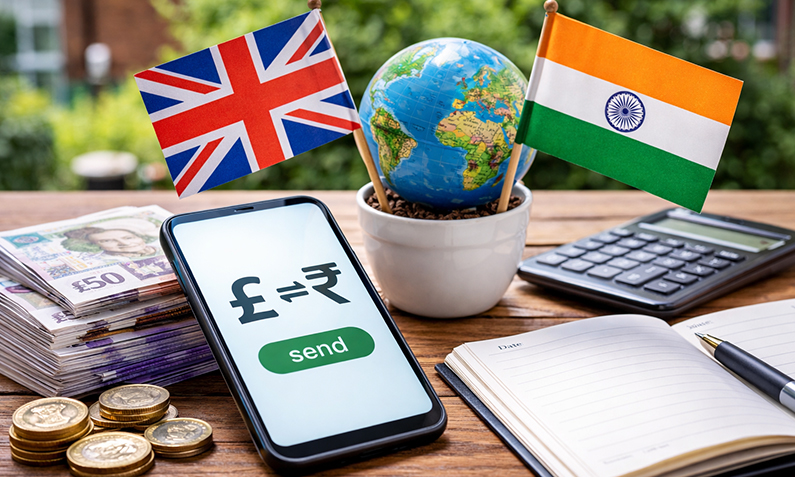




Cheapest Way to Send Money to India from the UK

March 27th, 2026
Cheapest Way to Send Money to India from the UK

Content in this article

Find the cheapest way to send money to India by comparing trusted currency exchange providers and international money transfer services in the United Kingdom. Avoid hidden fees, reduce exchange rate markups, and transfer funds securely to a recipient’s bank account in India.

  • Compare competitive rates from UK providers
  • Avoid unnecessary transfer fees and hidden costs
  • Send British pounds to Indian rupees with better exchange rates
  • Suitable for both large and smaller transfers

Compare providers to send money to India and find the best rate

What Is the Cheapest Way to Send Money to India?

The cheapest way to send money to India is usually through a currency broker or specialist international money transfer service, rather than a high street UK bank.

Banks often charge:

  • Transfer fees
  • Poor exchange rates
  • Additional fees and hidden fees

Currency brokers and money transfer companies typically offer:

  • Competitive rates
  • Lower overall costs
  • Faster international transfers

For most people, comparing providers is the best way to find the lowest cost option.

Compare Ways to Send Money to India

There are several money transfer options available, including bank transfers, currency brokers, and online platforms. Each option varies in cost, delivery speed, and payment options.

Method Fees Exchange Rates Speed Best For
UK Bank Transfer High Poor 2–5 business days Convenience
Currency Broker Low / £0 Competitive 1–3 business days Large transfers
Online Transfer Service Low–Medium Moderate Same day–2 business days Smaller transfers

Money Guides

Helping You Borrow Money at the Right Price

Why Exchange Rates Matter More Than Fees

When sending money abroad, the exchange rate (GBP to INR) has the biggest impact on cost.

Even if a provider offers “low fees”, they may:

  • Add exchange rate markups
  • Include additional fees within the rate
  • Offer less competitive rates than expected

Example

  • £10,000 transfer
  • 1% worse exchange rate = £100+ cost difference

Many providers advertise low fees but include additional costs through exchange rate markups or extra fees. The total amount received in local currency depends on both the rate and the overall cost structure. Comparing providers helps ensure you get the best value.

Compare international money transfer providers and save on fees

Cheapest Providers for Sending Money to India

Currency brokers are often the cheapest option for sending money to India, especially for large amounts of money.

They offer:

  • Better rates than most UK banks
  • Personal support through customer support teams
  • Flexible transfer options

Online transfer services can be useful for smaller transfers, but may result in higher costs for larger amounts.

Bank vs Currency Broker: Which Is Cheaper?

UK Banks

  • Higher costs overall
  • Poor exchange rates
  • Additional fees and limited flexibility

Currency Brokers

  • Competitive rates
  • Low fees or no transfer fees
  • Better for large transfers

For most transfers, especially over £5,000, a currency broker is usually the cheaper option.

Bank vs Currency Broker: Which Is Cheaper

How to Get the Best Exchange Rate

To get the best possible exchange rate when sending money to India:

  • Compare multiple money transfer companies
  • Request a live quote before confirming
  • Avoid last-minute transfers where possible
  • Consider the size of your transfer
  • Use providers offering competitive rates

Exchange rates change in real time, so timing your transfer can affect the final amount received.

Transfer Speed: How Long Does It Take?

Most international transfers from the United Kingdom to India take:

  • Currency brokers: 1–3 business days
  • Banks: 2–5 business days
  • Online services: Same day to 2 business days

Delivery speed will depend on the provider, payment method, and the speed of your transfer.

Get a live quote and send GBP to INR with trusted providers

Payment Options for Sending Money to India

Most providers offer a range of payment options depending on your needs.

These may include:

  • Bank transfer from a UK bank account
  • Debit card or credit card payments
  • Online banking transfers

Bank transfers are usually the cheapest option, while card payments may include additional fees but offer faster processing.

What Information Is Required to Send Money to India?

To complete an international money transfer, you will typically need:

  • Your email address and contact details
  • Recipient’s bank account details
  • Information of the person receiving the funds
  • Payment details and total amount

For larger transfers, additional documentation may be required as part of due diligence and compliance checks.

Money Guides

Helping You Borrow Money at the Right Price

Receiving Money in India

Funds are usually delivered directly to a recipient’s bank account with Indian banks.

Common receiving options include:

  • Bank deposit into Indian banks such as ICICI Bank, Bank of Baroda, or Union Bank of India
  • Mobile wallets or UPI ID (depending on provider)

Delivery options and transfer status updates will vary depending on the provider.

Is It Safe to Send Money to India?

Yes, sending money to India is safe when using FCA-regulated providers.

These providers must:

  • Safeguard client funds
  • Follow strict due diligence checks
  • Provide secure international transfer services

This gives you peace of mind when transferring large amounts of money.

Start your transfer to India with competitive exchange rates

What Affects the Cost of Sending Money to India?

Several factors impact the total cost:

  • Exchange rate markups
  • Transfer fees and additional fees
  • Amount of money being sent
  • Payment method and delivery speed
  • Provider pricing structure

Understanding these factors helps reduce higher costs and improve the value of your transfer.

Send Money to India for Different Needs

People commonly send money to India for:

  • Family support
  • Property purchases
  • Business payments and cash flow
  • Education costs

Different use cases may require different money transfer options depending on speed, cost, and flexibility.

Send Money to India for Different Needs

Last Updated 24 March 2026

FAQ’s About Sending Money to India

What is the cheapest way to send money to India from the UK?

The cheapest way is usually through a currency broker or specialist money transfer service. These providers offer better exchange rates and lower overall costs than most UK banks. Comparing providers helps ensure you get the best possible deal.

Are currency brokers cheaper than banks for India transfers?

Currency brokers typically offer better rates and lower fees than banks. This makes them a more cost-effective option, especially for large transfers.

How much does it cost to send money to India?

The cost depends on the provider, exchange rate, and transfer amount. Even if there are no upfront fees, costs are usually included in the exchange rate markup. Comparing providers helps reduce these costs.

How long does it take to send money to India?

Most transfers take between 1 and 3 business days with a currency broker, while banks can take longer. Delivery speed depends on the provider and payment method.

Is it safe to send large amounts of money to India?

Yes, as long as you use an FCA-regulated provider. These companies follow strict rules to protect your funds and ensure secure transfers.

Can I get a better exchange rate for larger transfers?

Larger transfers often qualify for better rates. Speaking to customer support or requesting a live quote can help you secure a more competitive exchange rate.

What documentation is required to send money to India?

You will usually need proof of identity and proof of address. For larger transfers, additional documentation may be required to confirm the source of funds as part of due diligence checks.

What is the current best exchange rate for sending GBP to INR?

The best exchange rate changes throughout the day based on market conditions. Providers apply different exchange rate markups, so comparing live quotes is the best way to find the most competitive rate.

Do money transfer apps offer better rates than traditional providers?

Some online services may offer competitive rates for smaller transfers, but this varies. For larger amounts, currency brokers often provide better value. Comparing different options helps ensure you get the best rate.

What is the maximum amount I can send to India from the UK?

The maximum amount you can send depends on the provider and the purpose of the transfer. Currency brokers typically support large amounts of money, making them suitable for property purchases or business payments. Some providers may require additional documentation for higher-value transfers as part of compliance checks.

Can I send money to India instantly from the UK?

Some providers offer faster or same-day transfers, depending on the payment method and delivery option. However, instant transfers may come with higher costs or less competitive exchange rates. Comparing providers helps you balance speed and value.

What details do I need from the recipient in India?

You will usually need the recipient’s bank account details, including account number and bank name. In some cases, additional information such as an IFSC code or UPI ID may be required. Providing accurate details helps ensure the transfer is completed without delays.

Are there limits on how often I can send money to India?

Most providers allow you to send money as often as needed, but limits may apply depending on the transfer size and verification status of your account. Regular transfers are common for family support or ongoing payments, and some providers offer tools to manage recurring transfers.

What is the difference between a bank transfer and a wire transfer to India?

A bank transfer usually refers to sending money directly between bank accounts, while a wire transfer is a specific type of international bank transfer processed through banking networks. In most cases, both methods involve similar steps, but costs and processing times can vary depending on the provider.

Can I track my money transfer to India?

Most providers offer tracking tools so you can monitor the status of your transfer. You will usually receive a reference number and updates during the process. This helps provide peace of mind and ensures you know when the funds have been delivered.

Do exchange rates change during the transfer process?

Exchange rates can change in real time, but most providers allow you to lock in a rate when you confirm your transfer. This means the amount received in Indian rupees will not change once the rate is agreed. Checking live rates before confirming helps ensure you get the best value.

Is there a best time to send money to India for better rates?

Exchange rates fluctuate based on market conditions, so there is no fixed “best time” to transfer money. However, monitoring rates and avoiding urgent transfers can help you secure a more competitive rate. Comparing providers at the time of transfer remains the most effective approach.

Also Read Related Articles

Explore Money Guides

Helping You Borrow Money at the Right Price

4000+ reviews