

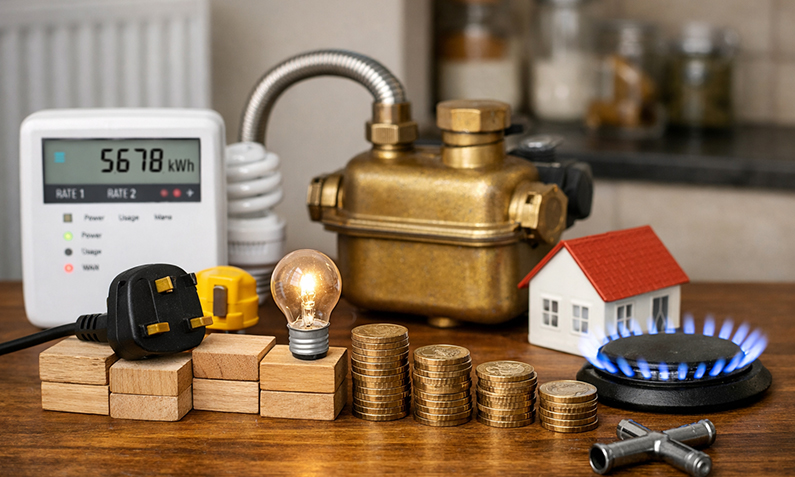





Why Do Electricity and Gas Have Different Standing Charges?

March 19th, 2026
Why Do Electricity and Gas Have Different Standing Charges?

Standing charges are a fixed daily cost included in most UK electricity and gas tariffs. These charges help cover the cost of maintaining the infrastructure that supplies energy to homes across the country.

Alongside this daily charge, households also pay unit prices for the energy they use. Energy consumption is measured in kilowatt hours (kWh), which is the standard unit of energy used to calculate electricity and gas costs.

In recent years, standing charges have become a major topic of discussion as households try to manage rising energy costs and the wider cost of living. Many consumers have noticed that the daily charge on their electricity bills or gas bill has increased even when their energy use has stayed the same.

Standing charges exist to cover the fixed costs of maintaining the UK’s energy infrastructure and keeping properties connected to the energy supply network. These costs apply every given day, regardless of how much energy a household uses.

Understanding why electricity and gas standing charges differ can help households make better sense of their energy bills and evaluate tariffs more effectively when they compare energy prices.

You can compare energy prices to see how standing charges vary between suppliers.

What Is a Standing Charge on Electricity and Gas?

A standing charge is a fixed daily fee applied to most electricity and gas tariffs. This charge applies every day your property remains connected to the energy network.

The standing charge helps fund the infrastructure that supports the UK energy system. This includes electricity cables, gas pipelines, substations and the systems that allow energy to be safely delivered to homes.

Costs typically covered by standing charges

Cost Type Description
Energy network maintenance Maintaining cables, pipelines and substations
Metering services Installing and maintaining energy meters
Supplier operating costs Billing systems and customer support
Government programmes Environmental and efficiency schemes
Energy supply network Infrastructure delivering energy to homes

Because these costs apply to every connected property, they are recovered through a daily charge rather than through the price per unit of energy.

Why Electricity Standing Charges Are Higher

Electricity standing charges are usually higher than gas standing charges in the UK. This difference largely reflects the complexity of maintaining electricity networks.

Electricity must travel through an extensive system of power stations, transmission lines and local distribution networks before reaching homes.

Electricity network infrastructure

The electricity system requires large-scale infrastructure including power stations, transmission lines and substations.

Electricity generated at power plants travels through the national grid before reaching regional distribution networks that deliver power to homes.

Distribution and transmission costs

Electricity networks involve both long-distance transmission lines and local distribution systems.

Maintaining both layers of infrastructure adds to the cost of supplying electricity.

Maintenance of the power grid

Electricity systems must constantly balance supply and demand. Engineers monitor the power grid and maintain transformers, substations and monitoring systems to ensure the network operates safely.

Because these systems are complex, electricity infrastructure is typically more expensive to maintain than gas pipelines.

Prepayment Meter Tariffs – Find Cheaper Options Today

Compare top-up tariffs in your area and cut your prepayment energy costs.

Why Gas Standing Charges Are Usually Lower

Gas standing charges are typically lower because the gas distribution system is structured differently.

Gas is transported through underground pipelines rather than electrical transmission networks.

Gas network structure

Natural gas is delivered through high-pressure pipelines that transport gas across long distances.

From there, local distribution pipelines deliver gas directly to homes.

Pipeline distribution costs

Gas infrastructure generally involves fewer components than electricity systems.

Although pipelines still require monitoring and maintenance, the overall cost structure is usually lower than electricity distribution networks.

Electricity vs Gas Standing Charges

The difference in infrastructure costs is reflected in the daily standing charges applied to energy tariffs.

Typical standing charges under the Ofgem price cap

Energy Type Average Standing Charge Estimated Annual Cost
Electricity about 57p per day about £208 per year
Gas about 29p per day about £106 per year

These figures are averages for households paying by direct debit and may vary slightly depending on region.

Standing charges can differ across England, Scotland, and Wales because energy network costs vary across the UK.

How Standing Charges Affect Energy Bills

Standing charges form part of the overall cost shown on both electricity bills and gas bills.

Because they apply every day, the charge can add a noticeable amount to the yearly cost of an energy tariff.

For example, a household paying 57p per day in electricity standing charges would pay more than £200 per year before any energy consumption is included.

The total energy bill is calculated using two main components:

  • the standing charge, which is a fixed daily cost
  • the unit price, which is the price paid for each kilowatt hour (kWh) of energy used

Because tariffs combine these two elements, the cheapest deal will depend on the household’s energy use, payment method, and overall tariff structure.

It may help to compare energy deals before choosing a tariff.

How Standing Charge Tariffs Work

Most households are on a standing charge tariff, which combines a daily charge with the unit rate for energy consumption.

Some suppliers offer a standing charge option with a lower daily charge but higher unit rates.

A small number of suppliers also offer a zero standing charge tariff, which removes the daily fee entirely. However, these tariffs usually increase the cost per unit of energy, meaning households that use much electricity or gas may pay more overall.

Standing charge tariffs may also be less suitable for properties such as holiday homes, where energy is only used during certain parts of the year.

How Standing Charge Tariffs Work

How the Ofgem Price Cap Affects Electricity and Gas Standing Charges

The energy regulator Ofgem sets limits on the maximum amount suppliers can charge on standard variable tariffs through the energy price cap.

The price cap covers both the standing charge and the unit price for electricity and gas.

The cap is reviewed four times each year, typically in:

  • January
  • April
  • July
  • October

Each update introduces a new price cap, which can affect both standing charges and unit prices.

Factors included in the energy price cap

Factor Description
Wholesale energy costs Cost of buying electricity and gas
Network maintenance Maintaining electricity and gas infrastructure
Environmental schemes Funding green levies and efficiency programmes
Supplier operating costs Customer services and billing systems

Changes in global energy markets, including supply disruptions linked to geopolitical events such as the war in Ukraine, can influence wholesale energy prices and the price cap.

Standing charges differ between suppliers, so it can be useful to compare energy tariffs.

Do All Suppliers Charge the Same Standing Charges?

No. Although the price cap limits the maximum amount suppliers can charge, companies may structure tariffs differently.

Some energy suppliers offer tariffs with lower standing charges but higher unit prices, while others do the opposite.

Large suppliers such as British Gas and Octopus Energy often offer several available tariffs depending on the customer’s payment method, such as direct debit or prepayment.

Customers can usually review tariffs through a supplier website or mobile app after entering their postcode.

Many households also use a smart meter, which automatically sends meter readings to suppliers and helps produce more accurate bills.

Some households choose to compare energy suppliers before switching to a new deal.

How Government Policies Affect Standing Charges

Some costs included in standing charges help fund government support schemes designed to help vulnerable households manage energy costs.

Examples include the Warm Home Discount Scheme, which provides financial assistance to eligible households, and the Energy Company Obligation (ECO) programme, which funds home insulation and efficiency improvements.

These programmes form part of broader environmental policy schemes designed to improve energy efficiency and reduce emissions across the UK.

Your Next Bill Could Be Lower

Use our calculator to see what you’d save — takes under 6 minutes.

Correct as of 16 March 2026

FAQs about Electricity and Gas Standing Charges

Why is the electricity standing charge higher than gas?

Electricity networks require more complex infrastructure than gas pipelines. Maintaining cables, substations and distribution systems increases overall costs.

What is the average standing charge for electricity in the UK?

Electricity standing charges are typically around 57p per day under the latest price cap. The exact amount may vary depending on the supplier and region.

What is the average standing charge for gas?

Gas standing charges are usually around 29p per day for households paying by direct debit. The exact cost can vary depending on the supplier and region.

Do standing charges apply even if I use no energy?

Yes, standing charges apply as long as your property remains connected to the energy network. This means you may still see charges on your bill even if energy use is very low.

Do standing charges vary by region?

Yes, standing charges can vary depending on where you live. Network costs differ across England, Scotland and Wales, which can affect tariffs.

Do smart meters affect standing charges?

No, having a smart meter does not normally change the standing charge on an energy tariff. However, smart meters can help provide more accurate meter readings and billing.

Are standing charges regulated in the UK?

Yes, the Ofgem energy price cap sets limits on the maximum standing charges suppliers can apply to standard tariffs. This helps protect customers from excessive pricing.

How often do standing charges change?

Standing charges can change when the Ofgem price cap is updated. The cap is reviewed four times per year.

Can I get an energy tariff with no standing charge?

Yes, some suppliers offer tariffs with no standing charge. These tariffs usually have higher unit prices, which may benefit low energy users but cost more for higher usage.

How can I find the standing charges for my region?

Standing charges are usually listed on your energy bill or within your supplier’s online account. They are also displayed when reviewing tariffs or entering your postcode on comparison services.

Do renewable energy tariffs have different standing charges?

Renewable energy tariffs may sometimes have slightly different pricing structures depending on the supplier. However, most still include a standing charge similar to standard tariffs.

Why do I pay a standing charge every day?

Standing charges help cover the cost of maintaining the UK energy supply network. These infrastructure costs apply every day regardless of how much energy is used.

Are standing charges the same for all payment methods?

Standing charges can vary slightly depending on the payment method, such as direct debit or prepayment. Direct debit tariffs often offer slightly lower overall costs.

Do standing charges include VAT?

Yes, domestic standing charges normally include 5% VAT, which is the reduced rate applied to household energy in the UK. This VAT rate applies to both the standing charge and the unit price.

Why have standing charges increased in recent years?

Standing charges increased during the energy crisis as suppliers recovered infrastructure costs and market adjustments. Regulators continue to review pricing structures to ensure the UK energy market remains stable.

Also Read Related Articles

Compare Energy Prices in Just 6 Minutes

Switch today and start saving — quick, easy, and with zero obligation.

4000+ reviews