





Business vs Personal Van Insurance Explained

Written by Tim Bailey
Reviewed by Andrea Troy
10 min read
Updated: 21 Aug 2026
Business vs Personal Van Insurance Explained

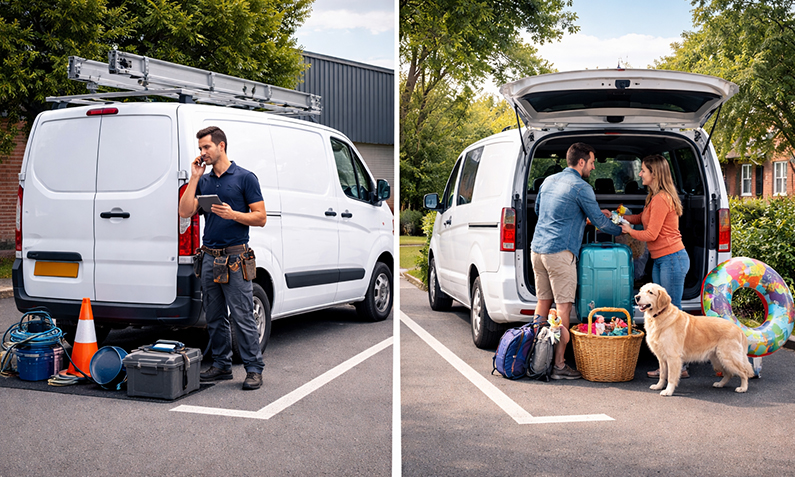
Business vs personal van insurance comes down to what you use the van for: personal van insurance covers social, domestic and everyday non-work driving, while business van insurance covers driving connected to your trade, including carrying your own tools and goods between jobs. If you are a plumber, electrician, joiner or any sole trader using the van for work, you almost certainly need a business class of use, not a personal policy.

Getting this wrong is a common and costly mistake. A van insured on personal cover only can have a claim declined if you were driving to a job or carrying trade tools at the time. Free Price Compare works with a wide panel of UK van insurers, so the same driver and van can be quoted across personal, business and courier classes of use to find the right cover at the right price.

Quick Answer: Business vs Personal Van Insurance Explained

  • Business van insurance is consistently priced above personal use because insurers factor in higher mileage, tools and goods in the van, and more time on the road.
  • Carrying your own trade tools between jobs is business use (carriage of own goods), not personal use, so it needs a business class of use.
  • Comprehensive van insurance for trades commonly runs from around £700 to £1,300 a year for a clean-licence driver aged 25 or over (2026 market examples); under-25s and couriers pay considerably more.
  • The main price drivers are class of use, annual mileage, postcode, van size and value, tools cover and your age and claims history.
  • Commuting to a single fixed workplace is often included under a personal or ‘social and commuting’ policy, but travelling to different job sites is business use.

Last updated: August 2026

Written by the Free Price Compare editorial team | Reviewed August 2026

What actually separates business use from personal use?

Business van insurance covers any driving connected to your trade or work, while personal van insurance covers only social, domestic and everyday non-work journeys. The dividing line is the reason for the journey, not the van itself. If you drive to a customer’s home, travel between job sites, or carry the tools and materials you need for work, that is business use and a personal policy will not cover it. If you use the van purely for the school run, the tip, weekend trips and shopping, personal use is enough. Most tradespeople and small-business owners fall on the business side because the van is a working vehicle, and insurers price the extra time on the road and the value of goods carried into the premium.

Under the Road Traffic Act 1988, you must hold at least third-party motor insurance to use a van on UK roads, and that cover must match how you actually use the vehicle. Declaring personal use while driving for work is a misrepresentation that can void the policy.

Does carrying tools count as business use?

Carrying your own trade tools between jobs counts as business use, specifically the class known as ‘carriage of own goods’. Driving with a boot full of tools, cable, timber or parts that you own and use to do your job is not classed as personal use, even if the van is registered in your name and you also use it privately. Insurers treat a van loaded with trade equipment as a higher risk because of the extra value on board, the theft exposure and the working mileage involved. A social-only policy would not cover you while making a journey to or from a job, and it may not cover the tools inside the van at all.

Cover for the tools themselves is usually a separate consideration. A standard motor policy insures the van, not necessarily its contents, so if you keep expensive tools in the vehicle you should check whether tools-in-transit or tools cover is included, and what the single-item and overnight limits are. Our van insurance FAQs guide explains how tools cover works alongside the motor policy.

Compare van insurance classes of use

What are the van insurance classes of use?

Van insurance classes of use are the categories insurers apply to describe how a van is used, and they directly affect your price and whether a claim is valid. Personal use covers social, domestic and pleasure driving only. Business use, often split into levels, covers work-related driving and carriage of your own goods. Carriage of goods for hire and reward (courier or haulage) is a separate, higher-cost category for delivering other people’s goods for payment. Choosing the class that matches your real working pattern is the single most important decision when buying van cover, because insuring below your actual use is the fastest route to a declined claim.

Class of use What it covers Typical user
Personal / social use Non-work driving only, plus commuting on some policies Owner using a van privately
Business use (carriage of own goods) Work driving and carrying your own tools and materials Plumbers, electricians, joiners, sole traders
Hire and reward (courier / haulage) Delivering other people’s goods for payment Couriers, delivery drivers, hauliers

Figures and categories are indicative and vary between insurers.

Some insurers subdivide business cover into numbered classes, where a higher class covers wider travel and, at the top level, other named drivers using the van for business. The exact labels differ between insurers, so read the definition rather than relying on the class number. If you deliver parcels or food for payment, that is hire and reward, covered in our courier van insurance guide.

What are the van insurance classes of use

Is business van insurance more expensive than personal?

Business van insurance is often more expensive than personal van insurance because insurers price in higher mileage, more time on the road, and the tools and goods carried for work. For a driver aged 25 or over with a clean licence and a small van, business or trades cover can be materially higher than private van cover for the same profile. Larger vans, younger drivers and courier use push prices higher, with under-25s frequently quoted several times the standard rate and hire-and-reward use the clear outlier.

Van insurance prices moved lower across 2025 and into 2026. Recent market data suggested van insurance quotes had eased year on year, with averages for the cheapest quotes lower than the previous year. These are quote-market figures rather than official regulator statistics, so treat them as directional. The ABI and the FCA publish the authoritative UK motor pricing data, and no single official business-vs-personal split was available at the time of writing.

Get the right class of use first time

Compare business, personal and courier van cover across a panel of 63 UK insurers.

Is commuting classed as business use?

Commuting to a single fixed place of work is usually not classed as business use, but it does need to be declared. Driving from home to the same office or depot every day is commuting, which many personal and ‘social and commuting’ van policies include. The position is different once you travel to varying job sites: driving from home to different customer addresses through the week is business use, because you are moving around for work rather than travelling to one fixed base. A plumber visiting several homes a day, or an electrician working across sites, is on business use even though each trip starts from home.

If you only ever drive to one workplace and never carry trade tools or goods, commuting cover on a personal policy can be enough. The moment the van becomes a working vehicle, moving between jobs or carrying equipment, a business class of use applies.

Do I need business insurance if I only use the van for work occasionally?

Business van insurance is needed even for occasional work use, because there is no minimum threshold below which trade driving is treated as personal use. Insurers assess whether a journey was for business, not how often you make it. If you drive to a paying job once a month, or carry tools to a site a few times a year, those journeys are business use and must be covered. A single work trip on a personal-only policy can be enough for a claim to be declined if an accident happens during it.

This trips up people who are employed and use their own van for the occasional side job, or who bought the van privately and later started working from it. The safest approach is to declare business use if any of your driving is work-related, even part-time, so the whole policy is valid for how you actually use the van.

See van cover options for tradespeople

Which class of use do I need for my trade?

The class of use you need for a trade such as a plumber, electrician or joiner is business use with carriage of own goods, because you carry your own tools and materials and travel to different job sites. This covers the van while you drive between customers and while your work equipment is inside it. Sole traders and small-business owners who work across multiple locations sit firmly in this category, not personal use. If you employ others who also drive the van for work, or need cover for named business drivers, you may need a higher business class, so check what each level includes rather than assuming the entry-level tier is enough.

Some situations need more than standard business cover. If you deliver goods for payment you need hire-and-reward cover, and if you run the van through a limited company the policy and the registered keeper details must reflect the company, not just you personally. Comparing your exact profile across insurers is the reliable way to land on the correct class, and our guide on UK van insurance costs puts the pricing in context.

How is van insurance different from car insurance?

Van insurance differs from car insurance mainly because vans are more often used for work, carry heavier and more valuable loads, and are priced around commercial use rather than private motoring. A van policy weighs class of use, cargo, tools carried and business mileage far more heavily than a typical car policy, and often includes or offers tools-in-transit cover that car policies do not. The cover levels are the familiar three: third-party only, third-party fire and theft, and comprehensive. What changes is how the risk is assessed, since a working van covers more miles and carries more theft-exposed equipment than a family car.

Electric vans add their own considerations around battery cover and charging, covered in our electric van insurance guide. Whatever the fuel type, the class-of-use decision remains the point that most affects both your price and whether a claim will be paid.

How is van insurance different from car insurance

Compare van insurance quotes

FAQs about business vs personal van insurance

What is business van insurance?

Business van insurance covers a van used for work, including driving between job sites and carrying your own tools and materials. It sits above personal van insurance because insurers price in higher mileage and the value of goods carried. Most tradespeople and sole traders need it rather than a personal-use policy.

Can a claim be declined if I have personal cover but was driving for work?

Yes. If you hold personal van insurance and an accident happens while you are driving for work or carrying trade tools, the insurer can decline the claim on the grounds that your use did not match the policy. Declaring personal use while working is a misrepresentation. Always match the class of use to how you actually use the van.

Does a personal van policy cover the tools inside my van?

Usually not. A standard motor policy insures the van itself, not necessarily its contents, so trade tools inside the vehicle often need separate tools cover or tools-in-transit cover. Check the single-item limit, the overnight limit and whether tools left in the van are covered while it is unattended.

Do I need commercial van insurance if I put my company logo on the van?

A logo alone does not decide the class of use, but if you use the van for business the branding usually confirms it. What matters is whether you drive for work or carry trade goods. If you do, you need business cover regardless of whether the van is branded, and if you deliver goods for payment you need hire-and-reward cover.

Can I insure a van privately if I do not use it for work?

Yes. If you use a van purely for social, domestic and everyday non-work driving, you can insure it on personal van insurance, which is generally cheaper than business cover. You can usually add commuting to a single fixed workplace. The moment you carry trade tools or drive to paying jobs, you move into business use.

What class of use covers a van run through a limited company?

A van owned by a limited company needs business van insurance in the company’s name, with the registered keeper and policyholder details reflecting the company rather than you as an individual. You may also need named-driver cover for anyone else who drives it for the business. Confirm the insurer accepts company ownership before you buy.

How much can under-25s expect to pay for business van insurance?

Under-25 drivers are frequently quoted higher business van rates because insurers price younger drivers as higher risk. Market examples show large-van or higher-class business cover for under-25s can reach very high annual premiums. Building a no-claims history, choosing a smaller van and comparing quotes are the main ways to reduce it.

Is delivering parcels covered by business van insurance?

No. Delivering parcels or food for payment is hire and reward, a separate and higher-cost class of use, not standard business cover. Business use covers carrying your own tools and goods, while hire and reward covers carrying other people’s goods for money. Courier drivers need the correct hire-and-reward policy to be valid.

What information affects a business van insurance quote?

The main factors are class of use, annual business mileage, your postcode, the van’s size and value, whether you carry tools, and your age and claims history. Higher mileage, a larger van and a younger or claims-heavy driver all increase the price. Providing accurate mileage and use details keeps the policy valid and the quote realistic.

Do I need both a personal and a business policy for the same van?

No. A single business van policy with the correct class of use covers your work driving and can usually include social and domestic use as well, so you do not need two separate policies for one van. Check that the business policy also covers personal journeys if you use the van privately, then you are covered for both.

Has van insurance become cheaper recently?

Van insurance prices generally fell across 2025 and into early 2026 before stabilising. Recent market data showed the average of the cheapest van quotes had fallen year on year. These are quote-market figures rather than official regulator statistics, so treat them as directional rather than a fixed price.

Also Read Related Articles


Information correct as of 19 August 2026. Prices, tariffs, policy details and providers change frequently, so please check the latest details before making a decision. This article is for general information only and does not constitute financial advice. Free Price Compare is authorised and regulated by the Financial Conduct Authority (FCA).

4000+ reviews