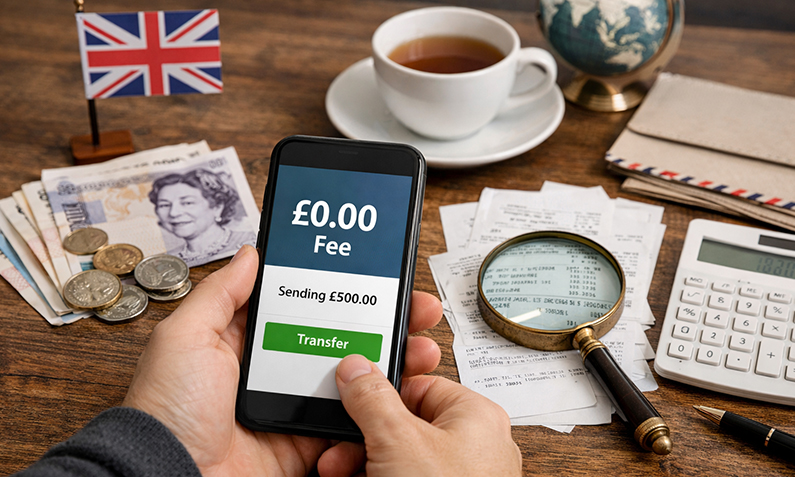





Are Zero-Fee Money Transfers Actually Cheaper?

February 9th, 2026
Are Zero-Fee Money Transfers Actually Cheaper?

Zero-fee international money transfers are often advertised as a low-cost way to send money abroad. While the idea of paying no transfer fee is appealing, it does not always mean the transfer is cheaper overall. The true cost depends on exchange rates, hidden charges, and how the transfer is processed.

What does “zero-fee” really mean?

When a provider advertises a zero-fee money transfer, it usually means there is no visible service fee charged upfront. However, this does not mean the transfer is free.

In most cases, providers still generate revenue through:

  • Exchange rate markups
  • Currency conversion charges
  • Payment method fees

The absence of a visible fee does not guarantee better value.

How international money transfer costs are calculated

The total cost of sending money abroad includes more than just the fee shown on screen.

Key cost components include:

  • The exchange rate used
  • Any transfer or service fee
  • Intermediary or receiving bank charges
  • Payment method costs

The most reliable way to compare providers is to look at how much money actually reaches the recipient’s bank account.

Money Guides

Helping You Borrow Money at the Right Price

Exchange rate markups and zero-fee transfers

Exchange rate markups are the most common way zero-fee transfers recover costs.

How exchange rate markups work

Instead of charging a fee, a provider may offer a weaker exchange rate than the real market rate. This difference is known as an exchange rate margin.

Transfer amount Small markup impact Larger markup impact
£200 Low Moderate
£2,000 Moderate High
£10,000 High Very high

For larger transfers, exchange rate differences often cost more than a visible fee.

Are zero-fee transfers cheaper for small amounts?

Zero-fee transfers can sometimes be cheaper for small amounts, particularly when:

  • The transfer is a one-off payment
  • Speed and convenience are priorities
  • Exchange rate differences are minimal

However, even for small transfers, it is important to compare the final amount received rather than relying on the headline “zero-fee” claim.

Zero-fee vs low-fee transfers

A low-fee transfer with a competitive exchange rate can often be cheaper than a zero-fee transfer with a poor rate.

Pricing model Main cost driver
Zero-fee Exchange rate margin
Low-fee Smaller service fee
Bank transfer Fees + FX margin

This is why comparing money transfer rates across different pricing models is essential.

Payment method impact on zero-fee transfers

The way a transfer is funded can affect whether a zero-fee offer is actually cheaper.

Bank transfer funding

Funding a transfer from a bank account usually results in lower overall costs. Bank transfers are slower but often avoid card processing fees.

Debit and credit card funding

Card-funded transfers may include:

  • Card processing fees
  • Foreign transaction fees
  • Higher total costs

A zero-fee headline may not account for these additional charges.

Payment method impact on zero-fee transfers

Do zero-fee transfers take longer to process than those that charge a fee?

Not necessarily. Zero-fee transfers do not automatically take longer to process. Transfer speed depends on the payment method used, destination country, and whether intermediary banks are involved. Some zero-fee transfers are processed quickly, while others take several business days, similar to paid transfers.

Intermediary and receiving bank fees

Some international transfers, especially those routed through traditional banking networks, may involve intermediary banks.

These banks can deduct fees during the transfer process, which:

  • Are not always shown upfront
  • Reduce the amount received
  • Apply regardless of whether the transfer claims to be zero-fee

This is particularly relevant for international bank transfers sent outside Europe.

Are zero-fee transfers cheaper than bank transfers?

Zero-fee transfers are often cheaper than high street bank transfers, but not always.

Banks typically charge:

  • Fixed international transfer fees
  • Exchange rate margins
  • Possible intermediary charges

However, a zero-fee transfer with a poor exchange rate can still cost more than a bank transfer with a competitive rate.

Zero-fee transfers and large amounts

For large transfers, zero-fee pricing is rarely the cheapest option.

Even a small exchange rate difference can have a significant impact when sending larger sums, making it important to compare providers that focus on exchange rate value rather than fee-free marketing.

Money Guides

Helping You Borrow Money at the Right Price

Transparency and pricing clarity

One advantage of some zero-fee transfer services is clearer pricing.

Transparent pricing usually includes:

  • Upfront exchange rates
  • Clear delivery estimates
  • Visible breakdowns of costs

However, transparency varies between providers and should not be assumed.

Are zero-fee transfers always transparent?

Not necessarily. Some zero-fee transfers still lack clarity around:

  • How exchange rates are set
  • Whether intermediary banks are involved
  • Whether receiving bank charges may apply

Reading the pricing information carefully helps avoid surprises.

When zero-fee transfers can make sense

Zero-fee transfers may suit users who:

  • Send small amounts infrequently
  • Prioritise convenience
  • Need fast delivery

They are less suitable when cost certainty or large transfer value is the priority.

Why comparing providers matters

No pricing model is always cheapest.

Costs vary based on:

  • Transfer amount
  • Destination country
  • Currency pair
  • Payment method

This is why comparing providers and methods before sending money can lead to meaningful savings.

Country-specific differences

Zero-fee pricing may work differently depending on the destination.

Local banking systems, currency liquidity, and intermediary involvement all affect whether a zero-fee transfer is competitive. Country-specific pages such as Cheapest Way to Send Money to [COUNTRY] from the UK often provide more accurate guidance.

Regulation and consumer protection

International money transfer providers operating in the UK must meet regulatory requirements, including:

  • Safeguarding customer funds
  • Clear pricing disclosure
  • Fair treatment of customers

Regulation improves transparency but does not guarantee lower prices.

Regulation and consumer protection

Correct as of 19 December 2025

FAQs about zero-fee money transfers

Are zero-fee international money transfers really free?

No. Zero-fee transfers usually recover costs through exchange rate markups or other charges, meaning the transfer is not truly free.

Are zero-fee transfers cheaper than low-fee transfers?

Not always. A low-fee transfer with a better exchange rate can be cheaper overall than a zero-fee transfer with a weaker rate.

Do zero-fee transfers include hidden fees?

They can. Exchange rate margins, intermediary bank fees, or payment method charges may still apply.

Are zero-fee transfers safe to use?

Yes, provided the service is regulated and follows UK safeguarding rules. Safety depends on regulation, not pricing.

Should I always choose a zero-fee option?

No. The cheapest option depends on the exchange rate, transfer size, destination, and payment method, not just whether a fee is shown.

Do zero-fee money transfers use worse exchange rates?

Often, yes. Zero-fee money transfers commonly recover costs by applying a margin to the exchange rate rather than charging a visible fee. This means the rate used may be worse than the market exchange rate, which can significantly reduce the final amount received, especially for larger transfers.

Are zero-fee money transfers cheaper for regular international payments?

Not always. For regular payments, small differences in exchange rates can add up over time. Even when no transfer fee is charged, repeated use of weaker exchange rates can make zero-fee transfers more expensive overall than options with low fees but better exchange rates.

Do zero-fee transfers include card or payment processing costs?

Sometimes. Zero-fee offers usually apply only to the transfer fee itself. If a transfer is funded by debit or credit card, additional card processing or foreign transaction fees may still apply, increasing the total cost despite the zero-fee headline.

Are zero-fee money transfers more common for certain currencies?

Yes. Zero-fee pricing is more common for major currencies with high liquidity, where exchange rates are more competitive. For less frequently traded currencies, wider exchange rate spreads often apply, which can reduce the cost advantage of a zero-fee transfer.

Can zero-fee transfers still include hidden fees?

Yes. Even when no transfer fee is charged, hidden costs can still apply. These may include exchange rate margins, intermediary bank deductions, or receiving bank charges, all of which can reduce the final amount received by the recipient.

Also Read Related Articles

Explore Money Guides

Helping You Borrow Money at the Right Price

4000+ reviews