







Compare Landlord Insurance for Your Rental Property

Written by Shay Ramani
Reviewed by Ankit Sureja
6 min read
Updated: 2 Sep 2026
Compare Landlord Insurance for Your Rental Property

Landlord insurance is specialist cover for property you let out, protecting the building and your position as a landlord in ways standard home insurance will not. If you rent out a home, a normal residential home insurance policy usually becomes invalid the moment a tenant moves in, because the risk profile changes. Landlord cover fills that gap with buildings protection plus landlord-specific extras such as property owners’ liability, loss of rent and legal expenses.

The core split matters most: you insure the structure and anything you provide, and your tenant insures their own belongings. In 2026 the median cost of landlord insurance in the UK is £284.75 a year for buildings-only cover with no extras, according to Alan Boswell Group’s published 2026 statistics, though prices vary widely by property. Free Price Compare lets you compare landlord and buildings cover across a panel of 42 home insurance providers, and we draw on published data from the ABI, FCA and Flood Re to explain what actually drives your price.

Quick Answer: Compare Landlord Insurance for Your Rental Property

  • Landlord insurance is not a legal requirement, but a standard home insurance policy is usually invalid once you let the property to a tenant.
  • You insure the building, fixtures and anything you provide; your tenant insures their own contents with separate tenant’s contents insurance.
  • Property owners’ liability cover is included in most landlord policies and typically insures you for around £2m to £5m if a tenant or visitor is injured.
  • Landlord insurance premiums are usually a tax-deductible business expense you can offset against rental income (check with HMRC or an accountant).
  • Most private landlords and residential buy-to-let properties cannot access the Flood Re scheme, so flood cover for rentals depends on the open market.

Last updated: August 2026

Written by the Free Price Compare editorial team | Reviewed August 2026

Why a standard home policy will not cover a let property

A standard home insurance policy usually becomes invalid once you let the property to a paying tenant, because the insurer priced it for an owner-occupier. The moment rent changes hands, the risk changes: the property may be occupied by people you do not know, left empty between tenancies, or exposed to different wear and damage. If you claim on a residential policy while letting the home, the insurer can decline the claim and cancel the cover.

Landlord insurance, sometimes called buy to let insurance, is built around this risk. It combines buildings cover with landlord-specific protection such as property owners’ liability and, if you choose, loss of rent and rent guarantee.

If you are moving out of a home you previously lived in and now plan to let, tell your insurer before the tenancy starts. Our guide on how to transfer home insurance when moving explains the steps when a property changes use.

Compare landlord and buildings cover

What does landlord building insurance cover and exclude?

Landlord building insurance covers the physical structure of your rental property, including the roof, walls, floors, permanent fixtures and often outbuildings, against events such as fire, flood, storm, subsidence and escape of water. It rebuilds or repairs the property you own after an insured event. Most policies set the sum insured on the rebuild cost, not the market value, and rebuild cost is the single biggest factor in your price.

Common inclusions and optional extras vary between insurers, but a typical landlord policy is built from these building blocks:

  • Buildings cover for the structure and landlord fixtures and fittings.
  • Property owners’ liability, usually £2m to £5m, if a tenant or visitor is injured or their property is damaged and you are found responsible.
  • Loss of rent or alternative accommodation if an insured event makes the property uninhabitable.
  • Landlord contents cover for items you provide, such as carpets, white goods and furniture in a furnished let.
  • Optional legal expenses and rent guarantee to help with tenant disputes and non-payment.
  • Optional landlord home emergency cover for urgent problems such as a broken boiler, burst pipe or lost keys.

Standard exclusions matter as much as inclusions. Wear and tear, gradual deterioration, poor maintenance, and damage caused by an unoccupied property beyond an agreed period (often 30 to 60 consecutive days) are usually excluded. Malicious damage by tenants is frequently an optional add-on rather than standard, so read the schedule carefully. The ABI reported the average subsidence claim reaching a record £20,000 in 2026.

For boiler and heating breakdowns specifically, a buildings policy will not usually repair a boiler that fails through age, which is where separate cover comes in. Our guides on whether home insurance covers boilers and whether tenants need boiler cover explain who is responsible for what.

Who insures what: landlord versus tenant

The landlord insures the building and anything the landlord provides, while the tenant insures their own belongings. This split is the single most misunderstood point in renting. Your landlord policy does not cover a tenant’s sofa, television, clothes or laptop, and your tenant’s contents policy does not repair your roof or boiler.

Item Insured by
Building structure, roof, walls Landlord (buildings cover)
Landlord-provided furniture, white goods, carpets Landlord (contents cover)
Tenant’s personal possessions and furniture Tenant (tenant’s contents insurance)
Injury to a visitor caused by building disrepair Landlord (property owners’ liability)
Accidental damage the tenant causes to their own things Tenant (contents accidental damage)

Insurance for tenants, known as tenant’s contents insurance, is bought separately by the renter and is not something you can require them to hold, though you can encourage it in the tenancy agreement. Because Flood Re can cover a tenant’s contents even where the building itself is not eligible, renters in flood-risk areas may still find affordable contents cover through the open market.

If you provide appliances or furnishings, list them and set a realistic landlord contents sum insured. An unfurnished let usually needs only a small amount of contents cover for items such as carpets, curtains and fitted kitchen units.

Who insures what: landlord versus tenant

Get a landlord insurance quote

Compare buildings and landlord cover from a panel of 42 UK providers

How much does landlord insurance cost in 2026?

The median cost of landlord insurance in the UK in 2026 is around £285 a year for buildings-only cover with no optional extras, according to Alan Boswell Group data published in May 2026. Prices in that same research ranged from as little as around £73 a year to over £1,470, which shows how much location alone moves the price.

Rebuild value is the biggest single driver. Industry quote data indicates a property with a £150,000 rebuild cost insures for around £167 a year, rising to roughly £415 at a £1 million rebuild. Property type also matters: a semi-detached house is among the cheaper types to insure, while a purpose-built block of flats is among the most expensive because the policy covers the entire building rather than a single unit.

Property type Indicative annual premium (2026)
Semi-detached house Around £177
Tyneside flat Around £188
Detached house Around £364
Converted block of flats Around £714
Purpose-built block of flats Around £823

Figures are indicative and may change. HMO (house in multiple occupation) properties usually cost more than a single-family let because of the higher liability and turnover, and adding legal expenses, rent guarantee and contents can push a typical policy past £400 a year. For general context, the ABI reported the average combined home insurance policy at £383 in April to June 2026, up slightly on the previous quarter but around 2% cheaper than a year earlier, according to the ABI.

See landlord insurance prices for your property

How to get a cheaper landlords insurance quote

The most reliable way to find cheap landlords insurance is to compare several quotes on the same cover level rather than accepting a renewal. Paying annually rather than monthly also avoids premium finance interest, though the FCA reported in February 2026 that falling premium finance costs are now saving consumers around £157m a year across insurance.

Practical steps that reduce a landlords insurance quote include setting the rebuild value accurately rather than guessing high, choosing a slightly higher voluntary excess, fitting approved locks and smoke alarms, and insuring multiple rental properties on one portfolio policy. Portfolio arrangements can lower the per-property cost compared with individual policies, though the exact saving depends on the insurer. Before you compare, our home insurance comparison checklist and the complete home insurance checklist help you line up like-for-like cover.

Landlord insurance is not a legal requirement in the UK, but it is close to essential and your mortgage lender will usually insist on buildings cover as a condition of a buy-to-let loan. There is no law forcing you to hold landlord insurance the way the Road Traffic Act requires car insurance, but letting without it leaves you exposed to the full cost of a fire, flood or liability claim.

If you own the property outright with no mortgage, you can technically let it uninsured, but doing so puts the entire rebuild cost and any injury claim on you personally. A single escape-of-water claim now averages several thousand pounds, and the ABI reported the average subsidence claim reaching a record £20,000 in 2026. Property owners’ liability alone justifies the cover for most landlords, because you owe a duty of care to tenants and visitors under the Landlord and Tenant Act 1985 and the Housing Act 2004.

Separately, you must meet legal safety duties regardless of insurance, including annual gas safety checks under the Gas Safety (Installation and Use) Regulations 1998 and providing a valid Energy Performance Certificate. Failing these can also invalidate a claim.

Compare cover levels side by side

Do I need it for a leasehold flat, and who insures the building?

For a leasehold flat, the freeholder or management company usually arranges buildings insurance for the whole block, and you as leasehold landlord pay a share through the service charge. This means you rarely buy separate buildings cover for a leasehold flat, but you should confirm what the block policy covers before assuming you are protected.

As a leasehold landlord you still typically need landlord contents cover for anything you provide, property owners’ liability for your own letting activity, and optional loss of rent. The FCA has focused heavily on multi-occupancy buildings insurance because leaseholders have historically received poor value through commission-heavy arrangements, and reforms embedded from 2026 now treat leaseholders as customers with more transparency over broker remuneration, according to the FCA. If you feel your block premium looks high, you are entitled to ask for a breakdown.

For a freehold house you let, you insure the building yourself, so a full landlord buildings policy is the norm.

How the Renters’ Rights Act 2025 affects landlord cover

The Renters’ Rights Act 2025 is legislation that gained Royal Assent in October 2025, with its reforms being phased in from 1 May 2026, changing the risks landlords insure against. The Act ends Section 21 no-fault evictions, abolishes fixed-term assured shorthold tenancies in favour of rolling periodic tenancies, and tightens enforcement of property standards, according to gov.uk. Valid Section 21 notices could still be served up to 30 April 2026, and notices served before that date remain valid.

For insurance, the practical effect is that regaining possession may take longer and rely more on specific grounds, which increases the value of rent guarantee and legal expenses cover for many landlords. Some in the sector describe the Act as a turning point for landlord risk exposure. If you rely on rental income to cover a mortgage, reviewing loss-of-rent and legal cover at renewal is a sensible response to the new tenancy regime rather than a reason to panic.

Is landlord insurance tax-deductible?

Landlord insurance premiums are usually an allowable business expense you can deduct from your rental income before calculating your tax bill. This applies to buildings, contents, liability, loss of rent and legal expenses cover taken out wholly for your letting business, and it effectively reduces the net cost of a policy for most landlords.

The exact treatment depends on your circumstances and whether you let as an individual or through a company, so confirm with HMRC guidance on gov.uk or an accountant. From 6 April 2026, changes to how some landlords report income under Making Tax Digital also apply, so keeping clear records of insurance costs is worthwhile. Because it is deductible, choosing slightly broader cover often costs less in real terms than the headline premium suggests.

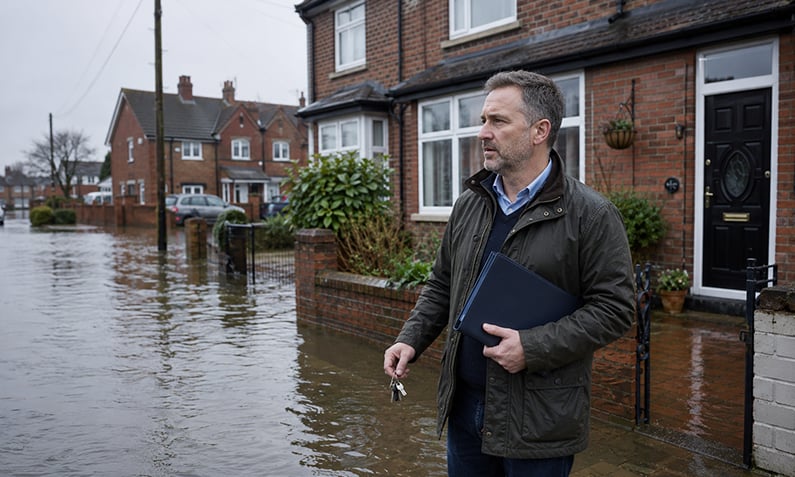
Can landlords still get flood cover?

Most private landlords and residential buy-to-let properties cannot access the Flood Re scheme, so flood cover for rental properties depends on the open insurance market. Flood Re is a government-backed reinsurance scheme that helps make flood cover affordable for high-risk homes, but its rules exclude private landlords insuring buy-to-let properties, homes built after 2009, and certain larger blocks, according to Flood Re.

Flood Re does cover a tenant’s own contents in a rented or leasehold property even where the buildings risk is not eligible, provided the scheme criteria are met. Where a flood claim is ceded to the scheme it carries a fixed £250 excess, and the Build Back Better element can reimburse up to £10,000 of flood-resilience improvements as part of a claim. For landlords, the practical takeaway is to compare specialist insurers directly, because flood-exposed rentals need cover priced on the open market rather than through Flood Re. Flood Re is currently planned to run until 2039.

Can landlords still get flood cover

FAQs about landlord insurance

Do I need landlord insurance if my property has no mortgage?

Landlord insurance is not legally required, so you can let a mortgage-free property without it, but doing so leaves you fully exposed to rebuild costs and liability claims. A standard home insurance policy is usually invalid once a tenant moves in, so you would effectively be uninsured. Most landlords still take at least buildings and property owners' liability cover to protect against fire, flood and injury claims.

What is the difference between landlord insurance and buildings insurance?

Buildings insurance covers only the structure of the property, whereas landlord insurance combines buildings cover with landlord-specific protection such as property owners' liability, loss of rent and legal expenses. A standard buildings policy sold to owner-occupiers usually will not respond to a let-property claim. Landlord insurance is priced and worded specifically for the risks of renting a home out.

Does landlord insurance cover the tenant's belongings?

No, landlord insurance does not cover a tenant's personal possessions. You insure the building and any furniture or appliances you provide, while the tenant is responsible for insuring their own belongings through tenant's contents insurance. You cannot legally force a tenant to buy contents cover, but you can recommend it in the tenancy agreement.

How much landlord contents cover do I need for an unfurnished let?

An unfurnished let usually needs only a small amount of landlord contents cover for items you still provide, such as carpets, curtains, blinds and fitted kitchen units. A furnished let needs a higher sum insured to cover sofas, beds, white goods and other furniture. List what you supply and value it at replacement cost so you are neither under- nor over-insured.

Is rent guarantee insurance worth it?

Rent guarantee insurance can be worth it if you rely on rental income to cover a mortgage, because it pays out when a tenant stops paying and often includes legal costs to regain possession. Under the Renters' Rights Act 2025, regaining possession can take longer, which raises the value of this cover for many landlords. Policies usually require you to have referenced tenants properly before cover applies.

What is property owners' liability and how much do I need?

Property owners' liability protects you if a tenant, visitor or member of the public is injured or has their property damaged because of your building, and you are found legally responsible. Most landlord policies include cover of between £2m and £5m as standard. Higher limits are worth considering for HMOs or blocks where more people are exposed to the risk.

Do I need landlord insurance for a leasehold flat?

For a leasehold flat, the freeholder or management company usually insures the whole building and you pay a share through the service charge, so you rarely buy separate buildings cover. You may still want landlord contents cover for items you provide, property owners' liability for your letting activity, and loss of rent. Always confirm what the block policy covers before assuming you are fully protected.

Can I insure several rental properties on one policy?

Yes, many insurers offer portfolio landlord insurance that covers multiple rental properties on a single policy with one renewal date. This can lower the per-property cost compared with holding separate policies and simplifies administration. The saving depends on the insurer, the number of properties and their combined risk profile.

What does landlord home emergency cover include?

Landlord home emergency cover pays for urgent call-outs and repairs to make a property safe and habitable, such as a boiler breakdown, burst pipe, blocked drain, roof damage or being locked out. It typically covers the tradesperson's call-out, labour and parts up to a set limit. It is different from a boiler service contract or property management, so check the definition of an emergency and any exclusions.

Will landlord insurance cover damage caused by tenants?

Accidental damage and malicious damage caused by tenants are usually optional add-ons rather than standard cover on a landlord policy. Standard cover typically excludes wear and tear and gradual deterioration. If you are concerned about tenant damage, check whether malicious damage by tenants is included and consider holding a deposit through an approved scheme to cover smaller amounts.

How long can a rental property be empty before insurance is affected?

Most landlord policies restrict cover once a property is unoccupied for a continuous period, commonly 30 to 60 days, after which some perils such as escape of water or malicious damage may be excluded. If a property will be empty between tenancies or during renovation, tell your insurer, as unoccupied property cover may be needed. Failing to declare a long void can lead to a declined claim.

Also Read Related Articles


Information correct as of 27 August 2026. Prices, tariffs, policy details and providers change frequently, so please check the latest details before making a decision. This article is for general information only and does not constitute financial advice. Free Price Compare is authorised and regulated by the Financial Conduct Authority (FCA).

4000+ reviews