





Fuse Energy Login Account Management

Written by Andrea Troy
Reviewed by Prajesh Manvar
10 min read
Updated: 12 Aug 2026
Fuse Energy Login Account Management

Fuse Energy login and account management is handled entirely online, through the Fuse app or the website, using your registered phone number or verified email address rather than a traditional username and password. Fuse launched as an app-only supplier and still runs a digital-first model: there are no paper bills and no customer service phone line, so everything from meter readings to payments and tariff changes happens in one place.

For a bill-conscious household comparing suppliers, the account experience matters as much as the price. Fuse uses variable direct debit, meaning you pay for the energy you actually used the previous month rather than a fixed estimate, and its app shows real-time usage and monthly forecasts. Free Price Compare tracks tariffs across the whole UK market using data from Ofgem, Citizens Advice and suppliers’ own published rates, so you can weigh Fuse against alternatives before you switch.

Quick Answer: Fuse Energy Login Account Management

  • You log in to Fuse Energy with your registered phone number or verified email, usually via a magic link or one-time password (OTP), on the app or website.
  • Fuse has no customer service phone number; support is via 24/7 live chat in the app and email at [email protected].
  • Fuse bills on variable direct debit, so each month you pay only for the energy used in the previous month rather than a fixed estimate.
  • Fuse charges exit fees of up to £50 per fuel on its fixed tariffs, but you can avoid them by moving to its variable tariff during the contract.
  • The Ofgem price cap rose 13% from 1 July 2026, so a typical direct-debit dual-fuel home pays around £1,663 a year under Ofgem’s updated typical usage figures (Ofgem, 27 May 2026).

Last updated: July 2026

Written by the Free Price Compare editorial team | Reviewed July 2026

How do I log in to my Fuse Energy account?

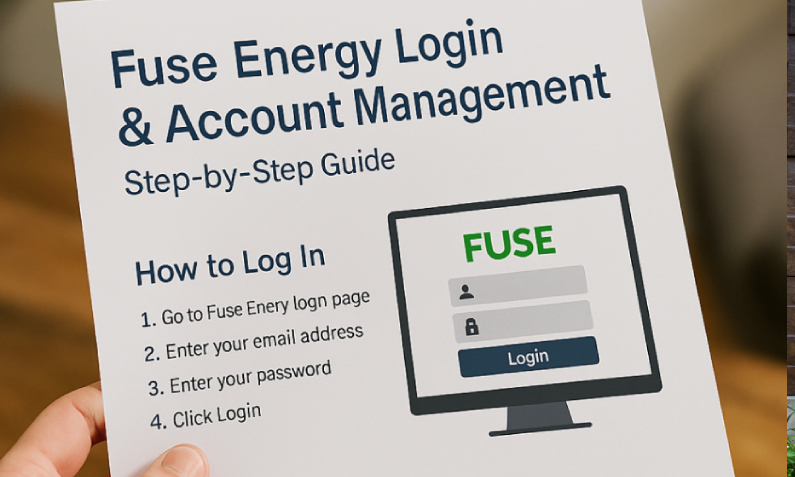
You log in to a Fuse Energy account using your registered phone number or verified email address, normally through a magic link or one-time password (OTP) rather than a fixed password. This works on both the Fuse app and the Fuse website. Fuse originally launched as an app-only energy supplier, and while you can now sign up and manage your account through a browser, most features and real-time usage data are designed around the app. Once you request a login, Fuse sends a code or link to your phone or email, and entering it opens your account. There is no separate account number and PIN system of the kind older suppliers use, so keeping the email address and mobile number on your account up to date is the single most important thing for reliable access.

If a login link does not arrive, check the email address or number Fuse has on file matches the one you registered with, and look in spam folders. Because access is tied to your contact details, updating them promptly after a house move or a new phone matters more here than with a traditional supplier.

Can I manage my account without the app on a browser?

Yes, you can manage a Fuse Energy account on the website as well as the app, though the app gives a fuller experience. Through a browser you can sign up, view billing and top up payments, but functions such as real-time usage tracking and monthly forecasts are built around the mobile app. If you prefer not to install an app, the website covers the essentials, but households that want to actively monitor consumption to cut costs will get more from the app. For a wider view of what to weigh up beyond the interface, our guide on what matters beyond just price on energy tariffs is worth reading before you commit.

Compare energy tariffs across the whole market

Does Fuse Energy have a customer service phone number?

Fuse Energy does not have a customer service phone number; support is delivered through 24/7 live chat in the app and by email at [email protected]. This digital-only model is a deliberate part of how Fuse keeps costs down, but it does not suit everyone. Fuse relies on digital support channels rather than a customer service phone line, with help available through live chat and email. If you are comfortable managing money and queries online, the response times are quick; if you rely on speaking to someone by phone, the absence of a call centre is a real trade-off to factor in.

Across the wider market, service standards are improving. According to Citizens Advice, the median energy supplier customer service star rating between January and March 2026 was 3.26 out of 5, up from 3.17 the previous quarter. If a supplier’s service falls short and cannot resolve a complaint, you can escalate to the Energy Ombudsman after eight weeks, or sooner if the supplier issues a deadlock letter.

How do I submit meter readings and view my energy usage?

You submit meter readings and view usage inside the Fuse app, where the platform shows real-time consumption updates and monthly forecasts. If you have a smart meter, readings are sent automatically, so manual submissions are only needed where a meter is not communicating. Fuse also lets you request a new smart meter directly through the app. Smart meters remove the estimated-bill guesswork that pushes some households onto the wrong direct debit, and pairing one with the app makes it easier to spot what is driving your bill. To understand where the money goes, our breakdown of what uses the most energy in the home pairs well with the app’s usage data.

Does Fuse Energy have a customer service phone number

How does Fuse Energy variable direct debit billing work?

Fuse Energy variable direct debit means the amount taken each month equals the energy you actually used in the previous month, rather than a fixed estimate spread evenly across the year. This is different from the fixed monthly direct debit most large suppliers use, where you overpay in summer to build credit for winter. With Fuse’s model, your payments rise in cold months and fall in warmer ones, and you are less likely to build up a large credit balance the supplier is holding. Credit card payments are handled separately, through a one-off payment link that tops up your Fuse Wallet, which then covers your energy charges.

The main advantage is transparency: you pay for what you use and are not funding a buffer. The trade-off is budgeting, because winter bills can be noticeably higher than summer ones, so households on tight monthly budgets should plan for that seasonal swing. If you have moved out of a property, tell Fuse promptly and provide a final meter reading, because leaving an account open can leave you liable for usage after you have gone.

Cut your bills before the cold weather hits

Small changes now can shave money off winter energy costs

What Fuse Energy tariffs are available and how are they priced?

Fuse Energy offers four tariff types built from two rate structures and two price types: single-rate fixed, single-rate variable, off-peak fixed, and off-peak variable, across contract lengths that include 12, 13 and 15 months. Fixed tariffs lock your unit rates and standing charge for the contract term, giving price certainty, while the standard variable tariff moves in line with the Ofgem price cap. Off-peak tariffs give a seven-hour cheaper window from 12:30am to 7:30am that applies to the whole household, which suits electric vehicle charging and heavy overnight users. Fuse aims to undercut the price cap by a few percent on its variable tariff, partly through lower-than-average standing charges.

Named fixed tariffs published in early 2026 showed electricity unit rates ranging up to around 25.05p per kWh across regions for its January 2026 Fixed 12-month version, and up to around 24.90p per kWh for the 13-month version. These are regional maximums, not a single national headline, because standing charges and unit rates vary by distribution region. A tariff that looks competitive nationally may be less so in your area, which is why checking the rates for your own postcode before switching matters. To see how a tariff structure affects your bill, compare it against the current cap using our overview of why some households pay more than their neighbours.

Feature Fuse Energy detail
Login method Phone number or verified email, via magic link or OTP
Account access App (full features) and website
Payment method Variable direct debit; card top-ups via Fuse Wallet
Phone support None; 24/7 live chat and email only
Tariff types Single-rate fixed, single-rate variable, off-peak fixed, off-peak variable
Exit fees Up to £50 per fuel on fixed tariffs (July 2026)

Figures are indicative and may change.

See how Fuse compares to whole-market tariffs

How do I switch tariff or avoid exit fees within my account?

You change tariff inside the Fuse app or website, and you can avoid Fuse Energy exit fees on a fixed tariff by moving to its variable tariff during the contract term. As of July 2026, Fuse’s fixed-tariff exit fees were set at up to £50 per fuel, so a dual-fuel household leaving early could face up to £100 in charges to switch away entirely. Moving from a fixed to Fuse’s own variable tariff, rather than leaving for another supplier, sidesteps the exit fee, which is useful if you fixed at a rate that is no longer competitive. If you are switching away completely, Ofgem’s switching rules protect you, and a switch should complete within about five working days.

Before fixing, weigh the certainty of a fixed price against the exit fee risk if rates fall. Fixed tariffs make sense when you value predictable payments and think the price cap will rise; variable tariffs suit households happy to track the cap and keep flexibility. Exit fees are common across suppliers, not unique to Fuse. For a worked example of how these charges apply elsewhere, our guide to exit fees and switching shows how the numbers stack up. If you prefer a supplier with an app-based account and clear billing, our E.ON Next account management guide covers a comparable digital setup.

How does the Ofgem price cap affect Fuse variable customers?

The Ofgem price cap sets the maximum unit rates and standing charge a supplier can charge on a standard variable tariff, so a Fuse variable customer’s rates move with it rather than being fixed. According to Ofgem, the cap rose 13% for the period 1 July to 30 September 2026, which put a typical dual-fuel direct-debit household at around £1,663 a year under Ofgem’s updated typical usage figures. The cap limits rates for a typical user, not a fixed total bill, so what you actually pay depends on how much energy you use. Around 33 million domestic accounts are on standard variable tariffs and exposed to cap movements, while roughly 22 million accounts on fixed deals are unaffected by each change.

For the July 2026 cap, electricity on a standard variable direct debit was capped at an average of 26.11p per kWh with a 57.19p daily standing charge, according to Ofgem’s 27 May 2026 announcement. Ofgem is due to publish the cap for 1 October to 31 December 2026 by 26 August 2026, and forecasters expect a modest further rise, though that is not confirmed. Because Fuse aims to sit a few percent below the cap on its variable tariff, checking your own regional rates against the latest cap is the clearest way to judge value. For practical ways to lower usage regardless of tariff, see our smart ways to cut energy costs.

How does the Ofgem price cap affect Fuse variable customers

Check current energy tariffs for your postcode

FAQs about fuse energy login account management

How do I reset access if I can't log in to Fuse Energy?

Because Fuse logs you in with a magic link or one-time code sent to your registered phone number or email, there is no password to reset. If a login link does not arrive, confirm the number and email on your account are current, check spam folders, and request a new code. If access still fails, contact Fuse through the in-app live chat or email [email protected].

Is Fuse Energy legitimate and regulated?

Fuse Energy is a licensed UK domestic energy supplier and is regulated by Ofgem, the energy market regulator, in the same way as larger suppliers. This means it must follow Ofgem's rules on billing, the price cap and switching. Being app-only does not change its regulatory status or the standard consumer protections you get.

Can I manage more than one property on a single Fuse account?

Yes, Fuse lets you manage energy supply for several properties under one account, which suits landlords, second-home owners or people managing bills for relatives. Each property's real-time usage and billing can be viewed in the same app or website login. This avoids juggling separate accounts and passwords for each address.

What happens if I move house while I'm with Fuse?

Tell Fuse as soon as you know your move date and provide a final meter reading for the property you are leaving, so your account can be closed and a final bill produced. Failing to notify your supplier can leave you liable for energy used at the old address after you have gone. You can then set up supply at your new home if Fuse covers that address.

Does Fuse Energy still claim to always be cheaper than the price cap?

Fuse aims to undercut the Ofgem price cap by a few percent on its variable tariff, partly through lower-than-average standing charges, but it no longer makes a blanket guarantee of always being cheaper than other suppliers. Whether it is cheaper for you depends on your region and usage, because unit rates and standing charges vary by distribution area. Always check the rates for your own postcode before switching.

How is variable direct debit different from fixed monthly payments?

With Fuse's variable direct debit, you pay each month for exactly the energy used the previous month, so payments rise in winter and fall in summer. Fixed monthly direct debit, used by many large suppliers, spreads an estimated annual cost evenly, meaning you overpay in warmer months to cover colder ones. The variable model avoids building large credit balances but requires budgeting for higher winter bills.

Can I pay my Fuse bill with a credit card?

Yes, but credit card payments are handled through a one-off payment link that tops up your Fuse Wallet rather than as a recurring direct debit. Your energy charges are then drawn from that wallet balance. The default and main payment method with Fuse remains variable direct debit.

How do I get a smart meter with Fuse Energy?

You request a smart meter directly through the Fuse mobile app, and Fuse arranges the installation. A smart meter sends automatic readings, which removes estimated bills and makes the app's real-time usage and forecast features more accurate. Installation is free and there is no obligation to accept a smart meter, though it makes managing an app-based account easier.

What are Fuse Energy's exit fees and can I avoid them?

Fuse charges exit fees of up to £50 per fuel on its fixed tariffs, so a dual-fuel household leaving early could face up to £100. You can avoid the fee by switching to Fuse's own variable tariff during the contract term rather than leaving for another supplier. Variable tariffs generally have no exit fee, giving you flexibility to switch away at any time.

What is the off-peak window on Fuse's tariffs?

Fuse's off-peak tariffs give a seven-hour cheaper window from 12:30am to 7:30am that applies to your whole household, not just a single circuit. This suits electric vehicle charging, running appliances overnight and heavy off-peak users. During peak hours the unit rate is higher, so off-peak tariffs only save money if you can shift usage to the night.

What happens if I have a complaint Fuse can't resolve?

Raise the complaint first through Fuse's in-app live chat or email, giving the supplier a chance to fix it. If it is not resolved within eight weeks, or Fuse issues a deadlock letter sooner, you can escalate to the Energy Ombudsman, which is free and independent. The Ombudsman's decision is binding on the supplier if you accept it.

Should I choose a fixed or variable Fuse tariff?

Choose a fixed Fuse tariff if you value predictable rates and expect the price cap to rise, accepting the up to £50 per fuel exit fee if you leave early. Choose the variable tariff if you want flexibility, no exit fee and are comfortable tracking the Ofgem price cap, which changes every three months. Compare the fixed rate against the current cap for your region before deciding.

Also Read Related Articles


Information correct as of 31 July 2026. Prices, tariffs, policy details and providers change frequently, so please check the latest details before making a decision. This article is for general information only and does not constitute financial advice. Free Price Compare is authorised and regulated by the Financial Conduct Authority (FCA).

4000+ reviews