





Feed-in Tariff Changes for UK Solar Households

February 3rd, 2026
Feed-in Tariff Changes for UK Solar Households

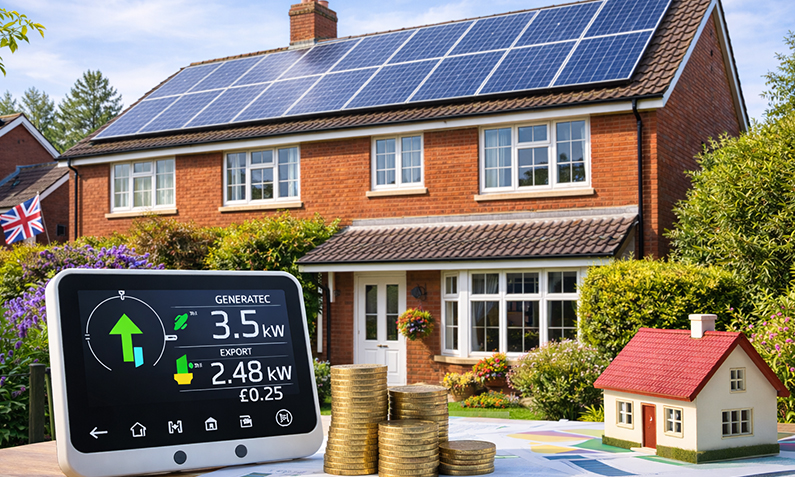
More than 800,000 households across the UK are still receiving payments under the Feed-in Tariff (FIT) scheme for generating their own electricity from renewable sources. Although the scheme closed to new installations in 2019, existing participants continue to receive long-term payments for electricity generation and export.

From April 2026, the way Feed-in Tariff payments increase each year is changing. Payments will still rise annually, but they will now be linked to a different measure of inflation. Understanding how the FIT scheme works, what is changing, and how it affects households with solar panels can help you make informed decisions about your wider energy setup.

What is the Feed-in Tariff (FIT) scheme?

The Feed-in Tariff scheme was introduced to encourage small-scale electricity generation from renewable technologies, particularly domestic solar PV installations.

What the FIT scheme pays for

The scheme provides two types of payments:

  • FIT generation payments for every unit of electricity your system produces
  • Export tariffs for electricity sent back to the grid

These payments are made separately from your electricity bill and apply regardless of how much electricity you use at home.

FIT and other renewable support schemes

The FIT scheme sits alongside other renewable support mechanisms, such as the Renewables Obligation, which applies to larger UK generators. Together, these schemes helped support early renewable deployment and increase total installed capacity across the UK.

Who is still on the Feed-in Tariff?

Although the scheme is closed to new applicants, a large number of households remain on FIT contracts.

How many households are affected?

More than 800,000 households across England, Wales and Scotland are still receiving Feed-in Tariff payments. The majority have solar PV installations, with smaller numbers using wind or hydro systems.

How to check if you are on FIT?

If your system was installed before 2019 and you receive regular FIT statements or payments from a licensed electricity supplier, you are likely registered under the scheme.

Prepayment Meter Tariffs – Find Cheaper Options Today

Compare top-up tariffs in your area and cut your prepayment energy costs.

How are Feed-in Tariff payments calculated?

Feed-in Tariff payments are calculated based on rules set when your system was registered.

FIT generation payments explained

Generation payments depend on:

  • The technology used, such as solar PV
  • The size and capacity of your system
  • Metered electricity generation

These payments apply even if all electricity is used within the home.

Export tariffs explained

Export tariffs are paid for electricity sent back to the grid. Many FIT systems use deemed export rather than an export meter.

Inflation indexation

FIT payments increase each financial year in line with inflation. This indexation is what is changing from April 2026.

What is changing to the Feed-in Tariff from April 2026?

From April 2026, FIT rates will increase in line with the Consumer Prices Index (CPI) rather than the Retail Prices Index (RPI).

CPI vs RPI explained

Measure What it means
RPI Older inflation measure, typically higher
CPI Widely used official measure, usually lower

Because CPI is generally lower than RPI, annual increases will continue but are expected to be smaller.

Why this change is happening?

The UK Government has said CPI is a more accurate and widely used measure of inflation. It has also stated that using CPI helps control the overall cost of the scheme, which is funded through levies on electricity bills.

Earlier proposals to freeze FIT rates were considered during consultation but have now been ruled out.

Are these changes just for solar panels?

No. The change applies to all renewable systems registered under the FIT scheme, including:

  • Solar PV installations
  • Wind turbines
  • Hydro systems

Solar panels are discussed most often simply because they make up the majority of FIT installations.

Will Feed-in Tariff payments go down?

No. FIT payments will not decrease.

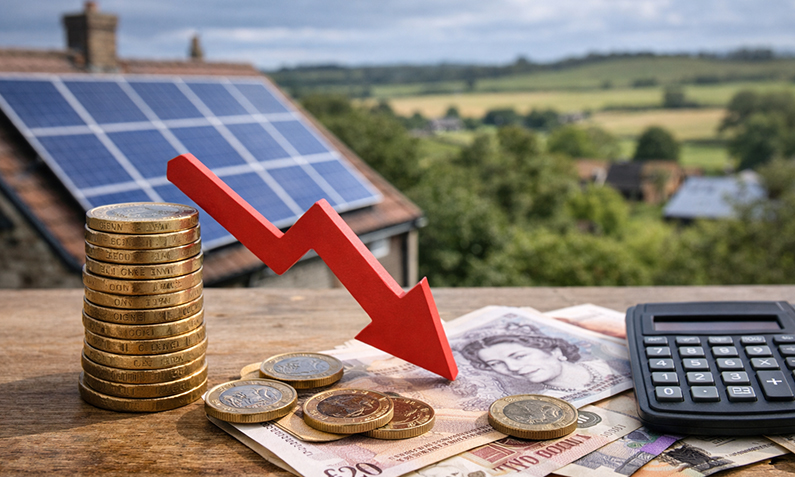
Payments will continue to rise each year, but increases will be linked to CPI rather than RPI. The impact is more noticeable over long timeframes rather than in a single year.

Will Feed-in Tariff payments go down

How much could households be affected financially?

The impact varies between households.

What affects the difference?

  • System size and capacity
  • Original tariff rate
  • How many years remain on the FIT contract

While annual changes may seem small, lower inflation linking can reduce total lifetime FIT income.

Compare energy prices to see if the electricity you still use is competitively priced.

When are new Feed-in Tariff rates announced?

Ofgem publishes updated FIT rates each year.

  • Rates are published in February
  • New rates apply from 1 April

This timetable applies each financial year.

Feed-in Tariff vs Smart Export Guarantee

The Feed-in Tariff and Smart Export Guarantee (SEG) work very differently.

Feature Feed-in Tariff Smart Export Guarantee
Open to new installations No Yes
Generation payments Yes No
Export payments Yes Yes
Inflation linked Yes No

Households on FIT cannot switch to SEG without giving up their FIT payments permanently.

Stop Overpaying — Compare Energy Deals Today

Check your current tariff against the cheapest energy deals available.

What should Feed-in Tariff households do now?

No immediate action is required, but it can be useful to review your overall energy setup.

Useful checks to make

  • Confirm your FIT rate and remaining contract length
  • Review how much electricity you export versus use at home
  • Understand how much grid electricity you still rely on

Comparing energy prices can help you check whether your current tariff suits your usage.

Does the Feed-in Tariff still make solar worthwhile?

For households already on the scheme, the Feed-in Tariff remains valuable.

Why FIT still matters

  • Long-term, predictable payments
  • Guaranteed income for electricity generation
  • Export payments alongside bill savings

Thinking about upgrades or changes?

Some households with older solar systems consider upgrades such as battery storage or newer panels to increase self-use and reduce reliance on the grid.

Explore your solar options before making any changes.

Who pays for the Feed-in Tariff?

The cost of the FIT scheme is recovered through levies included in electricity bills across the UK. This approach mirrors funding used for other renewable support schemes.

Correct as of 02 February 2026

FAQ’s About Feed-in Tariff Changes

Is the Feed-in Tariff ending?

No. Existing FIT contracts continue for their full agreed term, usually around 20 years.

Can I switch from FIT to another scheme?

No. Leaving the FIT scheme would permanently end your FIT payments.

Will FIT payments still increase every year?

Yes, but increases will be linked to CPI rather than RPI from April 2026.

Are FIT payments taxable?

Domestic FIT payments are generally not taxable, provided certain conditions are met.

Does battery storage affect FIT payments?

Battery storage does not change generation payments, but it can affect how much electricity is exported to the grid.

Also Read Related Articles

Compare Energy Prices in Just 6 Minutes

Switch today and start saving — quick, easy, and with zero obligation.

4000+ reviews