

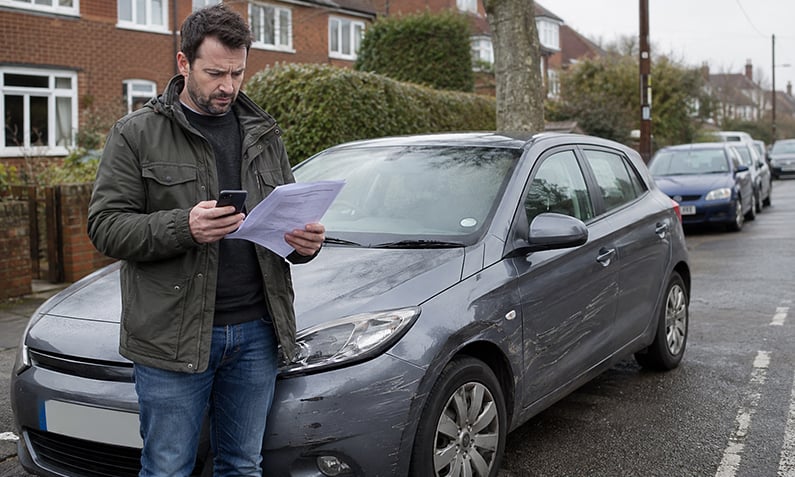




How Many Car Insurance Claims Per Year Is Too Many?

Written by Shay Ramani
Reviewed by Andrea Troy
5 min read
Updated: 21 Aug 2026
How Many Car Insurance Claims Per Year Is Too Many?

How many car insurance claims per year is too many depends on the insurer, because UK car insurance has no fixed legal limit on the number of claims you can make. In practice, most insurers treat two or more fault claims in a three-to-five-year period as a point where your premium rises sharply and your renewal may be at risk. Each claim sits on your record and shapes how risky you look at renewal.

The figure that matters is not a single yearly cap, but your claims frequency over time and whether each claim was your fault. Below we explain where the practical thresholds sit, how your no-claims bonus reacts, and when paying for a repair yourself can work out cheaper.

  • There is no legal limit on car insurance claims per year, but two or more fault claims within three to five years is where many insurers see you as high risk.
  • Most insurers apply a two-year no-claims bonus “step-back” for a single fault claim; a second claim in the same period can wipe your bonus.
  • Claims typically stay on your record for five years and must be declared, even non-fault ones where no money was paid.
  • Multiple claims rarely cause mid-term cancellation, but they can lead to non-renewal and higher quotes elsewhere.

Where insurers draw the line on claims frequency

Most UK insurers start treating you as higher risk once you reach two fault claims within a three-to-five-year period, though the exact threshold is set individually by each insurer. There is no industry-wide rule and no legal cap on how many claims you can file in a single year. What insurers watch is the frequency and the fault split of your claims over a rolling period.

One claim in a year is common and usually manageable. A second fault claim in the same year, or a third across a few years, is where many insurers either load your premium heavily or decline to quote at renewal. A claims history of several incidents in a short window signals a pattern, and pricing reflects that pattern rather than any single event.

Even claims that were not your fault count towards how an insurer reads your risk. A driver involved in several non-fault accidents in a short period can still see higher quotes, because some insurers view repeated involvement in incidents as a predictor of future claims.

Why claims volume keeps pushing prices up

UK motor insurers paid out £11.9 billion across 2.5 million claims in 2025, according to the Association of British Insurers (ABI, 11/02/2026). Vehicle damage alone accounted for nearly £7.5 billion, around 63% of the total. Rising repair costs feed straight back into premiums for everyone.

The average accidental damage claim rose to £3,699 in Q1 2026, up 8% on the previous quarter, as higher parts prices and more complex vehicles pushed up repair bills (ABI, 30/04/2026). When the cost per claim climbs like this, each claim you make has a larger effect on how your insurer prices your renewal.

Against that backdrop, the average motor premium held at £560 in Q1 2026, around £20 lower than Q1 2025 (ABI Motor Insurance Premium Tracker, 30/04/2026). The ABI figure reflects the price drivers actually pay across more than 28 million policies, rather than quoted prices, which typically run higher.

Where insurers draw the line on claims frequency

See typical car insurance prices

How your no-claims bonus reacts to each claim

A no-claims bonus is a discount insurers give for each consecutive year you do not make a fault claim. Most insurers cap it between five and nine years, with nine years being a common maximum. Each fault claim reduces the bonus through a “step-back” system rather than wiping it outright.

The most common approach is a two-year step-back for a single fault claim. If you hold five years of no-claims bonus and make one fault claim, you would typically drop to three years. Make a second fault claim in the same period and you could lose the bonus entirely.

The financial sting comes from losing years that took a long time to build. Losing five or more years of your no-claims bonus can add somewhere in the region of £300 to £700 to your annual premium, depending on the insurer and your wider risk profile. That is on top of any base premium increase the claim itself triggers.

Does protecting your no-claims bonus stop the rise?

Protecting your no-claims bonus preserves your discount percentage after a set number of claims, but it does not freeze your overall premium. An insurer will still see you as higher risk after a claim and will likely raise your base premium at renewal. The protection only keeps your percentage discount applied to that higher figure.

How many claims protection allows varies by insurer. Some allow up to two fault claims within a three-year period before the discount reduces, while others permit two claims within a single year. You usually need at least four or five years of no-claims bonus to buy protection in the first place. Our guide to no-claims discount protection walks through whether it is worth the extra cost for your situation.

Worried about losing your bonus?

See how no-claims discount protection works and whether it pays off.

How long claims affect your premium

Most car insurance claims stay on your record for five years, and you must declare them even after switching insurer. Insurers use this history to price future risk, so a claim made today can still influence quotes you receive several years from now. Both fault and non-fault claims are recorded.

When you apply for cover, you are expected to disclose all accidents you have been involved in as a driver over the past five years, even where no claim was made and even where you were not at fault. All reported incidents are logged centrally on the Claims and Underwriting Exchange (CUE), a UK database insurers check. Failing to declare something on CUE can void your policy.

The size of the increase depends on fault, claim type and whether your bonus is protected. A single non-fault claim may add relatively little, while a fault claim that also strips years off your no-claims bonus can have a much larger effect. The further a claim recedes into the past, the less weight it usually carries.

Compare car insurance quotes

When you should consider paying for repairs yourself

Paying for a minor repair yourself can be cheaper than claiming when the repair cost is close to or below your excess, or when claiming would cost you years of no-claims bonus. The decision comes down to comparing the out-of-pocket repair cost against the long-term premium effect of a claim.

Work through these points before deciding:

  • Add your compulsory and voluntary excess together. If the repair costs little more than that, claiming may not be worthwhile.
  • Estimate the bonus you would lose. Dropping several years of no-claims bonus can outweigh a modest repair bill.
  • Remember the incident may still need declaring. Even if you do not claim, an accident you caused can be a declarable event at renewal.
  • Get a quote for the repair first, so you are comparing real numbers, not guesses.

Increasing your voluntary excess is a separate lever that can lower your premium, but it raises what you pay towards any future claim. Our guide on car insurance excess explains how to balance the two without leaving yourself short. For broader savings, see our tips on how to save money on car insurance.

Can too many claims get you refused or dropped?

Insurers rarely cancel a policy mid-term purely because of multiple claims, but they can decline to renew it at the end of the term. Non-renewal is the more common outcome of a heavy claims history, and it leaves you needing fresh cover elsewhere with that history attached.

If you are non-renewed or quoted very high prices after several claims, your options narrow but do not disappear. Specialist and non-standard insurers price for higher-risk drivers, and comparing across a wide panel becomes more important when mainstream quotes climb. Free Price Compare compares car insurance from a panel of 130+ insurers, which widens the field when a difficult claims history limits your mainstream choices.

A run of non-fault claims can be frustrating, because you did nothing wrong yet still face higher prices. Keep records of fault decisions and recoveries, as a clear non-fault outcome can help when you explain your history to a new insurer.

Can too many claims get you refused or dropped

Compare across 130+ insurers

FAQs about how many car insurance claims per year is too many

Is there a limit on how many claims I can make per year?

There is no legal limit on how many car insurance claims you can make in a year in the UK. You can claim as often as you need to. However, each claim is recorded and affects how insurers price your cover, so several claims in a short period can lead to much higher premiums or a refusal to renew.

Will my premium go up even if the accident wasn’t my fault?

Yes, a non-fault claim can still raise your premium at renewal. Some insurers treat drivers who have been involved in any accident as statistically more likely to have another, regardless of blame. The increase from a non-fault claim is usually smaller than from a fault claim, but it is rarely nil.

How long does a claim affect my price?

Most claims stay on your record and affect your price for five years, whether they were fault or non-fault. You must declare them during this period even if you change insurer. The impact tends to fade over time, with the most recent claims carrying the heaviest weight.

Do I have to declare an accident if I didn’t claim?

Yes, you usually have to declare an accident even if you did not make a claim. Insurers ask about all incidents in the past five years, and many of these are logged on the Claims and Underwriting Exchange database that insurers can check. Failing to declare a known incident can void your policy if you later need to claim.

Should I pay for repairs myself instead of claiming?

Paying for repairs yourself can be cheaper when the cost is close to your excess or when claiming would cost you several years of no-claims bonus. Get a written repair quote and weigh it against the likely premium increase and bonus loss. Remember that even a non-claimed accident you caused may still need declaring at renewal.

Can I be refused or dropped after too many claims?

Insurers rarely cancel a policy mid-term solely for multiple claims, but they can decline to renew it. After non-renewal, your claims history follows you, so new quotes may be higher. Specialist insurers and comparing across a wide panel become more useful if mainstream insurers price you out.

How many fault claims is too many before insurers worry?

Many insurers start treating two or more fault claims within three to five years as high risk, though the exact threshold varies. A third fault claim in a short window is where some insurers load premiums heavily or decline to quote. There is no single industry figure, so it pays to compare several insurers.

Can I claim for multiple incidents in one car insurance claim?

Separate incidents are normally treated as separate claims, each with its own excess, even if they happened close together. You cannot usually bundle two unrelated events into a single claim to save on excess or protect your record. Always report each incident accurately, as describing them inaccurately could be treated as misrepresentation.

Does a windscreen claim count against my no-claims bonus?

Most insurers treat windscreen and glass claims separately, and many do not count them against your no-claims bonus. Some apply a smaller glass excess and leave your bonus intact. Check your policy wording, as the treatment of glass claims varies between insurers.

How much can losing my no-claims bonus add to my premium?

Losing five or more years of no-claims bonus can add somewhere in the region of £300 to £700 a year to your premium, depending on your insurer and risk profile. This is separate from any base premium increase the claim itself triggers. Protecting your bonus can keep the discount percentage, but it does not stop the underlying premium rising.

Also Read Related Articles


Information correct as of 22 June 2026. Prices, tariffs, policy details and providers change frequently, so please check the latest details before making a decision. This article is for general information only and does not constitute financial advice.

4000+ reviews