




What Is Fronting and Why Is It Illegal in the UK?

Written by Brijesh Patel
Reviewed by Andrea Troy
9 min read
Updated: 19 Nov 2026
What Is Fronting and Why Is It Illegal in the UK?

Fronting is naming an experienced driver as the main driver on a car insurance policy when a less experienced driver, usually someone younger, is actually the main user of the vehicle. It is illegal in the UK because it gives the insurer false information about who really drives the car, which is used to set the premium. Treated as insurance fraud, fronting can void the policy, leave the actual driver uninsured and lead to criminal consequences.

A common example is a parent putting themselves down as the main driver on their son or daughter’s car so the premium looks cheaper, with the young driver added as a named driver. That arrangement is only honest if the parent is the main user. Reverse it, and you have fronting.

This explainer sets out what fronting is, how insurers detect it, what happens if you are caught, and how to add a young or occasional driver to a policy legally. Free Price Compare lets you compare quotes from a panel of 130+ UK insurers, so you can find suitable cover without misrepresenting who drives the car.

Quick Answer: What Is Fronting and Why Is It Illegal in the UK?

  • Fronting names an experienced driver as main driver when they are not.
  • It is insurance fraud under the Fraud Act 2006 and policy law.
  • A voided policy can leave you treated as driving without insurance.
  • Uninsured driving carries a £300 fine and 6 penalty points (MIB).
  • A young driver can be a named driver legally if they are not the main user.

Last updated: November 2026

Written by the Free Price Compare editorial team | Reviewed November 2026

What does fronting mean in car insurance?

Fronting means declaring an experienced, lower-risk driver as the main driver on a policy when a higher-risk driver, often a teenager or new driver, is the one who actually uses the car most. The Association of British Insurers (ABI) describes a legitimate named-driver arrangement as one where the named driver is not the main user and does not own the vehicle, according to the ABI. When those conditions are broken to get a cheaper price, the arrangement becomes fronting.

The main driver is the person who drives the vehicle most over the year. Insurers price the policy around that person’s age, experience and claims history, so getting it wrong changes the risk the insurer actually takes on. A named driver is a legitimate second person covered to drive the car occasionally.

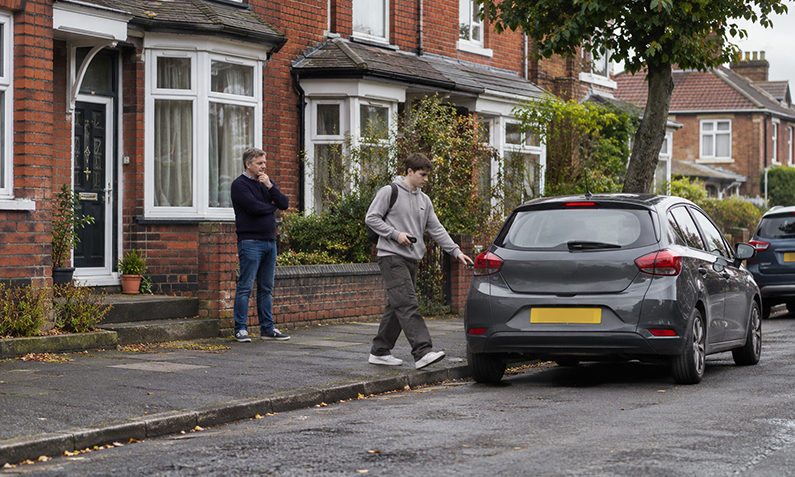
A realistic case: a 17-year-old buys a small car, but the policy lists their 50-year-old parent as main driver and the teenager as a named driver. If the teenager does most of the mileage, that is fronting, even where the intention was simply to afford cover. To understand the roles properly, our guide to named driver versus main driver sets out who should be listed as what.

Why is fronting illegal?

Fronting is illegal because the insurance application misrepresents a material fact, who the main driver is, that the insurer relies on to assess risk and set the premium. The ABI classes fronting as insurance fraud and warns it can lead to criminal convictions and make future cover harder and more expensive to obtain. In law, it can engage the Fraud Act 2006 and breaches the duty to take reasonable care not to misrepresent information under the Consumer Insurance (Disclosure and Representations) Act 2012.

The point insurers and regulators make is simple: a policy quoted for a careful 50-year-old carries a very different risk from one where a 17-year-old does most of the driving. The premium reflects that risk. When the declared main driver is not the real one, the insurer has priced a risk it never actually agreed to cover.

There is a persistent myth that fronting is just a harmless money-saving trick. It is not. Deliberately giving false details to get a lower premium is dishonest and unlawful, even when no claim is ever made.

Compare honest car insurance quotes

What happens if you are caught fronting?

If you are caught fronting, the insurer can void or cancel the policy and refuse to pay a claim, leaving the actual driver personally liable for accident costs. Once a policy is voided, the person at the wheel is usually treated as driving without insurance, which brings its own penalties on top.

Uninsured driving carries a £300 fixed penalty and six penalty points, with the vehicle liable to seizure, according to the Motor Insurers’ Bureau (MIB). More serious cases can go to court, where an unlimited fine or a driving disqualification may follow. The MIB’s Operation Drive Insured campaign, running in November 2026, specifically checks for incorrect main-driver declarations.

The costs can go well beyond fines. If a fronted policy is voided after a collision, the driver may have to pay for third-party injury and damage claims themselves, which can run into large sums. Fronting can also make you harder to insure for years, because insurers may treat a voided policy or a declined claim as grounds to charge more or refuse cover.

  • The policy can be voided and any claim refused.
  • The driver may be treated as uninsured: £300 fine and 6 penalty points (MIB).
  • The vehicle can be seized, and serious cases can reach court.
  • Future insurance becomes harder to get and more expensive.
  • A fraud conviction can affect jobs, finance and travel.

Add a young driver the legal way

List them as a named driver when they are not the main user, and compare across 130+ insurers.

Can I go to prison for fronting?

Prison is possible for fronting but not automatic, and most cases do not reach that point. Fronting is a form of insurance fraud, so it can in principle be prosecuted under the Fraud Act 2006, where the outcome depends on the facts and whether dishonesty can be proved. The ABI confirms fronting can result in criminal convictions, but there is no fixed, standard penalty applied to every case.

In many instances the practical consequence is a voided policy, a refused claim and the £300-and-six-points penalty for uninsured driving, rather than a custodial sentence. That said, treating fronting as low-risk is a mistake: a fraud conviction is a serious matter that can affect employment, credit and future insurance applications for years.

Can I be prosecuted if I did not know it was illegal?

Not knowing fronting is illegal does not reliably protect you, because the law looks at whether the information you gave was false, not only at what you believed. Under the Consumer Insurance (Disclosure and Representations) Act 2012 you have a duty to take reasonable care not to misrepresent the facts when buying a policy. If you knew the young driver was the real main user, describing someone else as main driver is a misrepresentation regardless of intent.

Honest confusion about who the main driver should be is common, which is exactly why it is worth getting the definition right before you buy. If two people share a car roughly equally, the main driver is whoever uses it most over the year.

Can I go to prison for fronting

How is car insurance fronting detected?

Insurers detect fronting mainly at the claim stage, when they investigate who was actually driving and how the car was really used, cross-checking the policy details against the evidence. If the facts do not match the declared main driver, the insurer can decline the claim and void the policy.

Several tools and data sources help insurers and the authorities spot it:

  • Claims investigations: statements, witness accounts, repair patterns and where the car is kept and used.
  • Shared industry databases, including the Claims and Underwriting Exchange and the Motor Insurance Database (MID), which flag inconsistencies across policies.
  • The Insurance Fraud Bureau and insurers’ own fraud teams, which analyse data for suspicious patterns.
  • Roadside checks: ANPR and police stops can reveal a young driver repeatedly using a car insured mainly in a parent’s name.

A frequent question is whether an insurer can know who the main driver is day to day. In normal driving they often cannot, which is why the risk crystallises at a claim, where a few questions about who usually drives, who commutes in it and where it lives overnight can expose a fronted arrangement.

See how fronting risks compare

Who should be the main driver on a policy?

The main driver is the person who uses the car most over the course of the year, and that person should be listed as the policyholder’s main or primary driver. If a teenager drives their own car to college or work most days, they are the main driver, even if a parent occasionally borrows it. Putting the parent down instead to reduce the price is fronting.

Honest named-driver cover is perfectly legal and useful. If a young or less experienced person drives the car only occasionally, naming them as an additional driver on the main user’s policy is above board and can build their driving record. The test is always real-world usage, not whose name makes the quote cheapest. Our named driver rules guide explains where the line sits.

Can I be a named driver or first driver on two policies?

You can be a named driver on more than one policy, and you can be the main driver on more than one car, provided each declaration is truthful for that vehicle. Being the main driver on two policies is only honest if you really are the principal user of both cars. Listing yourself as main driver on a car you rarely touch, so a younger relative pays less, is fronting on that policy.

There is no rule against legitimately insuring two cars or being covered on a partner’s and a parent’s policy at the same time. The problem only arises when one of those declarations misstates who actually drives the car most.

Will fronting affect my no-claims discount?

Fronting can damage your no-claims discount indirectly, because if the policy is voided and a claim refused, there may be no valid policy to earn a no-claims bonus on, and a refused or disputed claim can sit on your record. A named driver does not normally build their own no-claims discount on someone else’s policy in the first place, which is one reason some families consider fronting, and one reason it rarely pays off.

Honest named-driver experience still has value: some insurers recognise years of claim-free named-driver history when a young driver later takes out their own policy. That lawful route protects a genuine no-claims record far better than a fronted policy that can collapse at the first claim. For young drivers building a record from scratch, our car insurance for new drivers guide explains the legal ways to cut costs.

How do you insure a young driver without fronting?

You insure a young driver legally by listing whoever truly uses the car most as the main driver and adding the other person as a named driver only if their use is occasional. For a teenager who owns and mainly drives the car, that means the teenager is the main driver, with any parent added as a named driver if they sometimes borrow it.

There are lawful ways to bring the premium down without misstating the main driver:

  • Telematics or black box policies that price on actual driving behaviour.
  • Choosing a lower insurance group car with a small engine.
  • Adding a occasional experienced driver as a named driver.
  • A higher voluntary excess, where affordable, and limiting annual mileage honestly.
  • Comparing widely before buying, rather than accepting the first quote.

Comparing across a broad panel often reveals a far wider spread of prices than people expect. Free Price Compare runs quotes across 130+ insurers in a few minutes, and most people now do this on their phone: around 8 in 10 of our car insurance journeys happen on mobile (Free Price Compare data, January to June 2026).

Compare car insurance across 130+ insurers

How much does car insurance cost, and is fronting worth the risk?

The average UK motor insurance premium was around £562 in Q3 2026, about 2% higher than a year earlier, based on the ABI Motor Insurance Premium Tracker as reported in November 2026. Younger drivers pay considerably more because insurers price them as higher risk, which is what tempts families toward fronting in the first place.

Fronting is not worth the risk. A voided policy, a refused claim after an accident, potential personal liability for third-party costs and years of harder, pricier cover far outweigh any upfront saving. The legal routes above reduce the price without the fraud exposure. For context on how a legitimate policy is structured and why cover is required at all, see our guide to why car insurance is mandatory under the Road Traffic Act 1988. If a fronted or uninsured driver causes a crash, the Motor Insurers’ Bureau may step in for innocent victims, then pursue those responsible.

Comprehensive cover is the usual choice: around 9 in 10 car insurance quotes through Free Price Compare are for comprehensive policies (Free Price Compare data, January to June 2026). Getting the main-driver declaration right keeps that cover valid when you need it.

How much does car insurance cost, and is fronting worth the risk

FAQs about fronting

Is fronting car insurance illegal in the UK?

Yes. Fronting is illegal in the UK because it misrepresents who the main driver is to get a cheaper premium, which is treated as insurance fraud. It can engage the Fraud Act 2006 and breaches the duty not to misrepresent information when buying a policy. Even if no claim is ever made, deliberately giving false details is unlawful.

What is the difference between a named driver and fronting?

A named driver is a legitimate second person covered to drive the car occasionally, while fronting falsely names an experienced driver as the main driver when a riskier driver actually uses the car most. Adding a young driver as a named driver is legal if their use is occasional. It only becomes fronting when the declared main driver is not the real principal user.

What happens if I'm caught fronting?

If you are caught fronting, the insurer can void the policy and refuse to pay any claim, leaving the actual driver liable for the costs. The driver is then usually treated as uninsured, which carries a £300 fixed penalty, six penalty points and possible vehicle seizure. Serious cases can go to court and may result in a fraud conviction.

How would an insurance company know who the main driver is?

Insurers usually cannot tell who the main driver is during normal driving, but they investigate thoroughly when a claim is made. They check statements, where the car is kept and used, commuting patterns and shared industry databases such as the Claims and Underwriting Exchange and the Motor Insurance Database. Roadside ANPR checks and police stops can also reveal a mismatch.

Can I be prosecuted for fronting if I didn't know it was illegal?

Not knowing fronting is illegal does not reliably protect you, because the law focuses on whether the information you gave was false, not only on your intention. You have a duty to take reasonable care not to misrepresent the facts when buying a policy. If you knew the young driver was the real main user, naming someone else is a misrepresentation regardless of belief.

Can I be the main driver on two policies at once?

Yes, you can be the main driver on more than one car, provided each declaration is truthful for that specific vehicle. It is only honest if you are the principal user of both cars over the year. Listing yourself as main driver on a car you rarely use so a relative pays less is fronting on that policy.

Who should be listed as the main driver?

The main driver should be whoever uses the car most over the course of the year, regardless of whose name makes the quote cheapest. If a teenager drives their own car most days, they are the main driver even if a parent occasionally borrows it. If two people share a car roughly equally, the main driver is the one who uses it slightly more.

Is it fronting if I borrow my dad's car for a short trip?

Borrowing a parent's car for an occasional short trip is not fronting, as long as the policy correctly states that the parent is the main driver and you are only an occasional named driver. Fronting arises when the younger person is actually the main user over the year but the policy names the parent as main driver. Occasional, genuine use of someone else's car is a normal named-driver situation.

How can a young driver cut insurance costs without fronting?

A young driver can reduce costs legally by choosing a low insurance group car, using a telematics or black box policy that rewards safe driving, and keeping declared mileage and details accurate. Adding a occasional experienced driver as a named driver can also help. Comparing across many insurers before buying usually reveals a range of prices for the same driver.

What is the Motor Insurers' Bureau's role with uninsured and fronted drivers?

The Motor Insurers' Bureau compensates innocent victims of accidents caused by uninsured or untraced drivers, then seeks to recover those costs from the people responsible. It also runs enforcement campaigns that check for incorrect main-driver declarations, which is how many fronting cases come to light. If a fronted policy is voided after a crash, the driver can be treated as uninsured and pursued for the costs.

Also Read Related Articles


Information correct as of 18 November 2026. Prices, tariffs, policy details and providers change frequently, so please check the latest details before making a decision. This article is for general information only and does not constitute financial advice. Free Price Compare is authorised and regulated by the Financial Conduct Authority (FCA).

4000+ reviews