





Does a Black Box Track Your Location?

Written by Andrea Troy
Reviewed by Brijesh Patel
5 min read
Updated: 20 Aug 2026
Does a Black Box Track Your Location?

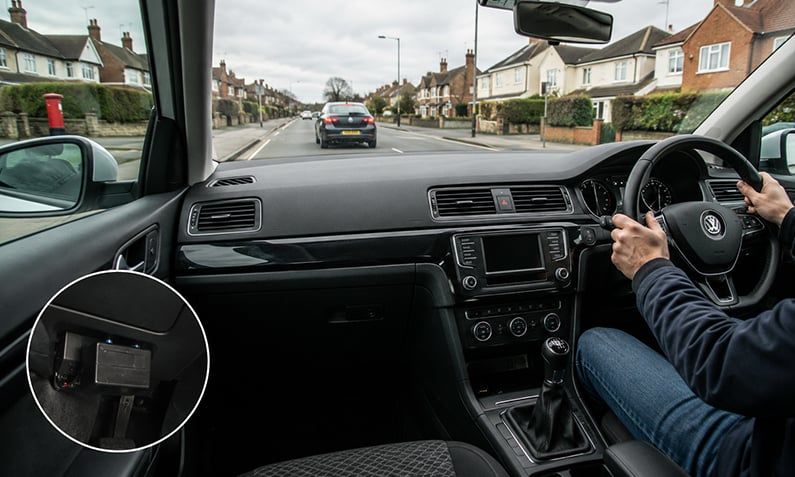
Does a black box track your location? Yes, a black box uses GPS to record where your car goes, including your routes, your speed against the limit, the time of day you drive and your total mileage. A black box (also called a telematics device or app) is a small unit or smartphone app fitted to your car insurance policy that measures how, when and where you drive, then feeds that data to your insurer to price your cover.

For most drivers the location data is used to understand the type of roads you use and to confirm your mileage, not to monitor your every movement or report you to anyone. Free Price Compare compares car insurance from a panel of 130+ insurers, and telematics policies are most relevant to newer and younger drivers looking to bring their premium down.

  • Yes, a black box tracks your location via GPS, including your route, speed and journey times.
  • Your insurer uses this to price your cover, not to report speeding to the police or your family.
  • Police can only access your location data with a court order or as part of a criminal investigation.
  • A permanently fitted black box can help trace a stolen car; an app-only policy cannot.

Quick Answer

  • Yes, a black box tracks your location using GPS, recording your route, speed, braking, cornering, time of day and total mileage.
  • Insurers use telematics data to price your cover; they do not report speeding to the police, your parents or the DVLA.
  • Police can only access your black box location data with a court order or as part of a criminal investigation.
  • A permanently fitted black box can help recover a stolen car, but an app-only telematics policy cannot trace your vehicle.
  • Telematics data is protected under UK GDPR and the Data Protection Act 2018, enforced by the ICO.

Last updated: June 2026

Written by the Free Price Compare editorial team | Reviewed June 2026

What location data does a black box actually record?

A black box records your car’s GPS location, the route you take, your speed against the local limit, your braking and cornering, the time of day you drive and your total annual mileage. Insurer privacy notices set this out plainly: telematics devices capture your specific location, direction, current speed, journey duration, braking and cornering, and send it to the insurer’s telematics supplier to understand the road type, speed and conditions of each journey.

The location element matters because it tells your insurer what kind of roads you use and roughly when you use them. Late-night driving between around 11pm and 5am is consistently scored as higher-risk, and mileage on faster roads is weighted differently from low-speed urban driving. The box is not interested in the specific addresses you visit; it is interested in the risk profile of how you drive.

Most telematics policies measure the same core data set. A black box does not record your conversations, and a standard insurance telematics device does not detect passengers, scan your phone’s contacts or stream video. Those concerns relate to factory-fitted connected-car systems, which sit outside a typical insurance black box.

  • GPS location and the route driven
  • Speed and whether it suits the limit and conditions
  • Braking, acceleration and cornering smoothness
  • Time of day, particularly late-night driving
  • Total mileage over the policy year

See how telematics affects your premium

Does a black box track your location 24/7?

A black box tracks your location whenever the device is switched on and the car is in use, not as constant surveillance of where the vehicle sits parked. Insurer privacy notices confirm that data is collected and transmitted any time the telematics device is switched on, recording the driving behaviour of you and anyone else who drives your car.

A permanently wired black box stays powered while it is connected to the car, so it can register location if the car is moved, which is what makes stolen-vehicle tracing possible. An app-based or self-fit plug-in device usually records journeys rather than continuously pinging your position, and an app only works while your phone is with you in the car.

In practice, your insurer is building a picture of your driving over the policy year, not watching a live map of your car. The data is processed to produce a driving score and to confirm your mileage, both of which feed into your renewal price.

Does a black box track your location 24/7

Can a black box track your car if it’s stolen?

A permanently fitted black box can help trace your car if it is stolen, because it relays location data the insurer can pass to the police, but an app-only telematics policy cannot. This is an important difference: if theft recovery is a reason you want telematics, check whether the policy uses a hardwired box rather than a phone app before you buy.

Vehicle theft remains a real cost pressure. According to the ABI, theft-related claims totalled £142 million in Q3 2025, with modern cars carrying high-value components that make them attractive to thieves. A fitted box will not stop a theft, but it can shorten the time it takes to locate the vehicle once the insurer or police request the data.

If you are weighing telematics mainly for security, treat it as one factor alongside price and the driving rules. A dedicated stolen-vehicle tracker is a separate product; a black box is primarily a pricing tool that happens to provide some location capability.

Compare car insurance quotes

Who can see your black box location data?

Your black box location data is held by your insurer and its telematics supplier, and is only shared further with the police or other third parties where the law allows, such as a court order or a serious crime or accident investigation. Telematics data is personal data protected under UK GDPR and the Data Protection Act 2018, both enforced by the ICO.

Under data protection law you have the right to know what data is collected, how it is used and who it is shared with. Your insurer must process telematics data fairly and for the stated insurance purposes, and you can raise concerns about how your data is handled with the ICO.

Importantly, your insurer will not alert the police if you exceed the speed limit. A black box monitors your speed and can lower your driving score, which may affect your future price, but speeding is not reported to the authorities automatically. Police can request your data from your insurer only if they believe it is relevant to a criminal investigation.

The location data also will not be handed to your parents or anyone else as routine. On a young-driver policy a parent named as the account holder may be able to view the app, but that is a contractual arrangement between the household and the insurer, not a third-party data leak.

Does location tracking mean I can insure my car at a cheaper address?

No, the GPS in a black box reveals where your car is actually kept and driven, so insuring it at a different address to get a cheaper quote risks your policy being cancelled. Stating a false address, known as fronting on address, is a misrepresentation that can void your cover and leave you uninsured at the point of a claim.

Where you keep your car overnight is one of the factors that influences your premium, and a telematics device will show your typical parking and journey locations. If the data does not match the address on the policy, the insurer can investigate, increase your price or cancel the cover, which then sits on your record and pushes up future quotes.

The honest route to a lower price is comparing widely and choosing the right policy type. Free Price Compare data shows around 9 in 10 of its car insurance buyers choose comprehensive cover, which is often priced similarly to or below lower levels of cover (Free Price Compare data, Jan-Apr 2026). Comparing the full panel matters more than trying to game a single quote.

Bring your premium down honestly

Compare cover across 130+ UK insurers in minutes

Is a black box worth the privacy trade-off?

A black box can be worth the privacy trade-off if you are a lower-mileage or careful driver who saves enough to justify sharing your location and driving data, but the benefit narrows for older, established drivers. The saving depends heavily on age and driving profile.

For context, the ABI Motor Insurance Premium Tracker reported that the average premium actually paid was £560 in Q1 2026, broadly flat on the previous quarter but £20 lower than Q1 2025. The ABI tracker is based on prices customers pay across more than 28 million policies a year, rather than quotes, so it tends to sit below comparison-site quote averages.

Telematics tends to deliver the largest savings for newer and younger drivers, where insurers price the highest uncertainty. For established drivers with long claim-free records, a standard policy is sometimes priced similarly or lower than a telematics one, so the value of accepting location tracking is smaller. Free Price Compare research suggests safer, lower-mileage drivers are the group most likely to see a worthwhile reduction from telematics, while higher-mileage or older drivers may see little or none (Free Price Compare research, June 2026).

If you want telematics chiefly to cut a young driver’s cost, our young driver car insurance strategies guide sets out how black box rules and curfews affect the price. Drivers running a van can also look at black box van insurance.

Read more cheap car insurance tips

Can you block or disable the GPS in a black box?

Disabling or blocking the GPS in a black box breaches your insurance contract and will usually void your cover, so it is not a route to keeping the policy while avoiding tracking. The telematics terms require the device to function for the policy to remain valid, and tampering can lead to cancellation.

Jamming a GPS signal is also problematic in its own right and interferes with how the device reports, which insurers can detect as missing or inconsistent data. If your honest concern is the tracking, the practical answer is to choose a standard, non-telematics policy and pay the price difference rather than take out a black box policy and try to defeat it.

If a black box is reporting your journeys incorrectly, raise it with your insurer through their complaints process rather than disabling the device. Inaccurate telematics data should be corrected by the insurer, and you keep the right to escalate to the Financial Ombudsman if it is not resolved, given car insurance is regulated by the FCA.

Telematics type Tracks location? Helps recover stolen car?
Permanently fitted black box Yes, via GPS while powered Yes, can relay location to insurer/police
Self-fit plug-in device Yes, records journeys Limited, depends on device
Smartphone app only Yes, but only when phone is in the car No

Figures are indicative and may change.

Can you block or disable the GPS in a black box

FAQs about does a black box track your location

Does a black box track your location 24/7?

A black box tracks your location while the device is powered and the car is in use, rather than constantly streaming your position to your insurer. A permanently fitted box stays powered with the car, so it can register movement even if the car is taken, while an app only works when your phone is in the vehicle. Insurers use the data to build a picture of your driving over the year, not to watch a live map of where you are parked.

Will the police be told if I speed with a black box?

No, your insurer does not automatically report speeding to the police. A black box monitors your speed and can lower your driving score, which may affect your renewal price, but it does not send alerts to the authorities. Police can only request your black box data from your insurer if they believe it is relevant to a criminal investigation, usually backed by a court order.

Can my parents see where I have driven on a black box policy?

Your location data is not routinely shared with your parents or anyone else outside your insurer and its data partners. On a young-driver policy where a parent is the named account holder, the household may be able to view the app dashboard, but that is set up as part of the policy arrangement rather than a separate disclosure. If you are the policyholder in your own name, the data sits with you and the insurer.

Does a black box record conversations or detect passengers?

A standard insurance black box does not record conversations or detect passengers; it measures location, speed, braking, cornering, time of day and mileage. Concerns about in-cabin audio or passenger data relate to factory-fitted connected-car systems built into some new vehicles, not a typical telematics insurance device. If you are unsure what your specific policy captures, the insurer’s telematics privacy notice lists exactly what is collected.

Will driving at night lower my black box score?

Yes, late-night driving between roughly 11pm and 5am is consistently scored as higher-risk by telematics insurers because crash rates are higher at those times. Regular night driving can reduce your overall driving score, which may push up your renewal price, though a single late journey is unlikely to have a large effect. Some older policies set firm curfews, but many newer telematics products simply weight night-time driving rather than banning it.

Can I insure my car at a cheaper address if a black box tracks where it is kept?

No, the GPS in a black box reveals where your car is actually kept and driven, so giving a false address to get a cheaper quote risks your policy being cancelled. Misrepresenting your address is a form of fronting, which can void your cover and leave you uninsured when you claim. A cancellation for misrepresentation also sits on your record and increases future premiums.

Can a black box help recover my car if it is stolen?

A permanently fitted black box can help trace a stolen car because it relays location data your insurer can pass to the police, but an app-only telematics policy cannot. If theft recovery is a key reason you want telematics, check that the policy uses a hardwired box rather than a phone app. A black box will not prevent a theft, but it can speed up locating the vehicle once the data is requested.

Is black box location data protected under data protection law?

Yes, the location and driving data a black box collects is personal data protected under UK GDPR and the Data Protection Act 2018, enforced by the Information Commissioner’s Office. Your insurer must tell you what data is collected, how it is used and who it is shared with, and process it only for the stated insurance purposes. You can raise concerns about how your data is handled with the ICO if you are not satisfied with the insurer’s response.

What happens if my black box reports my journeys incorrectly?

If your black box records the wrong road, speed or journey, you should report it to your insurer through their complaints process so the data can be corrected, rather than ignore it or tamper with the device. GPS can occasionally misread which of two nearby roads you were on, so checking your app and flagging errors helps keep your score accurate. As car insurance is FCA-regulated, you can escalate an unresolved complaint to the Financial Ombudsman Service.

Can I disable the GPS in my black box?

Disabling or jamming the GPS in a black box breaches your insurance contract and will usually void your cover, so it is not a safe way to keep the policy while avoiding tracking. The telematics terms require the device to work for the policy to stay valid, and insurers can detect missing or tampered data. If you do not want location tracking, the honest option is to choose a standard, non-telematics policy instead.

Do older drivers save money with a black box?

Black box savings are largest for newer and younger drivers, where insurers price the most uncertainty, and the benefit narrows for older, established drivers. Drivers with long claim-free records often find a standard policy priced similarly to or below a telematics one, so accepting location tracking adds little value. Lower-mileage and careful drivers of any age are the group most likely to see a worthwhile reduction, so it is worth comparing both options before deciding.

Does a black box use GPS or the car’s onboard system?

A telematics black box uses GPS satellites to fix your location and route, and some fitted devices also draw data from the car’s onboard diagnostic port to capture speed and other inputs. Because location relies on GPS, the device can occasionally misjudge which of two close roads you used, which is why insurers combine it with other driving signals. App-based policies use your phone’s GPS instead of a physical box.

Also Read Related Articles


Information correct as of 28 June 2026. Prices, tariffs, policy details and providers change frequently, so please check the latest details before making a decision. This article is for general information only and does not constitute financial advice. Free Price Compare is authorised and regulated by the Financial Conduct Authority (FCA).

4000+ reviews