

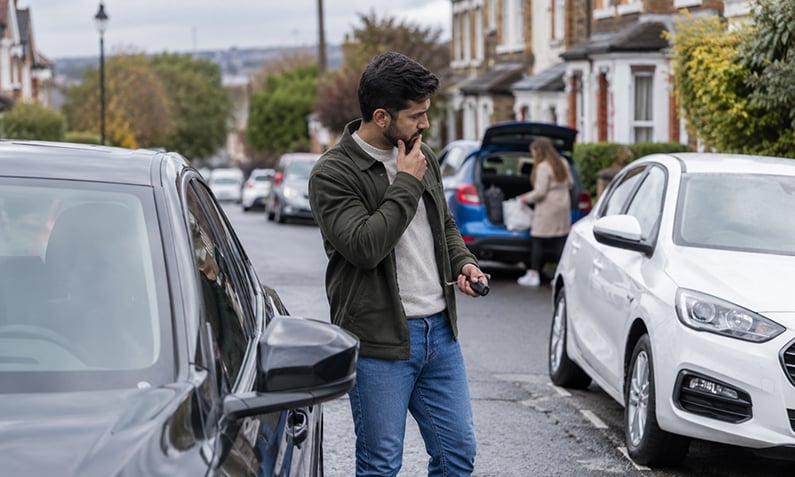




Can I Drive Any Car on Comprehensive Insurance? | 2026

Written by Prajesh Manvar
Reviewed by Tim Bailey
6 min read
Updated: 21 Sep 2026
Can I Drive Any Car on Comprehensive Insurance? | 2026

Comprehensive insurance does not automatically let you drive any car in the UK. Whether you can borrow another vehicle depends entirely on your policy wording and whether it includes a Driving Other Cars (DOC) extension. Where DOC is included, it is usually restricted to you as the policyholder and gives only third-party cover on the borrowed car, not the full comprehensive protection you have on your own vehicle.

The belief that “fully comp means I can drive anything” is one of the most common car insurance misconceptions in the UK, and acting on it can leave you driving uninsured. The only reliable way to know is to read your certificate of motor insurance and policy documents. Around 88-89% of quotes through Free Price Compare are for comprehensive cover, so this question affects most drivers who shop with us (Free Price Compare data, Jan-Jun 2026).

Quick Answer: Can I Drive Any Car on Comprehensive Insurance?

  • Driving Other Cars (DOC) cover is not standard on every comprehensive policy – many insurers have removed or restricted it, so check your certificate.
  • Where DOC applies, it is normally third-party only: damage you cause to others is covered, but not damage to the car you are borrowing.
  • The other car must be insured in its own right and you need the owner’s permission – DOC cannot make an otherwise uninsured car legal to drive.
  • DOC usually covers the named policyholder only, often only if you are over 25, and only for occasional use in an emergency.
  • The average UK comprehensive premium was £566 in Q2 2026, up 1% on Q1, according to the ABI Motor Insurance Premium Tracker.

Last updated: September 2026

Written by the Free Price Compare editorial team | Reviewed September 2026

Does comprehensive insurance let you drive any car?

Comprehensive insurance does not give you an automatic right to drive any car in the UK. A comprehensive policy insures the specific vehicle named on your certificate of motor insurance to the highest standard cover, but it says nothing about other people’s cars unless a Driving Other Cars (DOC) extension is written into the wording. Many insurers have removed DOC entirely or made it an optional add-on, so “fully comp” alone is not proof you are covered elsewhere.

Under the Road Traffic Act 1988, driving without valid insurance is a criminal offence, whether or not you believed you were covered. Your car and its policy are logged on the Motor Insurers’ Bureau’s Motor Insurance Database (MID), and the police can check any vehicle’s insurance status at the roadside. If your certificate does not extend to the borrowed car, you are the one who faces penalty points, a fine and possible seizure of the vehicle.

We list this among the most-repeated errors in our roundup of common car insurance myths that catch drivers out, precisely because so many people assume the opposite. If you are ever unsure, treat the answer as “no” until your documents say otherwise.

What is Driving Other Cars (DOC) cover?

Driving Other Cars cover is a policy extension that lets the named policyholder drive a vehicle they do not own, on a third-party basis, in limited circumstances. When it exists, it appears in the “limitations as to use” section of your certificate of motor insurance, usually with wording like “the policyholder may also drive a motor car not owned by them and not hired to them under a hire purchase agreement.”

DOC was once near-universal, but insurers have steadily pulled or narrowed it. Even where it is present, the conditions are strict, and they typically include:

  • Cover applies to the policyholder only, not to any named driver on the policy.
  • The other car is covered on a third-party basis only, so damage to that car is not paid for.
  • The vehicle must not belong to you or be hired to you, and you need the owner’s permission.
  • The other car must already hold its own valid insurance policy.
  • Many insurers require you to be aged 25 or over, and some restrict it to emergency or occasional use.

Because the terms vary so much between insurers, the safest step is to read your own certificate word for word. If it does not mention driving other cars, assume you have no DOC cover at all.

Compare comprehensive cover from 130+ insurers

Can I drive someone else’s car on my comprehensive insurance?

You can only drive someone else’s car on your comprehensive insurance if your certificate specifically includes Driving Other Cars cover, and even then the protection is limited. Where DOC applies, you are covered for injury or damage you cause to other people and their property, but not for damage to the borrowed car itself. If you crash it, the repair bill for that vehicle is not covered.

Two conditions catch people out most often. First, the car you borrow must be insured in its own right by someone else, because DOC does not resurrect an otherwise uninsured vehicle. Second, DOC almost always covers the policyholder alone, so a partner or family member listed as a named driver on your policy usually cannot rely on it. We explain the full picture in our guide on driving someone else’s car and whether it’s better to be added to their policy.

For anything beyond an occasional emergency, being added as a named driver on the owner’s policy is safer and gives you the same level of cover the car already has. It also avoids any dispute over whether “occasional use” applied on the day.

Can I drive someone else’s car on my comprehensive insurance

Why are insurers removing DOC from comprehensive policies?

Insurers have quietly removed or restricted Driving Other Cars cover to reduce claims cost and fraud risk, which is why you can no longer assume a comprehensive policy includes it. DOC created exposure that was hard to price, since insurers had little information about the other cars their policyholders might drive. Withdrawing it is a straightforward way to control risk.

The wider pressure on premiums is real. According to the ABI Motor Insurance Premium Tracker, the average price paid for comprehensive cover was £566 in Q2 2026, up around 1% on the £560 average in Q1 2026. The ABI said in April 2026 that premiums had broadly stabilised while repair costs remained high, which helps explain why insurers keep trimming discretionary extras like DOC.

The practical takeaway is that DOC is now something to confirm, not expect. If having occasional cover to drive other cars matters to you, treat it as a feature to check for when you compare, in the same way you would check the excess or the level of legal cover.

Check what your policy really includes

Compare comprehensive quotes and read the DOC wording before you commit

Comprehensive vs third party fire and theft: what’s the difference?

Comprehensive car insurance is the highest standard cover level, paying for damage to your own car in an accident that is your fault, as well as damage or injury you cause to others. Third party fire and theft (TPFT) covers your liability to other people plus loss of your car to fire or theft, but not accident damage to your own vehicle when you are at fault. Third party only is the legal minimum and covers only injury and damage you cause to others.

What’s covered Comprehensive TPFT Third party only
Damage/injury to others Yes Yes Yes
Fire or theft of your car Yes Yes No
Accident damage to your own car (at fault) Yes No No
Vandalism to your own car Usually yes No No
Flood or storm damage to your car Usually yes No No

Figures are indicative and cover varies by policy – always check the wording.

Comprehensive does not cover everything. Engine failure from wear and tear, mechanical breakdown and general servicing are excluded across all cover levels, since insurance is for sudden accidental loss, not maintenance. For those, you would need separate mechanical breakdown insurance or a warranty. Around 88-89% of quotes through Free Price Compare are for comprehensive, with roughly 6% third party only and 5% TPFT (Free Price Compare data, Jan-Jun 2026).

Should I get comprehensive or third party car insurance?

Comprehensive cover is usually the better choice for most drivers, and it is often no more expensive than third party only despite covering more. Insurers price third party policies higher for some drivers because that group has historically produced more claims, so comparing both cover levels on the same car is worthwhile rather than assuming the minimum is cheapest.

Comprehensive makes most sense if you would struggle to replace your car out of pocket, if it is worth more than a few hundred pounds, or if you value extras many comprehensive policies include, such as windscreen cover, personal accident benefit and courtesy car options. According to the ABI Motor Insurance Premium Tracker, the average price paid for comprehensive cover was £566 in Q2 2026. Around 43-48% of Free Price Compare quotes are for cars valued between £1,000 and £5,000 (Free Price Compare data, Jan-Jun 2026), a range where accident damage to your own car is well worth protecting. Our guide on why UK drivers pick cars under £10,000 shows how car value shapes the sums.

Third party only can suit a very low-value runaround where you would simply scrap it after a crash, but check the price first. If comprehensive costs the same or less, there is no reason to accept narrower cover.

See how comprehensive and TPFT prices compare

How do I check if my policy lets me drive other cars?

Read your certificate of motor insurance to check whether you can drive other cars, because the certificate is the legal document that defines exactly who is covered and on what terms. Look at the section headed “limitations as to use” or “persons entitled to drive” – if it does not mention driving a car not owned by you, you have no DOC cover.

Follow these steps before you borrow anyone’s keys:

  • Find the DOC wording on your certificate; “a motor car not owned by the policyholder” is the phrase to search for.
  • Confirm the age condition – many insurers apply DOC only to drivers aged 25 and over.
  • Check the borrowed car has its own valid insurance in place, since DOC will not cover an uninsured vehicle.
  • Confirm you have the owner’s explicit permission to drive it.
  • If anything is unclear, ring your insurer and get the answer confirmed before you drive.

If you regularly need to drive family or business vehicles, DOC is the wrong tool. Being added as a named driver, or arranging the right class of business use cover, gives proper protection. Whichever route you choose, it pays to ask the right questions when comparing quotes so the cover you buy matches how you actually drive.

How do I check if my policy lets me drive other cars

Compare car insurance quotes now

FAQs about comprehensive insurance

Can I drive any car if I have fully comprehensive insurance?

No. Fully comprehensive insurance covers the specific car named on your policy, not any car you fancy driving. You can only drive another vehicle if your certificate includes Driving Other Cars cover, and even then it is usually third-party only. Always read your certificate before assuming you are covered.

Is Driving Other Cars cover included as standard now?

No, it is no longer standard. Many UK insurers have removed or restricted Driving Other Cars cover, or made it an optional add-on. Some policies still include it for the policyholder aged over 25 on a third-party basis, but you cannot assume this. Check the limitations section of your certificate of motor insurance to confirm.

If I have DOC cover, am I insured for damage to the car I borrow?

No. Driving Other Cars cover is almost always third-party only, meaning it pays for injury or damage you cause to other people, not damage to the borrowed car. If you crash the car you have borrowed, its repair costs are not covered. For full protection on that vehicle you would need to be a named driver on its own policy.

Can my partner drive another car using my comprehensive policy?

Generally no. Driving Other Cars cover applies to the policyholder only, not to named drivers such as a partner or family member. Even if your partner is listed on your policy, they usually cannot rely on your DOC extension. They would need their own DOC cover or to be added to the other car's insurance.

Does the car I borrow need its own insurance for DOC to work?

Yes. Driving Other Cars cover only applies if the vehicle you borrow already holds its own valid insurance. DOC cannot make an otherwise uninsured car legal to drive. If the car is not insured in its own right, driving it on your DOC extension would still leave you driving uninsured.

What happens if I drive another car and I'm not actually covered?

Driving without valid insurance is a criminal offence under the Road Traffic Act 1988, even if you believed you were covered. Penalties can include six penalty points, a fine, and seizure of the vehicle. Your insurance status is logged on the Motor Insurance Database, so police can check it instantly at the roadside.

Can I use DOC cover for business or commuting in another car?

Usually no. Where Driving Other Cars cover exists, it is typically limited to occasional or emergency social use, not business or regular commuting. If you need to drive another vehicle for work, you generally need business use cover of the right class or to be a named driver on that car's policy. Check your certificate for the exact use limitations.

Does comprehensive insurance cover engine failure or breakdown?

No. Comprehensive car insurance does not cover engine failure from wear and tear, mechanical breakdown or servicing costs, as these are maintenance rather than sudden accidental loss. To cover mechanical or electrical failure you need separate mechanical breakdown insurance or a manufacturer's warranty. Comprehensive does cover sudden accidental damage, fire, theft and usually vandalism and flood.

Is it worth getting comprehensive car insurance?

For most drivers yes, because comprehensive cover often costs the same or less than third party only while covering far more, including damage to your own car in an at-fault accident. It is especially worthwhile if your car is worth more than a few hundred pounds. Always compare both cover levels on the same car rather than assuming the minimum is cheapest.

Does my car insurance end if the registered keeper dies?

A car insurance policy is tied to the policyholder, so cover generally lapses when that person dies and does not automatically transfer to relatives. Anyone wishing to drive the vehicle afterwards should arrange their own insurance or contact the insurer to discuss the estate's position. Driving the car on the deceased's expired policy would leave you uninsured.

Legal expenses cover, often an optional add-on, helps pay solicitor and legal costs to recover uninsured losses after a non-fault accident, such as your excess, hire car costs or personal injury compensation. It does not pay for the accident damage itself, which comes from your main policy. Check the cover limit and whether it is included or extra before buying.

Can two people insure the same car on separate policies?

It is not usually advisable, and most insurers will not knowingly allow a single vehicle to be insured twice by different people. Duplicate cover can create confusion at claim time and raise fraud concerns, since you can only claim once for a single loss. If more than one person drives a car regularly, add them as named drivers on one policy instead.

Also Read Related Articles


Information correct as of 9 September 2026. Prices, tariffs, policy details and providers change frequently, so please check the latest details before making a decision. This article is for general information only and does not constitute financial advice. Free Price Compare is authorised and regulated by the Financial Conduct Authority (FCA).

4000+ reviews