




Fronting Explained: What It Is and Why It’s Illegal

Written by Pratik Aghera
Reviewed by Brijesh Patel
7 min read
Updated: 18 Nov 2026
Fronting Explained: What It Is and Why It’s Illegal

Fronting is naming a lower-risk driver, usually a parent, as the main driver on a car insurance policy when a younger or less-experienced person is actually the regular main user. It is a form of insurance fraud, and it is illegal because the policyholder gives materially false information to obtain a cheaper premium. The Association of British Insurers (ABI) classes it as fraud that can invalidate the policy and lead to criminal prosecution.

Adding a young driver as a named driver is perfectly legal. The line is crossed only when the person named as the main driver is not the one really doing most of the driving. If that sounds like a grey area, it rarely is in practice: the test is simply who uses the car most over the year.

This explainer sets out what fronting means, how insurers spot it, what can happen if you are caught, and the legal ways a family can reduce the cost of insuring a younger driver.

Quick Answer: Fronting Explained

  • Fronting is a type of insurance fraud under the Fraud Act 2006.
  • If caught, your insurer can void the policy and refuse any claim.
  • A voided policy or fraud record makes future cover harder and dearer.
  • Insurance fraud adds around £50 a year to each honest customer’s premium (ABI).
  • Adding a young person as a named driver is legal; misnaming the main driver is not.

Last updated: October 2026

Written by the Free Price Compare editorial team | Reviewed October 2026

What is fronting in car insurance?

Fronting in car insurance is deliberately naming an experienced, lower-risk driver as the main driver when a younger or higher-risk person is actually the one using the car most. The policyholder does this to secure a lower premium than the real main driver would attract. According to the ABI, whose named-driver guidance was updated on 6 May 2026, this misrepresentation makes the policy fraudulent.

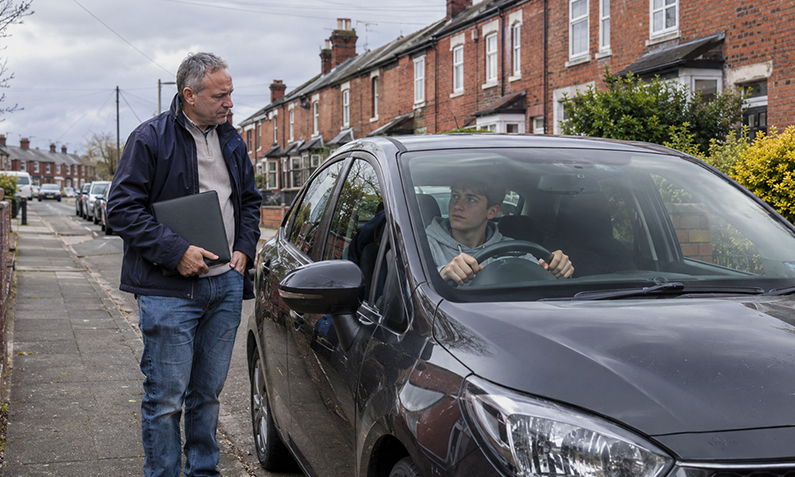
The practical test is usage. If a 17-year-old drives the car for most of the year but a parent is recorded as the main driver, that is fronting. If the parent drives it most and the teenager is a named driver who uses it occasionally, that is a legitimate arrangement. Who owns the car matters less than who drives it most.

The confusion comes from a common myth that “fronting is not illegal”. It is. The reason it feels murky is that fronting is not a named offence on its own; it is prosecuted as fraud because false information was supplied to buy the policy. The outcome for the household is the same either way: cover that can collapse exactly when it is needed.

Named driver vs main driver: where’s the line?

The main driver is the person who uses the car most over the year; a named driver is anyone else listed on the policy who may also drive it. Both are legitimate, declared roles. Fronting is not adding a second driver, it is recording the wrong person as the main one. A young driver can be a named driver on a parent’s car with no issue at all, provided the parent is the main user.

If you are weighing up where a young family member should sit on the policy, our guide to named driver rules and how to avoid fronting walks through realistic scenarios in more detail.

Is fronting illegal, and what law covers it?

Yes, fronting is illegal because it is a form of insurance fraud. When you apply for cover you give the insurer information it relies on to price the risk, and knowingly stating the wrong main driver is a material misrepresentation. Under the Consumer Insurance (Disclosure and Representations) Act 2012 you must take reasonable care not to make a misrepresentation, and a deliberate false statement to obtain cheaper cover can also amount to fraud under the Fraud Act 2006.

The ABI, in its “myths about insurance fraud” guidance updated on 17 April 2026, is clear that lying to obtain cheaper insurance is fraud. That is why the common forum claim that “fronting isn’t a crime” is misleading. Fronting itself is not a standalone offence with its own penalty, but the dishonesty behind it is prosecuted as fraud, which carries serious consequences.

It is worth being precise about what the ABI actually says. Fronting could lead to criminal prosecution or conviction; it does not automatically result in one every time. The more immediate and common consequence is at the insurance level, where the policy can be treated as if it never existed.

Compare honest, fully-declared car insurance quotes

What are the penalties for fronting?

The penalties for fronting fall into three levels: your policy, your finances and, in serious cases, the criminal courts. The ABI confirms an insurer can declare a fronted policy invalid and refuse to pay a claim, leaving everyone involved personally liable for the costs of an accident. There is no fixed fine or set prison term specifically for fronting, because it is dealt with as fraud rather than a named driving offence.

  • Voided policy: the insurer treats the cover as if it never existed and refuses the claim.
  • Personal liability: you may have to pay for vehicle damage, third-party injury claims and legal costs out of your own pocket.
  • Uninsured driving exposure: if the policy is void, the young driver was effectively driving uninsured, which carries its own penalties under the Road Traffic Act 1988.
  • Harder, costlier future cover: a voided policy or fraud marker makes insurance more expensive and harder to obtain for years afterwards.
  • Possible prosecution: in serious cases fronting can lead to criminal prosecution and, on conviction, imprisonment for fraud.

The knock-on cost is easy to underestimate. Having a policy voided for fraud is one of the hardest things to declare on future applications, and many mainstream insurers will decline it outright. That is a far bigger long-term expense than the few hundred pounds a year the fronting was meant to save.

What are the penalties for fronting

Insuring a young driver the legal way

Compare fully-declared cover across our panel of 130+ insurers in about five minutes.

How is car insurance fronting detected?

Fronting is detected when the recorded main driver does not match the car’s real usage pattern, and insurers have several ways to spot that mismatch. There is no single database that flags fronting automatically; instead, insurers piece it together from the claim, the application and shared industry data. The scrutiny usually comes after an accident, which is the worst possible moment to be found out.

Common triggers that prompt an investigation include:

  • A claim where the young named driver was driving at an address, time or location that does not fit an “occasional” user.
  • Patterns in the Claims and Underwriting Exchange (CUE), which insurers share, showing where a driver’s claims and policies sit.
  • A main driver who does not actually need the car, for example an older policyholder with their own separate vehicle and the insured car registered to a student’s term-time address.
  • Telematics or black box data on policies that use it, showing journey patterns inconsistent with the declared main driver.
  • Investigation by bodies such as the Insurance Fraud Bureau (IFB) and the Insurance Fraud Enforcement Department (IFED), which the industry funds to tackle organised and opportunistic fraud.

The important point for an honest household is that detection is not about catching you out on a technicality. If the parent is the main driver, the usage pattern will support that. Problems arise only where the declared arrangement and the real one do not match.

Get a clear, fully-declared quote in about five minutes

Can a parent be the main driver on their child’s car?

A parent can legitimately be the main driver on a car their child also uses, but only if the parent drives it most over the year. Ownership does not decide the question; usage does. If a parent owns and mainly drives the car and the child is a declared named driver, that is a normal, legal arrangement. If the child is the real main user and the parent is recorded as main driver purely to lower the premium, that is fronting.

A few realistic situations help show where the line sits:

  • Legitimate: a parent uses the family car daily for commuting and errands, and a 19-year-old borrows it at weekends. The parent is the main driver; the teenager is a named driver.
  • Fronting: a car is bought for a 17-year-old who drives it to college every day, but a parent with their own car is listed as main driver to cut the cost.
  • Legitimate: a young driver owns and insures their own car as the policyholder and main driver, with a parent added as a named driver for the odd trip.

Being the policyholder and being the main driver are different roles. A young person can be the policyholder, main driver and no-claims-bonus holder on their own car with a parent as a named driver, and that is not fronting. What the ABI warns against is the opposite: not naming someone as the main driver when they really are.

The legal ways to reduce a young driver’s premium focus on lowering risk rather than misstating who drives the car. With around a third of our car insurance quotes coming from drivers with no no-claims bonus at all, this is a common challenge, and there are several honest levers that make a real difference.

  • Telematics (black box) cover: price is set from actual driving data, which can reward careful younger drivers over time.
  • Choose a lower insurance group car: a small, low-powered car in an inexpensive group costs far less to insure than a fast or high-value one.
  • Add an experienced named driver honestly: listing a parent as an additional (not main) driver on the young person’s own policy can reduce the price, and this is legal because the young driver is correctly declared as the main user.
  • Build no-claims bonus early: running their own policy from the start lets a young driver earn their own discount year on year.
  • Increase the voluntary excess: agreeing to pay more towards any claim can lower the premium, as long as the excess remains affordable.

Almost nine in ten of our car insurance quotes are for comprehensive cover, and comprehensive is often similar in price to, or cheaper than, third party only for younger drivers, so it is worth comparing all three cover levels rather than assuming the basic option is cheapest. Our guide to car insurance for new drivers goes through these options in more depth, and regional pricing differences are covered in our breakdown of England car insurance costs by region.

Compare new-driver cover across 130+ insurers

Why fronting pushes up prices for everyone

Fronting pushes up prices for honest customers because insurers price fraud risk into the whole market. The ABI estimates that insurance fraud, including lying to obtain cheaper cover, adds around £50 a year to each honest customer’s premium (ABI, “No hiding place”, July 2025). When a fronted policy is priced as low risk but the real risk is high, the eventual claims cost is spread across everyone else.

That backdrop matters now because claims costs are rising. The FCA reports that claims costs rose from 54% of premium in 2024 to 59% in 2025, even as retail motor premiums fell by around 7% during 2025 (FCA, General insurance value measures data 2025, updated 2 October 2026). Misrepresented risk makes that pressure worse. If a fronted policy is caught and voided after a crash, any third-party injury or damage claim may fall to the Motor Insurers’ Bureau (MIB), whose costs are ultimately funded by insurers and therefore by policyholders.

None of this means a family cannot insure a young driver affordably and honestly. It means the saving has to come from lower risk, not from a false declaration that transfers the cost to everyone else.

What to do if you think a policy was set up as fronting

If you think a policy was set up as fronting, correct it with your insurer as soon as possible by updating who the real main driver is. Insurers deal with honest mid-policy corrections far more favourably than with a misrepresentation discovered at claim stage. Re-rating the policy correctly may increase the premium, but it protects the cover and avoids the far larger cost of a void.

When you re-quote, make sure the person who uses the car most is listed as the main driver, the car is registered and kept at the address where it is really based, and any additional drivers are declared accurately. Comparing across a wide panel helps you find the most competitive fully-declared price; we compare car insurance from more than 130 insurers, so an honest quote need not mean a high one.

What to do if you think a policy was set up as fronting

FAQs about fronting

Is fronting actually illegal or just against the rules?

Fronting is illegal. It is not a standalone offence with its own penalty, but giving false information about the main driver to get cheaper cover is insurance fraud. It can be prosecuted under fraud law and can leave your policy void. The common claim that fronting is not illegal is a myth.

Can I be the first named driver on two policies at once?

You can be a named driver on more than one policy, and you can be the main driver on one car while being a named driver on another. The problem only arises if you are recorded as the main driver on a car you do not actually use most. Being main driver on two different cars you share use of is possible, but each policy must reflect real usage.

Does fronting put points on your licence or cause a ban?

There is no fixed number of penalty points or automatic ban that applies specifically to fronting, because it is handled as fraud rather than a set motoring offence. However, if the policy is voided, the young driver was effectively uninsured, and driving without insurance carries penalty points and a possible disqualification under the Road Traffic Act 1988.

What happens to a claim on a fronted policy?

The insurer can treat a fronted policy as if it never existed and refuse to pay the claim. That leaves the people involved personally liable for repair costs, third-party damage and any injury claims. Third-party victims are still protected, but the insurer or the Motor Insurers’ Bureau may then pursue the policyholder to recover what it pays out.

Is it fronting if my child owns the car but I’m the main driver?

It depends entirely on who drives the car most. If your child owns the car but you use it most of the year, you can be the main driver and it is not fronting. If your child is the one using it most, you should not be listed as main driver regardless of who owns it. Usage decides, not ownership.

Can a young driver be the policyholder with a parent as named driver?

Yes, and this is a legitimate and often sensible arrangement. The young driver can own the car, be the policyholder and the main driver, and build their own no-claims bonus, with an experienced parent added as a named driver. This can reduce the premium and is legal because the young driver is correctly declared as the main user.

How long does a voided policy affect future insurance?

A policy voided for fraud can affect your applications for years, as most insurers ask whether you have ever had cover cancelled, refused or voided. There is no single fixed period set in law, but a fraud marker makes cover harder to obtain and more expensive. Many mainstream insurers decline applicants with a void on record, pushing them towards specialist providers.

Will insurers always catch fronting?

Not always, but the risk of being caught rises sharply at claim time, which is the worst moment to be found out. Insurers use claims data, shared industry databases, telematics where fitted and fraud investigation teams to check whether the declared main driver matches real usage. Even if fronting goes unnoticed while no claim is made, it leaves cover that can collapse exactly when it is needed.

Yes. Adding a younger or less-experienced person as a named driver is completely legal, provided someone else remains the main driver. Fronting only occurs when the named driver is actually the main user but is not declared as such. Honest named-driver arrangements are a normal part of family motoring.

Does fronting make everyone’s insurance more expensive?

Yes. The ABI estimates that insurance fraud, including lying to get cheaper cover, adds around £50 a year to each honest customer’s premium. When fronted policies are priced as low risk but generate high claims, the shortfall is spread across the wider market. Honest, accurate applications help keep prices fairer for everyone.

What is the difference between fronting and a genuine shared car?

A genuine shared car has its main driver declared honestly as the person who uses it most, with others listed as named drivers. Fronting records the wrong person as main driver to cut the price. Sharing a car across a household is fine; misstating who drives it most to save money is not. The declaration simply needs to match reality.

Also Read Related Articles


Information correct as of 16 October 2026. Prices, tariffs, policy details and providers change frequently, so please check the latest details before making a decision. This article is for general information only and does not constitute financial advice. Free Price Compare is authorised and regulated by the Financial Conduct Authority (FCA).

4000+ reviews