

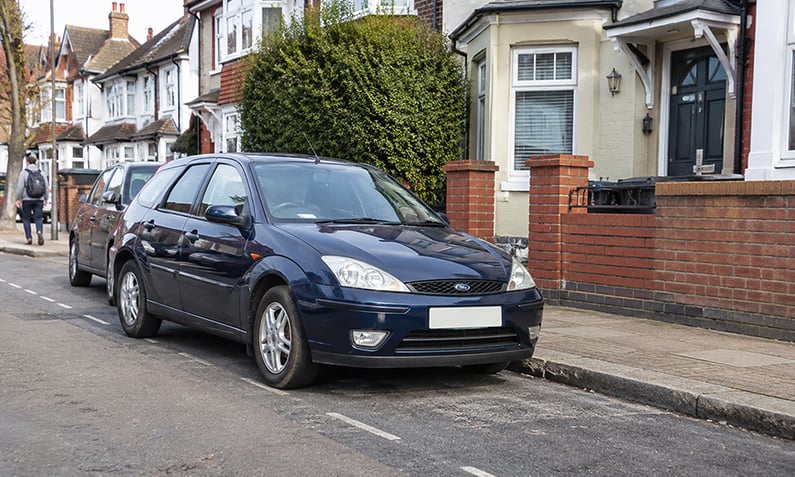



Is It Illegal to Park an Uninsured Car on the Road? | 2026

Written by Brijesh Patel
Reviewed by Shay Ramani
5 min read
Updated: 17 Nov 2026
Is It Illegal to Park an Uninsured Car on the Road? | 2026

Parking an uninsured car on the road is illegal in the UK. Under Continuous Insurance Enforcement, any vehicle kept on a public road or in a public place must have valid insurance unless the registered keeper has made a Statutory Off Road Notification (SORN) and keeps it off the road. The rule applies whether or not you ever drive the car.

This catches a lot of people out during the gap between buying a car and arranging cover, or when a renewal lapses by a few days. The car does not have to move for you to break the law. If it is sitting at the kerb uninsured and not declared SORN, the registered keeper is liable, even if it never turns a wheel.

Here we set out exactly what the law says, what penalties apply, where you can legally keep an uninsured car, and how the gap between a lapsed policy and a new one can be managed without a fine.

Quick Answer: Is It Illegal to Park an Uninsured Car on the Road?

  • An uninsured car on a public road breaks Continuous Insurance Enforcement rules.
  • The registered keeper risks a £100 DVLA fine, rising to £1,000 in court.
  • To keep a car uninsured you must declare SORN and keep it off the road.
  • A SORN car cannot legally be parked on a public road at all.
  • Driving uninsured brings a £300 fine and six penalty points.

Last updated: October 2026

Written by the Free Price Compare editorial team | Reviewed October 2026

What the law says about keeping a car on the road

Keeping an uninsured car on a public road is an offence under the UK’s Continuous Insurance Enforcement regime, introduced in 2011. Continuous Insurance Enforcement means every registered vehicle must be covered by valid insurance at all times unless it is formally declared off the road. The offence sits alongside the long-standing requirement under the Road Traffic Act 1988 that a driver must be insured to use a vehicle on a road.

The distinction matters because two separate things can be illegal. First, the registered keeper commits an offence simply by keeping an uninsured vehicle on the road, even parked and unused. Second, anyone who drives that vehicle without insurance commits a separate, more serious offence. According to GOV.UK guidance updated on 3 October 2026, a vehicle kept on a road or in a public place must be insured, and an uninsured vehicle must be covered by a SORN if it is kept off the road.

The Motor Insurers’ Bureau maintains the Motor Insurance Database, which the DVLA and police cross-check against the DVLA’s own records. When a car shows as taxed or registered but has no matching insurance policy, the system flags it automatically. That is how most keepers of an uninsured car on the road end up receiving a penalty letter without ever being stopped.

Can you park a car on the road without insurance?

No, you cannot legally park a car on a public road without insurance in the UK. A public road includes the street outside your home, a lay-by, a public car park and any other place the public can access with a vehicle. If the car is registered and kept there without insurance and without a SORN, the registered keeper is breaking Continuous Insurance Enforcement rules.

A common misunderstanding is that cover is only needed when the car is moving. That is not how the law works. The obligation attaches to keeping the vehicle, not to using it. A car left at the kerb for a fortnight while you sort out a policy is still an uninsured car on the road, and the keeper remains liable for the whole period it sits there.

The gap after buying a car trips people up most often. If a dealer or seller closes on a bank holiday, or an insurer’s line is shut, the safest approach is to arrange cover before you take the car to a public road, or to keep it on private land until the policy starts. You can check whether a car is already insured on the Motor Insurance Database before relying on existing cover.

Get covered before your car hits the road

Can I keep an uninsured car on my driveway?

Yes, you can keep an uninsured car on your own driveway, in a garage or on private land, provided the registered keeper has made a SORN. A Statutory Off Road Notification (SORN) is a free declaration to the DVLA that a vehicle is kept off the public road and will not be used or parked on it. Once a SORN is in place, the car does not need insurance or road tax.

A driveway or garage only removes the insurance requirement if the car is off any public road and a SORN has been made. If the vehicle is still taxed and not SORN, it must be insured even sitting on private land, because the DVLA treats it as a vehicle in active use. According to GOV.UK’s SORN guidance updated on 6 October 2026, an uninsured vehicle must have a SORN, even if the insurance lapse is only brief, such as during a delayed renewal.

So the practical rule is simple. If a car is taxed, it must be insured wherever it is kept. If you want to stop insuring it, you must declare SORN first and keep it entirely off the public road. Failing to make a SORN when one is required can lead to an £80 fine.

Can you park a SORN car on the road?

No, a SORN car cannot legally be parked or kept on a public road at all. A SORN declares that the vehicle is kept off the road, so parking it at the kerb directly contradicts the declaration and is an offence. The only time a SORN vehicle may be on a public road is when it is being driven to or from a pre-booked MOT or other testing appointment.

Using a SORN vehicle on the road for any other reason can lead to prosecution and a fine of up to £2,500, according to GOV.UK. That is a far heavier penalty than the standard uninsured-keeper fine, which is why a SORN is not a shortcut to leaving a car on the street cheaply.

If you need somewhere other than a public road to store a SORN car, a driveway, garage, private yard or paid storage all qualify as off-road. The moment the wheels touch the public highway outside the permitted MOT journey, both the SORN and the lack of insurance become a problem.

Can you park a SORN car on the road

Moving a car back onto the road?

Arrange cover first so you are never caught uninsured at the kerb.

What are the penalties for an uninsured vehicle?

The registered keeper of an uninsured vehicle kept on the road without a SORN can receive a £100 DVLA fine, according to GOV.UK guidance updated on 3 October 2026. If the matter goes to court, the maximum fine rises to £1,000, and the vehicle can be wheel-clamped, impounded or in some cases destroyed. These penalties apply to the keeper regardless of whether anyone ever drives the car.

Driving an uninsured vehicle is treated more severely. The police can issue a £300 fixed penalty and six penalty points on the spot. If the case reaches court, the penalties escalate to an unlimited fine and disqualification from driving, and the police can seize and, in some cases, destroy the vehicle. For a newer driver, six points can be enough to lose a licence under the New Drivers Act.

Situation Typical penalty
Uninsured car kept on the road, no SORN (keeper) £100 DVLA fine, up to £1,000 in court; clamp or seizure possible
No SORN made when required £80 fine
Driving uninsured (fixed penalty) £300 fine and six penalty points
Driving uninsured (court) Unlimited fine and possible disqualification
Using a SORN vehicle improperly on the road Fine of up to £2,500

Figures are indicative and may change. Your DVLA penalty letter states the exact amount payable and the deadline.

GOV.UK confirms the penalty letter sets out the amount and the deadline, and that late payment can lead to clamping, crushing or debt-collection action. Paying promptly and getting the car either insured or declared SORN usually resolves the issue. Separately, the full set of current motoring rules is covered in our round-up of UK driving laws and penalties.

See how much comprehensive cover costs

How is an uninsured car detected without being stopped?

An uninsured car is usually detected through an automated cross-check between the DVLA’s vehicle records and the Motor Insurance Database, not by being pulled over. When a registered vehicle has no matching live insurance policy and no SORN, the system identifies it and the DVLA issues an Insurance Advisory Letter, then a penalty if the keeper does not act.

Police also use automatic number plate recognition (ANPR) cameras, which read number plates and query insurance status continuously against the database. A car driven on a public road while uninsured can be flagged within seconds, which is why “the policy office was shut” is not accepted as an excuse. The insurance either exists on the database or it does not.

This matters when you buy a used car. A policy on your previous vehicle does not automatically transfer, and the car is not insured on the database until a policy naming that specific vehicle is live. Comparing cover across a panel of more than 130 insurers before you collect the car is the cleanest way to avoid a gap, and our tips for cutting your premium can help keep that cost down.

How can you report an uninsured vehicle near you?

You can report a suspected uninsured vehicle to the Motor Insurers’ Bureau, which runs a confidential reporting service for the public and works with the police to trace uninsured cars. Reporting is anonymous, and you only need the number plate, make, model and location of the vehicle. The MIB checks the registration against the Motor Insurance Database and passes confirmed cases to enforcement bodies.

An uninsured vehicle parked on a public road is primarily a matter for the DVLA and the MIB rather than something the police will attend simply because it is stationary. If a vehicle is also blocking access, abandoned or causing an obstruction, your local council handles abandoned and nuisance vehicles separately. For a car that has been there a long time with flat tyres and no tax, the council’s abandoned-vehicle route is often the quicker one.

Reporting does not guarantee the car is moved immediately, but it does trigger a database check. If the vehicle has no cover and no SORN, the registered keeper will face the standard enforcement process set out above.

Do I need to insure a car I never drive?

Yes, you must insure a car you never drive if it is kept on a public road, because Continuous Insurance Enforcement applies to keeping the vehicle, not using it. The only lawful alternative is to declare SORN and keep the car entirely off the public road, which removes both the insurance and the road tax requirement.

This is the exact scenario behind most unexpected penalty letters. People assume a car gathering dust at the kerb, or a project car waiting for repairs, needs no cover because it is not in use. In fact, as long as it is registered, taxed and on the road, it must be insured, or declared SORN and moved onto private land.

Comprehensive cover is still the sensible default for a car you occasionally use, which is why around 88-89% of car insurance quotes we see are for comprehensive rather than third party (Free Price Compare data, Jan-Jun 2026). If a car is truly dormant, SORN is cheaper than insuring it, but only works if you have genuine off-road storage. You can weigh the real on-road costs in our breakdown of the cost of getting a car on the road.

Compare quotes from 130+ insurers

What this costs against the risk of a fine

Insuring a car costs far less than the combined risk of a £100 keeper fine, a possible £1,000 court fine and a clamped or seized vehicle. The average UK motor insurance premium was £560 in Q1 2026, according to the Association of British Insurers (ABI) Motor Insurance Premium Tracker, which was broadly stable on the previous quarter and £20 lower than Q1 2025. The ABI also reported £11.9 billion paid across 2.5 million motor claims in 2025, a reminder of why cover matters beyond simple legality.

That average is a market-wide figure, not a quote for any specific vehicle. Your own price depends on the car, your age and address, your annual mileage, your no-claims bonus and your claims history, so the only way to see a real number is to get a quote for that car. Most of our car insurance journeys now happen on a mobile device, so a quick comparison on your phone is enough to replace an uninsured gap with valid cover in minutes.

Keeping a car taxed but uninsured to “save money” is a false economy. Avoid listing a parent or lower-risk person as the main driver when they are not, which is fronting and is itself an offence that can void a policy. If the car is not being used, declare SORN and store it off-road rather than leaving an uninsured car on the road and hoping the database check misses it.

What this costs against the risk of a fine

FAQs about uninsured car on the road

Is it illegal to park an uninsured car on the street outside my house?

Yes. The street outside your home is a public road, so an uninsured car parked there breaks Continuous Insurance Enforcement rules unless you have declared it SORN and moved it off the road. The registered keeper is liable even if the car never moves. To keep it uninsured you would need to park it on a driveway, in a garage or on other private land and make a SORN.

Can I keep an uninsured car on my driveway without a SORN?

Only if the car is not currently taxed. If a vehicle is still taxed, it must be insured wherever it is kept, including on a private driveway. To keep a car uninsured on your driveway lawfully you must first declare SORN with the DVLA, which also cancels the road tax. A SORN is free to make and can be done online.

How long can a car be left uninsured before I get fined?

There is no safe grace period. The obligation to insure or SORN a vehicle applies continuously, so even a brief lapse during a delayed renewal can trigger an Insurance Advisory Letter and then a £100 penalty. If your cover is about to lapse and you are not using the car, declare SORN and keep it off the road rather than risk the gap.

I bought a car on a bank holiday and could not insure it. Was it illegal to drive home?

Driving an uninsured car on a public road is always an offence, with a £300 fixed penalty and six points, and the insurer being closed is not a defence. Arrange cover before collecting the car, or keep it on the seller’s private land until a policy is live. Many insurers let you buy cover online at any time, so a closed phone line is rarely the only option.

Does a SORN let me park my car on the road if I am not driving it?

No. A SORN specifically declares that the vehicle is kept off the public road, so parking a SORN car at the kerb contradicts the declaration and is an offence. A SORN vehicle may only be on a public road when driven to or from a pre-booked MOT or testing appointment. Using it on the road for any other reason can bring a fine of up to £2,500.

What happens if the registered keeper’s car is uninsured?

The registered keeper, not necessarily the driver, is responsible for ensuring a vehicle on the road is insured or SORN. If it is neither, the keeper can receive a £100 DVLA fine, rising to a £1,000 fine in court, and the car can be clamped, impounded or destroyed. This applies even if the keeper has never driven the car.

How can I report an uninsured vehicle parked near me?

You can report it confidentially to the Motor Insurers’ Bureau using the number plate, make, model and location. The MIB checks the registration against the Motor Insurance Database and passes confirmed uninsured vehicles to enforcement. If the car is also abandoned or obstructing access, your local council deals with abandoned and nuisance vehicles separately.

Can the police seize an uninsured car that is just parked?

A parked uninsured vehicle is mainly dealt with by the DVLA and the Motor Insurers’ Bureau through database enforcement rather than on-the-spot seizure. The police are more likely to seize a vehicle being driven uninsured, which they can detect through ANPR cameras. A persistently uninsured parked car can still be clamped or impounded through the DVLA enforcement process.

Is it cheaper to SORN a car than to insure it?

Declaring SORN is free and removes both the insurance and road tax costs, so for a car you never use and can store off-road it is cheaper than insuring it. The catch is that a SORN car must stay entirely off the public road except for the single permitted journey to a booked MOT. If you have no off-road storage, insurance remains the only legal way to keep the car.

Do I still need an MOT for a car that is declared SORN?

A SORN car does not need a valid MOT while it is kept off the road and not in use. However, the only way you can legally drive it on a public road is to or from a pre-booked MOT or testing appointment, and you must still have the car insured for that journey. Once the car passes and goes back into use, you need both a valid MOT and continuous insurance.

Will my old policy cover a newly bought car automatically?

Not reliably. Insurance is tied to a specific vehicle on the Motor Insurance Database, so your previous car’s policy does not automatically make a newly bought car insured. Some policies include limited driving-other-cars cover, but this is usually third party only and does not count as insuring the new vehicle for keeping it on the road. Arrange a dedicated policy before the car reaches a public road.

Does the £100 fine replace the need to insure the car?

No. Paying the DVLA penalty does not make the car legal to keep on the road, and the vehicle can be fined again if it remains uninsured and not SORN. After paying, you must either insure the car or declare SORN and move it off the public road. Ignoring the letter can lead to clamping, crushing or debt-collection action.

Also Read Related Articles


Information correct as of 22 October 2026. Prices, tariffs, policy details and providers change frequently, so please check the latest details before making a decision. This article is for general information only and does not constitute financial advice. Free Price Compare is authorised and regulated by the Financial Conduct Authority (FCA).

4000+ reviews