




Car Insurance Write-Off Categories Explained

Written by Prajesh Manvar
Reviewed by Ankit Sureja
5 min read
Updated: 19 Oct 2026
Car Insurance Write-Off Categories Explained

Car insurance write-off categories are the four grades (A, B, S and N) that insurers use to record how badly a car has been damaged and whether it can safely return to UK roads. Cat A and Cat B cars must be destroyed and can never be driven again. Cat S and Cat N cars are repairable and can go back on the road once they meet the rules.

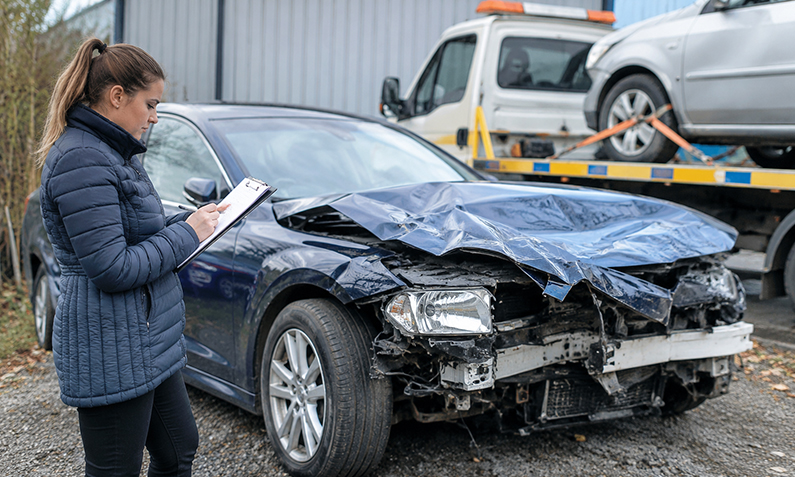
A car is “written off” when your insurer decides repairs would cost more than the car is worth, or when the damage makes it unsafe to fix. The category it then receives decides everything that follows: whether you can buy the car back, whether it needs re-registering, and how much its value drops. With the average accidental damage claim reaching £3,699 in Q1 2026, according to the Association of British Insurers (ABI), rising repair costs are pushing more cars towards a write-off than a repair.

Quick Answer: Car Insurance Write-Off Categories Explained

  • Cat A and Cat B cars must be scrapped and can never be driven again
  • Cat S means structural damage, repairable, but must be re-registered with the DVLA
  • Cat N means non-structural damage, repairable, no re-registration needed
  • Write-off data sits on the MIAFTR register, not on a free DVLA check
  • Failing to tell the DVLA your car was written off can mean a £1,000 fine

Last updated: October 2026

Written by the Free Price Compare editorial team | Reviewed October 2026

What do Cat A, B, S and N actually mean?

Cat A, B, S and N are the four UK insurance write-off categories, set out in the ABI Salvage Code of Practice, and they describe the severity of damage rather than just the repair bill. The letters tell you whether a car can ever go back on the road and, if it can, what has to happen first. The current system replaced the old Cat C and Cat D grades in October 2017, introduced by the ABI with the British Vehicle Salvage Association.

The split that matters most is structural versus non-structural damage. Cat A and Cat B cover cars too dangerous to ever drive again. Cat S covers repairable cars with damage to safety-critical structure, and Cat N covers repairable cars where the structure is intact.

Category Repairable? Can it return to the road? What it means
Cat A No Never The whole vehicle must be crushed, including every part. Reserved for the most severe damage, such as major fires.
Cat B No Never The body shell must be destroyed, though some undamaged parts can be salvaged and reused elsewhere.
Cat S Yes Yes, after repair and DVLA re-registration Structural damage to the chassis, crumple zones or suspension mounts, but repairable to a roadworthy standard.
Cat N Yes Yes, after repair Non-structural damage: cosmetic bodywork, electrical faults, interior or non-structural suspension parts.

Figures are indicative and may change.

If you are looking at an older car, you may still see Cat C or Cat D on its history. Those labels were used before October 2017 and were never updated: treat Cat C as broadly equivalent to Cat S, and Cat D as broadly equivalent to Cat N.

How are categories like Cat N or Cat S assigned?

A car’s write-off category is assigned by the insurer’s engineer after they assess the damage, not by the DVLA or any government body. The engineer inspects the vehicle, estimates the repair cost against its pre-accident market value, and judges whether the damage is structural. That judgement decides the letter. Structural damage to load-bearing parts pushes a car into Cat S; damage limited to panels, electrics or trim points to Cat N.

If you repair minor accident damage yourself without involving your insurer, no category is assigned at all, because the vehicle was never declared a total loss. A category only exists once an insurer settles a claim and records the car as written off.

Compare comprehensive car insurance quotes

Why would an insurer write off a car worth repairing?

An insurer writes off a car when the repair cost comes close to or exceeds the car’s market value, or when the damage makes it unsafe to return to the road. This is often called a total loss. A written-off car is not always wrecked beyond recognition: insurers work to a threshold, frequently around 50-60% of the car’s value, above which repair stops making financial sense for them.

This is why an estimate lower than the payout can still result in a write-off. Insurers factor in the cost of a courtesy car, storage, the risk of hidden damage found mid-repair, and the car’s residual value afterwards. On an older car worth £2,000, even a £1,200 repair can tip the balance towards settlement. Through Free Price Compare, 43-48% of car insurance quotes are for cars valued between £1,000 and £5,000 (Free Price Compare data, Jan-Jun 2026), the price band where write-offs happen most readily because repair bills quickly outrun the car’s worth.

Rising parts prices and vehicle complexity are making this more common. The ABI reported that insurers paid out a record £3.2 billion in Q2 2026, with the average claim payout rising to £4,900, according to the ABI. As repairs get dearer, the write-off threshold is reached on cars that would once have been fixed.

Why would an insurer write off a car worth repairing

Can a written-off car legally go back on the road?

A written-off car can legally return to the road only if it is a Cat S or Cat N vehicle, repaired to a roadworthy standard. Cat A and Cat B cars can never be driven again: Cat A must be completely destroyed, and a Cat B body shell must be crushed even if some parts are salvaged. There is no legal route to putting a Cat A or Cat B car back on the road.

A Cat S car must be fully repaired, pass an MOT test and be re-registered with the DVLA before it can be driven. Once the DVLA is told the repair and MOT are complete, it issues a new V5C registration certificate that clearly shows the write-off category. A Cat N car must still be safe and MOT-compliant, but it does not need re-registering because the structure was never compromised.

If you want to keep your own written-off car rather than hand it over, you can. The insurer pays out the settlement and then sells the salvage back to you, usually deducting the salvage value from your payout. For a Cat S car you must send the V5C to your insurer and apply for a free duplicate using form V62.

Buying or keeping a repairable write-off?

Get the right cover for a Cat S or Cat N car before you drive it.

Can you insure a written-off car?

You can insure a repairable written-off car (Cat S or Cat N) once it has been properly repaired, MOT-tested and, for Cat S, re-registered with the DVLA. You cannot insure a Cat A or Cat B car, because it is not legal to drive one. When you quote for a previously written-off car, you must declare its category, as failing to do so can invalidate the policy.

Expect fewer insurers to offer cover, and some quotes to be higher, because a recorded write-off permanently affects the car’s value and perceived risk. Structural total losses in particular hold a lower value even after a good repair. Comparing across a panel of 130+ insurers helps here, since appetite for Cat S and Cat N cars varies widely between providers. Before you buy a used car, an HPI check or similar history check will reveal a write-off marker that a free DVLA lookup will not.

Write-off categories are held on the Motor Insurance Anti-Fraud and Theft Register (MIAFTR), maintained by Thatcham Research, not by the DVLA. That is why a car’s status can seem invisible on a basic government check but shows up on a paid vehicle history report. When you tell us about the car, this is one of the details worth getting right, alongside the other questions insurers will ask you.

See which insurers cover written-off cars

How is a write-off valuation decided, and can you challenge it?

A write-off valuation is the market value your insurer pays for your car when it declares a total loss, based on what a similar car would sell for just before the accident. It is not what you paid, nor the cost of a brand-new replacement. The Financial Conduct Authority has made clear that this should be a fair estimate of the car’s pre-accident market value.

You can challenge a valuation you think is too low, and it is often worth doing. The FCA found, in its multi-firm review of how insurers value written-off and stolen vehicles, that some firms made a first offer below market value expecting to raise it only if the customer complained. The review covered 12 firms making up an estimated 70% of the market. If your first offer feels low, push back with evidence.

To support a challenge, gather advertised prices for the same make, model, age, mileage and condition from reputable motor trade guides and current listings. The Financial Ombudsman Service weighs valuations against recognised trade guides, so documented evidence carries real weight. Query any deductions too: the FCA said blanket deductions for pre-accident condition may be unfair unless the insurer can justify them against the evidence.

Do you still pay your excess if the car is written off?

Yes, you usually pay your excess when your car is written off if you are claiming on your own policy, and it is deducted from the settlement rather than paid separately. If you were not at fault and your insurer recovers costs from the other driver, your excess is normally refunded afterwards. Understanding how your compulsory and voluntary excess works matters here, because a high voluntary excess reduces an already-modest payout on a lower-value car.

If the accident was not your fault, you may be able to claim the excess back from the at-fault driver’s insurer. Our guide on whether you pay excess when you are not at fault explains how that recovery works and when it does not.

What happens if your written-off car is on finance?

If your written-off car is on PCP or HP finance, the insurance payout goes towards clearing the outstanding finance balance first, because the finance company technically owns the car until the agreement ends. If the payout covers the balance, you keep any surplus. If it falls short, you owe the difference, which is where GAP insurance can help.

This catches people out most on PCP deals, where the car can depreciate faster than the finance reduces, leaving a shortfall. Our full breakdown of what happens to a car written off on finance walks through the settlement order and your options. You should also tell the DVLA your car has been written off and scrapped, or you risk a £1,000 fine.

What happens if your written-off car is on finance

Compare car insurance in about five minutes

FAQs about car insurance write-off categories

What is the difference between Cat S and Cat N?

Cat S means the car had structural damage, such as to the chassis or crumple zones, while Cat N means the damage was non-structural, such as bodywork, electrics or trim. Both are repairable and can return to the road, but a Cat S car must be re-registered with the DVLA after repair, whereas a Cat N car does not need re-registering. Cat S cars generally lose more value because structural damage affects a vehicle permanently.

Does a write-off category show on a free DVLA check?

No. Write-off categories are held on the MIAFTR register maintained by Thatcham Research, not by the DVLA, so they will not appear on a free government vehicle check. To see whether a used car has been written off, you need a paid vehicle history check such as an HPI check. Always run one before buying a used car privately or at auction.

Can I keep my car after it has been written off?

Yes, if it is a repairable category (Cat S or Cat N). Your insurer pays the settlement and then sells the salvage back to you, usually deducting the salvage value from your payout. For a Cat S car you must send the V5C to your insurer and apply for a free duplicate logbook using form V62. Cat A and Cat B cars cannot be kept for road use as they must be destroyed.

Why did my insurer write off my car when repairs cost less than the payout?

Insurers include costs beyond the repair estimate, such as a courtesy car, storage, the risk of further hidden damage and the car’s reduced value after repair. When these push the total close to the car’s market value, writing it off is cheaper for the insurer than repairing it. On older, lower-value cars this threshold is reached quickly, which is why a repair quote below the payout can still result in a write-off.

How long does a write-off stay on a car’s history?

A write-off marker stays on a car’s history permanently once it is recorded on the MIAFTR register. Repairing and re-registering the car does not remove it, and it will always show on a vehicle history check. This permanent record is one reason repaired Cat S and Cat N cars sell for less than an equivalent car with a clean history.

Is it safe to buy a Cat S or Cat N car?

A Cat S or Cat N car can be safe to buy if it has been properly repaired by a competent workshop and passes an MOT, but you should be cautious. Ask for repair invoices and photos of the damage, check the work independently where possible, and factor in that the car will be harder to sell on and worth less. A thorough history check and an independent inspection are worthwhile before committing.

Does a write-off claim affect my no-claims bonus?

Yes, a write-off claim usually affects your no-claims bonus unless you were not at fault and your insurer recovers its costs in full from the other driver. A no-claims bonus is a discount built up for each year you do not claim, and a fault write-off typically reduces or resets it. If you have protected your no-claims bonus, the discount is preserved even though the claim still appears on your record.

Can I challenge a low write-off valuation?

Yes, you can and often should challenge a valuation you believe is too low. Gather advertised prices for the same make, model, age, mileage and condition from reputable trade guides and current listings, and send them to your insurer. If you cannot reach a fair figure, you can escalate to the Financial Ombudsman Service, which compares offers against recognised motor trade guides when deciding what is fair.

What happens to my car after it is written off?

After a write-off, the salvage is usually collected and sold by a salvage company unless you buy it back. Cat A cars are crushed entirely, Cat B cars have the body shell destroyed but usable parts salvaged, and Cat S and Cat N cars may be repaired and resold. The insurer keeps the salvage value as part of settling your claim, which is why that value is deducted if you choose to keep the car.

Do I need to tell the DVLA my car has been written off?

Yes. If your insurer has written off and scrapped your car, you must tell the DVLA, or you could be fined up to £1,000. If instead you are keeping a repairable Cat S or Cat N car, you handle the logbook process with your insurer and apply for a new V5C. Keeping the DVLA informed ensures the car’s status is recorded correctly on its registration certificate.

Can a car be a write-off if I repair it myself without claiming?

No. A write-off category is only assigned when an insurer declares the car a total loss during a claim. If you repair accident damage yourself without involving your insurer, no category is recorded and the car keeps a clean history. However, you must still make sure any repairs leave the car roadworthy and that it passes its MOT.

Will insurance be more expensive on a previously written-off car?

Insurance on a repaired Cat S or Cat N car can be more expensive, and fewer insurers will offer cover, because a recorded write-off lowers the car’s value and raises perceived risk. You must declare the category when you quote, as hiding it can invalidate your policy. Comparing across a wide panel of insurers helps, because appetite for previously written-off cars varies a lot between providers.

Also Read Related Articles


Information correct as of 13 October 2026. Prices, tariffs, policy details and providers change frequently, so please check the latest details before making a decision. This article is for general information only and does not constitute financial advice. Free Price Compare is authorised and regulated by the Financial Conduct Authority (FCA).

4000+ reviews