






Windscreen Cover and ADAS Calibration: What to Know

Written by Shay Ramani
Reviewed by Prajesh Manvar
7 min read
Updated: 12 Aug 2026
Windscreen Cover and ADAS Calibration: What to Know

Windscreen cover and ADAS calibration often go together on modern cars, and a UK comprehensive policy may pay for both when you claim for a chipped or cracked windscreen. Windscreen cover is the part of a car insurance policy that pays to repair or replace your windscreen (and often the other glass), while ADAS calibration is the process of resetting the cameras and sensors mounted behind the glass so safety systems such as lane assist and automatic emergency braking aim correctly again.

The reason this matters is money and safety. Replacing a windscreen on a car with driver-assistance technology can cost far more than a plain sheet of glass, because the fitter also has to recalibrate the systems that look through it. If those cameras are left even slightly out of alignment, features such as autonomous braking can misread the road. Free Price Compare compares comprehensive cover across a panel of more than 130 UK insurers, and glass cover terms vary between them, so it pays to read the small print before you assume calibration is included.

Quick Answer: Windscreen Cover and ADAS Calibration

  • ADAS calibration is the process of realigning windscreen-mounted cameras and sensors after a replacement so systems like lane-keep assist and automatic emergency braking work correctly.
  • Most UK comprehensive policies pay for windscreen repair and replacement, and where a car needs recalibration the calibration is normally covered as part of the same claim – but always confirm this with your insurer first.
  • Windscreen repairs usually carry a lower excess than replacements; a typical glass excess is often around £75-£115 for a replacement and lower or nil for a repair, though it varies by insurer.
  • Standalone ADAS calibration is charged from around £168 to £499 depending on system type and whether static, dynamic or both are needed (UK windscreen provider pricing, 2026).
  • A windscreen glass claim often does not affect your no-claims bonus, but check your policy – some insurers treat it differently and a separate glass excess still applies.

Last updated: August 2026

Written by the Free Price Compare editorial team | Reviewed August 2026

What is ADAS windscreen calibration?

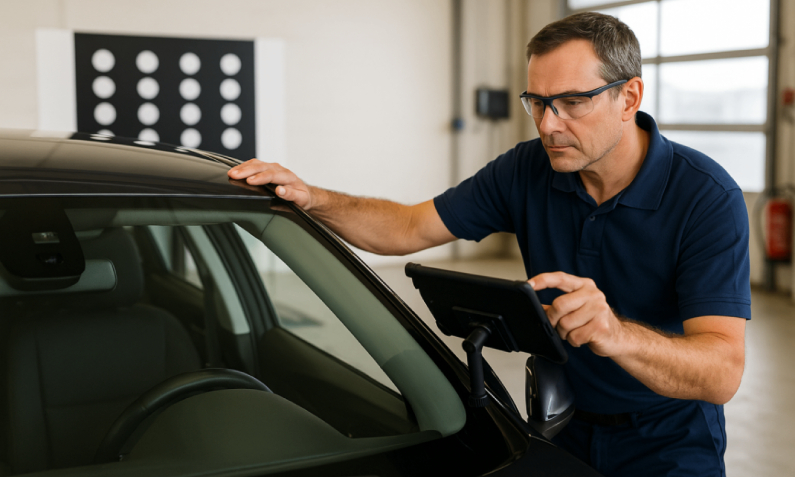
ADAS windscreen calibration is the process of realigning the cameras and sensors mounted on or behind your windscreen so your car’s driver-assistance systems point at the road correctly after the glass is replaced. ADAS stands for Advanced Driver Assistance Systems, the group of safety features that includes lane-keep assist, adaptive cruise control, traffic-sign recognition and automatic emergency braking. Many of these features rely on a forward-facing camera fixed near the top-centre of the windscreen, so once that glass is removed and refitted the camera may need recalibration. According to Thatcham Research, whose work underpins UK vehicle-safety and repair standards, correct calibration is essential for these systems to function as the manufacturer intended.

There are two main methods. Static calibration is done in a workshop using targets placed in front of the car; dynamic calibration is done by driving the vehicle on the road while diagnostic equipment reads the system. Some cars need one, some need both. GOV.UK’s MOT inspection manual says headlamp aim is checked by positioning the vehicle on the designated standing area and aligning the testing equipment to the vehicle, while dynamic calibration is a separate road-test procedure using diagnostic equipment; some vehicles need one method and some need both, according to GOV.UK guidance dated 2026.[18]

How do I know if I have an ADAS windscreen?

You have an ADAS windscreen if your car has a camera or sensor unit fixed behind the glass near the rear-view mirror, which many newer vehicles do. Look for a black plastic housing or a camera pod on the inside of the windscreen at the top-centre. Features such as lane-departure warning, adaptive cruise control, automatic high-beam or a speed-limit display on your dashboard are strong signs the car is ADAS-equipped. Your vehicle handbook and the manufacturer’s specification for your registration will confirm it, and any reputable windscreen fitter checks this before quoting.

Many recent models from major UK car brands carry a windscreen camera as standard. If your car has a windscreen-mounted ADAS camera, assume calibration will be part of any windscreen replacement and factor that into the conversation with your insurer. gov.uk’s vehicle repair guidance supports the general point that windscreen replacement on vehicles with ADAS may require recalibration of the affected systems, so it should be discussed with your insurer as part of the repair.

Compare comprehensive car insurance quotes

Does insurance cover windscreen recalibration?

Yes – most UK comprehensive car insurance policies cover windscreen recalibration as part of a glass claim, provided the calibration is needed because of a windscreen replacement your policy is paying for. Glass cover is a standard feature of many comprehensive policies, and insurers generally treat necessary ADAS calibration as part of the repair rather than a separate charge you pay yourself. Third-party and third-party fire and theft policies usually do not include glass cover at all, so recalibration would not be covered under them. According to the Association of British Insurers, if your motor policy does not include glass cover, you would pay the glass repair or replacement cost yourself, and ADAS recalibration would only be covered if your policy includes that cover.

The important caveat is that cover terms differ between insurers, and some policies cap the amount they pay for glass or exclude approved-repairer requirements. Before you book anything, confirm with your insurer that calibration is included and whether you must use their approved glass network. Our guide to comprehensive car insurance and windscreen cover explains what to check line by line, and a high share of quotes started through Free Price Compare are for comprehensive cover, so this is the level many buyers already hold.

Does insurance cover windscreen recalibration

Is recalibration after a windscreen replacement really necessary?

Recalibration after a windscreen replacement is necessary on any car with a windscreen-mounted ADAS camera, because removing and refitting the glass shifts the camera’s aim enough to compromise the safety systems that rely on it. If the camera is left uncalibrated, features such as automatic emergency braking or lane-keep assist can misjudge distances and lane positions, which is a genuine safety risk rather than a paperwork formality. All major vehicle manufacturers recommend recalibration after the glass is changed.

Skipping it can also have knock-on consequences. An uncalibrated system that fails or behaves unexpectedly could affect an insurance claim if it contributes to an incident, and a mis-set safety system is not something you want discovered at your next MOT test or after a collision. Reputable fitters will not sign off a replacement on an ADAS car without completing and certifying the calibration.

Check your glass cover before you claim

Confirm calibration is included and whether an approved fitter is required.

How much does windscreen replacement with ADAS calibration cost?

Windscreen replacement with ADAS calibration typically costs more than a plain replacement because calibration is charged on top, with standalone calibration is commonly priced in the hundreds of pounds across UK specialists. A basic replacement without a camera can start from around £199, while a repair for a small chip is often around £75, depending on the vehicle and provider. Where a car needs calibration, providers price it either as a separate line or bundled into the quote, and complete replacements including glass, fitting and calibration on ADAS models are frequently quoted in the £300 to £600 range, with some premium or electric vehicles running higher.

Service Typical UK price (2026)
Windscreen chip repair From around £75
Basic windscreen replacement (no camera) From around £199
Standalone ADAS calibration Around £168 to £499
ADAS windscreen replacement (glass, fitting and calibration) Often around £300 to £600+

Figures are indicative and may change. Prices depend on the vehicle, the glass specification and whether static, dynamic or both calibration types are required.

What is the windscreen cover excess?

The windscreen cover excess is the fixed amount you pay towards a glass claim before your insurer covers the rest, and it is usually lower for a repair than for a full replacement. Many comprehensive policies set a repair excess at or near nil to encourage drivers to fix small chips early, while a replacement glass excess is often somewhere around £75 to £115, depending on the insurer and whether you use their approved fitter. Using an insurer’s approved glass network typically means the lower excess applies; going outside it can mean a higher excess or a capped payout.

The glass excess is separate from your main policy excess, so a windscreen claim does not usually trigger the larger accident excess. Check the exact figure in your policy schedule before booking, because this is where costs differ most between providers.

See what affects your car insurance price

Will a windscreen claim affect my no-claims bonus?

A windscreen glass claim usually does not affect your no-claims bonus, because most insurers treat glass-only claims separately from at-fault accident claims. This means you can normally repair or replace your windscreen without losing the years you have built up, though you still pay any glass excess. Protecting a no-claims bonus is a common concern when a windscreen cracks. According to the FCA, windscreen claims are often treated separately from other motor claims, but whether they affect your no-claims discount and any excess payable depends on the specific policy terms.

Cover terms are not identical everywhere. A minority of insurers record a glass claim in a way that could affect renewal pricing even if it does not reduce your no-claims years, so confirm the treatment with your insurer before claiming. If you are comparing renewal options, our guide on why car insurance quotes differ explains why glass and claims history can move your price differently across providers.

Should I use my insurer’s approved windscreen fitter?

Using your insurer’s approved windscreen fitter is usually the cheaper route, because it typically means the lowest glass excess applies and the calibration is billed directly to the insurer with no upfront cost to you. Insurers negotiate fixed rates with their approved networks and handle the ADAS calibration as part of the job, so you avoid paying the full replacement price and reclaiming it. Going outside the approved network can mean a higher excess, a payout cap, or paying the bill yourself and claiming it back.

There are reasons some drivers prefer a specific fitter, such as insisting on genuine manufacturer glass rather than an aftermarket equivalent, or wanting a particular garage for a high-value car. If that matters to you, ask your insurer whether they will authorise it before the work starts. For older or lower-value cars, the approved-fitter route is generally the most cost-effective choice.

Compare car insurance across 130+ insurers

What can go wrong with ADAS calibration?

ADAS calibration can fail or produce warning lights if the alignment cannot be completed, the glass is not fitted to specification, or the vehicle is not set up correctly for the procedure. Static calibration needs a level floor and precise target placement, while dynamic calibration requires the car to be driven under specific conditions, and some manufacturers even specify a full fuel tank and correct tyre pressures because ride height affects camera angle. If calibration fails, you may see a dashboard warning and the driver-assistance features will be disabled until it is completed successfully. TRL says changing a vehicle’s **ride height** and rake angle can significantly change ADAS camera field of view, and if recalibration inputs are outside manufacturer tolerances the **recalibration will fail**; this is from TRL’s *Calibration of advanced driver-assistance systems (ADASs) on modified vehicles* report.

A failed or skipped calibration is more than an inconvenience. Systems such as automatic emergency braking depend on an accurate camera aim, so an uncalibrated car should not be driven relying on those features. If a fitter cannot complete calibration, they should return the car to the manufacturer’s dealer or a specialist rather than sign it off. Always ask for a calibration certificate confirming the work was done, and keep it with your records.

What can go wrong with ADAS calibration

FAQs about windscreen cover and adas calibration

Does comprehensive car insurance always include windscreen cover?

Most comprehensive policies include windscreen and glass cover as standard, but it is not guaranteed on every policy, so check your schedule. Third-party and third-party fire and theft policies generally do not include glass cover at all. Where glass cover exists, it usually extends to the recalibration a modern car needs after a replacement.

How long does ADAS calibration take?

ADAS calibration usually takes between roughly 30 and 90 minutes on top of the windscreen fitting itself, though the exact time depends on the vehicle and whether static, dynamic or both methods are needed. Static calibration is done in a workshop, while dynamic calibration requires a road drive under set conditions. Complex systems can take longer if the first attempt does not complete successfully.

Is a chip repair cheaper than a full windscreen replacement?

A chip repair is far cheaper than a full replacement and often carries little or no excess on a comprehensive policy. Repairs typically start from around £75 privately, while a replacement runs into hundreds of pounds once ADAS calibration is added. Repairing a small chip early also avoids it spreading into a crack that forces a full, calibration-triggering replacement.

Can I choose my own windscreen fitter on a glass claim?

You can often choose your own fitter, but going outside your insurer’s approved network usually means a higher excess or a capped payout, and sometimes paying upfront and claiming back. Approved fitters bill the insurer directly and apply the lower glass excess. If you want genuine manufacturer glass or a specific garage, ask your insurer to authorise it before the work begins.

What happens if I drive without recalibrating my ADAS system?

Driving with an uncalibrated ADAS system means safety features such as lane-keep assist and automatic emergency braking may misjudge the road, which is a real safety risk. The car will often show a warning light and disable those features until calibration is completed. An uncalibrated system that contributes to an incident could also complicate an insurance claim.

Why does the fitter want a full tank of fuel for calibration?

Some manufacturers specify a full fuel tank because fuel weight affects the car’s ride height, which changes the exact angle of the windscreen-mounted camera. Even a small change in height can shift where the camera points, so calibration must be done under the conditions the manufacturer defines. Fitters may also check tyre pressures for the same reason.

Does a windscreen claim count as an insurance claim?

A windscreen glass claim is usually recorded separately from an at-fault accident claim and does not normally reduce your no-claims bonus. You still pay any glass excess. A small number of insurers may note the claim in a way that affects renewal pricing, so confirm how your insurer treats glass claims before you proceed.

How do I check whether calibration is included in my quote?

Ask the fitter or your insurer directly whether the quote includes ADAS calibration, and request that it is listed on the invoice. Reputable providers identify whether your car needs calibration before quoting and either bundle it in or show it as a separate line. Always obtain a calibration certificate once the work is done.

Do electric and premium cars cost more for windscreen replacement?

Electric and premium vehicles often cost more for windscreen replacement because they tend to use specialist glass, heated or coated panels and more complex sensor arrays that need careful calibration. Replacement quotes on these cars can run well above the typical range, sometimes into four figures. Confirm cover limits with your insurer, as some policies cap the amount paid for glass.

Can aftermarket glass affect ADAS calibration?

Aftermarket glass can affect calibration if it does not match the optical specification the camera expects, which can cause calibration to fail or the system to read inaccurately. Many owners prefer genuine manufacturer glass on ADAS vehicles for this reason. If you want a specific type of glass, agree it with your insurer before the replacement so it does not affect your cover or the calibration result.

Will an uncalibrated windscreen camera fail an MOT?

A dashboard warning light for a safety system can lead to an MOT advisory or failure depending on the system and how the tester interprets it. More importantly, an uncalibrated ADAS camera means safety features are not working as designed, which is a roadworthiness concern regardless of the MOT outcome. Completing calibration and keeping the certificate avoids doubt.

Also Read Related Articles


Information correct as of 10 August 2026. Prices, tariffs, policy details and providers change frequently, so please check the latest details before making a decision. This article is for general information only and does not constitute financial advice. Free Price Compare is authorised and regulated by the Financial Conduct Authority (FCA).

4000+ reviews