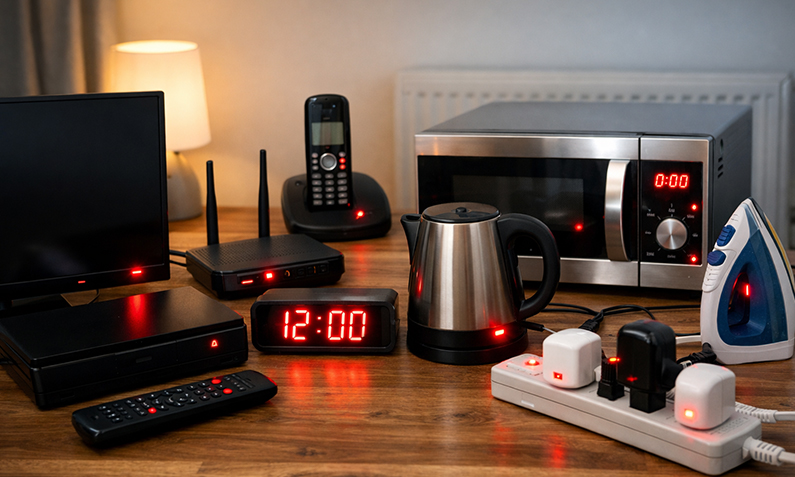






Vampire Devices: Which Appliances Cost You Money on Standby

February 4th, 2026
Vampire Devices: Which Appliances Cost You Money on Standby

Content in this article

Many households focus on heating and hot water when trying to reduce their energy bills. However, everyday electrical appliances and electronic devices can also contribute to rising energy usage, particularly when they are left on standby.

Devices that continue to draw power when they appear to be switched off are often called “vampire” or “phantom” devices. While the power consumption of a single device may seem small, standby consumption across an entire home can lead to noticeable energy waste over time.

Understanding how standby energy use affects bills, which appliances are responsible, and how this fits into wider household energy efficiency can help households make more informed choices about energy use.

What are “vampire devices”?

Vampire devices are electronic devices that continue to use electricity even when they are not actively in use. This usually happens when an appliance is left in standby mode rather than being switched off fully at the wall.

What standby power means

Standby power refers to electricity used by a device when it is not performing its main function but is still connected to the mains. This allows appliances to:

  • Start instantly when switched on
  • Maintain memory or settings
  • Stay connected to networks or apps

This constant background power draw is why standby consumption is sometimes described as phantom energy use.

Why appliances still use electricity when switched off

Many modern electrical appliances are designed to remain partially powered. Even when a screen is off, internal components may still be drawing power measured in watts, contributing to ongoing energy usage.

Stop Overpaying — Compare Energy Deals Today

Check your current tariff against the cheapest energy deals available.

Does standby mode really use electricity?

Yes. Standby mode does use electricity, although the amount varies widely between devices.

Standby vs sleep mode vs switched off

  • Standby mode keeps parts of a device powered
  • Sleep mode reduces power consumption but does not stop it completely
  • Switching off at the wall cuts electricity entirely

Only switching off at the wall or unplugging a device prevents all standby energy use.

Why small amounts of power add up

Even a small number of watts used continuously can add up over time. Because electricity is billed per kilowatt hour (kWh), devices that draw power all day can consume a noticeable number of units of electricity over a year.

Check how your current electricity costs compare to other options available.

How much electricity do appliances use on standby?

Standby energy use varies depending on appliance type, age, and design. Some devices draw only a fraction of a watt, while others use several watts continuously.

Industry research referenced in UK media suggests that standby energy usage across multiple devices can add over £100 per year to household electricity bills in some homes.

How standby costs build over time

Standby consumption is usually spread evenly across the year. Because it does not cause sharp spikes in energy usage, it can be easy to overlook, even though it contributes steadily to overall energy waste.

Which appliances cost the most when left on standby?

Some appliances are more energy-intensive on standby than others, particularly those designed to remain connected or ready for instant use.

Appliances commonly linked to higher standby consumption

Appliance Why standby use is higher
Games consoles Always-on connectivity
PC or laptop Active power supplies
Printer Network and sleep functions
TV Instant-on and smart features
Audio equipment Background receivers

Entertainment systems and home office equipment often account for a large share of standby power consumption.

What about kitchen and laundry appliances?

Large household appliances usually use relatively small amounts of power on standby, but they still contribute to background energy usage.

Common examples

  • Washing machine and dishwasher displays
  • Microwave clocks and digital panels
  • Tumble dryer standby electronics
  • Kettle bases with indicator lights

Individually, these appliances use small amounts of power, but together they can increase overall standby energy use.

What about kitchen and laundry appliances

Which appliances are cheap to leave on standby?

Not all electrical appliances contribute significantly to standby energy use.

Low standby power devices

Some devices use minimal electricity when left plugged in, such as:

  • Basic lamps
  • Simple chargers
  • Non-digital appliances

These typically have a much smaller impact on overall household energy usage compared with connected electronics.

Which appliances should not be switched off?

While switching appliances off at the wall can reduce energy waste, some devices should remain powered for safety or practical reasons.

Appliances that should usually stay switched on

  • Fridge freezers, to prevent food spoilage
  • Medical or monitoring equipment
  • Systems connected to a hot water tank or hot water cylinder

Switching these off could cause inconvenience or risk that outweighs any potential savings.

Is standby energy use more of a problem during winter months?

Standby energy use happens throughout the year, but it can feel more noticeable during winter.

Why standby power feels higher in winter

During colder months:

  • Overall energy usage increases
  • Hot water systems are used more often
  • Heating via radiators runs for longer
  • Bills rise, especially following price cap changes

Because standby consumption continues at a steady rate, it becomes more visible when combined with higher winter energy costs.

Does winter change how much standby power devices use?

In most cases, no. Standby power per device usually remains the same year-round. What changes is the wider context of household energy usage.

Beat Energy Price Hikes with Fixed Energy Tariffs

Lock in a fixed energy deal today and protect yourself from rising energy bills.

How much could households realistically save?

Savings from reducing standby energy use vary from home to home.

What affects potential savings

  • Number of electronic devices in the household
  • How often appliances are left on standby
  • Electricity unit rates

Reducing standby consumption can improve energy efficiency and slightly reduce a household’s carbon footprint, but it should be viewed as one part of a broader approach to managing energy use.

Review your energy usage to see where small changes could make a difference.

How can I find out how much energy my devices use when left in standby mode?

There are several practical ways to estimate standby energy use.

Using a smart meter, display, or app

If you have a smart meter, its in-home display or linked app can show real-time electricity usage. Switching devices on and off at the wall can help identify which appliances continue to draw power.

Using a plug-in energy monitor

Plug-in energy monitors measure power consumption in watts and electricity use in kWh. They are one of the most accurate ways to understand how much energy individual appliances use on standby.

Checking manufacturer information

Some appliance manuals include standby power figures. While these may not reflect real-world behaviour exactly, they can still provide a useful guide.

How to reduce standby power safely

Reducing standby energy use does not require major lifestyle changes.

Practical steps to reduce energy waste

  • Switch appliances off at the wall when not in use
  • Use extension leads with switches
  • Group electronic devices together

Combining standby savings with wider efficiency measures

Standby savings are most effective when combined with other energy efficiency steps, such as:

  • Using thermostatic radiator valves to control heating
  • Reducing heat loss with radiator reflector panels
  • Managing hot water systems efficiently

See how your current energy usage compares with other options available.

Is switching off appliances better than switching energy tariffs?

Switching off appliances reduces energy usage, while switching tariffs affects how much you pay per unit of electricity.

Behaviour vs tariff choice

Households often see the biggest savings by combining behaviour changes with tariff reviews.

Is switching off appliances better than switching energy tariffs

Compare energy prices to see if your tariff is still competitive.

Should you focus on standby power or overall energy use?

Standby power is only one part of household energy consumption.

Where most household energy is used

In most homes, the largest share of energy usage comes from:

  • Space heating via radiators
  • Hot water systems
  • Cooking and laundry

Reducing standby consumption can help, but managing overall energy use usually has a greater impact on bills.

Explore whether switching energy tariffs could help reduce your overall bills.

Correct as of 02 February 2026

FAQ’s About Vampire Devices

What are vampire or phantom devices?

Vampire or phantom devices are electronic devices that continue to use electricity when they are not actively in use, usually because they are left on standby.

Does standby mode use electricity?

Yes. Standby mode keeps parts of a device powered so it can respond quickly or maintain settings, which means electricity is still being used.

Should appliances be switched off at the wall?

Often, yes. Switching appliances off at the wall stops standby energy use. However, some appliances should remain powered for safety or practical reasons.

Are smart devices always using electricity?

Most smart devices use some electricity at all times so they can stay connected to networks or apps, which can increase standby consumption.

Do smart plugs help reduce energy waste?

Smart plugs can help reduce energy waste by cutting power automatically. They are most effective when used alongside good household habits.

Which appliances should not be switched off?

Fridge freezers, medical equipment, and systems linked to heating or hot water controls should usually remain switched on.

Is standby energy use bad for the environment?

Standby energy use contributes to unnecessary electricity demand. Reducing it can improve household energy efficiency and help lower overall carbon emissions over time.

Is standby power a major part of energy bills?

Standby power is usually a smaller part of household energy use compared with heating and hot water. However, across many devices and over long periods, it can still add noticeably to energy bills.

Also Read Related Articles

Compare Energy Prices in Just 6 Minutes

Switch today and start saving — quick, easy, and with zero obligation.

4000+ reviews