





Octopus Energy: Tariffs, Prices and How to Switch

Written by Tim Bailey
Reviewed by Pratik Aghera
5 min read
Updated: 11 Aug 2026
Octopus Energy: Tariffs, Prices and How to Switch

Octopus Energy is the UK’s largest domestic energy supplier, with around 14 million customer accounts across roughly 8 million households as of 2026. For a bill-conscious household stuck on a standard variable tariff sitting at or near the Ofgem price cap, the appeal is simple: Octopus offers several tariffs that can price below the cap, plus smart tariffs that reward you for shifting usage to cheaper times.

This explainer covers what each Octopus tariff actually costs, how those prices line up against the July 2026 price cap, whether the smart tariffs suit your home, and how switching works. Free Price Compare draws on published Ofgem cap data and supplier tariff information to keep these figures accurate and dated.

Quick Answer

  • The Ofgem price cap for 1 July to 30 September 2026 rose 13% and, under Ofgem’s new Typical Domestic Consumption Values, sits at around £1,663/year for a typical direct-debit household (Ofgem, 27 May 2026).
  • Octopus Flexible is its standard variable tariff and typically prices slightly below the price cap; Octopus says it has never charged the full cap on its flexible tariff.
  • Octopus Tracker and Agile are wholesale-linked smart tariffs that need a smart meter and can drop below cap rates, but Agile exposes you to peak-price swings.
  • Intelligent Octopus Go charges eligible EVs from around 8p/kWh in an overnight window, compared with the July 2026 cap electricity rate of 26.11p/kWh (Octopus).
  • Switching to Octopus completes within 21 days under Ofgem’s rules, with a 14-day cooling-off period, and some fixed tariffs now carry exit fees.

Last updated: July 2026

Written by the Free Price Compare editorial team | Reviewed July 2026

Why Octopus tariffs matter if you’re on a standard variable deal

Octopus Energy matters most to households sitting on a standard variable tariff at or near the Ofgem price cap, because several of its tariffs are priced to undercut that cap. The energy price cap set by Ofgem rose 13% for 1 July to 30 September 2026. Under Ofgem’s new Typical Domestic Consumption Values, that puts a typical direct-debit dual-fuel bill at around £1,663 a year.

The price cap does not cap your total bill, a point that trips many people up. It caps the maximum unit rate and standing charge a supplier can charge a typical customer, so your actual annual cost rises or falls with how much gas and electricity you use. For the July 2026 period, Ofgem confirmed an average electricity unit rate of 26.11p per kWh with a 57.19p daily standing charge, and gas at 7.33p per kWh with a 29.04p daily standing charge.

Because a standard variable tariff simply tracks the cap, most households on one are paying close to the maximum allowed. That is the gap Octopus tariffs aim to close, either by pricing marginally below the cap or by letting you move usage to cheaper hours.

Compare current home energy deals

What is the Octopus Flexible tariff?

Octopus Flexible is the company’s standard variable tariff, the default deal you go onto if you don’t pick a fixed or smart tariff. It has no fixed end date, no exit fees, and its unit rates move up and down as the wider market changes, in the same way any variable tariff does.

Octopus states it has never charged the full Ofgem price cap on its flexible tariff among large suppliers, and it typically prices slightly below the cap. In practice the saving against the cap is modest, often only in the region of a few pounds a month rather than hundreds, so it should be seen as a small ongoing discount rather than a large one. For the July 2026 period, Ofgem set the cap at around £1,663 a year for a typical direct-debit dual-fuel household, the benchmark against which a flexible tariff is measured.

Flexible suits households that want no commitment and no exit fees, and who prefer their price to fall automatically if the cap drops. If you value certainty over flexibility, a fixed tariff may suit you better.

Octopus fixed tariffs and exit fees

A fixed tariff locks your unit rates and standing charges for a set term, protecting you from cap rises during that period. As of early 2026, Octopus fixed deals run for 12 months, and a fix can save money when it prices below the cap at the point you sign up.

Octopus changed its exit-fee approach in March 2026, moving back towards charging exit fees on some fixed products after a spell without them, which it linked to volatile wholesale prices. That means newer fixes may carry a charge if you leave early, so check the specific terms of the exact product before you commit. You can read more on how these charges work in our guide to Octopus Energy tariff cancellation fees.

A fix is worth considering if you want a predictable monthly cost and the fixed rate on offer is below the current cap. If you expect the cap to fall sharply, a variable or wholesale-linked tariff without exit fees keeps more of your options open.

See the latest Octopus tariffs

How Octopus Tracker and Agile work

Octopus Tracker is a variable tariff whose unit rate updates once a day, based on the previous day’s wholesale gas and electricity costs plus a small margin. There are no half-hourly changes, just one gas rate and one electricity rate per day, which makes it more predictable than a half-hourly tariff while still passing on wholesale movements.

Agile Octopus goes further: its electricity price changes every half hour and follows the wholesale electricity market directly. When renewable generation is high and demand is low, prices can fall very low and occasionally turn negative, so-called plunge pricing, where you are effectively paid to use electricity. The trade-off is that prices also climb during peak evening hours, so Agile rewards households that can shift usage away from those windows.

Both tariffs require a smart meter and are available to existing Octopus customers, and both can beat cap unit rates in the right conditions. They suit engaged households comfortable with variable pricing; they are less suitable if your usage is fixed around peak times or you prefer a steady, predictable bill.

How Octopus Tracker and Agile work

Is Intelligent Octopus Go worth it for EV drivers?

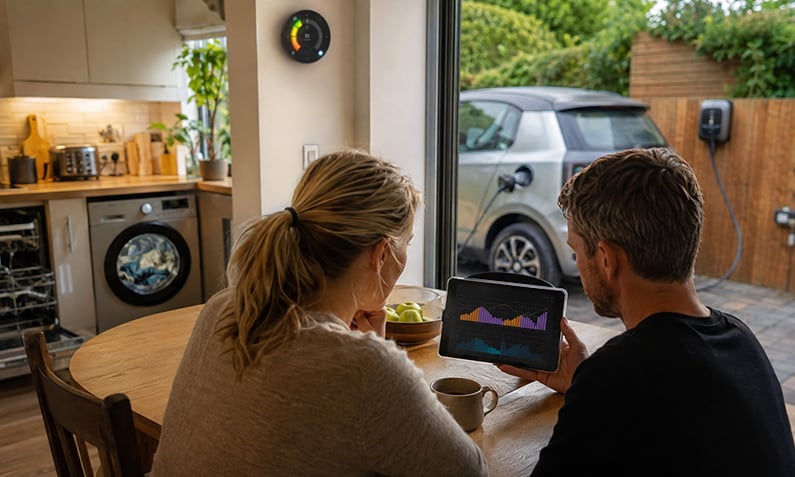
Intelligent Octopus Go is Octopus’s electric-vehicle tariff, which smart-charges an eligible car overnight from around 8p per kWh, against the July 2026 price cap electricity rate of 26.11p per kWh. You tell the app when you need the car ready and how much charge you want, and it schedules charging across the cheapest available overnight hours, using a window of up to six hours.

The cheap overnight rate also covers the rest of your home during that window, so you can run a dishwasher, washing machine or home battery charge at the same low price. Octopus reports that over the year from May 2025 to April 2026, customers on this tariff typically saved around £771 compared with its Flexible variable tariff, though your own saving depends on how much you charge and how much household use you can move into the cheap window.

In 2026, Octopus is applying the six-hour smart-charging limit automatically, noting that around 80% of sessions already use less than six hours. Intelligent Octopus Go is worth it if you own a compatible EV or charger and can shift meaningful electricity use overnight; it delivers little if you rarely charge at home. Our guide to Intelligent Octopus smart energy covers eligibility in more detail.

Not sure which tariff fits your usage?

Compare household energy deals across the market before you switch.

Which Octopus tariff is cheapest for your household?

The cheapest Octopus tariff depends on how and when you use energy, not on a single headline number. For most standard households with typical, spread-out usage, the practical choice is between Flexible for zero commitment and a 12-month fixed tariff for price certainty.

  • If you want no exit fees and a small discount to the cap, Octopus Flexible is the low-effort option.
  • If you want a predictable bill and a fix is priced below the current cap, a 12-month fixed tariff locks that in, subject to any exit fee.
  • If you have a smart meter and can shift usage off peak, Tracker or Agile can beat cap unit rates in favourable market conditions.
  • If you drive an EV and can charge overnight, Intelligent Octopus Go offers the lowest unit rate of the range in its overnight window.

Remember standing charges apply on every tariff regardless of usage, so a very low unit rate does not eliminate the fixed daily cost. For July 2026, Ofgem set the electricity standing charge at 57.19p per day and gas at 29.04p per day. Compare the whole annual estimate, not just the headline unit rate, before switching.

How to switch to Octopus with confidence

Switching to Octopus completes within 21 days under Ofgem’s switching rules, and you get a 14-day cooling-off period during which you can cancel without penalty. You do not lose supply during a switch and there is no interruption to your gas or electricity, because it is a billing change, not a physical reconnection.

Before you switch, take a meter reading on your changeover date so your old and new suppliers bill accurately, and check whether your existing tariff carries an exit fee for leaving early. If you are switching onto an Octopus smart tariff such as Tracker, Agile or Intelligent Octopus Go, you will need a working smart meter, which Octopus can arrange if you don’t already have one.

Octopus has consistently earned strong independent customer-service ratings for several consecutive years, though as with any supplier some households report billing or smart-meter data issues. If a problem is not resolved, you can escalate to the Energy Ombudsman after eight weeks, and Citizens Advice offers free guidance on energy complaints and the Warm Home Discount. Households in vulnerable circumstances can also ask to join the Priority Services Register for extra support.

Check energy tariffs for your postcode

FAQs about octopus energy

Does Octopus Energy charge exit fees?

Octopus Flexible, its standard variable tariff, has no exit fees, so you can leave at any time without a charge. From March 2026 Octopus moved back towards applying exit fees on some fixed tariffs, so a newer 12-month fix may charge you for leaving early. Always check the specific terms of the exact product before you sign up.

Is Octopus Energy really cheaper than the price cap?

Octopus says it has never charged the full Ofgem price cap on its Flexible variable tariff among large suppliers, and it typically prices slightly below the cap. The saving is usually modest, often only a few pounds a month, so treat it as a small ongoing discount rather than a large one. Its wholesale-linked and EV tariffs can save considerably more if your usage pattern suits them.

Do I need a smart meter for Octopus smart tariffs?

Yes. Tracker, Agile and Intelligent Octopus Go all require a working smart meter, because they price by the day or half hour and need to record when you use energy. If you don’t have one, Octopus can arrange installation, usually before or shortly after you move onto the tariff. Standard tariffs like Flexible and fixed deals do not require a smart meter.

How long does it take to switch to Octopus Energy?

A switch to Octopus completes within 21 days under Ofgem’s switching rules, and you keep your supply throughout with no physical disconnection. You also get a 14-day cooling-off period during which you can cancel without penalty. Taking a meter reading on your switch date helps ensure your final and opening bills are accurate.

Is Octopus Energy 100% renewable?

Octopus supplies electricity backed by 100% renewable sources through its green tariffs, meaning it matches customers’ electricity use with renewable generation and certificates. Gas is not renewable in the same way, though some suppliers offset or partly green it. Check the specific tariff details, as green claims vary by product and can change over time.

What is the cheapest Octopus tariff for an average home?

For a typical household with usage spread through the day, the practical choice is between Octopus Flexible for no commitment and a 12-month fixed tariff for price certainty. Neither will slash your bill significantly compared with the cap. The larger savings come from smart tariffs like Tracker, Agile or Intelligent Octopus Go, but only if you can shift usage to cheaper times.

Can I get Intelligent Octopus Go without an electric car?

Intelligent Octopus Go is designed for households with an eligible electric vehicle or compatible charger, as its cheap overnight rate is tied to smart-charging the car. Without an EV you cannot access the tariff, though the cheap overnight window also covers other home use for those who qualify. If you have a home battery, that can help you make the most of it.

What happens to my Octopus tariff when a fixed deal ends?

When an Octopus fixed tariff reaches its end date, you are moved onto the Flexible variable tariff unless you actively choose a new deal beforehand. Octopus usually contacts you in advance with your options. It is worth comparing tariffs at that point, because rolling onto the variable rate rarely gives you the best available price.

Does Octopus offer the Warm Home Discount and support for vulnerable customers?

Octopus participates in the Warm Home Discount scheme, which gives eligible low-income households a one-off credit towards their winter electricity costs. Eligibility is set by government rules rather than the supplier. Households in vulnerable circumstances can also ask to join the Priority Services Register for extra help such as priority support during outages and accessible bills.

What can I do if Octopus bills me incorrectly or loses my meter data?

First raise the issue directly with Octopus and keep a record of your meter readings and correspondence, as accurate readings are the strongest evidence in a billing dispute. If it is not resolved within eight weeks, or you reach deadlock sooner, you can escalate free of charge to the Energy Ombudsman, whose decision is binding on the supplier. Citizens Advice can also help you prepare a complaint.

Can I switch to Octopus if I rent my home?

If you pay the energy bill directly and your name is on the account, you are usually free to switch supplier as a tenant, even in rented accommodation. If energy is included in your rent or the landlord holds the account, you generally cannot switch without their agreement. Check your tenancy agreement before making any changes.

Also Read Related Articles


Information correct as of 3 July 2026. Prices, tariffs, policy details and providers change frequently, so please check the latest details before making a decision. This article is for general information only and does not constitute financial advice. Free Price Compare is authorised and regulated by the Financial Conduct Authority (FCA).

4000+ reviews