





European Health Insurance Card: What UK Travellers Need

Written by Prajesh Manvar
Reviewed by Brijesh Patel
7 min read
Updated: 18 Sep 2026
European Health Insurance Card: What UK Travellers Need

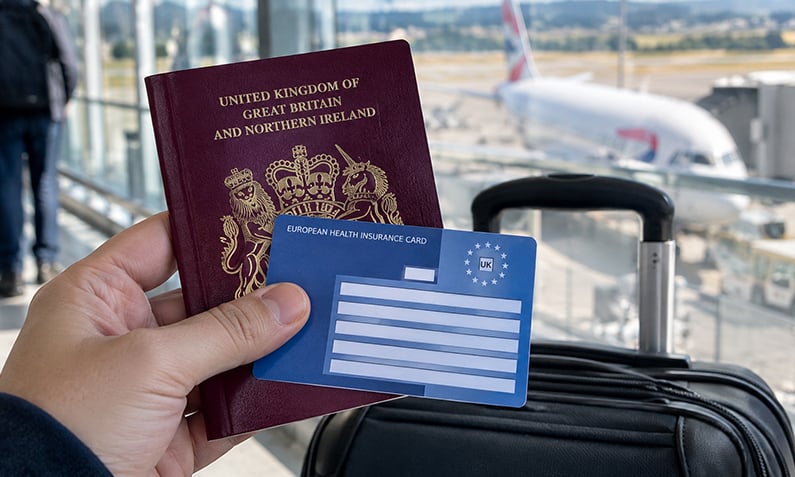
The European Health Insurance Card (EHIC) is a free card that lets you access medically necessary state healthcare when travelling in the EU, on the same basis and at the same cost as a local resident. For most UK residents the EHIC has been replaced by the UK Global Health Insurance Card (GHIC), though existing EHICs stay valid until their printed expiry date, according to the NHS.

Neither card is private cover, and neither replaces travel insurance. They give you access to state-funded treatment abroad, but they do not pay for private care, mountain rescue or a flight home. Free Price Compare sources this guidance from the NHS, gov.uk and ABI publications so you can see exactly what each card does, what it costs (nothing) and where private medical insurance fits alongside it.

Quick Answer: European Health Insurance Card

  • Both the EHIC and the UK GHIC are free and the GHIC lasts up to 5 years – apply only through the NHS website, never a copycat site that charges a fee (NHS).
  • The GHIC gives access to medically necessary state healthcare across the EEA and some other countries, including care for pre-existing conditions, on the same basis as a local resident (NHS).
  • Neither card covers private treatment, mountain rescue or medical repatriation, so the NHS advises holding travel insurance as well.
  • You can apply for a UK GHIC up to 9 months before your current card expires, and cards typically arrive within 15 working days (NHS).
  • UK health insurers paid a record level of private medical insurance claims in 2024, with claims spending rising from the previous year., as NHS waiting lists stayed high (ABI, January 2026).

Last updated: September 2026

Written by the Free Price Compare editorial team | Reviewed September 2026

What is the European Health Insurance Card and does it still exist?

The European Health Insurance Card (EHIC) still exists but has been largely replaced for UK residents by the UK Global Health Insurance Card (GHIC), according to the NHS. If you hold an EHIC issued before the switch, you can keep using it until the expiry date printed on the card. Once it expires, you apply for a UK GHIC to replace it. A small group can still get a new UK-issued EHIC rather than a GHIC, including EU, Swiss, Norwegian, Icelandic or Liechtenstein citizens who were living in the UK before 1 January 2021, some UK state pensioners living in the EU on an S1 form, and certain frontier workers. For everyone else, the GHIC is the current card.

Both cards do the same core job: they let you access state-provided healthcare during a temporary stay abroad, on the same terms as a resident of the country you are visiting. The change of name follows the UK’s departure from the EU and the Trade and Cooperation Agreement that preserved reciprocal healthcare arrangements.

How does a GHIC card differ from the EHIC?

The GHIC differs from the EHIC by offering slightly broader geographic cover than the older UK EHIC, though the day-to-day protection is the same. Both give access to medically necessary state healthcare across the European Economic Area on a same-as-a-local basis, and both work as proof of UK residency for treatment in Australia, Guernsey, Jersey and the Isle of Man. The GHIC additionally counts as proof of UK residency for state-funded treatment in Montenegro, St Helena, Ascension Island and Tristan da Cunha, which the EHIC does not cover.

The practical takeaway is straightforward: if your EHIC is still in date, there is no urgency to swap it for holidays in the EU. If it has expired, or you are visiting one of the extra GHIC territories, apply for the GHIC. Our fuller comparison of the two cards is set out in the EU health insurance card guide covering GHIC and EHIC.

What does the European health insurance card cover?

The European health insurance card covers medically necessary state healthcare while you are temporarily abroad, including A&E visits, emergency treatment and routine care that cannot wait until you return home. Cover is provided on the same basis as a local resident, so if locals pay a charge for a treatment, you pay it too. The card also covers ongoing treatment for pre-existing conditions and routine maternity care where that care becomes necessary during your stay, according to NHS guidance.

What the card does not do matters just as much. It does not cover private hospitals or private clinics, and it does not pay for mountain rescue or medical repatriation, the cost of flying you back to the UK. It is not a substitute for travel insurance, and the NHS advises holding both. If you have a health concern before travelling, speak to your GP or NHS 111 rather than relying on a card to solve it abroad.

  • Covered: emergency and medically necessary state treatment, including for pre-existing conditions, on the same terms as a local.
  • Covered: routine care that becomes necessary during your stay, such as dialysis or oxygen therapy arranged in advance with the provider.
  • Not covered: private treatment, mountain rescue, or repatriation back to the UK.
  • Not covered: care in a country outside the scheme, or planned treatment you travel specifically to receive.

Compare private health insurance quotes

Does the European health card cover pre-existing medical conditions?

Yes, the European health card covers treatment for pre-existing medical conditions where that treatment becomes medically necessary during a temporary stay abroad. A UK resident with a long-term condition who needs routine dialysis, for example, can arrange it in advance with a state provider in the country they are visiting and use the GHIC or EHIC to access it on the same terms as a local. This is a clear difference from private medical insurance, which usually excludes pre-existing conditions or handles them through a moratorium.

There are limits. The card covers state care only, so private clinics fall outside it, and some routine treatments still carry a patient charge that locals also pay. For planned treatment you travel specifically to receive, a different route applies, the S2 scheme, arranged before you go. Private cover works differently again: our explainer on private medical insurance and existing conditions sets out how underwriting and moratoriums affect what you can claim for.

Does the European health card cover pre-existing medical conditions

How do I apply for a European health insurance card online?

Apply for a UK GHIC or UK EHIC free of charge through the official NHS service using your National Insurance number, according to the NHS. You can add a spouse, civil partner and children to the same application so the household is covered together, and cards typically arrive by post within 15 working days of approval. You can apply up to 9 months before your current card expires, and there is no deadline to apply if you do not currently hold one.

Only use the official NHS route. Unofficial copycat websites charge a fee to forward an application that is free to make yourself. The gov.uk and NHS guidance is clear that no fee is required, so if a site asks for payment to process your card, it is not the official service. If your card has not arrived before you travel and you need treatment, you can apply for a Provisional Replacement Certificate, which gives the same cover, but only from the point at which you need care.

Beware paid EHIC and GHIC websites

Applying for a GHIC or UK EHIC is always free, so any site charging a processing fee is exploiting travellers, not providing an official service. The NHS Counter Fraud Authority has warned that certain websites advertise themselves as official application handlers and charge for simply forwarding your details to the NHS, without making clear you can do this yourself at no cost. The NHSCFA estimates that £824,000 of NHS funding is vulnerable to reciprocal healthcare fraud. The authority estimates around £824,000 of NHS funding is vulnerable to reciprocal healthcare fraud linked to EHIC, GHIC and Provisional Replacement Certificate expenditure.

Action Fraud has similarly reported criminals building fake websites that mimic the NHS, promising to fast-track or manage your application before charging an up-front fee. Older reports suggest copycat sites have sometimes charged fees to process EHIC or GHIC applications, though those figures are historic and used here only to show the scale of the problem. The safest check is simple: the genuine card costs nothing, so never enter payment details to apply.

Planning a trip abroad?

See exactly what health cover you need for travel and where the gaps are.

Do I still need travel insurance with a GHIC or EHIC?

Yes, you still need travel insurance alongside a GHIC or EHIC because the card leaves major gaps the NHS explicitly warns about. The card does not pay for private treatment, mountain rescue, or medical repatriation, the cost of flying you home if you are too ill to travel by normal means. It also does not cover non-medical losses such as cancelled trips, lost baggage or missed departures. The ABI said its members paid out £472 million across more than 500,000 travel insurance claims in 2024., according to the ABI, which shows how often travellers rely on that separate cover.

Think of the card and travel insurance as complementary, not alternatives. The card reduces the bill for state treatment abroad, which can in turn lower any travel insurance excess or claim. Travel insurance then handles repatriation, private care and the wider costs of a disrupted trip. If you have a health condition, a specialist travel policy that covers it is worth comparing carefully.

Where does private medical insurance fit in?

Private medical insurance (PMI) covers planned private treatment in the UK, such as diagnostics, consultations and surgery for new, acute conditions, and sits alongside the NHS rather than replacing it. Neither the EHIC nor the GHIC provides private cover of any kind, and PMI does not replace either card for state care abroad, so the two products solve different problems. PMI generally does not cover emergencies and A&E, which remain the NHS’s role, ongoing management of chronic conditions, or pre-existing conditions, which are usually excluded or handled through a moratorium.

UK demand for private cover has risen sharply as NHS waiting times have stayed high. Health insurers processed a record £4 billion in individual and workplace PMI claims in 2024, up 13% on 2023, with 6.5 million people covered, according to the ABI in January 2026. Against that backdrop, the NHS waiting list for elective treatment stood at 7.33 million cases in July 2026 based on NHS England referral-to-treatment data. If you are weighing up cover, our health insurance comparison guide explains cover levels, excess and underwriting.

See private medical care costs for 2026

How do the two cards and private cover compare at a glance?

The three products cover different ground: the EHIC and GHIC handle state care abroad for free, while private medical insurance is paid cover for private treatment, mainly in the UK. The table below sets out the practical differences so you can see which fills which gap.

Feature EHIC / GHIC Private medical insurance
Cost Free Monthly or annual premium
Where it works State care abroad (EEA and some other countries) Mainly private treatment in the UK
Emergency A&E abroad Covered on a local-resident basis Not the main purpose; A&E is the NHS
Pre-existing conditions Covered where care becomes necessary abroad Usually excluded or via a moratorium
Repatriation home Not covered Not covered (travel insurance handles this)

Figures are indicative and may change.

For most travellers the right answer is a free card plus travel insurance. Private medical insurance is a separate decision about how you access planned care in the UK. If you want to understand what a UK policy pays for, our review of Bupa health insurance value works through a real provider’s cover.

How do the two cards and private cover compare at a glance

Compare UK health insurance policies

FAQs about european health insurance card

Is the European health insurance card the same as the GHIC?

No. The UK GHIC has replaced the EHIC for most UK residents, though both give the same core cover for state healthcare abroad. If you hold a valid EHIC you can keep using it until it expires, then apply for a GHIC. A small group, such as certain EU citizens living in the UK before 2021, can still be issued a UK EHIC rather than a GHIC.

How much does the European health insurance card cost?

Nothing. Both the EHIC and the UK GHIC are free and are applied for through the official NHS service. Any website that charges a fee to process your application is a copycat site, not the official route. The NHS Counter Fraud Authority has warned travellers not to pay for a card that costs nothing.

How do I claim a refund for emergency treatment abroad with an EHIC?

If you paid for state treatment abroad that should have been covered, you can apply for a refund through the NHSBSA overseas healthcare service after you return. Keep all receipts, invoices and medical records, as you will need them to support your claim. Refunds apply to state-provided care only, not private treatment, so check the provider was part of the state system.

Do I still need travel insurance if I have a GHIC?

Yes. The GHIC does not cover private treatment, mountain rescue or medical repatriation, and it does not cover cancelled trips or lost baggage. The NHS advises holding travel insurance alongside your card so those gaps are covered. For anyone with a health condition, a policy that covers that condition is worth comparing carefully.

Is the GHIC accepted in Ireland?

Yes. Ireland is part of the arrangements, so UK travellers can access medically necessary state healthcare there on the same basis as an Irish resident. Under the Common Travel Area, UK residents visiting Ireland can also access needs-arising state care without necessarily presenting a card, but carrying your GHIC or EHIC is still sensible.

How long does it take for a European health insurance card to arrive?

Cards typically arrive by post within 15 working days of your application being approved, according to the NHS. Apply well before you travel, and you can apply up to 9 months before your current card expires. If your card has not arrived and you need treatment abroad, you can apply for a Provisional Replacement Certificate, which gives the same cover.

Can I use my GHIC outside the EU?

In some places, yes. Beyond the EEA, the GHIC works as proof of UK residency for state-funded treatment in Australia, Montenegro, St Helena, Ascension Island, Tristan da Cunha, Guernsey, Jersey and the Isle of Man. It does not provide worldwide cover, so for most non-EU destinations you rely on travel insurance instead.

What is a Provisional Replacement Certificate?

A Provisional Replacement Certificate (PRC) gives you the same cover as a GHIC or UK EHIC when you do not have your card with you, or your application has not yet arrived. You can only apply for a PRC from the point you need treatment, and it can cover care that has already taken place, but it cannot be issued in advance of travel.

Does private medical insurance replace the EHIC or GHIC?

No. Private medical insurance covers planned private treatment, mainly in the UK, and does not provide state care abroad. The EHIC and GHIC cover state healthcare while you are travelling and are free. The two are separate products for different situations, and neither replaces the other or the NHS.

Can the whole family apply on one European health insurance card application?

Yes. You can add a spouse, civil partner and children to a single NHS application so each person receives their own card. Every member of the family needs their own card to be covered, as the card is personal to the individual. The application is free for everyone included on it.

How often do I need to renew my GHIC?

A UK GHIC lasts up to 5 years, and you renew it through the official NHS service, again free of charge. You can apply for a replacement up to 9 months before the current card expires, which avoids a gap in cover. Set a reminder for the expiry date printed on the card so you are never caught without it before a trip.

Also Read Related Articles


Information correct as of 14 September 2026. Prices, tariffs, policy details and providers change frequently, so please check the latest details before making a decision. This article is for general information only and does not constitute financial advice. Free Price Compare is authorised and regulated by the Financial Conduct Authority (FCA).

4000+ reviews