





Buying a 2nd Hand Car: 11 Essential Checks

March 25th, 2026
Buying a 2nd Hand Car: 11 Essential Checks

Content in this article

Buying a 2nd hand car can be a cost-effective way to get on the road, but it also comes with risks if you do not carry out the right checks.

Whether you are buying from a dealer or a private seller, it is important to understand the condition of the car, its vehicle history report, and how it may affect your future car insurance costs.

Before making a purchase, many drivers choose to compare car insurance to understand how different vehicles impact pricing.

Compare car insurance before you buy your next car.

What Should You Check Before Buying a 2nd Hand Car?

Buying in the used car market requires careful inspection and research.

Key areas to check

Check Why It Matters
Vehicle history Identifies accidents or outstanding finance
Mileage Confirms realistic usage
Condition of the car Highlights wear or damage
Documents Confirms legal ownership
Insurance group Affects future premiums

1. Check the Value of the Car

Before buying, research the value of similar vehicles.

Why this matters

  • helps avoid overpaying
  • highlights suspicious pricing
  • supports negotiation

Understanding the value of the car helps you avoid unnecessary extra cost.

2. Always Take a Test Drive

A test drive is essential when buying a used car.

What to look for

  • smooth gear changes
  • braking performance
  • steering alignment
  • unusual noises

You must have valid insurance to legally drive the vehicle.

Compare Car Insurance

Save up to £518* on your car insurance

3. Inspect the Car in Daylight

Viewing the car in daylight makes it easier to spot:

  • scratches and dents
  • mismatched paint or colour changes
  • visible signs of damage

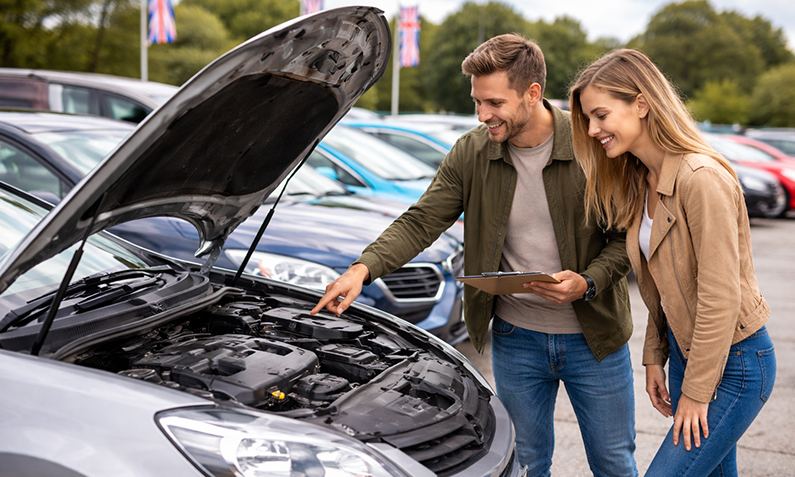
Check under the bonnet and around every part of the vehicle.

4. Check the V5C Log Book

Every car should have a valid V5C log book.

What to verify

  • registered keeper details
  • VIN matches the vehicle
  • full previous ownership history

This confirms the seller has the legal right to sell the car.

5. Watch for Signs of “Cut and Shut” Repairs

Some vehicles may have been poorly repaired after accidents.

Warning signs

  • uneven panels
  • mismatched paint
  • signs of welding

These vehicles may have serious potential problems and can be unsafe.

6. Review Service and MOT History

A well-maintained car should have:

  • a full service history of the vehicle
  • consistent mileage
  • valid MOT test records

Checking the car’s MOT history helps identify ongoing issues.

7. Carry Out a Vehicle History Check

A vehicle history report can reveal important details.

What it includes

  • outstanding finance
  • theft records
  • accident history
  • number of previous owners

An HPI check is a simple way to identify hidden issues and often includes a data guarantee.

8. Verify the Vehicle Identification Number (VIN)

The VIN should match across:

  • the V5C log book
  • the vehicle chassis
  • windscreen or engine bay

Make sure it matches the car’s registration details.

9. Check Locks, Windows and Interior

Test all internal features:

  • door locks
  • windows
  • dashboard controls

Faults may indicate poor maintenance or hidden damage.

10. Check Mileage and Signs of Tampering

Mileage should match the car’s condition.

Look for

  • worn pedals and seats
  • inconsistent records
  • signs of tampering

Mileage discrepancies can indicate fraud.

11. Inspect Tyres and Alignment

Tyres can reveal issues with the car.

Check for

  • tread depth
  • uneven wear
  • alignment issues

Excessive wear may indicate suspension or steering problems.

What Should You Check Before Buying a 2nd Hand Car

How Does a 2nd Hand Car Affect Insurance Costs?

The vehicle you choose directly impacts your premium.

Key factors insurers consider

Factor Impact
Insurance group Higher group = higher premium
Engine size Larger engines cost more
Value Higher value increases risk
Repair costs Expensive parts increase cost

Checking car insurance information before buying helps avoid unexpected costs.

What Type of Insurance Do You Need for a Used Car?

There are different levels of cover available.

Types of cover

Cover Type Description
Third party Covers damage to others
Third party fire and theft Adds theft protection
Comprehensive Covers your own vehicle

Comprehensive cover can provide more protection and peace of mind.

You may want to explore comprehensive car insurance to understand what is included.

Explore comprehensive cover options for used cars.

Can You Get Insurance Before Buying the Car?

Yes, you can get quotes before purchasing.

Why this is important

  • helps you budget accurately
  • avoids unexpected costs
  • allows better comparison

Many drivers check insurance before committing to a vehicle.

Yes, there are legal requirements you must follow.

  • the seller must have the legal right to sell the car
  • the car must have a valid MOT test (if required)
  • the vehicle must be taxed or declared off-road
  • you must arrange insurance before driving

Under the Consumer Rights Act, cars bought from dealers must be roadworthy and as described.

Compare Car Insurance

Save up to £518* on your car insurance

What Are Common Scams When Buying a Used Car?

There are risks in the used car market if checks are not carried out.

Common scams

  • cloned vehicles using false number plates
  • fake or altered vehicle history reports
  • hidden water damage or flood damage
  • mileage tampering

Always carry out full car checks before buying.

Where Is the Safest Place to Buy a Second-Hand Car?

There are several options available.

Safer buying options

Option Benefit
Dealership Legal protection
Approved sellers Vehicles inspected
Private seller Lower price but higher risk

Dealer purchases offer more protection, while private sales require more careful checks.

How Can I Get a Cheap Car History Check in the UK?

A vehicle check helps identify potential issues.

What to look for

  • finance status
  • theft records
  • accident history

An HPI check is one of the most common options and can help avoid costly mistakes.

What Payment Methods Are Safest When Buying a Used Car?

Choosing the right method of payment is important.

Safer methods

  • credit card (for added protection)
  • bank transfer

Avoid

  • large cash payments
  • unverified transactions

Using secure payment methods can help protect your purchase.

How Do You Transfer Ownership After Buying a Used Car?

Ownership must be transferred correctly.

Steps to follow

  1. complete the V5C log book
  2. update the new keeper details
  3. submit to DVLA
  4. receive confirmation

This ensures the vehicle is registered in your name.

Compare quotes and find the right car insurance today.

Common Mistakes to Avoid When Buying a 2nd Hand Car

Mistakes to avoid

  • skipping a used car inspection
  • not checking history reports
  • ignoring warning signs
  • failing to verify documents

Taking time to complete checks reduces risk.

How to Compare Car Insurance for a Used Car

Comparing policies helps you find the right deal.

Steps to follow

  1. gather vehicle details
  2. compare quotes
  3. review cover levels
  4. check excess and features
  5. choose a suitable policy

Many drivers choose to compare car insurance providers before making a decision.

How to Compare Car Insurance for a Used Car

Last Updated 19 March 2026

FAQs About Buying a 2nd Hand Car

What should I check when buying a 2nd hand car?

You should check the vehicle history, mileage, condition and documents. These help confirm the car is safe and legally owned.

Is it safe to buy from a private seller?

Yes, but it requires more checks. Always verify documents and carry out a vehicle history check.

How does a used car affect insurance costs?

Cars in lower insurance groups are usually cheaper to insure. Engine size and value also affect premiums.

Can I test drive a car without insurance?

No, you must be insured to drive legally. Arrange temporary cover if needed.

What documents should I check before buying?

Check the V5C log book, MOT history and service records. These confirm ownership and condition.

Is mileage important when buying a used car?

Yes, but it should be considered alongside condition and service history.

Should I compare insurance before buying?

Yes, comparing insurance helps you understand the total cost of ownership.

Also Read Related Articles

The Importance of Comparison Sites

Get Cheaper Car Insurance – Even with Points or Claims

We help you find policies that suit your situation and budget.

4000+ reviews