

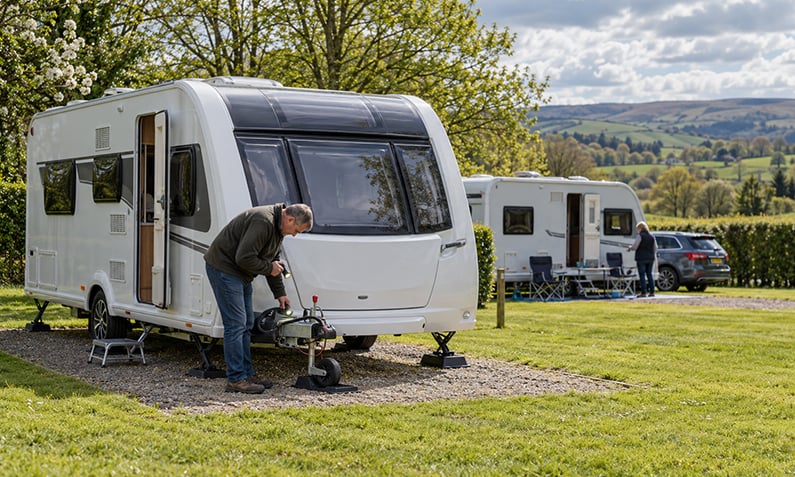



Caravan Insurance Comparison: A Plain-English Guide

Written by Pratik Aghera
Reviewed by Brijesh Patel
7 min read
Updated: 2 Nov 2026
Caravan Insurance Comparison: A Plain-English Guide

Caravan insurance comparison is the process of weighing up cover, limits and price across several specialist insurers before you buy, so you end up with the right protection for your touring or static caravan rather than the cheapest headline figure. Prices in the UK vary widely, which is why comparing like-for-like matters.

Free Price Compare helps UK van and leisure-vehicle owners weigh cover against price, and we source market context from bodies such as the Association of British Insurers (ABI) and the Financial Conduct Authority (FCA). This explainer defines the cover levels, sets out what pushes your premium up or down, and shows how to compare quotes properly so you are not caught out by a low price that hides a thin policy.

Quick Answer: Caravan Insurance Comparison

  • Caravan insurance is not legally required, unlike motor insurance for a towing vehicle.
  • Touring caravan quotes ranged from £80 to £410+ (InsureMy data, June 2026).
  • Public liability cover of £5m is offered by some insurers, not guaranteed market-wide.
  • Secure storage, a tracker and an alarm can lower your premium but do not guarantee a discount.
  • New-for-old cover is often limited to caravans up to 10 years old at policy start.

Last updated: October 2026

Written by the Free Price Compare editorial team | Reviewed October 2026

What’s covered in caravan insurance?

Caravan insurance covers a touring or static caravan against risks such as accidental damage, fire, flood, storm, theft and vandalism, and usually extends to contents, equipment and the awning up to a stated limit. Most specialist policies also include public liability cover, which protects you if someone is injured or their property is damaged because of your caravan.

Cover is not identical across the market. A touring policy typically protects the caravan on the road, in storage and while pitched; a static policy focuses on the unit on its site, plus contents and site-related risks. Some insurers add loss-of-use cover, which pays towards alternative accommodation if your caravan is unusable after an insured event. One provider, for example, offers loss-of-use up to £2,000 for up to 14 days (Everywhen, October 2026), though limits differ by insurer.

  • Accidental damage, fire, flood, storm and impact damage to the caravan.
  • Theft and attempted theft, including of fitted equipment and contents.
  • Public liability cover (limits vary; £5 million is offered by some insurers).
  • Contents, awning and equipment up to the sums you insure.
  • Optional extras such as European use, breakdown recovery and loss of use.

When you compare, check the sums insured rather than the premium alone. Under-insure the caravan or its contents and a claim can be reduced proportionately. It helps to understand the basics of what vehicle insurance really covers before you set your limits.

Compare caravan and van cover options

Caravan insurance is not a legal requirement in the UK, which is the key difference from motor insurance. A touring caravan is an unpowered trailer, so it does not need its own insurance to be towed legally. What is legally required is valid motor insurance on the vehicle towing it, under the Road Traffic Act 1988.

Towing a caravan without caravan insurance is therefore not illegal. Your car or van policy may extend third-party liability to a caravan while it is attached and being towed, but that is not automatic and rarely covers the caravan itself for damage or theft. Check your motor policy wording, because third-party cover for a trailer in transit is different from insuring the caravan as a valuable asset in its own right.

Static caravans are often subject to a site rule rather than a legal one. Many holiday parks require proof of insurance as a condition of keeping your unit on their pitch, so while the state does not compel it, your site operator frequently does. Lenders and finance agreements can impose the same condition.

How much does caravan insurance cost?

Caravan insurance cost in the UK is highly risk-specific, with no single verified market-wide average, but published quote data gives a realistic range. One intermediary reported touring caravan premiums from £80 to £410 or more, with an average of £162.45 (InsureMy, based on quotes from January 2025 to June 2026). Safeguard advertised caravan cover from £97, stating that 10% of its new static or touring customers paid that price between 1 December 2025 and 31 May 2026.

Treat those figures as indicative, not a guaranteed price for your caravan. Caravan-specific averages are not published by the ABI, so avoid treating general motor-insurance numbers as caravan prices. For context on the wider market, the ABI reported the average motor premium at £560 in Q1 2026, up 0.2% on the previous quarter (according to the ABI) — relevant background on claims-cost pressure, but not a caravan price.

Source and basis Price point Period
Intermediary touring-caravan quote data (average) around £162 Jan 2025–Jun 2026
Intermediary touring-caravan quote data (range) £80 to £410 or more Jan 2025–Jun 2026
Provider advertised entry price (10% of new buyers) from £97 Dec 2025–May 2026

Figures are indicative and may change.

Pricing has been moving across insurance generally. Motor-insurance pricing has varied between providers, reinforcing the value of comparing several quotes rather than renewing automatically. That spread is the strongest argument for comparing several quotes rather than renewing automatically.

How much does caravan insurance cost

See how comparison can cut your premium

What affects my caravan insurance premium?

Your caravan insurance premium is driven mainly by the caravan’s value and age, where it is stored, the security fitted, how you use it and your claims and towing history. Insurers price each of these as a measure of theft and damage risk, so two owners with identical caravans can pay very different premiums.

  • Value and age: higher-value and newer caravans cost more to replace, which raises the premium.
  • Storage: a caravan kept at a CaSSOA-rated secure storage site usually attracts a lower price than one on a driveway or roadside.
  • Security: approved wheel clamps, hitch locks, alarms and trackers can reduce the premium, though no provider guarantees a fixed discount.
  • Usage and mileage: frequent touring, overseas trips and higher annual use increase exposure and can raise the cost.
  • No-claims and towing experience: a clean claims record and towing experience are rated favourably by most insurers.

Servicing matters too. Some insurers offer preferential rates where a touring caravan is serviced at least once every two years (Everywhen, October 2026), because a well-maintained unit is less likely to suffer certain claims. Registering your caravan with CRiS (the Caravan Registration and Identification Scheme) also helps with theft recovery and can support a claim.

These variables behave similarly to the factors that make insurance quotes differ between comparison sites, which is why a single quote rarely reflects the best available price.

Compare before you renew

Prices can vary between insurers, so shopping around can pay.

How do you compare caravan insurance quotes in the UK?

To compare caravan insurance quotes in the UK, match cover on a like-for-like basis first, then compare price, because the cheapest policy is not always the best value. Start by setting consistent sums insured for the caravan, contents, equipment and awning, then check each quote against the same cover level before you look at the premium.

  • Decide between new-for-old and market-value cover. New-for-old is often limited to caravans up to 10 years old at policy start, while market value may be offered up to 30 years (Everywhen, October 2026).
  • Check the public liability limit. Some insurers include £5 million, but it is not universal, so confirm the figure on each quote.
  • Compare the excess, not just the premium. A low price with a high excess can cost more at claim time.
  • Confirm storage and security requirements. A quote assuming secure storage may be void if your caravan is kept elsewhere.
  • Add up optional extras you actually need, such as European use, breakdown recovery and loss of use.

Specialist caravan insurers and brokers often price leisure-vehicle risks more keenly than general providers, so a specialist route can be competitive. Avoid assuming your renewal is the benchmark: renewal quotes sometimes carry over last year’s value and cover, which may no longer reflect your caravan. The same discipline that applies to the 21-day renewal rule for motor cover is useful here — start comparing well before your policy lapses.

Free Price Compare lets you weigh cover and price across a panel of UK insurers in minutes, and the same answer-first approach we apply to gathering the right information to compare cover applies to caravans: have your details ready and compare identical cover.

Can I take my caravan outside the UK?

You can take your caravan outside the UK, but standard caravan insurance usually covers UK use only, so you need to confirm or add European use before you travel. Many insurers offer overseas cover as an optional extra, often with a maximum number of days per year, and your motor policy for the towing vehicle must also extend to the countries you are visiting.

Overseas trips are rated as higher risk, so adding European use can increase your premium. Check the territorial limits, the day limit, and whether breakdown recovery abroad is included or a separate add-on. Carry proof of cover, because some sites and border checks may ask for it. If you tow regularly in Europe, factor the extra days and any trip limit into your comparison rather than buying the cheapest UK-only policy and finding it does not travel.

Start a caravan and van insurance comparison

Does my home contents insurance already cover caravan belongings?

Home contents insurance rarely provides full cover for items kept in or used from a caravan, and it almost never covers the caravan itself. Some home policies extend limited personal-possessions cover to belongings temporarily away from home, but that is usually capped, often excludes items left in an unattended caravan, and does not insure the structure, fittings or awning.

Treat caravan contents as a separate consideration within a specialist caravan policy. That way, equipment, gas bottles, awnings and personal effects are insured on terms built for leisure use, with limits you can set to match what you actually carry. Relying on a home policy for caravan belongings is a common gap that only becomes clear at claim time, so check the wording of both policies and insure contents where they are protected.

Does my home contents insurance already cover caravan belongings

FAQs about caravan insurance comparison

Is it illegal to tow a caravan without insurance?

No, it is not illegal to tow a caravan without caravan insurance, because a touring caravan is an unpowered trailer and does not require its own policy. What is legally required is valid motor insurance on the vehicle towing it. Your car or van policy may extend third-party liability to the caravan while it is attached, but this does not cover the caravan itself for damage or theft.

How much does caravan insurance cost on average?

There is no verified UK-wide average caravan insurance price, but published quote data gives a guide. One intermediary reported touring caravan premiums from £80 to £410 or more, averaging around £162 (data collected January 2025 to June 2026). Your own price depends on the caravan’s value, storage, security and usage, so comparing several quotes is the only reliable way to find your cost.

Is static caravan insurance more expensive than touring caravan insurance?

There is no verified rule that static caravan insurance always costs more or less than touring caravan insurance, because the two cover different risks. Static cover focuses on the unit on its site plus contents and site-related perils, while touring cover protects the caravan on the road, in storage and while pitched. Price depends on value, location, security and usage rather than the type alone.

What’s covered in caravan insurance as standard?

Standard caravan insurance typically covers accidental damage, fire, flood, storm, theft and vandalism, plus contents, equipment and the awning up to stated limits. Most specialist policies also include public liability cover. Extras such as European use, breakdown recovery and loss of use are usually optional. Always check the sums insured and limits on each quote rather than assuming cover is identical.

Can I insure an older caravan for new-for-old?

New-for-old caravan cover is often limited to caravans up to around 10 years old at the time you take out the policy. Older caravans are usually insured on a market-value basis, which some insurers offer up to about 30 years old. Market value pays the caravan’s worth at the time of loss, so set your sum insured realistically to avoid under-insurance.

Does a tracker or secure storage guarantee a cheaper premium?

No provider guarantees a fixed discount for a tracker, alarm or secure storage, but these security and storage measures can reduce your premium because they lower theft risk. Keeping a caravan at a recognised secure storage site and fitting approved locks or a tracker often helps. The actual effect varies by insurer, so compare quotes with your security details entered accurately.

Is specialist caravan insurance cheaper than general insurers?

Specialist caravan insurers and brokers often price leisure-vehicle risks more keenly than general providers, because they underwrite caravans specifically. That does not mean a specialist is always cheapest, so compare specialists alongside wider-market options. Focus on matching cover levels, excess and limits first, then compare the price, rather than assuming any single route is best.

Will my premium rise in 2026?

There is no verified caravan-specific price index for 2026, so caravan premiums cannot be pinned to a single percentage. Pricing can vary between insurers, making comparison a useful way to control your cost. The wide spread between providers makes comparing quotes the best way to control your cost.

What happens if I under-insure my caravan?

If you under-insure your caravan or its contents, an insurer can reduce a claim payout proportionately to the shortfall. For example, insuring a caravan for less than its true replacement value may mean a settlement well below the cost of putting things right. Review your sums insured each year, especially at renewal, because values and the cost of replacement can change.

Do I need caravan insurance if my park requires it?

Many holiday parks require proof of insurance as a condition of keeping a static caravan on their pitch, even though the state does not legally compel caravan cover. Finance agreements can impose the same condition. Check your site’s rules and your lender’s terms, because a contractual requirement is as binding on you as a legal one when you want to keep your caravan on site.

How do I compare caravan insurance quotes properly?

Compare caravan insurance by matching cover on a like-for-like basis before looking at price. Set consistent sums insured, check the public liability limit, compare the excess and confirm storage and security assumptions on each quote. Add only the optional extras you need, such as European use or breakdown recovery, then compare the total price. The cheapest premium with a thin policy is rarely the best value.

Does my motor insurance cover my caravan while towing?

Your car or van insurance may extend third-party liability to a caravan while it is attached and being towed, but this is not automatic and rarely covers the caravan itself for damage or theft. Check your motor policy wording to confirm whether trailer cover is included. For protection of the caravan as an asset, a separate specialist caravan policy is usually needed.

Also Read Related Articles


Information correct as of 17 October 2026. Prices, tariffs, policy details and providers change frequently, so please check the latest details before making a decision. This article is for general information only and does not constitute financial advice. Free Price Compare is authorised and regulated by the Financial Conduct Authority (FCA).

4000+ reviews