

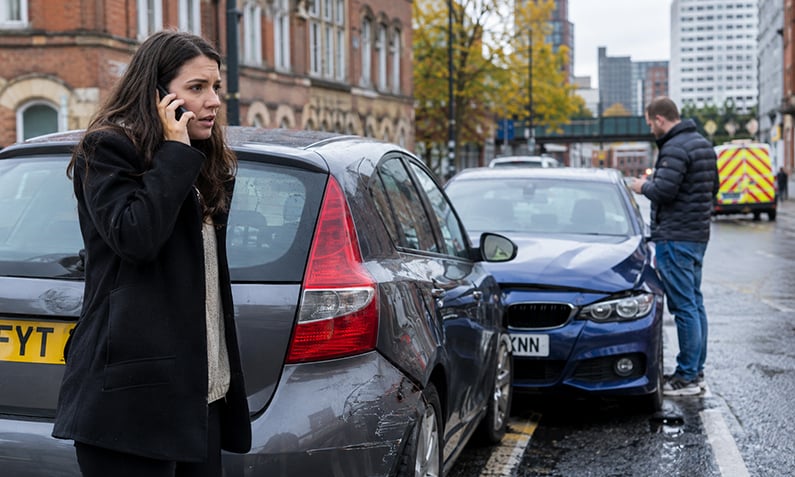




What to Do After a Car Accident Without Insurance | 2026

Written by Pratik Aghera
Reviewed by Prajesh Manvar
7 min read
Updated: 6 Oct 2026
What to Do After a Car Accident Without Insurance | 2026

A car accident without insurance in the UK still means you must stop, exchange details, document the scene and report it, even though driving uninsured is an offence. Stopping and swapping details is a legal duty under the Road Traffic Act 1988 whether or not you were covered, and leaving the scene makes your position far worse.

What happens next depends on two things: whether you were the uninsured driver, or whether the other driver was. The penalties, the compensation routes and the paperwork are completely different for each. This explainer sets out both, with the current UK penalties, the role of the Motor Insurers’ Bureau (MIB), and the practical steps to take before you leave the roadside.

Quick Answer: What to Do After a Car Accident Without Insurance

  • Stop and exchange names, addresses, vehicle and insurance details with anyone involved. Leaving the scene is a separate offence under the Road Traffic Act 1988.
  • If you were driving uninsured, GOV.UK confirms you can get a £300 fixed penalty and 6 penalty points; a court case can bring an unlimited fine, disqualification and seizure of the vehicle.
  • If the other driver was uninsured and you hold comprehensive cover, you can usually claim through your own insurer, and Aviva notes it will often not affect your no-claims discount.
  • Without comprehensive cover, or for personal injury, you may need to claim through the Motor Insurers’ Bureau (MIB), which handles uninsured and untraced driver claims.
  • Report the accident to your insurer straight away even if you do not want to claim, or you risk breaching your policy terms.

Last updated: September 2026

Written by the Free Price Compare editorial team | Reviewed September 2026

First steps at the scene, insured or not

The first steps after any car accident without insurance are the same as for any crash: stop, make sure everyone is safe, and exchange details. Under the Road Traffic Act 1988, every driver involved in an accident that causes injury or damage must stop and give their name, address and vehicle details when asked, and failing to do so is a separate criminal offence regardless of insurance status.

Citizens Advice sets out the standard roadside checklist: do not admit fault, exchange details, gather independent witness contact details, take photographs, and tell your insurer promptly. Do not apologise or accept blame at the scene even if you think you were responsible, because liability is decided later on the evidence, not on what was said in the moment.

  • Record the date, time and exact location, plus weather and road conditions.
  • Note the other vehicle’s make, model, colour and number plate.
  • Take clear photos or video of all vehicles, damage, positions and any skid marks.
  • Get names and contact numbers for the other driver and any independent witnesses.
  • Ask whether anyone is injured and call 999 if so.

Call the police if someone is hurt, if the road is blocked or dangerous, or if a driver refuses to stop or give details. According to GOV.UK, you should report an accident to the police within 24 hours if you could not exchange details at the scene.

What happens if you crash with no insurance?

Crashing with no insurance is a criminal offence in the UK, and GOV.UK confirms police can issue a £300 fixed penalty and 6 penalty points for driving uninsured. If the case goes to court, penalties can escalate to an unlimited fine, disqualification from driving, and seizure of the vehicle, which in some cases can be destroyed.

The fixed penalty is not automatic in every case, and outcomes depend on the circumstances and whether the matter reaches court. What is consistent is that driving without cover is treated seriously, and being at fault in a crash on top of it adds financial liability for the damage you caused.

If you caused the accident while uninsured, you are personally responsible for the other party’s losses. The other driver, or their insurer, can pursue you directly through the small claims court or civil proceedings to recover repair and injury costs, and a court can order you to pay based on the evidence. There is no insurer standing behind you, so any settlement comes out of your own pocket.

Practical priorities if you were the uninsured driver: stop and exchange details, document everything, do not admit liability, and seek legal advice quickly. If you have any legal cover through a home policy or a union, use it. An uninsured-driving conviction also affects future premiums, and an IN10 conviction code stays on your record and pushes up quotes for years, which is why some drivers later compare specialist cover for an IN10 conviction to rebuild affordable insurance.

Compare cover after a conviction

Hit by an uninsured driver: how to claim

If you were hit by an uninsured driver and hold comprehensive cover, you can usually claim through your own insurer for the damage to your car. Aviva notes that a claim involving an uninsured driver will often still go through your policy, and in many cases it will not affect your no-claims discount, though this is not guaranteed and depends on the insurer and the circumstances.

Evidence collected at the scene is what makes this work. The RAC advises recording the time and date, the other car’s make, model and registration number, taking photos or video, collecting witness names and contact details, and telling your insurer even if you do not plan to claim. Where the other driver refuses to give details, Citizens Advice notes your insurer may be able to trace them through the vehicle registration number using the Motor Insurance Database.

Without comprehensive cover, or if you want to claim for personal injury, Ageas explains you may need to go through the Motor Insurers’ Bureau (MIB). Understanding how the claims process works in the UK helps you decide which route protects your finances best.

Hit by an uninsured driver: how to claim

Been hit by an uninsured driver?

Know your options before you claim and protect your no-claims discount.

What is the Motor Insurers’ Bureau and when do you use it?

The Motor Insurers’ Bureau (MIB) is a body funded by UK insurers that compensates people injured or affected by uninsured or untraced drivers. Ageas explains the MIB helps road users claim against uninsured drivers, untraced (hit-and-run) drivers, and certain foreign-registered vehicles when no valid insurance is available to meet the claim.

You typically turn to the MIB when the driver responsible cannot be identified, has no insurance, and you either lack comprehensive cover or are claiming for injury that your own policy does not fully address. West Yorkshire Police notes that an accident victim may pursue civil proceedings against the other driver to recover repair costs, and may also be able to claim through the MIB.

MIB claims can take longer than a standard insurer claim and require the same strong evidence: photos, witness details, the police reference number and a full account of what happened. Keeping every receipt and repair estimate matters, because the MIB assesses your actual losses.

How does car insurance work after an accident?

After an accident, car insurance works by your insurer establishing who was at fault before it pays out or recovers costs, and that liability decision drives everything else. Until liability is agreed, an insurer usually treats a claim as “fault” on your record, even in a genuine non-fault crash, until it recovers its outlay from the other side.

You must report the accident to your insurer promptly whether or not you intend to claim. Not reporting it can breach your policy terms and invalidate cover, which is a common and expensive mistake. Once reported, the insurer investigates, arranges inspection or repair, and pursues the other party where you were not at fault.

Fault affects your no-claims discount and future premiums. A non-fault claim where your insurer recovers everything usually protects your discount, while a fault claim reduces it. Repair costs have been rising, and the Association of British Insurers (ABI) reported that motor premiums stayed broadly stable in Q1 2026 even as the cost of repairs continued to increase, which is one reason claims are scrutinised carefully.

See what affects your renewal price

How to reclaim your insurance excess after a non-fault crash

You can reclaim your insurance excess after a non-fault accident once your insurer confirms the other party was liable and recovers its costs from them. The excess is the amount you agree to pay towards any claim before the insurer covers the rest, and on a genuine non-fault claim it should ultimately be refunded once liability is settled in your favour.

Excess recovery cannot begin until the liability position is clear. Your insurer first needs to confirm who it believes is at fault, and until that is agreed the excess stays with you. If the other driver was uninsured, recovery can involve the MIB or civil action, which lengthens the process.

Keep a record of the excess you paid, chase your insurer for updates, and ask specifically whether excess recovery is being pursued as part of your claim. If your insurer settles at fault or split liability when you believe you were not to blame, you can escalate a complaint, and if unresolved after eight weeks take it to the Financial Ombudsman Service.

Can you settle a car accident privately without insurance?

Yes, you can settle a minor car accident privately without going through insurance, but you must still tell your insurer about the incident, because not reporting it can breach your policy terms even when no claim is made. Private settlement means the drivers agree to sort out the cost of damage between themselves rather than making a claim.

Private settlement can suit very minor, clear-cut damage where both drivers agree the cost and both are insured, avoiding a claim record and a hit to a no-claims discount. The risks are real: hidden damage, a later injury claim, or the other party changing their mind and pursuing you anyway once repair costs come in higher than expected.

Get any agreement in writing, take photographs, and only pay or accept payment once you have seen a proper repair quote. Where the other driver has no insurance and you were not at fault, private settlement rarely protects you, because you have no insurer to fall back on if they refuse to pay, and small claims court may be your only recovery route.

Compare quotes from 130+ insurers

Rebuilding affordable cover after an accident or conviction

Rebuilding affordable cover after a fault accident or an uninsured-driving conviction is possible, but expect higher premiums for a period and shop the whole market rather than auto-renewing. A conviction code such as IN10 for driving without insurance, or AC codes for accident-related offences, stays on your record and raises quotes, so comparing widely matters more than usual.

Comparing across a broad panel gives the best chance of a workable price. Free Price Compare checks car insurance across a panel of more than 130 insurers, which helps drivers with a claim or conviction find insurers that price their situation reasonably rather than declining outright. Around 88 to 89% of quotes run through Free Price Compare are for comprehensive cover (Free Price Compare data, Jan to Jun 2026), and comprehensive is often the level that lets you claim on your own policy after a non-fault crash.

Drivers with an accident-related conviction can also look at cover for AC10, AC20 and AC30 convictions, and it helps to know the questions insurers will ask you so you disclose everything accurately and avoid invalidating a new policy. If you were left without a car after a non-fault crash, check your courtesy car rights after an accident too.

Reviewing recent car insurance claims trends can also help you understand why prices move and where you might save at renewal.

Rebuilding affordable cover after an accident or conviction

FAQs about car accident

What can I do if I got hit while driving with no insurance?

Stop, exchange details, document the scene and gather witness information exactly as an insured driver would. You cannot claim on cover you do not have, so if the other driver was at fault you may need to pursue them directly through the small claims court or, for injury, through the Motor Insurers' Bureau. Being uninsured is still an offence, so seek legal advice about your own position quickly.

Do I go to jail for crashing without insurance in the UK?

Driving without insurance is usually punished by a £300 fixed penalty and 6 penalty points, and prison is not the standard outcome for a first offence. However, if the case goes to court more serious penalties are possible, including an unlimited fine, disqualification and seizure of the vehicle. Custody is generally reserved for cases involving other serious offences alongside the uninsured driving.

Will my no-claims discount be affected if an uninsured driver hits me?

It is often not affected, but this is not guaranteed. If you claim through your own comprehensive policy and your insurer later recovers its costs, most insurers protect your no-claims discount. Until liability is confirmed and recovery succeeds, some insurers may temporarily treat it as a claim, so ask your insurer directly how your discount will be handled.

Do I have to tell my insurer about an accident if I am not claiming?

Yes. Reporting an accident to your insurer is normally a condition of your policy, even when you do not want to claim. Failing to report it can breach your policy terms and could invalidate your cover or cause problems if the other party claims later. A quick notification protects you without necessarily starting a claim.

How do I make a claim through the Motor Insurers' Bureau?

You apply to the Motor Insurers' Bureau when the responsible driver is uninsured or untraced and you cannot recover your losses another way. You will need strong evidence including photos, witness details, a police reference number and a full account of the incident, plus records of your actual losses such as repair quotes and medical costs. MIB claims can take longer than a standard insurer claim.

How do I reclaim my excess after a non-fault accident?

Your excess is refundable on a genuine non-fault claim once your insurer confirms the other party was liable and recovers its costs. Recovery cannot start until the liability position is agreed, so keep a record of the excess you paid and ask your insurer whether it is pursuing excess recovery. If you disagree with a fault or split-liability decision, you can escalate a complaint.

Can I settle a car accident privately instead of using insurance?

You can agree a private settlement for minor damage, but you should still notify your insurer of the incident to avoid breaching your policy terms. Private settlement carries risks such as hidden damage, a later injury claim, or the other party changing their mind. Always get the agreement in writing and only pay against a proper repair quote.

What happens if the other driver refuses to give their details?

Note their vehicle registration number, take photos and video, and get any witness contact details. Your insurer may be able to trace the driver through the registration number using the Motor Insurance Database. You should also report the incident to the police, especially if the driver leaves the scene, as failing to stop is a separate offence.

Can an uninsured driver take me to small claims court after a crash?

Yes. If you were at fault and uninsured, the other driver can pursue you personally through the small claims court or civil proceedings to recover their repair and injury costs, and a judge can order you to pay based on the evidence. With no insurer behind you, any award comes from your own funds, which is why documenting the scene and seeking legal advice matters.

How does fault affect my car insurance after an accident?

Fault determines whether your no-claims discount is protected and how much your premium rises at renewal. A fault claim usually reduces your discount and increases future prices, while a successful non-fault claim where your insurer recovers everything normally protects your record. Until liability is agreed, insurers may record a claim as fault temporarily.

Can I get car insurance again after driving without insurance?

Yes, though a conviction such as IN10 for driving without insurance will raise your premiums for several years and stays on your record. Comparing across a wide panel of insurers gives the best chance of a workable price, as some insurers specialise in pricing convictions rather than declining them. Always disclose the conviction accurately to avoid invalidating the new policy.

Should I see a doctor after a car accident even without visible injuries?

Yes, it is sensible to seek medical advice after any collision, because some injuries such as whiplash or concussion appear hours or days later. A prompt medical record also supports any future personal injury claim, including one made through the Motor Insurers' Bureau if an uninsured driver was responsible. If you feel unwell or in pain, use urgent care or call 111 for guidance.

Also Read Related Articles


Information correct as of 18 September 2026. Prices, tariffs, policy details and providers change frequently, so please check the latest details before making a decision. This article is for general information only and does not constitute financial advice. Free Price Compare is authorised and regulated by the Financial Conduct Authority (FCA).

4000+ reviews