

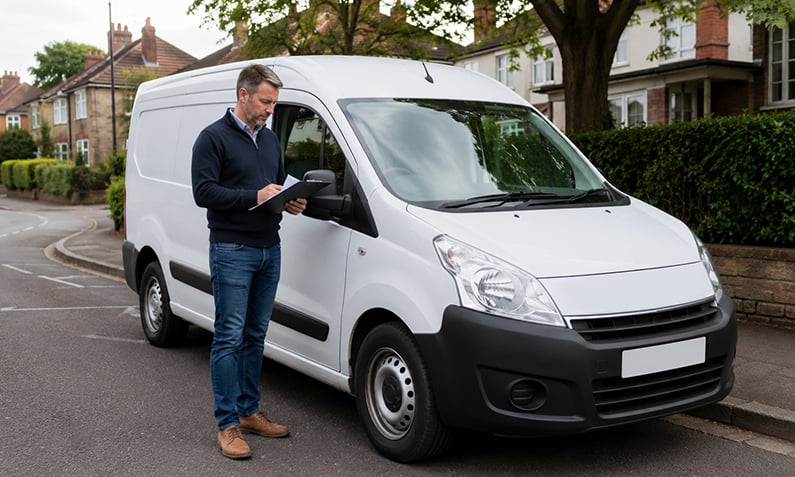




Admiral Business Van Insurance: A Practical Guide

Written by Shay Ramani
Reviewed by Ankit Sureja
6 min read
Updated: 27 Aug 2026
Admiral Business Van Insurance: A Practical Guide

Admiral business van insurance is a commercial policy for vans up to 3.5 tonnes used for work, letting you choose comprehensive, third party fire and theft, or third party only cover. If you carry your own tools and goods for a trade, you need a business class of use rather than a social, domestic and pleasure policy, otherwise a claim can be refused.

Admiral’s commercial van page confirms it quotes for business use and offers monthly or annual payments on Admiral Business. This explainer walks a tradesperson or small-business van owner through the correct class of use, how tools cover works, what Admiral does and does not include, and how to sense-check the price against the wider market. Free Price Compare compares van insurance from a panel of 63 providers, so you can see where an Admiral quote sits before you commit.

Quick Answer: Admiral Business Van Insurance

  • Admiral’s van contents (goods and tools) cover is offered at limits of £2,000, £4,000 or £6,000 as an add-on, not automatically included in the base policy.
  • Carrying your own tools for work needs ‘business use for carriage of own goods’ class of use; using the wrong class can void a claim.
  • Admiral comprehensive van policies sold from 1 February 2019 include vehicle replacement cover as standard, subject to policy terms.
  • The average new-business quoted van premium across comparison sites was around £1,767 in May 2026 (Consumer Intelligence), so use that as a benchmark, not an Admiral price.
  • Admiral Business offers monthly or annual payment options with no cancellation fees; always check the excess and exclusions before buying.

Last updated: August 2026

Written by the Free Price Compare editorial team | Reviewed August 2026

What is business van insurance and do you need it?

Business van insurance is cover for a van used in connection with your trade or occupation, including driving between sites, visiting clients, or carrying your own tools and stock. If you use your van for work as a tradesperson, a social, domestic and pleasure policy is not enough, and driving without the correct class of use can leave a claim refused. Under the Road Traffic Act 1988, you must at minimum hold valid third party motor insurance to drive on UK roads, but the class of use also has to match how you actually use the van.

Admiral’s commercial van page states it covers all types of van up to 3.5 tonnes and quotes for business use, so it does provide business van cover. For most sole traders and small firms, the relevant class is business use for carriage of own goods, which lets you carry your own tools and materials. If you deliver goods for payment, that is hire and reward and needs a different policy such as courier van cover.

For a fuller comparison of when you need each type, our guide on business versus private van insurance sets out the practical differences.

Which class of use for van insurance do you need?

There are four main classes of use for van insurance, and choosing the right one is the single most important decision a working van owner makes. The classes run from social use only up to full commercial and hire and reward use, and each covers a different range of journeys.

  • Social, domestic and pleasure only – personal trips, no work use. Not suitable if you carry tools for a job.
  • Social and commuting – adds travel to one regular place of work, but still not for carrying goods for the business.
  • Business use for carriage of own goods – the correct class for most tradespeople carrying their own tools, stock and equipment to jobs.
  • Carriage of goods for hire and reward – delivering or transporting goods for payment, such as courier work.

A plumber, electrician or carpenter moving between customers with their own tools needs business use for carriage of own goods. Declaring social use to save money is a false economy: Admiral, like any insurer, can decline a claim if the van was being used outside the class you paid for. If you are unsure which fits, our explainer on van insurance for business use versus personal use breaks down each option in plain terms.

Compare business van insurance quotes

Does Admiral business van insurance cover tools and equipment?

Admiral covers tools and goods in the van through an optional van contents add-on, with cover limits of £2,000, £4,000 or £6,000 shown on its van contents page. Tools and equipment are not automatically covered in full by a standard motor van policy, so if you carry expensive kit you need to add this contents cover and pick a limit that reflects the real replacement value of what you carry.

Two points catch tradespeople out. First, the limit is the maximum the policy will pay for goods and tools, so if you carry £5,000 of equipment and buy the £2,000 tier, you would be underinsured. Second, insurers commonly require tools to be locked away and the van secured, and many exclude theft when tools are left in the van overnight or on the street. Read the policy wording on overnight theft carefully before you rely on it.

Business tools cover on a motor policy protects the physical items in the van. It does not replace trade-specific covers like public liability or Employers’ Liability insurance, which are separate products a small firm may also need. To understand what a van policy does and does not include, see our guide on what van insurance covers.

Does Admiral business van insurance cover tools and equipment

Carrying valuable tools every day?

Match your goods and tools cover limit to what you actually carry, then compare across the market.

What information do you need to get a quote?

To get an Admiral business van quote you need the van registration, van type, number of seats, purchase date, security features, the cover level you want, driver details, any claims or motoring offences, and your estimated annual mileage. Having these ready before you start speeds up the quote and helps you get an accurate price rather than an estimate that changes at purchase.

Being accurate matters for two reasons. Under-declaring mileage or leaving off a past claim can invalidate cover, and over-declaring drives the price up for no benefit. Gather these details before you request quotes:

  • Vehicle registration, make, model and van weight (up to 3.5 tonnes for standard cover)
  • Date you bought the van and any security features such as an alarm or immobiliser
  • The correct class of use for how you actually work
  • All named drivers, their licence details, occupations and claims history
  • Realistic annual mileage and where the van is kept overnight

Give the same details to every insurer so you compare like for like. Small differences in declared mileage or overnight location can move the price noticeably.

Get quotes from 63 van insurers

What isn’t covered? Common exclusions to check

Common exclusions on business van insurance include mechanical breakdown, wear and tear, using the van for a class of use you have not paid for, and, on many policies, theft of tools left in the van overnight. Every insurer sets its own exclusions, so the policy wording is what matters, not a general description.

Community feedback about Admiral often centres on cover for vehicle modifications and conversions. If your van is modified or part-converted, check in writing whether the modifications themselves would be replaced after a claim, because standard motor policies frequently exclude non-standard alterations. Declare any conversion or modification upfront and get the position confirmed before you buy, rather than assuming it is included.

Other frequent exclusions worth checking:

  • Goods or tools above your chosen contents limit, or left unsecured
  • Driving outside your declared class of use or by an undeclared driver
  • Any hire and reward or delivery-for-payment work on an own-goods policy
  • Loss where the van was left get access toed or keys were left in it

If a claim is declined and you believe it was handled unfairly, you can escalate to the Financial Ombudsman Service after the insurer’s own complaints process. Admiral is authorised and regulated by the FCA, as is Free Price Compare.

How much does business van insurance cost in 2026?

No fixed Admiral business van price exists, because premiums are individually calculated from your van, mileage, address, driving record and cover level. As a market benchmark, average new-business quoted van premiums across comparison sites were £1,767 in May 2026 and £1,720 in May 2025. That is a market average, not an Admiral quote, and your own price could be higher or lower.

Van premiums softened for much of late 2025 and early 2026 before edging up again, with quoted prices rising in the three months to May 2026. Reports also noted that some of the most competitive insurers raised prices most sharply for newer vans. The practical takeaway is that a single quote tells you little on its own, so treat any Admiral figure as one data point among several.

Factor Effect on your premium
Class of use Business own-goods use costs more than social use, but is required for work
Annual mileage Higher work mileage raises the price; declare a realistic figure
Goods and tools cover Higher contents limits (£2,000 to £6,000) add to the premium
Van age and value Newer, higher-value vans have seen sharper recent price rises
Driver history Claims, convictions and named drivers all affect the price

Figures are indicative and may change. For a fuller picture of what drives the price and where to trim it, see our guide on UK van insurance costs, and if you suspect you are paying over the odds, our piece on overpaying for van insurance.

Check where an Admiral quote sits

Can you add a van to your Admiral car insurance?

You generally cannot add a van to a standard car insurance policy, because vans are commercial vehicles rated differently from cars. Admiral offers separate van and multi-van policies rather than adding a van to a private car policy, though it does offer multi-vehicle products that can group vehicles under one customer. If you run more than one van, a multi-van policy that insures several vans on one policy can simplify renewals and admin.

A common related question is which address to use if you live at one place and work from another. Insurers price on the risk where the van is kept overnight, so you should declare the address where the van is normally parked overnight, not simply your correspondence address. Getting this wrong can invalidate cover, so if your situation is unusual, confirm it with the insurer directly.

Payment flexibility also varies. Admiral’s business page highlights monthly or annual payment options with no cancellation fees on Admiral Business, which suits seasonal trades that may change vans. Whatever insurer you choose, compare the whole cost including any interest on monthly payments, not just the headline premium.

Can you add a van to your Admiral car insurance

FAQs about admiral business van insurance

Do I legally need business van insurance if I use my van for work?

Yes. If you use your van for work, such as carrying your own tools between jobs, you need a business class of use rather than social, domestic and pleasure cover. UK law requires at least valid third party motor insurance to drive, but the class of use must also match how you actually use the van, or a claim can be refused.

Does Admiral do business van insurance?

Yes, Admiral's commercial van insurance covers vans up to 3.5 tonnes for business use, including carriage of own goods. You can choose comprehensive, third party fire and theft, or third party only cover, with monthly or annual payment options. Tools and goods cover is available as an add-on rather than included by default.

What class of use do I need to carry my own tools?

You need business use for carriage of own goods to carry your own tools, stock and equipment for your trade. Social and commuting cover does not extend to carrying goods for the business. If you deliver or transport goods for payment, that is hire and reward and needs a separate policy.

How much tools cover can I get with Admiral?

Admiral's van contents cover is offered at limits of £2,000, £4,000 or £6,000 for goods and tools. Choose a limit that matches the full replacement value of what you carry, because the figure is the most the policy will pay. Check the wording on overnight theft, as many policies restrict cover for tools left in the van at night.

What information do I need to get a van insurance quote?

You need your van registration, van type and weight, number of seats, purchase date, security features, the cover level you want, all driver details, any claims or motoring offences, and your estimated annual mileage. Having these ready gives you an accurate price and speeds up the quote. Give the same details to every insurer so you compare like for like.

Does Admiral cover modified or converted vans?

Standard motor van policies frequently exclude non-standard modifications and conversions from replacement after a claim, and this is a common concern with mainstream insurers. If your van is modified or part-converted, declare it upfront and get written confirmation of what would and would not be replaced. A specialist policy may suit heavily converted vans better.

Can I add a van to my Admiral car insurance?

You generally cannot add a van to a private car policy, because vans are rated as commercial vehicles. Admiral offers separate van and multi-van policies instead. If you run more than one van, a multi-van policy that insures several vans together can reduce admin and simplify your renewal dates.

Which address should I give for van insurance if I live and work at different places?

Give the address where the van is normally kept overnight, as insurers price the risk on where the vehicle is parked overnight rather than your correspondence address. Declaring the wrong address to get a cheaper price can invalidate your cover. If your situation is unusual, confirm the correct declaration with the insurer directly.

What is not covered by business van insurance?

Common exclusions include mechanical breakdown, general wear and tear, driving outside your declared class of use, and theft of tools left in the van overnight on many policies. Modifications and conversions are also frequently excluded from replacement. Always read the specific policy wording, because every insurer sets its own exclusions.

How much does it cost to add a driver to van insurance?

Adding a driver changes the premium based on that person's age, licence type, occupation and claims history, so there is no fixed cost. A young or inexperienced driver usually raises the price more than an experienced one with a clean record. You must declare all regular drivers accurately, as an undeclared driver can lead to a refused claim.

Do I need to tell my insurer about a speeding fine from another country?

You should tell your insurer about motoring convictions when asked, and most proposal forms ask about offences over a set period regardless of where they happened. Failing to disclose a relevant conviction can invalidate your policy. If you are unsure whether a foreign penalty counts as a UK-recognised conviction, ask your insurer directly rather than guessing.

Also Read Related Articles


Information correct as of 26 August 2026. Prices, tariffs, policy details and providers change frequently, so please check the latest details before making a decision. This article is for general information only and does not constitute financial advice. Free Price Compare is authorised and regulated by the Financial Conduct Authority (FCA).

4000+ reviews