





Pothole Compensation Claims: The UK’s Worst Hotspots

December 9th, 2025
Pothole Compensation Claims: The UK’s Worst Hotspots

Content in this article

Pothole damage is now one of the UK’s costliest problems on the roads. A new study found that councils in England and Wales paid over £10.2 million in pothole compensation claims from 2022 to 2024. The true number could be even higher, as some data is missing.

UK drivers are paying more to fix tyres, wheels, and suspension because of potholes. Knowing where the most potholes are can help you stay out of trouble. This is also a good reason to look at your car insurance to make sure you will be covered. People should compare options so they don’t lose money if bad roads damage their vehicles.

This guide shows the newest information. It tells you how pay works for drivers. It also explains how drivers can look out for themselves.

Looking to save money on your cover? You can compare car insurance today

Which UK councils paid out the most for pothole damage?

Go.Compare sent an FOI request to 171 councils. The findings show big differences in how much money drivers get across regions for pothole damage. Staffordshire County Council paid the most. The total was a bit over £1 million from 2022 to 2024. That was almost twice as much as the council in second place.

Councils paying the most in pothole compensation (2022–2024)

Rank Council Amount Paid to Drivers
1 Staffordshire County Council £1,039,522.93
2 East Sussex County Council £598,112.00
3 Derbyshire County Council £526,089.62
4 Havering £450,000.00
5 Wiltshire Council £448,950.99
6 Barnet £424,370.00
7 Warwickshire CC £414,495.00
8 Shropshire Council £385,342.00
9 Oxfordshire CC £321,975.00
10 Surrey CC £316,331.38

This data shows how much vehicle damage be caused by bad road conditions. It also points to the places where drivers have the most risk to hit a pothole.

Why are pothole claims increasing?

Many experts say that the pothole problem in Britain is not new. It goes back a long way and it is a big part of how things work. A lot of places in the UK use older road surfaces and infrastructure. This has been true for years now. In some rural areas, the people in charge do not have enough money to fix roads as the need for repairs goes up.

The legacy from the early 1990s is important. Back then, work on fibre optic infrastructure stopped. A lot of roads were dug up many times for different utilities. The roads were often fixed with patches instead of being properly resurfaced. As years go by, these patched areas wear out faster.

Motoring experts say there are a few main things that add to this.

  • Weather cycles can wear down the road surface.
  • Budget constraints can make it hard to keep up with road work over time.
  • Heavy vehicle traffic often happens in rural, farming, and daily drive areas.
  • Lack of full-depth resurfacing lets cracks, dips, and potholes come back.

This leads to big safety problems. It also brings huge money troubles for drivers and councils.

Compare Car Insurance

Save up to £518* on your car insurance

Where are the UK’s worst pothole blackspots?

Ofcom’s reports on connection and data from local government show many spots where roads are in bad shape. These areas have lots of potholes. This puts cars at risk of damage.

Key findings include:

  • West Devon: 9% of homes use fixed-line internet that is slower than 10Mbps. This shows there are problems with rural infrastructure, like roads.
  • Torridge: 8.5% of homes have speeds below 10Mbps. This area also has the same type of rural infrastructure issues.
  • East and West Lindsey (Lincolnshire): these places are where the most potholes get reported.
  • Surrey: this area has the 7th highest number of potholes per mile, with 17.5 potholes for every mile.

Rural councils often deal with higher costs to repair roads. It can also be harder to get the work done because of where they are. This causes potholes to stay on the road longer, and that means there is a bigger chance for vehicle damage.

What kind of damage can potholes cause?

Potholes might look safe, but hitting one while driving at usual speed can cause big problems. The damage can cost a lot to fix.

Common repairs include:

  • Tyre blowouts
  • Bent or cracked alloy wheels
  • Damaged suspension springs or shock absorbers
  • Misaligned steering
  • Exhaust damage
  • Underbody damage

These repairs can often cost a lot. You might have to pay hundreds of pounds for them. If the problem is really bad, like damage to the structure or chassis, the price can be much higher.

Want more protection when you drive? Check out your car insurance options

Should you claim through the council or your insurer?

Drivers usually get two choices when they want to claim for a pothole.

Claiming from the local authority

This is usually the preferred route because:

  • It does not affect your no claims discount.
  • You will not have to pay any insurance excess.
  • It will not increase your car insurance premium for next year.

But councils will only give money if they have not done their job to keep the road in good shape under Section 58 of the Highways Act 1980.

Your claim must include:

  • A clear photo of the pothole
  • The exact spot where it is. Add street name, nearest house number, or GPS if you can.
  • A photo that shows vehicle damage
  • A copy of repair quotes or invoices
  • The time and date when it happened

Councils have the right to say no to claims if they can show the road gets checked and fixed often.

Claiming through your car insurance

If the damage is bad and you need help right away, your insurer can often help you faster.

However:

  • You have to pay your excess.
  • This can increase premiums for next year.
  • Your no claims discount may go down.

No matter what, you need to let the insurance company know about the incident, even if you do not plan to file an insurance claim.

Should you claim through the council or your insurer

Why pothole damage can affect your insurance

Car insurance companies look at risk when setting prices. If you live in a place with a lot of potholes, your costs might be higher.

  • Cost to fix your vehicle
  • How often claims happen
  • Chance of an accident or breakdown

It is important to check the types of cover you have, especially when you drive on roads that are in bad shape or in the country. You can use this time to see how car insurance plans compare. This will help you make sure you have the right protection for your car.

How drivers can reduce the risk of pothole damage

Experts recommend several strategies:

  • Drive slowly on roads where there are a lot of potholes.
  • Leave space between your car and other cars so you can see better.
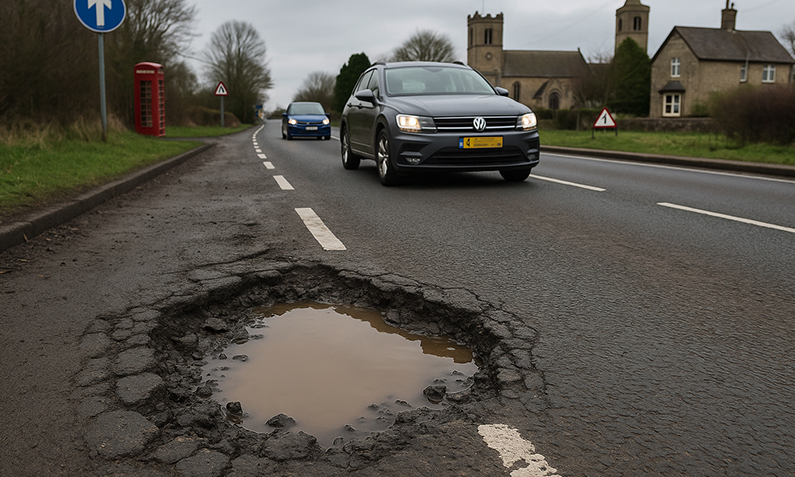
  • Avoid puddles, as they can hide deep potholes.
  • Check tyre pressure to help stop damage from bumps.
  • Use dashcams to have proof if there is any damage.
  • Report potholes by using the council or government tools.

Roads can change fast, especially in winter, even when you drive with care.

See how much you may save when you compare car insurance deals

Understanding How Pothole Claims Work Across the UK Road Network

Pothole risk is not the same on all UK roads. Different parts of the UK, like Scotland, Wales, and Northern Ireland, each have their own ways to report and handle claims. A lot of pothole damage happens on local roads. These are looked after by your local council. The main trunk roads, motorways, and other key routes are the job of National Highways in England, Traffic Wales, or Transport Scotland.

Each authority needs to show that they take reasonable measures to keep up their part of the road network. They have to check and fix individual potholes within set time limits. This is why it is so important to note the specific location, postcode, road name, and the location of the pothole when you fill out a claim form. Having clear photos of the damage, the pothole, and where it is found helps find out if the right authority should take care of it.

Severe pothole hits can do more than just hurt tyres and wheels. The steering wheel alignment, the suspension, and parts under the car can also get damaged. When you drive at higher speeds, the impact from the pothole is much harder. This makes A-roads, busy B-roads, and places with no lights more dangerous. A pothole can also put cyclists, pedestrians, and motorcyclists in danger. During extreme weather, or when there are adverse weather conditions, cracks can form on the road. These cracks may break open even more over time.

Industry research, like the yearly Asphalt Industry Alliance report, says roads go bad faster because of cold weather, old surfaces, and a lot of cars and trucks. Freedom of Information requests show that many councils find it hard to fix all the damaged roads, especially in places that get icy in December or lots of rain in April.

Compare Car Insurance

Save up to £518* on your car insurance

What to include in your pothole claim

To get the best chance of success when asking for help from the relevant council, you should collect:

  • You need to take photos of the pothole. Also, remember to have photos of the damage done.
  • Write down the name of the road. Put the postcode, and the exact GPS coordinates too.
  • Get details of any witnesses, like people who saw what happened.
  • Have proof of any uninsured losses. You can use repair invoices for this.
  • Draw a sketch or write a short description. This sketch or text should show your approach and explain the road conditions at the time.
  • Find out if the road is a local council road, a trunk road, or part of the National Highways network.

If the pothole is on a road run by Highways England (they are now called National Highways), then you must send your claim to them. You do not give your claim to the local council.

Should you notify your insurer?

Even if you do not make a claim through your insurance company, you need to let them know about any damage. If you do not, it could cause problems for you later if you need to make a claim or if you want to keep your no claims bonus. If you decide to claim on your comprehensive car insurance, know that your premium may go up the following year.

If the council says no to your claim and you feel they did not do what is right, you can ask for inspection logs and maintenance dates. Drivers can also get legal advice from the RAC, motoring lawyers, or groups that help consumers. This can help if the damage is causing you a lot of inconvenience or you lose money.

How do I use online platforms like FixMyStreet to report potholes and seek compensation?

Online platforms like FixMyStreet help you report potholes to the relevant council. If you do not know which group looks after the road, these tools can guide you. To start, put in the postcode or turn on location access. You can then show the specific location of the pothole on the map. You may add photos of the road, the pothole, and any damage you see. The system will send your report to the right authority. It could be your local council, National Highways, or another team that fixes roads.

FixMyStreet gives you a public list of reports in your area. You can use this to help with your pothole compensation claim. If the pothole or defect is reported on there before and not fixed in a reasonable time, this can be strong proof. This shows the authority did not take reasonable measures to keep the road network safe and in good shape. Having this kind of proof is important when you want to win your claim.

Reporting a pothole on FixMyStreet is not a way to ask for money back. After you report the pothole, you should still send a claim to the council or the team that deals with the road. You will need to give them some things so they can look at your claim.

  • The location of the pothole. List the exact road name, postcode, and if you can, GPS details.
  • Photos of the damage and the safe place where you stopped.
  • Repair invoices and receipts for your uninsured losses.
  • Details about witnesses, if you have any.
  • A short note about how the damage happened, including your speed and the weather.

FixMyStreet makes sure that the right authority knows about the issue fast. But, if you want to start the compensation process, you still have to go through the proper official steps.

Understanding How Pothole Claims Work Across the UK Road Network

Correct as of 03 December 2025

FAQs About Pothole Claims and Car Insurance

What evidence do I need to support a pothole damage claim?

Councils require clear proof that the pothole directly caused the damage. Useful evidence includes: photos of the pothole from multiple angles, close-ups of the damage to your car, the exact location (road name, postcode, nearby landmarks), the date and time of the incident and any repair estimates or invoices. If possible, gather details of any witnesses who saw the incident. Strong evidence increases your chances of a successful claim and reduces the risk of the council rejecting it due to lack of detail.

Can pothole damage affect my no-claims bonus if I claim on insurance?

Yes. If you claim through your car insurance rather than the local council, your insurer may treat it as an at-fault claim because a third party is not covering the cost. This often results in losing some or all of your no-claims bonus unless you have NCB protection. Even where you are not to blame, insurers can still categorise the incident this way because they cannot recover costs from the highways authority.

How long do councils have to repair a reported pothole?

Repair times vary depending on the severity and the council’s inspection schedules. Many local authorities aim to repair the most dangerous potholes within 24–48 hours, while lower-risk defects may take days or weeks. Councils must show they have taken “reasonable measures” under the Highways Act, including regular inspections. If the pothole had already been reported and the council did not act within their stated timeframe, your claim is more likely to be successful.

What happens if the council rejects my pothole claim?

You can ask to see their inspection records and question their choice. A lot of denied claims win on appeal if the maintenance logs are wrong.

Are pothole claims treated as at-fault or non-fault by insurers?

Most insurers classify pothole claims as at-fault because no recoverable third party is paying for the damage. This means your excess will apply, and your future premiums may rise. This is why many drivers attempt to claim compensation from the local authority first. However, you must still inform your insurer of the incident even if you do not make a claim.

Can I claim for tyre, suspension and wheel alignment damage caused by potholes?

Yes. Councils typically receive claims for tyre blowouts, alloy wheel cracks, suspension issues, broken springs, shock absorber damage and wheel misalignment. If the pothole directly caused measurable damage, you can request compensation for repair costs and any uninsured losses. Photos of the damage and a mechanic’s report greatly strengthen your case.

Does driving over a pothole at higher speeds affect my claim?

Potentially. Local authorities may reject compensation if they believe you were driving at an unsafe speed or failed to take reasonable care to avoid the pothole. Councils expect drivers to react safely to road hazards, particularly in poor weather or on unfamiliar roads. If the pothole was unavoidable or visibility was poor (e.g., hidden by water), this strengthens your claim.

Can cyclists and motorcyclists also claim for pothole damage?

Yes. Cyclists, motorcyclists and even pedestrians can submit pothole compensation claims if they are injured or their property is damaged. Claims from vulnerable road users are assessed using the same Highways Act standards but often carry stronger weight due to safety risks. Evidence such as photos, witness statements and medical reports may be required.

Are pothole compensation rules different in Scotland, Wales or Northern Ireland?

Yes. While the principles are similar, each nation has different road authorities and inspection standards.

  • Scotland: Local councils maintain most roads; trunk roads are managed by Transport Scotland contractors.
  • Wales: Traffic Wales oversees major roads; local councils handle others.
  • Northern Ireland: The Department for Infrastructure (DfI) manages most road maintenance.
    Processes and response times may differ, but all authorities must demonstrate reasonable care to maintain safe roads.

What is Section 58 of the Highways Act and how does it affect claims?

Section 58 provides councils with a statutory defence against pothole claims. If the council can prove it carried out regular inspections, responded to hazards within reasonable timescales and maintained the road to an acceptable standard, your claim may be rejected. Understanding Section 58 is important because many councils use it as their primary defence against compensation payouts.

Do councils have budgets set aside for pothole compensation payouts?

Yes. Most councils allocate part of their annual highways budget for claims relating to road defects. However, these budgets vary significantly between local authorities. High compensation totals can indicate either poor road conditions or a higher willingness to settle legitimate claims, depending on the area. Budget pressures can also influence how quickly repairs are carried out.

When is it better to claim through insurance instead of the council?

Claiming through insurance may be better if the repair cost is low, the damage is urgent or you lack strong evidence against the council. However, doing so may affect your no-claims bonus and could increase future premiums. For expensive repairs where the council may be liable, attempting a council claim first is usually the more cost-effective route.

How do I use online platforms like FixMyStreet to report potholes and seek compensation?

FixMyStreet lets you report potholes by entering the road name or postcode and uploading photos. The report is automatically sent to the correct local authority, creating a digital record that the pothole has been logged. This timestamp is useful for compensation claims because it shows when the defect was first reported. After submitting your report, you can track updates and later reference the report ID when submitting a claim to the council.

How do I know if I can claim pothole compensation?

You can ask for help if the pothole caused damage to your car. If the council did not look after the road well, it helps your case. Proof of bad road care can make it more likely for you to get help.

Can a pothole claim affect my insurance?

Yes, if you make a claim through your insurer, it can change your price when you renew next time. Claiming from the council does not do this. Still, you have to tell your insurer about any damage.

How deep does a pothole need to be to claim?

There is not any strict rule for this, but many councils see potholes that are about 40mm deep as problems that need fixing. Smaller potholes can also cause harm, so you should report them too.

Should I repair the damage before claiming?

Yes, this is true, especially when the car is not safe. You need to make sure you take clear photos. You should also keep all the invoices and reports from repairs.

How long do councils take to respond to pothole claims?

Most councils try to finish things in about 20–40 working days. But if the case is hard, it can take more time.

Can I claim for bent alloy wheels or suspension damage?

Yes — these are some of the most usual pothole fixes that show up in many of the claims where people get money back.

Are rural areas more at risk for pothole damage?

Yes, that’s true. Rural roads have old pavement. They also have less money to fix problems. This means there are more potholes. It takes more time to repair them.

Also Read Related Articles

The Importance of Comparison Sites

Get Cheaper Car Insurance – Even with Points or Claims

We help you find policies that suit your situation and budget.

4000+ reviews