














What Are Van Insurance Groups and Which Vans Are Cheapest?

  • You can save up to £671* on your van insurance
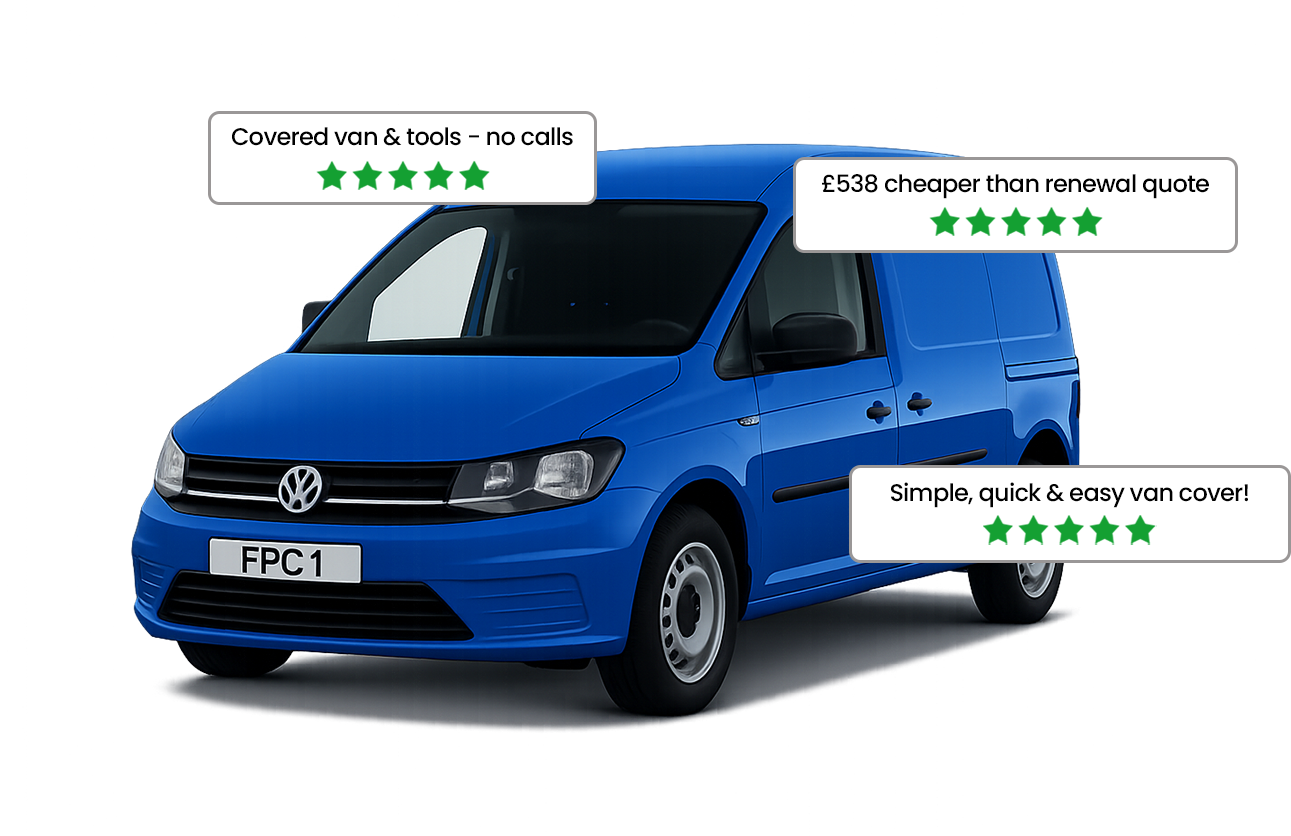
  • 97% of people who reviewed recommend Free Price Compare
  • Get van insurance quotes from over 63 insurers
GB

Don't have your registration number? No worries, just click here. click here.

Retrieve Quotes

Tip: Think about the type of goods you will be taking. Some items may need special insurance.

4000+ reviews

You could save up to £671* T&C's apply

We compare van insurance quotes from all of these suppliers and more...

  • Admiral
  • Hasting Direct
  • Budget Insurance
  • GoSkippy
  • Autonet
  • Axa Redefining Standards
  • Vans4leisure
  • Mustard

Van insurance can cost more than car insurance because vans are used for work, carry expensive tools and travel higher miles. Many UK drivers now check the van’s insurance group before buying, because it has a direct impact on insurance costs, especially for tradespeople, delivery drivers and small businesses.

A lower insurance group normally means lower premiums, while higher insurance groups usually mean higher premiums. Other personal factors still apply — driving history, postcode, mileage, personal use vs business use, modifications and security features — but the van insurance group provides the starting point for pricing.

Check £0-charge van insurance quotes in one minute before renewing

How Do Van Insurance Groups Work in the UK?

All vans in the UK are placed into a numbered insurance group. This makes it easy to see how much it can cost to get them insured. A governing panel from the Association of British Insurers (ABI) and the Lloyd’s Market Association (LMA) sets up this system. Thatcham Research is the one that does the testing for it.

There are two age-based systems working together:

Registration age Group range Meaning
Vans registered before 1 January 2016 Groups 1 – 20 Group 1 = cheapest to insure, Group 20 = most expensive
Vans registered from 2016 onwards Groups 21 – 50 Group 21 = cheapest to insure, Group 50 = most expensive

Even though the numbers are different, the meaning is the same:
Lower numbers = lower premiums
Higher numbers = higher premiums

Keeping to lower insurance groups can save hundreds per year on cover

What Factors Decide a Van’s Insurance Group?

The ABI/LMA panel checks more than 100 things that can change risk. But, the main factors that pick insurance group ratings are:

Factor Why it changes the insurance group
Repair costs & parts prices Most important; cheap repair = lower group
Safety features Strong safety tech can reduce claims and casualty risk
Security features Alarms, deadlocks, immobilisers reduce theft claims
Performance and engine power Heavy vans or high-power engines sit in higher groups
Purchase price and value Expensive vans cost more to replace
Cost of repairs after vandalism or collision Higher body shop labour hours lead to higher groups
Theft claim history for the model High theft rate pushes group up

The panel does not look only at the type of fuel the car uses, like diesel, petrol, or electric. What matters more is security, how hard it is to fix, and how likely people are to make a claim.

What Factors Decide a Van’s Insurance Group

Which Vans Sit in the Lowest Insurance Groups and Cost the Least to Insure?

Van model (typical trims) Why it is cheaper to insure Insurance groups — vans registered before 2016 (1–20 scale) Insurance groups — vans registered from 2016 onwards (21–50 scale)
Citroën Nemo Small engine, low repair costs, cheap body panels Group 1–3 Group 21–23
Fiat Fiorino Simple design, small diesel engines, good security on later models Group 2–4 Group 21–24
Peugeot Bipper Lightweight body and cheap replacement parts Group 2–4 Group 21–24
Vauxhall Combo (basic trims) Good safety features and modest engines Group 4–6 Group 23–27
Ford Transit Courier Car-like design keeps repair bills low Group 3–6 Group 23–27
Volkswagen Caddy (low-power models) Strong security features improve risk rating Group 6–8 Group 27–30
Renault Kangoo (basic business trim) Low-performance engines and cheap side panels Group 5–7 Group 26–29

These vans are in lower insurance groups. So, many people will get lower premiums on them. If you are like other drivers, you may get lower premiums too.

Get Quotes

Which Vans Sit in Higher Insurance Groups and Cost the Most to Insure?

Some vans are part of higher insurance groups. This happens if they are made with strong engines, have costly repair parts, come with complex electronics, or if they get stolen often. These things push up the cost of repairs and money that companies pay out. Because of that, drivers need to pay higher premiums.

Van model Why premiums are usually higher Insurance groups — vans registered before 2016 (1–20 scale) Insurance groups — vans registered from 2016 onwards (21–50 scale)
Mercedes-Benz Sprinter High value; costly repair panels; strong theft targeting Group 17–20 Group 41–50
Ford Transit (full-size) Large target for theft and expensive mechanical parts Group 16–20 Group 38–44
Ford Transit Custom (high-power variants) Performance engines and bigger body sizes Group 14–18 Group 34–40
Toyota Hilux (pickup) High purchase price and costly bodywork repairs Group 18–20 Group 42–50
Volkswagen Crafter Complex electrical systems and high labour costs Group 16–19 Group 38–44
Renault Trafic (premium trims) Higher-spec interior and advanced electronics Group 13–17 Group 32–38

These vans typically fall in groups 1–5 (pre-2016 scale) and groups 21–26 (new scale), which gives lower premiums for similar driver profiles.

Check insurance groups before buying

Does the Type of Van (Size and Engine) Affect the Cost of Your Premium

Does the Type of Van (Size and Engine) Affect the Cost of Your Premium?

Yes. Insurance providers look at the size of the van, how strong the engine is, and usual repair costs when they set prices. Smaller vans that have less powerful engines often be put in lower insurance groups. Bigger vans and pickups with more powerful engines are in higher groups. This is because they can cost more to fix and are more likely to get into accidents.

Van type Effect on van insurance premiums Typical insurance groups — pre-2016 scale (1–20) Typical insurance groups — 2016-onwards scale (21–50)
Small vans (e.g., Citroën Nemo / Bipper / Vauxhall Combo) Cheapest – low power, cheaper repairs, lightweight panels Group 1–6 Group 21–27
Medium vans (e.g., Ford Transit Custom / Vivaro / Renault Trafic) Mid-range – depends heavily on trim, payload and security features Group 10–16 Group 31–38
Large vans (e.g., Mercedes-Benz Sprinter / Ford Transit L3 / VW Crafter) Higher premiums – expensive bodywork, higher theft rates and costly mechanical components Group 16–20 Group 38–44
Pickups (e.g., Toyota Hilux / Ford Ranger / VW Amarok) Often high premiums – high purchase price and costly accident damage Group 18–20 Group 42–50
Electric vans Mixed – high purchase price and expensive batteries can offset security and efficiency advantages Group varies widely Group varies widely (typically 30–50 depending on model)

Insurers use these group levels to figure out repair costs, claim size, and how likely theft is. Then, they look at personal risk factors. These can be things like age, postcode, mileage, and driving history.

How Much Do Security Features Affect Insurance Premiums?

Security matters now. Van theft is going up in many UK places. People need to take steps to protect their things. This problem is getting worse, and many people say they feel worried. The UK is seeing more theft, so van owners should be careful.

Typical differences seen by insurers:

Security level Effect on premiums
Factory alarm only Baseline risk
Factory alarm + immobiliser Lower premiums in most cases
Factory security + deadlocks Reduced theft claims for commercial vehicle users
Security tracker installed Can significantly reduce premiums for high-risk vans
No overnight tools left inside Some insurers offer tool-theft reductions

Some insurers also offer discounts if locking wheel nuts, OBD-port protection kits or GPS tracking are fitted.

Adding security upgrades may cost less than paying higher premiums at renewal

Get Quotes

How Can Drivers Reduce Van Insurance Premiums Without Changing Van Model?

These steps can help you get lower insurance costs, even if the van is in a higher group.

Method Why it helps
Higher voluntary excess Lowers premium in exchange for a bigger payout if you claim
Accurate mileage Over-estimating miles can put you in a higher-risk band
Secure overnight parking Private driveway or locked compound reduces theft risk
Removing tools overnight Helps avoid tool-theft claims and extra risk loading
Avoid unnecessary modifications Cosmetic upgrades can increase premiums
Named drivers with experience Can reduce the cost of your premium
Telematics for delivery drivers Proves safe driving and reduces risk rating
Annual payment instead of monthly Removes interest charges from monthly instalments

Even vans that are in higher groups can help you save money. You just need to drive with care. Try to park them in safe places.

Why Personal Use Often Costs Less Than Business Use

A van that you have for personal use will get a cheaper insurance cost. A commercial vehicle you use for work will be more expensive.

Business vans tend to:

  • Drive more miles
  • Go to places where there is more risk
  • Take equipment and tools when you go
  • Be targeted for theft more often

This puts them in a group that can face more risk. When you use the same van for social reasons, it is not as risky.

What Do the Letters After a Van Insurance Group Mean?

When you see the van’s insurance group, there will be a number and a letter, like 23E or 41A. The number is for the insurance group that the van is in. The letter tells you how good the van’s security from the factory is. This shows if the van's security is better, not as good, or just the same as you would expect for that insurance group.

Letter Meaning How it affects premiums
A Security is acceptable for the group No change to premium
E Exceeds expected security Group rating is lowered → can help reduce premiums
D Doesn’t meet expected security Group rating is increased → can lead to higher premiums
P Provisional security data Rating may change once full data is available
U Unacceptable security level Insurers may require upgrades before providing cover
G Imported vehicle Insurance group systems apply only to UK-market vehicles

This security letter is set by Thatcham Research / ABI’s Vehicle Risk Rating panel and applies automatically — drivers don’t need to notify insurers manually.

Stronger security ratings can mean cheaper van insurance

FAQs About Van Insurance Groups and Cheapest Vans to Insure in the UK

It is a rating that goes from 1 to 50. The rating shows how much it will cost to fix and cover a van. If you get lower numbers, your cover will be cheaper. If it is a higher number, you will have to pay higher premiums.

Smaller cars like the Citroën Nemo, Fiat Fiorino, Peugeot Bipper, Vauxhall Combo, Ford Transit Courier, and Renault Kangoo are often put in lower insurance groups. This makes them cheaper to insure. A ford car like the Ford Transit Courier is a good choice if you want to save money on insurance. The Vauxhall Combo is also one of these cars. A ford or vauxhall car can help you keep insurance costs down, as they are in lower insurance groups.

Vans like the Mercedes-Benz Sprinter, Ford Transit, Toyota Hilux, and Volkswagen Crafter are in higher insurance groups. This is because they can cost a lot to fix and there are more theft claims for them. The Ford Transit is well-known for its repair costs. That is why it can be expensive to insure this van.

Good security features can make your van safer. This can help it be in a lower risk group. If that happens, you get lower premiums. But, if the security is not good, your van may be put in higher groups. This means you will have to pay more.

Most of the time, the answer is yes. If your van drives more miles, insurers see this as a higher risk for accidents or theft. Because of this, van insurance premiums can go up. If you drive more miles in a year, you may need to pay higher insurance premiums for your van. This is good for people to know if they use their van a lot.

They check the van’s insurance group, driver’s age, and where you live. They also look at your driving history and if the van is for personal use or business. Any modifications made to the van are important as well. They want to know where you park the van at night.

Yes, the cost can be less if you use secure parking and add things like immobilisers or trackers. If you pay for your insurance once every year and not every month, that can help save money too. When you keep your mileage low and make sure it is correct, it may help lower what you pay. Choosing to raise your voluntary excess is another way that you can get your costs down.

You can look at van insurance quotes from many companies. This way, you may get cheaper prices that match how you use your van.

Just enter the van's reg or model on a car insurance comparison site. The right ABI or Thatcham group will show when you get a quote. You do not need to work out the group by yourself.

Yes. Vans and cars are rated on different scales.
Van insurance groups use:

  • Groups 1–20 for vans registered before January 2016
  • Groups 21–50 for vans registered from 2016 onwards

Car insurance groups run on a single 1–50 scale, so the numbers are not interchangeable. A van in group 23 is not the same risk as a car in group 23.

Insurance providers calculate premiums separately for cars and vans, so it’s always worth checking both if you run a business and a personal vehicle — drivers often save more when they compare van insurance and compare car insurance instead of auto-renewing with their current insurer.

Page last updated on: 03/12/2025

Page reviewed by: Tim Bailey

4000+ reviews