

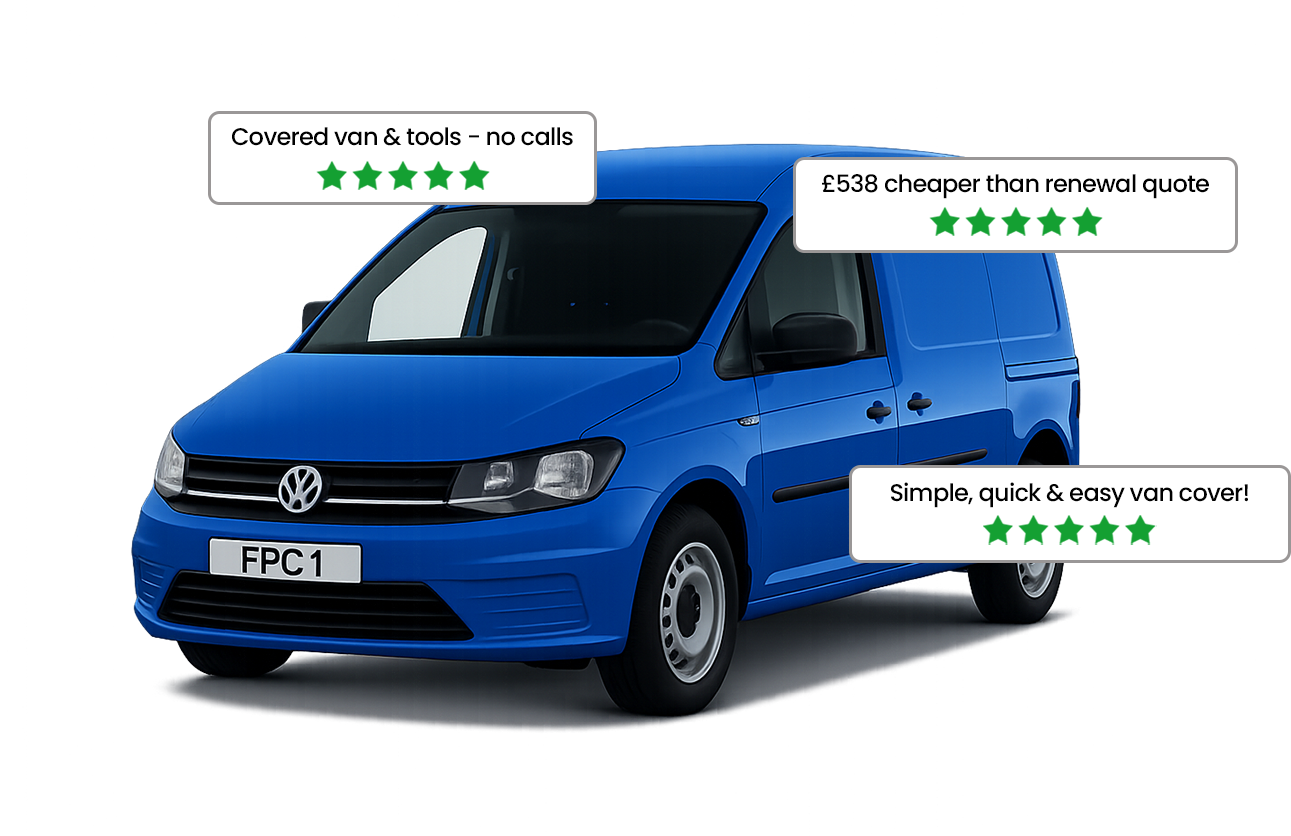













Compare Commercial Van Insurance

  • You can save up to £671* on your van insurance
  • 97% of people who reviewed recommend Free Price Compare
  • Get van insurance quotes from over 63 insurers
GB

Don't have your registration number? No worries, just click here. click here.

Retrieve Quotes

Tip: Think about the type of goods you will be taking. Some items may need special insurance.

4000+ reviews

You could save up to £671* T&C's apply

We compare van insurance quotes from all of these suppliers and more...

  • Admiral
  • Hasting Direct
  • Budget Insurance
  • GoSkippy
  • Autonet
  • Axa Redefining Standards
  • Vans4leisure
  • Mustard

Find commercial van insurance that suits your business, vehicles, and drivers. Whether you run one delivery van or manage a small fleet, the right policy protects your vehicles, goods, and tools while keeping your business on the move.

You can compare prices, cover types, and extras in minutes — helping you get affordable protection for your vans and everything inside them.

Save money on your commercial van insurance today

  • Compare quotes from trusted UK insurers
  • Choose cover for tools, goods, and multiple drivers
  • Add extras like breakdown or goods-in-transit protection

Get quotes for commercial van insurance quickly

What Is Commercial Van Insurance?

Commercial van insurance is a policy that covers vehicles used for business or trade. It protects you if your van is damaged, stolen, or involved in an accident during work.

It’s required by UK law if you use your van for commercial purposes — such as carrying goods for customers, making deliveries, or transporting work equipment. Standard car or private van insurance doesn’t cover this type of use.

Most commercial policies can include:

  • Cover for multiple vans or drivers
  • Protection for goods in transit
  • Breakdown cover to keep you on the road
  • Legal expenses cover for accidents or claims

According to the Department for Transport (DfT), over 4.8 million vans are registered for business use in the UK (2024). For many small businesses, the van is their most valuable asset — and commercial insurance is essential to protect it.

Who Needs Commercial Van Insurance?

You’ll need commercial van insurance if your van is used for:

  • Deliveries or courier work under hire and reward
  • Transporting goods or materials for clients
  • Trades like plumbers, electricians, or furniture removers carrying work equipment
  • Multiple drivers or employees using company vans

Commercial van insurance is suitable for:

  • Sole traders
  • Limited companies
  • Small business fleets
  • Delivery or logistics firms

If you only use your van to carry your own tools or visit clients, you may only need business van insurance. But if you transport goods for others or employ multiple drivers, you’ll need a commercial van insurance policy.

What Does Commercial Van Insurance Cover?

Commercial van insurance policies can protect against:

Type of Cover What It Includes
Third Party Only The minimum legal cover. Pays for damage or injury to others but not your own van.
Third Party, Fire & Theft Adds fire and theft protection for your van.
Comprehensive Cover Covers you, your van, and others — regardless of who’s at fault. Includes damage, fire, theft, and personal injury.

Many policies also offer extra protection, such as:

  • Goods in transit – for goods or stock carried for business.
  • Tools cover – for tools or equipment kept in your van.
  • Breakdown cover – roadside help, recovery, or home start.
  • Courtesy van – keeps your business running while yours is repaired.
  • Personal accident cover – if you’re injured in an accident.
  • Legal costs – covers solicitor fees or liability claims.
What Does Commercial Van Insurance Cover

What Are the Different Types of Commercial Van Insurance?

Commercial van insurance is split into a few common types depending on what you use your vans for:

Type of Policy Description Ideal For
Carriage of Own Goods Carrying your own tools, stock, or materials. Builders, plumbers, electricians.
Carriage of Goods for Hire and Reward Delivering goods for others under contract. Couriers, delivery drivers.
Haulage Insurance Long-distance delivery of larger loads. Logistics or transport companies.
Fleet or Multi-Van Insurance One policy for several vehicles. Businesses with multiple vans or employees.

If you’re not sure which category applies, think about whether you carry your own goods or deliver for customers. That usually decides which type of commercial cover you need.

Get Quotes

How Much Does Commercial Van Insurance Cost in the UK?

Premiums vary depending on the type of van, use, and level of cover.

According to ABI data, the average cost of comprehensive commercial van insurance in 2024 was £841 per year, up slightly from £803 in 2023.

Here’s a general guide:

Van Type Average Annual Premium Typical Use
Small van (e.g. Citroën Berlingo) £590–£650 Light trade, local deliveries
Medium van (e.g. Ford Transit Custom) £750–£850 Trades and courier work
Large van (e.g. Mercedes Sprinter) £950–£1,150 Long-distance or heavy transport
Fleet insurance (2–5 vans) £1,700–£2,300 Small business fleets

Premiums can rise if your vans travel long distances, carry valuable goods, or operate in high-risk postcodes.

What Affects the Cost of Commercial Van Insurance?

Insurance providers look at several factors:

  • Type of van – engine size, weight, and market value.
  • Business use – deliveries or haulage cost more than own-goods carriage.
  • Driving record – claims, convictions, and no claims discounts.
  • Drivers – age and experience of all named drivers.
  • Mileage – higher mileage increases risk.
  • Storage location – off-street or secure parking lowers premiums.
  • Level of cover – comprehensive cover costs more than third party.

According to Thatcham Research, fitting a Category 1 alarm or tracker can reduce van theft risk by up to 60%, which may lower premiums.

What Optional Extras Can You Add to a Commercial Van Policy

What Optional Extras Can You Add to a Commercial Van Policy?

Optional extras make your policy stronger and more flexible:

  • Breakdown cover – roadside repair or recovery to keep your business moving.
  • Goods in transit – protection for stock or parcels you deliver.
  • Tools in transit – cover for tools kept inside the van.
  • Courtesy van – lets you stay on the road after an accident.
  • Windscreen cover – covers repair or replacement.
  • Legal expenses – helps cover court or solicitor costs.
  • Personal belongings – protects your items inside the van.

Each extra adds a small cost but provides greater peace of mind and protection for your business operations.

How to Lower the Cost of Your Commercial Van Insurance

Van insurance doesn’t have to break your budget. Here are practical ways to reduce your premium:

Improve van security

Install an alarm, immobiliser, or GPS tracker. Parking your van in a locked garage or gated yard overnight can also reduce theft risk.

Build your no claims discount

Safe driving pays off. A few years without a claim can save up to 60% on your annual premium.

Choose the right level of cover

Make sure your policy matches your van’s use. If you only carry your own tools, you don’t need haulage insurance.

Increase your voluntary excess

Raising your voluntary excess from £250 to £500 can lower premiums by up to 10%, according to ABI figures.

Pay annually

Paying in one go avoids monthly interest or admin fees, saving around 6–8% per year.

Compare van insurance regularly

Renewal quotes aren’t always the best. Always compare van insurance from multiple UK insurers before your renewal date to find the best deal.

Find your best commercial van insurance deal today

Get Quotes

What’s the Difference Between Commercial and Business Van Insurance?

Feature Business Van Insurance Commercial Van Insurance
Use Carrying your own tools or goods. Carrying goods for others or delivery work.
Drivers Usually one driver. Multiple drivers or employees.
Vehicles Often one van. Fleets or multiple vans.
Cover level Focused on self-employed use. Includes goods in transit and liability cover.

If your work involves deliveries, customer transport, or a team of drivers, commercial van insurance is the right policy.

How to Compare Commercial Van Insurance Quotes in the UK

The best way to get the right cover and price for your business is to compare quotes from several UK insurers. A side-by-side comparison helps you understand what each policy includes and which type of insurance gives you the best value for your money.

When comparing, always look beyond the price. Focus on how well each commercial van insurance policy fits your day-to-day work, where you drive, and what you carry. This makes it easier to find the right choice for your trade or company.

Here’s what to check before buying:

Levels of cover

Make sure the policy has the right level of insurance for your van and business purposes. Compare third party, fire and theft, and comprehensive van insurance. Comprehensive insurance usually gives the most protection, including damage to your own van, accidental damage, and personal injury cover.

Optional extras

Extras such as breakdown cover, tools in transit, goods in transit, or uninsured driver protection can save you from unexpected costs. Some policies also include medical expenses or uninsured losses if an accident isn’t your fault.

Policy documents

Read the small print carefully. Check your policy documents to confirm what is and isn’t covered. Look for exclusions around leisure activities, personal reasons, or driving outside the European Union.

Type of commercial van insurance

Match your policy to your line of work. The right type of commercial van insurance depends on whether you deliver parcels, visit clients, or carry your own goods. Your place of work and mileage will affect how insurers rate your risk.

Policy excess

Check your compulsory and voluntary policy excess. A higher excess can lower your premium, but make sure it’s affordable if you need to make a claim for the cost of repair or stolen equipment.

Drivers and vehicle details

Insurers will ask for the date of birth, licence type, and experience of each driver. They may also need details about the type of van, number of seats, and any modifications. These all affect the quote and level of cover.

Legal requirement

It’s a legal requirement to have valid commercial van insurance if your van is used for commercial use or business insurance purposes. Driving without it could lead to fines or disqualification.

When you’ve compared the types of van insurance available, choose the one that offers the right balance of cover and cost for your business. Always make sure you’re protected for every part of your job — from customer visits to carrying stock or tools.

Compare commercial van insurance quotes today

For more options, you can also compare van insurance to see policies for personal van insurance, business van insurance, and temporary cover across the UK.

FAQs About Commercial Van Insurance

It protects your van, goods, and drivers while used for business. It can include tools, goods in transit, and breakdown cover.

Anyone using vans for deliveries, courier work, or to transport goods for others.

Average annual costs are between £750 and £1,150, depending on the van size and use.

Some insurers allow it if you add “social, domestic and pleasure” use. Always check your policy first.

Yes. Most insurers let you add extra drivers or choose an “any authorised driver” policy.

Yes. It’s a business expense if your van is used for work purposes.

You can add breakdown cover, goods in transit, tools cover, windscreen cover, or legal costs protection.

Contact your insurer immediately. Provide details, photos, and your policy number. They’ll guide you through repairs or replacements.

Yes. Some insurers offer cover from 1 day to 28 days for short-term work or extra vans.

Yes. It can be cheaper and easier to manage than separate policies. You can insure several vans and drivers under one commercial van insurance policy.

You’ll need your van’s registration, make and model, driver details, type of cover you want, and how you use the van for work. Insurers will also ask where it’s parked overnight, any security features, and your no claims bonus.

Page last updated on: 27/11/2025

Page reviewed by: Tim Bailey

4000+ reviews